Notes on...

Tequila slammers all round!

‘Tequila, it makes me happy,/ Con Tequila it feels fine’ goes the student anthem by Terrorvision. It is midnight, somewhere around the turn of the new millennium, and we are on the sticky dancefloor of a grotty union bar in Edinburgh, but it could be Bristol, Cambridge or Newcastle. You get the picture. The song is greeted by whoops and an influx of revellers throwing drunken shapes. Meanwhile, some bastard in your friendship group who’s feeling flush is already elbowing his way to the bar to spank part of the student loan that’s just hit his account on a bottle of Jose Cuervo tequila, shot glasses, lemon and salt. Slammers all round! Bleurrggghhhhh.

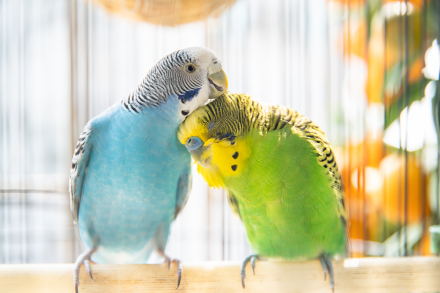
Why budgerigars are the perfect pets 

Geoff Capes, two-time winner of The World’s Strongest Man competition, weighing in at 27 stone, was a budgie fancier. He kept them, bred them and was even president of the Budgerigar Society in 2008. The fascination started for him when he was a copper in the 1960s and came across a budgie in the house of someone he arrested. The villain entrusted Capes with six of the birds. Capes was smitten. We don’t know what happened to the criminal. In our modern world of cockapoos and designer dogs, the budgie – which was wildly popular in the 1950s and 1960s – could do with a comeback. Our lives would be better with them. They hark back to a simpler time when pets were pets and not designer accessories. Budgies are native to the grasslands of Australia.

Forties’ love: tennis serves me a perfect midlife crisis 

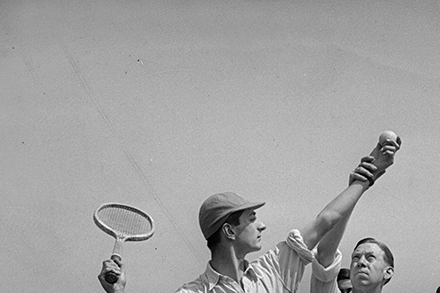
There comes a time when every man must choose how to tackle an impending midlife crisis. A Maserati? A marathon? A mistress? Lacking the wealth, stamina or sheer Italian-ness for any of the above, I’ve plumped for that most gentile of sports to feel alive again: tennis. The problem with a new hobby, of course, is that you immediately feel more infantile than raffishly young. Picking up fresh skills means relearning how to learn, decades after university, when you actually had the appetite for self-improvement. Sure, tennis is, as studies have found, one of the most effective activities for staying healthy. It’s also infuriatingly finicky. Technique-wise, I can fire off a decent groundstroke (forehand and backhand), thanks to lessons as a mopey teen.

Make the fez great again

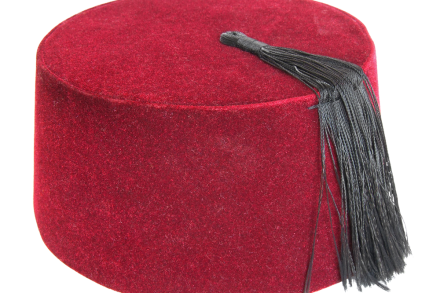
Ireturned from a recent holiday to Morocco with three mementos: a bright red pair of swimming trunks (teenager-sized; the largest the supermarket had), a bright red nose (thanks to my unscientific aversion to sun cream) and a bright red fez.  I’ve always wanted to own a fez and since purchasing it in a Marrakesh souk – ‘For you, sir, special price’ – I have been besotted with it. I’ve worn it on the Tube, to a pub quiz and around the Spectator offices, to variable enthusiasm from colleagues. As far as practicality goes, it is a useless hat. It  doesn’t keep the sun off. Its finest Moroccan cardboard will wilt in its first brush with the rain. But that won’t keep it off my head.

Who cares if fridge magnets are naff?

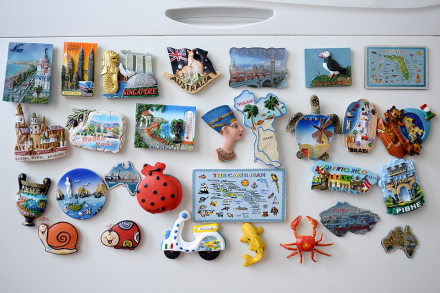
Let’s dispense with the obvious question first. Are they common? While there’s a clear temptation to consult Nicky Haslam on such matters, I don’t think I can be bothered. Not least because first, I am a Prusso-Italian immigrant, second, I was born in Essex and third, I adore fridge magnets. We should be honest and admit that, like everything in life, they are signifiers. The aim is to show our friends how cultured, travelled, well-read, ironic and amusing we are. They are our lives writ in ceramic. Where to begin? One of my favourite magnets, designed to strike fear and dread into any intruder, dates back to Iraq circa 2004: ‘Caution Stay 100 metres back or you will be shot.’ No punctuation, not even an exclamation mark!

In defence of celebrity rosé

Alan Watkins, the late parliamentary sketch writer, told a story about his time on the Sunday Express in the 1960s. He was called into the office of his editor, Sir John Junor, thinking he was going to be told off for spending too much on expenses. Instead, Junor brought out a receipt from El Vino and said: ‘Only poofs drink rosé.’ How far we have come from those Neanderthal days. It’s not just Britain’s gay community knocking back the pink. Everyone’s at it. Jeremy Clarkson’s drink of choice isn’t beer, it’s rosé. As a nation we get through more than 100 million bottles each year. In fact, the British have enjoyed rosé for centuries. In the past, many wines would have been pink by default as all the grapes would be thrown in together.

The joy of liquorice

‘I’ll swap you two of my rolls for three of your spogs.’ That was the sort of thing you’d hear round the tuckshop in morning break when we schoolboys swapped and bartered our Liquorice Allsorts. We all had our favourites, spogs being the round pink or blue jelly buttons that had a coating of tiny sugar grains, while the pink or yellow coconut rolls featured a plug of liquorice surrounded with coconut ice. Another schoolboy favourite was Pontefract Cakes, allegedly one of, if not the,oldest commercial sweets in the world. In the 11th century, Benedictine monks introduced liquorice to Pontefract, Yorkshire. At that time, the plant’s roots were commonly chewed to soothe sore throats, ease coughs and help digestion.

Americans will never understand Marmite

‘I fucking hate Marmite,’ said Andy McLeod, a young ad man who at some point in the mid-1990s was tasked with remarketing the savoury spread that had been around since 1902. ‘Oh, I love it,’ said his creative partner. They both then just looked at each other. You either love it or you hate it, Marmite – at least since 1996. At first, the yeast extract, made with the vitamin-rich by-products of beer-brewing at a factory in Burton on Trent, had been promoted as healthy, ‘the growing-up spread you never grow out of’. By the 1980s, it was ‘My mate, Marmite’, shouted by an army platoon, playing on its history as a supplement for British-based POWs during the second world war.

A journey to the dark side of the Moon

The climax of the Artemis II mission lasted just a few hours. The capsule, named Integrity, rounded the Moon, the crew becoming the most distant humans in history as they moved from its sunward side into its shadow. The familiar features of the permanently Earth-facing side made way for the more heavily cratered far side. This is not the Moon we know. The far side is different. It has a thicker crust, no major solidified lava plains and is more heavily cratered, like the aftermath of the final war. Before reaching it, the crew saw two Apollo landing sites: Apollo 12 touched down on Oceanus Procellarum (Ocean of Storms), and Apollo 14 landed on the plains of Fra Mauro, the target for the aborted Apollo 13 mission. There have been travellers here before, but not like this.

Who would ever run a marathon?

Like many good ideas, the London marathon was conceived over a drink in a pub. Inspired by their experience running the New York marathon in 1979, two British athletes met in the Dysart Arms, next to Richmond Park, to discuss staging a similar race in London. It became an iconic event and, such has been its success, organisers are now in talks to hold the London marathon over two days instead of one. The first Olympic marathon was held in 1896 in Athens. Of the 17 starters, only nine completed the gruelling course. The original distance was 25 miles but, for the 1908 London Olympics, the course was extended to 26.2 miles after the Queen asked for the route to start at Windsor Castle and end in front of the royal box at the Olympic stadium. From 1924, 26.2 miles became the standard.

Potatoes are one of life’s great simple pleasures

My wife found the list in the back pocket of my gardening trousers. That ought to have been a clue, but she didn’t pick up on it. She marched into the study with an interrogative stride. ‘Who the hell are Mimi? Orla? Charlotte? Anya? Lady Christl!?’ I felt a pang of relief that she hadn’t found my ‘tasting notes’ as well. ‘Charlotte – firm, puts out well, nice finish.’ If my wife had been a gardener or an allotmenteer she would have recognised the names as varieties of spud. Still, I can’t blame her. The faintly porny air does persist, as do some mysteries. Mimi, for instance – a redhead, ‘small, but plentiful’ – disappeared suddenly some years ago and no one knows exactly why.

The dying art of the kimono

‘The road was frozen… Komako hitched up the skirt of her kimono and tucked it into her obi [broad sash]. The moon shone like a blade frozen in blue ice.’ When I think of the kimono (literally: ‘a thing to wear’) my thoughts turn to Yukiguni, the 1948 book by Nobel Prize winner Yasunari Kawabata. The novel is set in a city close to Minakami Onsen, a spa town where I used to rent a mountain cabin. For me, Kawabata’s images of kimono-clad women scurrying about in the snow were very real. However, my best memories of kimonos were in the epicentre of the craft, Kyoto, where I would dine with geisha at traditional wooden machiya houses in Gion, Kyoto’s pleasure quarter. By the 1980s kimonos were a dying fashion.

My phobia is not to be sneezed at

In January 1894, an assistant of Thomas Edison made a five-second silent film of Fred Ott taking snuff and then sneezing. It was the second ever film to be copyrighted – and it started with a sneeze. The sneeze is a blessing and a curse, associated with good fortune and ill omen. In ancient Greece it was a prophetic sign from the gods – a sneeze could confirm the gods’ blessing of a decision. By the end of the 6th century, with plague sweeping through Rome, it had become associated with illness and death. Pope Pelagius II died from plague mid-sneeze. His successor, Gregory the Great, declared by papal decree that ‘God bless you’ was the appropriate response of a Christian when someone sneezes, to keep the wildness and danger at bay.

Could your 50p coin be worth much more?

‘I have not found anybody yet who has a good word to say for the new coin,’ Sir Douglas Glover complained to the House of Commons in November 1969. ‘The great mass of the people are very hostile to the shape, size and look.’ So hostile, in fact, that retired colonel Essex Moorcroft formed the Anti-Heptagonists, calling the coin an insult to the sovereign. Crucially, nobody had called it a ‘jolly good coin’. Luckily, by 1973 heptagon-hate had waned. It was during this lull that the first commemorative 50p was issued, marking Britain’s entry into the European Economic Community. Designed by the sculptor David Wynne, it showed nine hands clasped together in a circle, each representing one of the nine member states at the time.

‘It was making me think like a Latin American dictator’: why my moustache had to go

Iloved my moustache. Unfortunately, my fondness for it seemed inversely proportionate to its popularity among my peers. After much unsolicited feedback from friends (‘You look like a young Peter Mandelson’) and online strangers (‘You look like a 1970s porn star’), I put a poll on my Instagram asking my followers whether or not I should scrap it. Four-fifths said I should. After a brief consideration of my options (ignore the results? Rerun the vote? My moustache was making me think like a Latin American dictator), I reluctantly shaved. God how I miss it. There is something intoxicating about a moustache – a small hedgerow on his top lip can convince even the dowdiest man that he looks like a Battle of Britain pilot.

Europeans love offal – why don’t we?

The British used to love offal but now we tend to be a bit wimpy about it, unlike the French or Italians, let alone the Austrians. (I once ate a pig’s lung in Vienna. Its texture was rather like an Aero bar.) In the UK you’re unlikely to find a restaurant that would serve you andouillette or tripes à la mode de Caen. Even that traditional British staple steak and kidney pie is a rarity these days. Mind you, I did once eat bull’s testicles in an Italian restaurant – Macellaio on the Old Brompton Road. They’ve since been given the chop from the menu. In Italy, particularly Venice, they cook their liver with thinly sliced red onions and red wine: Fegato alla Veneziana, delicious. In Piedmont you sometimes see Finanziera on the menu. It’s not for the fainthearted.

The horror of the male wig

Horrible injuries are commonplace in boxing but none, surely, has been quite so devastating as that sustained by the heavyweight Jarrell Miller. In the moment it took for an uppercut to land, the Brooklyn boxer’s life changed forever. Miller went from professional athlete to, well, ‘the man who got his wig punched off’. I have rewatched Miller’s hairpiece getting punched off countless times, my hand clamped to my mouth. Why didn’t his team throw in the towel? Why didn’t the referee just stop the fight? Why didn’t Miller, his wig flipped up at 90 degrees like a kitchen bin lid, simply step out of the ring, exit the arena and start a new life several thousand miles away under an adopted identity?

What Freud would say about your teddy bear

It is widely known that when a Duke of York is down, he is down, and the recent hit-piece in Heat – ‘“Pathetic” Andrew’s tantrums over prized teddy bears’ – found a new way of kicking Andrew Mountbatten-Windsor. Its royal source said that ‘being forced to move [out of Royal Lodge] has sent him into a full-on meltdown because he keeps telling people the bears won’t cope with the change… as he says, it’s their home too’. When it was reported last month that Andrew’s teddy bear collection was being sent to a south London storage facility, I was on the verge of feeling sorry for him; until I realised I was actually feeling sorry for the bears. There are no wonderful games to play in a Bermondsey lock-up.

How we all got hooked on Calpol

At the present count, we have 14 syringes. Some are stuffed in kitchen drawers, but I have also found an alarming number under my eight-year-old daughter’s bed, suggesting heavy recreational use. But this isn’t a crack den. It’s simply your average British household with small children who take – need? – the family-favourite brand of paracetamol, Calpol. Formulated in 1959 and administered to children for nearly 70 years, Calpol is a part of British life. And this is set to continue: more than five tons of Calpol are sold every day and more than 12 million units each year. With more than 70 per cent of the market share, Calpol is the family narcotic of choice. Nothing conjures up childhood memories quite like that little brown bottle.

Heaven is an Airfix Spitfire

Last weekend, I sat in my kitchen to build and paint an Airfix model. I’d experimented before with mindful colouring and adult Lego, but this was my first try at the solo bachelor activity par excellence.  After a few hours of tugging, sticking and dabbing, I was quite impressed with my little Tiger 1 tank. The tread painting was a bit sloppy and the snapping of the turret unfortunate. But, for a kit that had cost me £8 in an Aldi middle aisle, it brought me tremendous joy – and not just because of the copious glue fumes I had inhaled. I worry I might be a little too late to the party. Earlier this month, Hornby – the company behind Airfix, Scalextric cars and the eponymous model railways – announced it was facing a ‘severe’ cash shortage.