Notes on...

Down with exclamation marks!

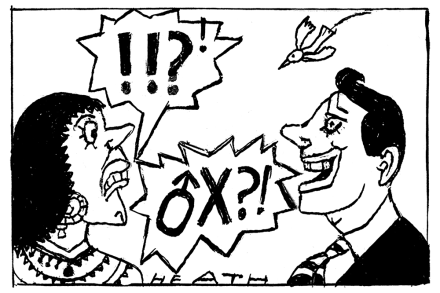
Punctuation is a gendered thing. I’ve been trying to stop myself overusing exclamation marks and it’s been difficult. Exclamation marks are girly because they’re a way of taking the sting out of what you say; they make any pronouncement seem more tentative, less serious. They’re the equivalent of a disarming smile, the marker that says: ‘No offence!’ You add them at the end of a sentence to prevent anyone thinking that you’re being bossy or critical. They’re an economical form of non-confrontation. Women use them far more than men. Almost 20 years ago, a study in Journal of Computer-Mediated Communication found that women used nearly three-quarters of the exclamation marks in electronic messages, but it identified the tic as ‘markers of friendly interaction’.

I’m learning to swim – at 37

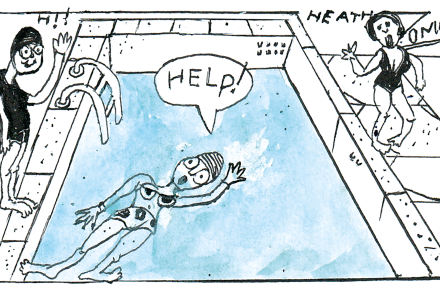
It’s humiliating to admit that at 37, I can’t swim. I’ve spent most of my life embarrassed about not having a skill familiar to most children. It’s not as though I can blame never having had lessons. I did. Each week, with my nine-year-old classmates, I would trundle off to our local leisure centre in Oldham for compulsory classes. I didn’t hate them, but I didn’t exactly enjoy them either. My limbs flailed and I disliked that stench of chlorine. Any skills I picked up by the end of the year atrophied. I found myself returning to the pool with increasing infrequence. My insecurities deepened, turning into an insurmountable, all-encompassing fear of the water.

The power of wax seals has never waned

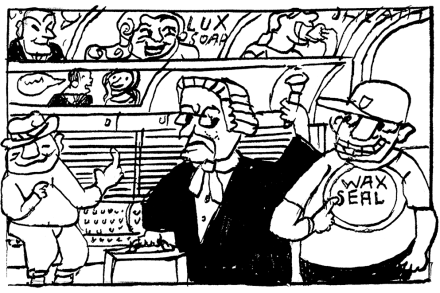
In our electronic age it hardly comes as a surprise that Pat MacFadden’s Cabinet Office intends to do away with the use of seals on most official documents, such as grants of patents to inventors. Old-fashioned wax seals, hanging from the bottom of parchment documents, may be seen as cumbersome, but most sealings nowadays consist of an embossed impression on a thin wax wafer. I used to seal documents myself when I occupied the ancient office of ‘Registrary’ in my Cambridge college. Most memorable was the sale of land the college had owned in Rickmansworth since the 16th century – by now a muddy private road thought too costly to maintain.

The secrets of the Palm House at Kew

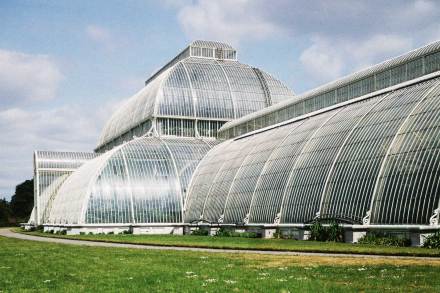
The news that the Palm House at the Royal Botanic Gardens, Kew, will begin a £60 million, five-year renovation in 2027 brought back to me a slew of memories from 1978, when I worked there for several months. The extraordinary fame and innovative nature of this unique Victorian building, with its curvilinear, cruciform shape, designed by Decimus Burton and constructed by Richard Turner, seemed to confer a kind of grandeur and significance on an otherwise pretty lowly and scruffy horticultural student. The special treat was the periodic ‘weekend duty’ when, after turning the enormous iron key in the door at eight o’clock on a weekend morning, for two blissful hours I had the entire building to myself, before the visitors began to wander in.

The wit and beauty of bank notes

William Shakespeare was the first to feature, in 1970. Alan Turing was most recent, in 2021. But the Bank of England is now asking whether anyone else should appear, ever. The Bank’s redesigning our bank notes and wants the public’s thoughts on replacing the famous people who currently grace them with buildings, animals, films, historical events or even food. However the redesign ends up, let’s hope the notes continue to display the wit and beauty they’ve traditionally had. The Churchill fiver, for instance. Look closely and you’ll see that Big Ben stands at 3 p.m., the hour that Winston made his first speech to the Commons as Prime Minister.

I’ve got Donald Trump to thank for my unusual middle name

Never make a drunken bet. At about 3 a.m. one fateful morning, pre-pandemic and several bottles down, a friend and I made a wager on the outcome of the 2020 US election – he for Joe Biden, I for Donald Trump (who, at the time, looked like a sure thing). Then came lockdown, spiralling inflation and unemployment – and the rest is history. This wasn’t a bet for money. Instead, it was stipulated that whoever lost would legally assume a new middle name. Being gamers of a certain vintage, we drew from the Nintendo canon. If my friend had lost, he’d have become James Edward Bowser Price. Should I lose, I would take on the middle name Waluigi. For the uninitiated, Waluigi is a decidedly second- or even third-tier baddie from Mario Kart, who wears dark blue dungarees and a purple hat.

How postcards made Britain

Worse for drink, and lonely in his Hollywood apartment, F. Scott Fitzgerald sat down to write a postcard. He began, ‘How are you?’, an important question as he was planning to send the postcard to himself.  Although he never sent it, perhaps he understood the magical ability of the postcard to cheer us up. They’ve been doing that since the first ones – plain cards bearing a pre-printed stamp – were introduced into Britain in 1870. It took time for the current format as we know it to develop: picture on one side and, on the other, a space for the address and some words. By the Edwardian period, 800 million cards were being sent a year.

The hidden value of notes

‘You asshole,’ was my friend’s cheery greeting when we met in Ludlow. I’d mucked up the time. Reconciled, we walked to his place and on the door was a note he’d left me, scrawled on a card with an image of him mimicking Philip Larkin proudly sitting on a border stone: ‘Just a note that you are an asshole. Call.’ Stuart, a collector of manuscripts, showed me a recent acquisition, a note by Sir Edward Elgar, graced with a self-portrait featuring, my friend is sure, an immodestly large penis. I think it’s his coat tail. We debated the iconography while listening to ‘Nimrod’. Notes are often discarded – who hasn’t inherited, in the bottom of a trolley, a forlorn shopping list? But they have a long history.

Heaven is Angel Delight

I once heard an American complain that, being married to an Englishwoman, he was regularly baffled by the contents of his kitchen cupboards – salad cream, Ambrosia custard and Robinsons barley water. It was ‘like industrial processed food but from the Shire’. It is probably this quality of baffling foreigners that allegedly enabled drug runners to use sachets of Angel Delight – the ultimate English ultra-processed food, surely to be found on many a table in Hobbiton, if only for second dinner – to smuggle cocaine into Indonesia. What could be more natural than an Englishman carrying real artificial flavours in his luggage so he didn’t have to make do with nasi goreng and chicken satay? (When I went to Japan for a year, my luggage was filled with proper tea bags.

A love letter to lonely hearts ads

Published in Britain for at least 330 years, lonely hearts ads are now a rare sight – driven to the brink of extinction by the rise of dating apps. This is a pity. ‘The personals’ were a voyeuristic delight. Even if you weren’t looking for love, you still read them. They could be tragic, comic, or both – like this one placed in an 1832 edition of the Dorset County Chronicle: ‘My wife has been dead 12 months ago, last Shroton Fair. I want a good steady woman for a wife. I do not want a second family. I want a woman to look after the pigs while I am out at work.’ His was a straightforward request, clearly stated. But quite often the ads were keyholes through which whole melodramas might be glimpsed.

The disposable vape ban has changed nothing

I felt a mixture of annoyance and relief when I bought my first non-disposable Elf Bar last weekend, ahead of the disposable vape ban. Relieved, because to all intents and purposes, the new vape is identical to the old one. It looks the same, tastes the same and costs the same. The only difference is that when you give it a tug, a ‘reusable’ pod slides out. Annoyed, because after all the fuss over the ban over the past few years – panicked headlines, furious parents, relentless lobbying – vaping is effectively unchanged. What a waste of time and energy. In the next few days, a third emotion started to creep in: fear. I can’t be the only one to have noticed that the new vapes are just as delicious and, in practice, as disposable as the old ones.

How to survive a Chinese banquet 

When heading to China on a business trip, I was somewhat bemused to be warned about the banquets I would be attending. Do not sit next to the host, I was told. I was to find out why. Learning the rituals of banquets is an essential part of doing business in China. I was treated to at least one every day on a ten-day trip around the country – and sometimes two or three. There is no such thing as a casual business lunch. Any meal will turn into a semi-formal event held in a private room and hosted by the most senior person in the organisation. The meal starts slowly, with a few rather unappealing cold dishes laid out on a spinner that sits on a round table, though initially no one sits down.

Typos are an unintentional delight

Afriend of mine was once delighted to get a job at the Radio Times, where he ‘corrected’ a golfing picture caption to ‘Steve Ballesteros’. Typos, literals or misprints are often committed in an effort to expunge them. Pity the poor subeditor who blanked out the wrong half of the word that is conventionally printed as mother*****r. The harder you try to whack the moles, the faster they come. The other rule is: the bigger, the easier to miss. In 96pt type the front-page headline in the Guardian on 5 November 1980 was: ‘Landside makes it President Reagan.’ That is what optimistic journalists call a ‘self-correcting literal’ – one that readers miss. But there’s the danger.

Should gentlemen wear pearls?

There are few phrases more terrifying than ‘men’s fashion’. It reminds me of yuppies in salmon-coloured jorts on their way to play padel; Hackney mullets; white polo shirts worn by blokes who bathe in Joop!; Olly Murs and the era of the trilby; the Peaky Blinders aesthetic. Men’s fashion has now brought us another monstrosity, the gentleman’s pearl necklace. And no, I’m not talking about the sexual act – get your mind out of the gutter. Timothée Chalamet recently became the first solo man to appear on the front cover of Vogue, where he wore a pearl choker. A pearled-up Harry Styles attended the 2019 Met Gala in what can only be described as a crossover between Sir Walter Raleigh and a divorcée from Croydon.

The conservatism of Thomas the Tank Engine

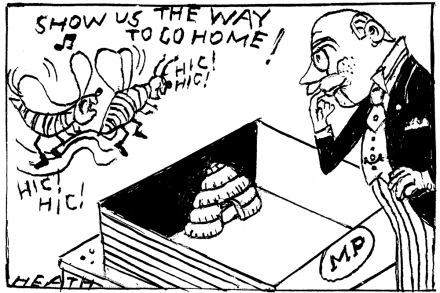
Ringo Starr is mostly known as the second or third best drummer in the Beatles. But for me – as for many children of the past four decades – he will forever be the voice of Thomas the Tank Engine.  This week marks 80 years since the publication of The Three Railway Engines, the first book in the Revd Wilbert Awdry’s Railway Series. The series is based on stories Awdry told to cheer up his son Christopher, who was recovering from measles. More than 40 books followed, alongside the television programme, films, theme parks and toys. Together, the franchise has been valued at more than £1.2 billion. Despite its success, Awdry’s world has been condemned as authoritarian and reactionary.

The art of a great pub quiz

‘What’s the capital of Albania?’ The correct answer is, of course: ‘Who cares?’ If you’re at a quiz and this is one of the questions, find another quiz. Either you know it’s Tirana or you don’t, and in neither case is there any satisfaction. A really good quiz question is one you can work out. For instance: ‘Which major UK retailer has the same name as Odysseus’s dog in Greek mythology?’ Even if you don’t know your Classics, you can take a mental trip up and down the high street until you arrive at Argos. Or, in the case of one team I encountered, FatFace. A good quizmaster should also avoid themed rounds. Saying ‘and now – geography’ will produce a groan from at least a quarter of the crowd.

My battle to avoid boredom

Four days ago I was so bored that I considered starting a terrorist groupuscule. I had no demands, no ideology, no manifesto. I just wanted directionless chaos. I even got as far as ChatGPTing ‘How to start a violent movement’ before realising all movements require meetings. And meetings are dull. You may think I’m exaggerating. But the truth is, I have a lifelong fear of boredom. To put it another way, I can handle peril, I can handle regret, I can handle doing lines of Californian coke so long they risk a heart attack. What I can’t handle is monotony. For example, in my early thirties I visited a warzone in southern Lebanon to escape the tedium of an otherwise routine travel assignment.

Admit it: Creme Eggs are vile

Every Easter, the Creme Egg dominates supermarket shelves. It is, Cadbury’s marketing department loves to remind us, ‘the nation’s favourite Easter egg’. Its popularity sometimes verges on cultlike. In 2016, when Cadbury opened a pop-up café in Soho called Crème de la Creme Egg Café, people queued down the street to eat something they could have bought at any old corner shop. In 2019, a mega-fan from Liverpool had a Creme Egg tattooed on her hip. I have never understood the love for something so mediocre. Creme Eggs are a cheerless chocolate. What I find perplexing is why anyone would find a confectionary that resembles the albumen and yolk of a soft-boiled egg appealing.

Why I said no to marrying my cousin

There’s a joke that does the rounds about a Pakistani couple who get a divorce. After their union is dissolved, one of them says to the other: ‘Well, at least we’re still cousins!’ I feel slightly guilty whenever I laugh, yet there is some truth to it. I remember at my secondary school how Pakistani girls would, shortly after they’d completed their GCSEs, find themselves married off to a cousin from ‘back home’ just so their husbands could get a British passport and send money back to their families.  I was relieved my family never brought up the subject with me at that age. And then one day, to my horror, they did. I would have been 19 or 20, when my mother told me it was my late grandmother’s wish for me to marry her nephew (my second cousin) in Kashmir.

The truth about ninjas

One of my favourite scenes in Kill Bill, Quentin Tarantino’s black comedy martial arts film, is the meeting of Beatrix ‘the Bride’ Kiddo, played by Uma Thurman, with sword-maker Hattori Hanzo at his scruffy sushi bar in Okinawa. Hanzo: What do you want with Hattori Hanzo? Kiddo: I need Japanese steel. Hanzo: Why do you need Japanese steel? Kiddo: I have vermin to kill. Hanzo: You must have big rats, to need Hattori Hanzo’s steel. Tarantino filched his sword-maker’s name from history. Hattori Hanzo was a real ninja (or rather, the historically correct word shinobi). Born in 1542, he spent his life in the service of the shogun Tokugawa Ieyasu and compiled the manual Shinobi Hiden (Legends of Ninja Secrets).