Mary Wellesley

Peter Hitchens, Lionel Shriver, Mary Wellesley and more

From our UK edition

31 min listen

On this week's episode, Peter Hitchens remembers a Christmas in Bucharest, Lionel Shriver says people don't care about Ukraine anymore, Ed West wonders if you can ‘meme’ yourself into believing in God, Mary Wellesley reads her ‘Notes On’ St Nicholas, and Melissa Kite says she had to move to Ireland to escape the EU‘s rules.

‘Sex trafficking, cannibalism and murder’: St Nicholas wasn’t always so jolly

From our UK edition

For a heartwarming Christmas tale, look no further than the medieval legend of St Nicholas – a story of sex-trafficking, cannibalism and murder. The historical Nicholas is a hazy figure whose scant biography was embroidered in the Middle Ages. The 12th-century Norman poet Wace wrote a colourful account of his life. It opens with the story that has informed the modern Santa Claus. Nicholas, we are told, took pity on a man who had once been wealthy but had fallen into poverty. The man had three daughters. Things were desperate – the man concluded that the girls had to be sold into sexual slavery. Nicholas visited the man’s house on three consecutive nights and each night threw gold in through an open window.

Matthew Lynn, Will Knowland and Mary Wellesley

From our UK edition

18 min listen

On this week's episode, author and financial columnist Matthew Lynn begins by arguing that the EU has already botched its Covid vaccine rollout. (00:25) Then, Will Knowland, formerly an English teacher at Eton, explains why he was dismissed from the school and criticises its 'stifling monoculture'. (08:20) And finally, Mary Wellesley reflects on the lives of 13th-century hermits.

How to be a hermit

From our UK edition

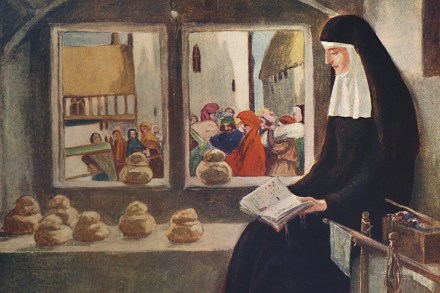
At a time when so many of us are experiencing some measure of isolation, it is hard to fathom the choice to live in extreme confinement in the middle of the urban bustle. But hermits were once unremarkable features of England’s cities. The 13th-century traveller entering London from the north, at Cripplegate, would have walked within yards of a hermit’s cell. There were also cells at Aldgate, Bishops-gate, Temple Bar and Cornhill, as well as many others beyond the city limits. These hermits — more properly called anchorites or anchoresses — permanently enclosed themselves in cells attached to churches in order to live a life of prayer and contemplation. (The word comes from the Greek anachorein, meaning ‘to retire or retreat’.