Notes on...

The hellish return of the mullet

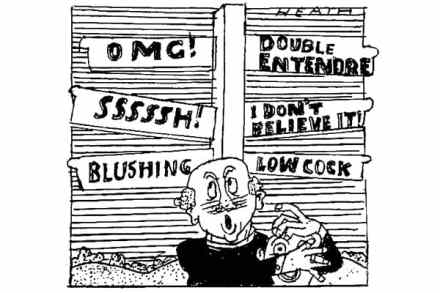
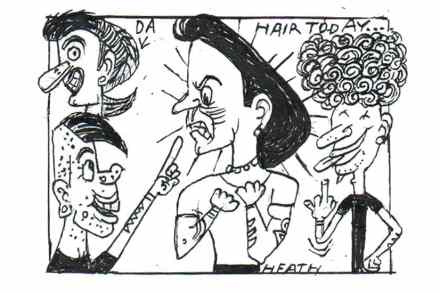
The mullet is back in fashion, which is proof that true evil never dies. What’s more, the trend is being driven by public-school boys. I only noticed its return last month, when I attended a local ball in East Sussex frequented by the type of people you’d expect at a local ball in East Sussex. But this year was different. There were 17-year-olds with mullets everywhere. ‘Why? What does it all mean?’ I asked anyone who would listen. We were all baffled. The mullet has been trending on Instagram and TikTok, supposedly a consequence of 2020’s boredom-induced madness. Rihanna sported a mullet recently as did Cara Delevingne in last year’s Savage X Fenty fashion show.
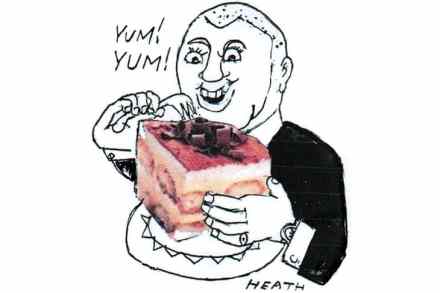
How to get drunk on tiramisu

You can get drunk on tiramisu. I have done it. It takes two portions at least. You drink (I mean eat) the Marsala wine and the rum — and then must be escorted, tenderly, to the bus stop. I don’t usually drink alcohol. If I did, I would smash up restaurants. But I do eat tiramisu. You have to eat a lot of tiramisu to be hospitalised. That is my reasoning. Tiramisu means ‘lift me up’. Like Caesar salad and the world, it has a detailed creation myth with its own pretenders, factions, expert witnesses and conspiracy theories. There is a website, the Tiramisu Academy, devoted to the mystery of its origin. (‘Since 2011 we have been transmitting the culture of tiramisu.

In defence of bagpipes

Many people love to hate bagpipes. Everyone from William Shakespeare to Alfred Hitchcock has held them in contempt. For some, they are almost a form of punishment. Last week, a frustrated motorist blasted bagpipe music in the faces of Insulate Britain protestors on the M25 before he was stopped by police. Most pipers will tell you they are sick of hearing that the definition of a gentleman is someone who knows how to play the bagpipes and doesn’t. Equally, someone once told me the joke that the bagpipes are an ingenious breathalyser test: you blow into the bag and if the noise that comes out doesn’t want to make you kill yourself, you aren’t drunk enough. Despite bagpipes’ supposed unpopularity, though, bagpiping is in its ascendancy in Britain.

How the pumpkin hijacked Halloween

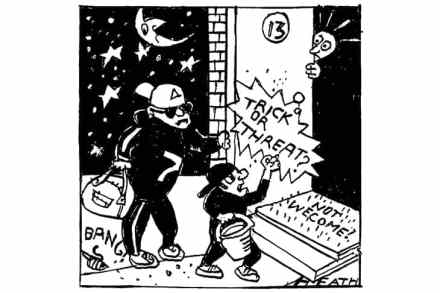
You see them everywhere in vast orange mounds: pumpkins, piles of pumpkins, large enough to be turned into a coach in Whole Foods, a bargain 65p in M&S. Halloween, in terms of retail, means orange for pumpkin and black for witches. Round our way, a pumpkin outside the front door means that the household is receptive to tots and teenagers coming round in costume looking for sweets. Pah! When I was small in Ireland, there was none of this pumpkin lark. We never saw pumpkins, except in Cinderella, where it was the exotic element of the story. Pumpkins are a visible symbol of what happened to All Hallows’ Eve, when the celebrations for the feast of ghosts and divination were taken to America with Irish emigrants… and then somehow came back again.

The simple pleasures of sloe gin

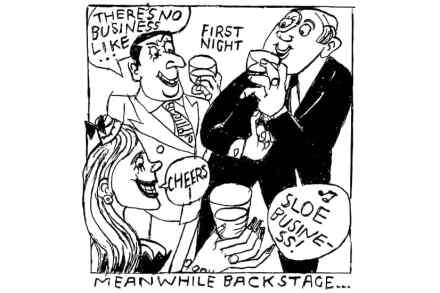
The gin craze of recent years has reached a scale that would have horrified Hogarth. You can now buy strawberry, raspberry, rhubarb, blueberry and lime gins in supermarkets. For me, though, there is only one flavoured variety worth bothering with: sloe gin. Where the rest are novelties, this is a staple dating back to the early 19th century. Sloe gin is everywhere — Buckingham Palace even launched a line this year. But it is the easiest thing to make at home and there’s something very pleasurable about the ritual of doing so. Folk wisdom suggests you should go foraging for sloes in the days after the first frosts — by which point they won’t ripen further but haven’t yet dried up — which means from mid-late October through November.

What makes a conker champion?

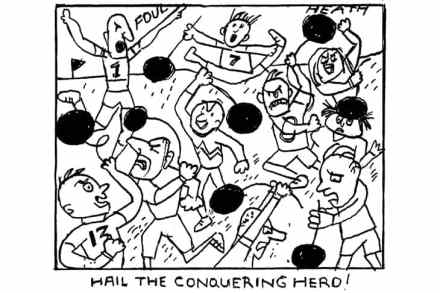
Last weekend, for the 54th time, hundreds of competitors met to compete for the title of world conker champion in the village of Southwick in Northamptonshire. King Conker was there to oversee the proceedings. Jasmine Tetley beat the men’s champion Ady Hurrell in the Grand Final to retain the title she won in 2019. There are several different versions of the game of conkers, but essentially it involves ‘smashing’ your opponent’s nut before they break yours. At the world championships, competitors have to draw a conker blind from a bag for each match, and then have three swings at their adversary’s conker, before receiving three.

Lateral thinking: the beauty of bungalows

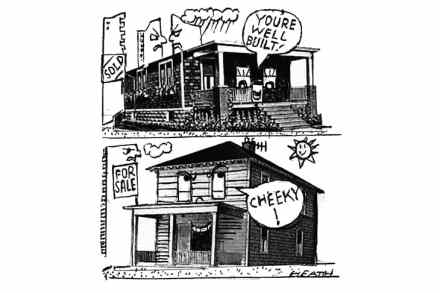
We keep hearing about the importance of levelling up. Architects tasked with the responsibility of building new homes, however, might want to consider levelling across. With land prices at a premium, bungalows may not appear to be the most prudent use of limited space but lateral living has plenty to recommend it. Originally built for early European settlers in India, the first UK bungalows — from the Hindi word bangla, meaning ‘belonging to Bengal’ — appeared in Westgate on the north coast of Kent in 1869. These early examples tended to be austere holiday homes constructed from prefabricated corrugated iron. Over in the US, grander structures became increasingly popular with the Arts and Crafts movement of the early 20th century.

The cult of Irn Bru

There aren’t many countries where Coca-Cola isn’t the most popular drink. Scotland is one of them. And unlike some of the others — such as North Korea or Cuba — it’s not because Coke isn’t sold. It’s because of the popularity of Irn Bru, Scotland’s ‘other national drink’. Few soft drinks have such a devoted following as Irn Bru. It has inspired tattoos, poetry (‘a drop ae yer liquid gold’) and — in true Scottish style — its own batter. Why is it so popular? It helps that it is an excellent hangover cure, but it has something else going for it — a sense of fun. Irn Bru is known for pushing things a little too far in advertising campaigns.

The joy of rude place names

Last week a gentle Norfolk waterway got into trouble with Facebook. The problem was its name — Cockshoot Dyke. Facebook’s relentless algorithms blocked posts that mentioned the dyke and issued notifications warning about ‘sexual content’ and ‘violence’. The name of this stretch of water isn’t, of course, actually rude at all. It relates to a fowl-hunting term for a broad glade through which woodcock might fly. The joy of supposedly ‘rude’ place names lies in their innocence. The village of Upperthong, near Huddersfield, is named after the Old English words uferra (upper) and thwang (a narrow strip of land), while Twatt in Orkney comes from the Old Norse þveit, meaning ‘small piece of land’.

The flaw in vaccine passports

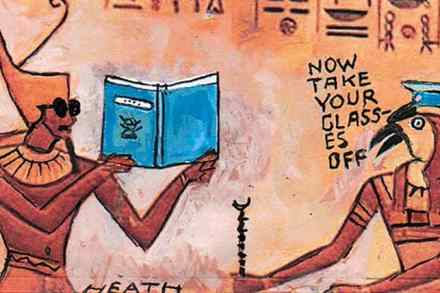
The Egyptologist Sir J. Gardner Wilkinson interprets drawings in a tomb in Thebes as persons queuing up to have passports issued to them in 1500 BC. This was a millennium before Nehemiah asked King Artaxerxes in the Bible for ‘letters to be given me to the governors of the province beyond the river that they may let me pass through until I come to Judah’. How did we get from the roll of papyrus to the technically complex booklet we use today? The basic components of a passport are facilitation and control — enabling the holder to travel while dictating what they can do. William the Conqueror would refuse his King’s Licence to persons who owed him feudal dues or if they were his enemy.

Our fascination with treehouses has deep roots

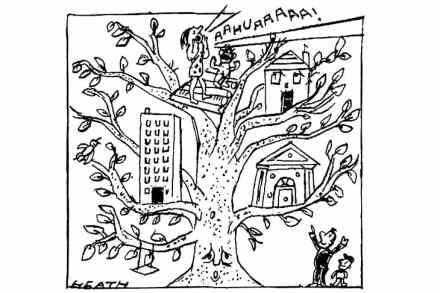
You can’t (and probably shouldn’t) design a treehouse. Treehouses should grow organically, in every sense: they must be made of wood, obviously — one definition of a treehouse is that it is a tree holding its dead friend — and the footings for the platform must be the knots or branches that are footholds when climbing the tree. Besides, it is only when you are halfway through building that you can work out where you need to fit round branches and add noggins — unless you build it between the trunks of two separate trees, or use some sort of 3D mapping software, both of which sound very much like cheating. So there wasn’t any masterplan behind my son’s treehouse.

The daring young man who gave his name to the leotard

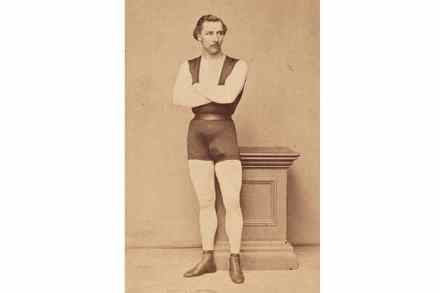
Jules Léotard was blessed in his name. It might have been quite different had he been called, say, Jules Droupé. As it was, his family name was lithe, elongated, taut. It was a name with stretch. Léotard was born in Toulouse in 1838, the son of a gymnastics teacher. The young Jules might have become a lawyer. He passed his legal exams, but twisting words wasn’t enough. He wanted to be twisting, turning, falling, flying. At 18, he began to practise with trapeze bars, ropes and rings over a swimming pool. He joined the Cirque Napoléon, and on 12 November 1859 performed its first flying trapeze routine.

Save our eels

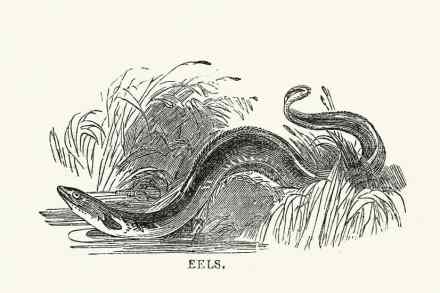
The migration of European eels is one of the miracles of nature. They start life in the great deeps of the Sargasso sea in the north-west of the Atlantic ocean as tiny, flat creatures, like almost transparent willow leaves, which drift 3,700 miles on the Gulf Stream to Britain and mainland Europe. The journey can take more than three years. When they approach Europe they make their first metamorphosis into ‘glass eels’: thin rods, shorter than a finger, which are also virtually transparent. These in turn have their own metamorphosis into elvers, which are essentially tiny eels. They swim upstream, close to the bank to avoid the river’s current, and slowly change into ‘yellow eels’.

My strange night in a sensory deprivation tank

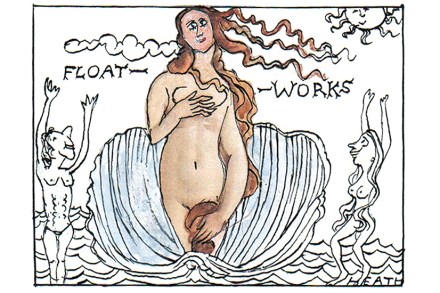
Hidden below St George’s Wharf in Vauxhall, down the road from a now defunct gay sauna, is Floatworks, a wellness centre that offers ‘floatation therapy’. Sensory deprivation tanks can be found in most British cities — in bohemian towns like Bristol and Brighton, but also in Birmingham and Belfast. The concept is simple enough: people are locked in an unlit pod and lie there with nothing but their thoughts. Some people report hallucinations, others a deep sense of calm. Wally Funk, the 82-year-old who was blasted into low earth orbit last month aboard Jeff Bezos’s private rocket, endured ten hours of sensory deprivation when she trained as an astronaut.

Will Sizewell C see off the avocet?

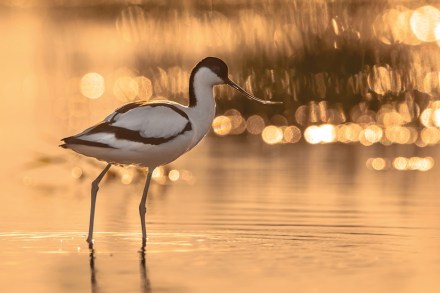
There are many reasons why birds disappear — and why they return. The avocet, however, is probably the only one that owes its resurgence to the Nazis. After a 100-year hiatus in Britain, this elegant black and white wader reappeared after the second world war. Four pairs were found in Minsmere nature reserve and another four in Havergate Island, both along the Suffolk coast. These areas had been flooded to prevent a German invasion, making them ideal nesting grounds. The avocet had taken flight from parts of Holland damaged by the Nazis, travelling 100 miles or so here across the North Sea. Amid headlines about the Cold War and the H-bomb, the news of returning avocets was greeted with much fanfare.

The awe-inspiring appeal of aquariums

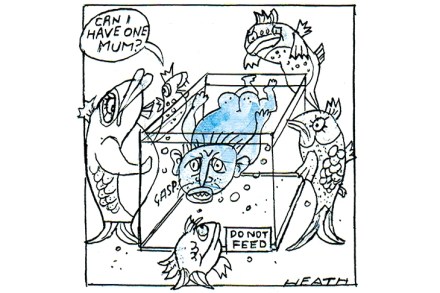
Fish tanks were probably first conceived in the distant past by the Chinese, but in many respects, aquariums are a distinctly British phenomenon. The first public one opened at Regent’s Park Zoological Gardens in 1853. The word itself seems to have been first used in Philip Gosse’s 1854 book The Aquarium: An Unveiling of the Wonders of the Deep Sea. And the glass-fronted version was patented by Edward Edwards in 1858. All that Victorian ingenuity definitely benefitted our underwater cousins. It’s hard to determine if keeping fish is trendy. On the one hand, there’s not much to be said for goldfish in a bowl; on the other, a James Bond-style mega aquarium with sharks sends a thrill down the spine.

Why are bidets the butt of so many jokes?

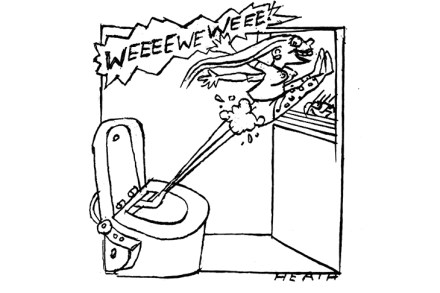
In December 2019, and in keeping with our tradition of perverse birthday gifts, some friends gave me a bidet device. The contraption was a simple one. Fastened on to the back of the lavatory bowl beneath the rim of the seat, it plugged into the flexible hose that filled the cistern, thus enabling the user to administer a cool jet of water, of variable angle and intensity, via the control panel at their right hand. Back then, like most Britons, I saw bidets as a humorous oddity. Then, a few months later, coronavirus reached our shores. Hygiene became a matter of life and death, and supermarkets sold out of loo paper. In these unlikely circumstances, our unwanted plug-and-play bidet became a welcome member of the household.

The curious mythology of the Gosforth Cross

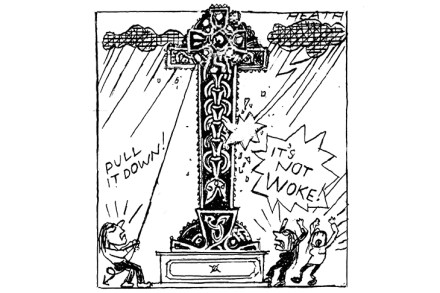
In the small Cumbrian village of Gosforth, in the graveyard of St Mary’s Church, there is a sandstone cross which has stood there since the 10th century. It’s tall, nearly 15 feet, which immediately distinguishes it from any other sculpted stone cross you might find in churchyards across Britain. Up close, it’s even more unusual. The imagery is weird: men wrestle with giant monsters that snake up the cross’s shaft. The depictions weren’t identified until 1883 when William Slater Calverley, a vicar and amateur antiquarian, realised that the cross doesn’t show Christian subjects at all. It shows scenes from Ragnarök, the end of the world in Viking mythology.

The politics of eating lobster

Lobsters like to live in gullies on the sea floor, or under sand, and I understand how they feel. But you can’t hide from politics. An amendment to the Animal Welfare (Sentience) Bill will make it illegal to post shrink-wrapped lobsters alive, or boil them alive, which turns them from blue to Father Christmas scarlet. In Switzerland, Norway and New Zealand it is already illegal to boil them. It is considered kinder to freeze them or pierce them or shoot them with an expensive lobster-stunning gun which you can probably buy in Hampstead Village. And then boil them. Lobsters were once food for the destitute near the sea, so plentiful they would wash ashore in piles. Then the trains came, and it was possible to transport them inland. The price shot up.

I was a skateboarding pioneer

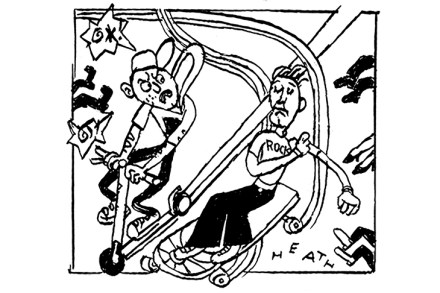
I was 12 when I got into skateboarding: the same age as Sky Brown, the youngest member of Team GB’s skateboarding squad at the Tokyo Olympics. And unlike most old fogies, I’m pleased that boarding has finally been recognised as an Olympic sport. When I took it up, I was constantly being told that it was a passing fad and would soon go the way of the hula hoop, the space hopper and the pogo stick. But I confidently told the doubters it was here to stay and it turns out I was right. I made my first skateboard by pulling apart some roller-skates and nailing the bits to a piece of wood. The first time I tried it out I fell off and cut my toe so badly I had to have stitches.