Notes on...

How to mend (almost) anything

‘Sides to middle’, that’s the cry. When your foot goes through the flat sheet in the night, there’s only one thing for it: scissors down the centre, then sew it edge to edge. Good as new – for as long as your stitches hold up. If you’ve paid for Egyptian cotton, you cannot cut your linen into dusters the minute the thread count wears thin. Besides, call it eco-activism, call it penny--pinching, mending things is fun. From time to time, when my husband is washing up, a plate will crumble like a biscuit in his hands. Seeing his ‘it wasn’t me’ expression, I’ll tell him that the plate, glued and glued again, was beyond salvation. Then I’ll glue it together again.

The politics of bowls clubs

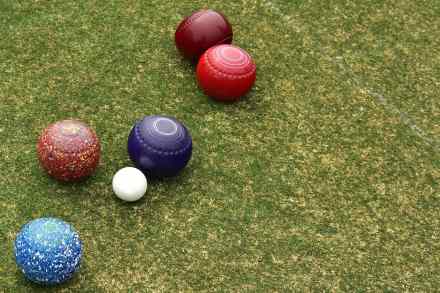
Bowls has a reputation as a sedate pastime, but it can be as fiercely competitive as any other sport. It can even get rowdy. At the Edinburgh cup final in 2012, a young player, angry at losing the match, stripped down to his boxers in protest. When committee members from his team tried to restrain him, he headbutted the club secretary. Bowls players have always taken the sport very seriously. According to popular legend, Sir Francis Drake was playing bowls at Plymouth Hoe when the Spanish Armada came into view off the headland. He insisted on finishing the game. Battle could wait, bowls couldn’t. The object of the game is simple: get your bowls closer to the ‘jack’ than your opponent. That said, the sport is more sophisticated than the French variation, boules.

Why Kent is being bulldozed by buffalo

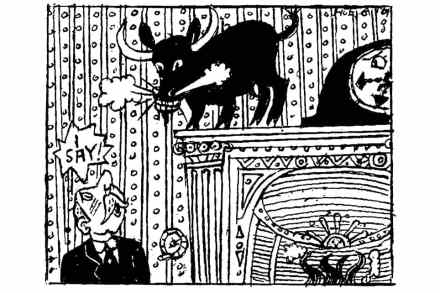
Buffalo are now living in the fens of Kent. Why – have we slipped into the metaverse of Lewis Carroll? ‘He thought he saw a buffalo/ Upon the chimney-piece.’ But these are not African buffalo, those fierce beasts that recently charged but narrowly missed killing my wife at home in Kenya. No, these are the more docile water buffalo and so this story isn’t nonsense. ‘He looked again, and found it was/ His Sister’s Husband’s Niece.’ Clever scientists on sabbatical from modelling pandemics and climate change have introduced four water buffalo to the Ham Fen nature reserve, near Sandwich. These wetlands become clogged with silt, causing floods, and the idea is that the buffalo, with their huge bodies, will bulldoze channels through the mud.

The romance and rebellion of an Iranian picnic

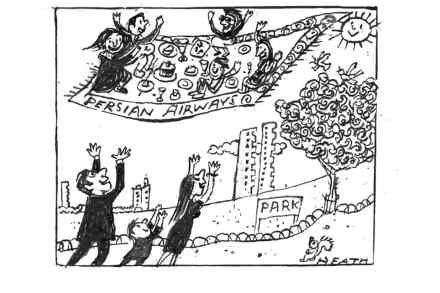
Iranians adore a picnic. During the country’s most ancient festival, Nowruz, the Persian new year, they brandish baskets of food as they swarm into parks and gardens to celebrate Sizdah-bedar, the 13th and final day of the Nowruz celebrations and the coming of spring. In Britain, it’s only just getting warm enough to enjoy a khoresht stew or doogh, a yoghurt drink that tastes a little like Indian lassi. But venture out to Hyde Park and you’ll see groups of young and old Iranians sitting in the pale springtime sun. The Persian picnic is generally a family affair. Pretty much every Iranian has fond memories of Nowruz meals; eating fragrant rice and meats with kindly aunts.

Getting a fringe is always a cry for help

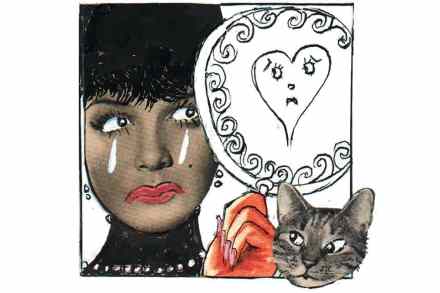
Fringes have in recent years been considered attractive – Bettie Page, Elizabeth Taylor, Jane Birkin, Kate Moss – so it is easy to forget the period we have been living through is something of an aberration. For most of history, cutting a fringe has tended to mark a woman out as odd, mad or suspicious. In the 1600s, conservative churches thought a fringe indicated you were on your way to committing a mortal sin. This was true even as late as the 1920s, which is why the fringe was key to the rebellious flapper bob. There are stories of parents suing hairdressers for giving their daughter this haircut in case it damaged her chances of marriage. Those old fringe politics are back. Having a fringe nowadays says one of three things: break-up, breakdown or mutiny.

Thumbs up: why hitchhiking is the best way to travel

When I first saw Vitaly I thought he was drunk. I was standing outside a petrol station near Fulda, in central Germany, when he pulled up in a battered Saab. Mud covered the entire left side of his car and the rear bumper hung like a drooping bottom lip. His hair was greasy. He looked as if he hadn’t slept in weeks. Only later did I discover that he had just fled besieged Kyiv. He was now driving to Bern in Switzerland, where he hoped to find work. I was heading to Morzine for a family skiing holiday. Vitaly offered me a lift. My decision to hitchhike the 428-mile journey from Fulda to Morzine had been in part to test whether it was possible. I hitchhiked across the Balkans and then the Caucasus when I was at university.

Why violets come into their own at Easter

The English Rock Garden, the magnum opus of the great gardening writer, horticulturist and plant collector Reginald Farrer, is an indispensable A to Z guide to alpine flowers. When he finally reaches V, Farrer writes: ‘Viola brings this alphabet to the last great dragon in its path.’ But rather than offering fire-breathing terror, he presents a family of flowers containing both beauties and ‘dull and dowdy species’. There are between 400 and 500 species in the viola family. The sweet violet, while lacking the dark mystery and beauty of its cousin Bowles black, was associated with Aphrodite and became a symbol of both Athens and fertility, which evolved into a Scots tradition of violets being presented to brides on their wedding day in the Athens of the North.

My love affair with the Wolseley

I was sitting alone at a small table in the Wolseley, Piccadilly, waiting for my supper and feeling a sense of absolute contentment. The evening buzz in that theatre-set of a restaurant has always been slightly more subdued than the lunchtime one. The lighting is lower; there are candles, there is calm. On my right, a duke dined with his family; on the left, two celebrated actors next to a young rising star. There were elderly couples from New York who believed in dressing for dinner in glitter and diamonds; there were discreet lovers, old friends. The waiter was perfectly attentive – not too little, nor, importantly, too much. Wolseley waiters do not gush. My smoked salmon arrived, with thin brown bread and butter, half a lemon wrapped in gauze. I sighed.

Crunch time: how to make the perfect crisp sandwich

A crisp sandwich is a private and personal endeavour. In my experience (and I have considerable experience in this particular area) it is usually eaten alone in the kitchen, often over the sink. It is deliberately unsophisticated, the ultimate fast food: simple, salty, satisfying. It is a snack that speaks of the person you are, rather than the person you want to be. I firmly believe that no food should be a guilty pleasure, but I’ll concede that crisps sandwiched between two heavily buttered slices of bread does not scream nutritional balance.

How Mother’s Day became big business

As ever, the Romans got there first. Their version of Mothering Sunday or Mother’s Day was the feast of Juno Lucina, the patroness of childbirth, which happened on the first day of the year, 1 March. Roman mothers wore their hair down and their tunics loose. Their husbands and daughters gave them gifts. It was also one of the few days when slaves got time off and were, for once, waited on. Obvious parallels, then. Fast forward 1,500 years, and Mothering Sunday is a thing, but the origins aren’t entirely clear. Was it connected with the medieval custom whereby parish churches sent parishioners to their mother church or cathedral?

In defence of slugs: gastropods are seriously misunderstood

Slugs and snails are the bane of every gardener who tries to grow strawberries, leafy and tuberous vegetables, flowering bulbs and soft-shooted perennials. But Britain’s gastropods are ‘misunderstood’, according to Dr Andrew Salisbury, principal entomologist at the Royal Horticultural Society, which announced this month that it will no longer class slugs and snails as ‘pests’. That is because – along with earthworms, springtails and woodlice – they clear up dead plant and animal matter in the garden and thus balance their perfidy with benevolence. I am no slug-hater. I find them more fascinating than repellent and am especially intrigued by the great grey slug and its un-usual mating habits (look it up).

The cult of the convertible

The earliest cars were technically convertibles because the technology to fit a roof did not exist. Now the dedicated retractable hardtop roof convertible is a century old – invented in 1922 and transported to America after the war because GIs loved them. These are cars of pleasure, and we know it: less than 2 per cent of cars sold are convertibles, which seems to me insane. The early ones – the MG Midget, the Triumph Roadster, the Jaguar XK150 – are the most beautiful, but they are not as safe as a Volvo. What is? I borrowed a pink Morgan LMV6 Roadster once, and my father drove me down the A4 from South Kensington to Richmond Park, muttering about death all the way. I borrowed it again and, on the way back to London, the man who delivered it crashed.

The prickly truth: hedgehogs face a struggle to survive

No wild animal is closer to the hearts of the British than the hedgehog. In poll after poll, it has been voted our favourite mammal. This is hardly surprising. Hedgehogs naturally inspire affection. Mrs Tiggy-Winkle, the companionable washerwoman created by Beatrix Potter, is only the most celebrated of a whole host of them who trot and snuffle through our national imagination. They are familiar to us in a way that few other wild creatures are. They can be met in fields and gardens, in hedgerows and parks. To see one is to feel the tug of a fascination with the natural world as a whole. In the words of Hugh Warwick, the naturalist who serves hedgehogs as their great contemporary champion: ‘These are precious creatures to be treated with great respect.

How sausage dogs were weaponised in the war

Short of leg but big on personality, the eccentrically shaped dachshund is one of Britain’s most beloved pets. Originally known as the ‘dachs kriecher’ (badger crawler) or ‘dachs krieger’ (badger warrior), dachshunds as we know them today can be traced back to 15th-century Germany where they were bred primarily for hunting. With extended, sausage-shaped body, elongated snout and long whippy tail, the scent hound’s ability to flush out badgers and other smaller mammals became a highly prized trait. Sadly, these feisty creatures haven’t always been held in such high regard. During the first world war, ‘wiener dogs’ featured in anti-German propaganda.

The rise and fall of whistling

There was, at least until recently, an old sign round the back of the Savoy banning whistling by staff or tradesmen. Whistling, it seems, can wind up some people. Winston Churchill hated the practice. Posters were put up in the War Rooms forbidding it. One day, on his way to Downing Street, he heard a paperboy whistling and sharply told him to stop it at once. The boy had some spirit and argued back: ‘Why should I, you can shut your ears can’t you?’ Churchill found this amusing — even if he never learned to love whistling. If he’d lived in my house, he’d have seen it a little differently. When I was growing up in the 1960s and 1970s, men — and it generally was men — seemed always to be whistling.

The controversial side of carp fishing

All anglers are obsessive, but carp fishers are the most single-minded of all. They think nothing of spending weeks on the banks of a muddy lake or gravel pit, lines and breath baited, waiting for a bite. Ask an aficionado what motivates him and he’ll speak — with an intensity that sounds a lot like love — about the carp’s unrivalled cunning and fighting ability: its coquettish, crafty takes and its long, blistering runs. Most of all he will talk in awe about the sheer, meaty heft of these fish, of their unparalleled weight and girth. Carp fishing is a particularly British obsession, which is surprising, as the species is a relative newcomer to our waters.

The cult of the daffodil

Spring is the season of supermarket daffodils. At a pound a bunch, you can deck out your home like Elton John and still have change from a fiver. From January until April, daffodils burst from village greens and quiet churchyards. The wild daffodil found across Britain is the Narcissus pseudonarcissus, known also as the ‘Lent lily’. Native to northern Europe, the hardy bulbs followed the British empire around the world and can now be found in Canada, New Zealand, Australia and the Falklands. There are thought to be 27,000 different cultivars of daffodil bred from 36 different species. Most are yellow but there are white varieties and a few with splashes of pink. Generally the flowers are a trumpet-like corona encircled by petals.

The rise and fall of Britain’s fur trade

We in Britain have long been much more squeamish about fur than other Europeans. I still well remember the snide comments I would get even in the 1980s when my German mother would collect me from my London school in the fur coats she insisted on wearing. The ocelot number especially raised eyebrows. The UK’s domestic retail market for fur has always been small. Britain’s half--dozen fur farms were closed when Tony Blair’s government legislated to ban them in 2000. As it was, British manufacturing could never compete with Italy on quality, or with Hong Kong, and then China itself, on price. But the wholesale trade has been a very different matter.

The secrets of chicken soup

Catherine Chicken is sickly. She has swollen up like a barrage balloon with an evil face and dinosaur feet. She lumbers about. It is peritonitis, the vet says, after I make my husband drive her to the animal hospital in Falmouth. She will not recover without an implant that prevents her ovulating. Chickens are ever in danger of reproduction, like human women, and that is why I find them so touching. They are feathered paradigms. (There is a novel on this called Brood.) They counsel implants on the chicken welfare site — they counsel deification on the chicken welfare site — but it’s £250 for a chicken that cost less than a tenner, and my husband is from a farming family and says he couldn’t live with the shame.

The bittersweet truth about homemade marmalade

The spectrum of ‘bestowing homemade gifts on one’s friends’ ranges from giving to foisting. Pure giving is when you make something by hand especially for a particular person. Foisting is when you don’t let a friend leave your house before pressing a copy of your privately published memoir into their hands. Where does homemade marmalade come on this spectrum? I think it comes nearer the benign ‘giving’ end than homemade jam, which is at the ‘foisting’ end, along with homemade sloe gin and nettle ale. It’s the difference between treasure-giving and glut-giving.