More from Books

The indomitable Pamela Anderson sees the best in everything

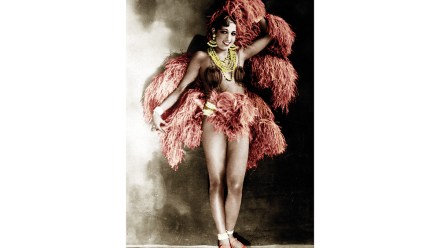
Pamela Anderson’s life story contains several showbiz-beauty clichés: an abusive childhood, accidental fame and many marriages. Unlike Marilyn Monroe, Lana Turner or Rita Hayworth, she didn’t grow up with the Hollywood studio system, so there were no brilliant writers and directors laid on to make her acting career memorable. But the absence of this structure – in which women were deemed past it at 35 – also meant that she could do much as she pleased at an age when those earlier sex symbols were distraught, depressed or dead. Ten years ago she was branded ‘delinquent’ for running up $493,000 in unpaid taxes and moving to a trailer park in Malibu.

Doctor in despair: Tell Her Everything, by Mirza Waheed, reviewed

‘No one dies without regrets,’ says Doctor Kaiser Shah in Mirza Waheed’s melancholy third novel, an exploration of guilt through the eyes of a doctor haunted by his past, which won the Hindu Prize for Fiction 2019 and was nominated for two further prizes in Asia. While both Waheed’s previous novels – The Collaborator, a Guardian First Book Award finalist, and The Book of Gold Leaves – deal with the turbulent recent history of his homeland, Kashmir, Tell Her Everything tackles the moral cost of a professional choice that compromises personal ethics. Set between India, London and an unnamed oil monarchy, it tells the story of the regretful doctor, now retired in London and living in a luxurious Thameside flat.

Failing to denigrate Britain’s entire colonial record has become a heinous crime

This book has already had an interesting life, and most readers will by now know something of its history. For any who don’t, Nigel Biggar’s Colonialism was originally submitted for publication to Bloomsbury and was warmly received by them; but two months later it was indefinitely delayed, because (as the ‘email from the very top’ went) ‘public feeling’ was ‘not currently favourable’. Biggar writes in his introduction: I asked them to specify which ‘public feeling’ they were referring to, and what would have to change to make conditions favourable to publication, but they declined to give answers. Instead, they informed me that they were cancelling our contract. Happily, William Collins has rescued what Bloomsbury chose to jettison.

The death of popular music in Cambodia

The musical revolution of the 1960s reverberated widely. In many countries it was given added impetus by decolonisation. Newly independent nations adopted rock and roll, usually infused with local traditions, as a signal of modernity. From Addis Ababa to Dakar to São Paulo, officials and businessmen jived and swung and caroused in nightclubs, serenaded by bands with some measure of official sponsorship, if not directly employed by the government itself. Some of these stories ended unhappily. The Brazilian junta dispatched Tropicália musicians into exile. When the Derg seized power in Ethiopia, Swinging Addis came to a sudden halt. The ligueurs in Benin forced Angélique Kidjo and others to flee the country. But the most horrific tale of all was Cambodia.

Is human migration really a normal activity?

Halfway up the high street in Totnes, a small town on the river Dart in Devon, a modest stone is set into the edge of the road. It claims to mark the point at which Brutus, legendary founder of Britain, first set foot on this island. The grandson of the equally legendary Trojan hero Aeneas, Brutus was said to have been born in Rome; but, exiled from his birthplace, he travelled western Europe before finally settling here. Most of us carry with us a little Neanderthal DNA. We are all mongrels of a sort That the legend of Brutus was a ninth-century fantasy concocted by a Welsh monk named Nennius need not concern us.

A small house in Dublin: The Springs of Affection, by Maeve Brennan, reviewed

A man ignores his wedding anniversary and is so sickened by the bowl of flowers his wife has placed by his bed that he drops them and breaks the precious cut glass. Another man is so enraged by seeing his wife close the kitchen door when he comes in from work that he enters a state of fevered reverie where he concludes ‘nothing in his life made sense’. In a different story, the mess and argument caused by an improperly laid fire makes Mrs Derdon leave the house, sure that she ‘was not coming back’. The stories in Maeve Brennan’s The Springs of Affection (first published in the New Yorker, and, after her death in 1993, as a collected edition in 1997) are not about dramatic flights of fancy or the memorable red-letter days of a life.

Don Paterson is frank, fearless and furious about everything

Memoirs by poets – the Top Ten? It’s an admittedly niche category, and since no one would ask this in normal conversation, or even in a pub quiz, here is the chart. It is based not on official sales or downloads but rather on my own tastes, prejudices and relatively recent reading: Last Night’s Fun, Ciaran Carson; It Goes With the Territory, Elaine Feinstein; A Fly in the Soup, Charles Simic; The U.S.A.

Healing herbs in abundance in an unspoilt corner of central Europe

The only thing I’m uncertain about in this uplifting and beautifully written book is its subtitle. Granted, the landscape Kapka Kassabova invokes does sound like ‘a place that struck you dumb with its majesty’, but we are not in some Shangri-La beyond the reach of mortals. The valley in question is a two-hour drive from a modern European capital. Elixir is set on the banks of the Mesta River (known as the Nestos in Greece), where its life-giving waters meet the forests and mountains of the western Rhodope range in Bulgaria. Mesta’s montane flora has provided wild crops and herbal medicines for centuries This is the author’s country of origin; but she left it 30 years ago and is unflinching in her judgment of its recent past, which she divides into three phases.

A cruel eviction: This Other Eden, by Paul Harding, reviewed

When Paul Harding won the 2010 Pulitzer for Tinkers, he was a literary unknown who had all but abandoned hopes of his debut novel getting published until a tiny independent publisher chanced upon it. That story, about George Crosby, a dying clock- repairer who lived in Maine, heralded Harding as a great new voice, championed by Marilynne Robinson, no less. But huge success brings huge expectations and Harding’s second book, Enon, which returned to the Crosby family and the same New England landscape, lacked the narrative perfection of Tinkers, despite the beauty of the prose as he explored a father’s collapse after the sudden death of his teenage daughter. For This Other Eden, Harding tries something that is both startlingly different and reassuringly familiar.

Can anyone become an accomplished violinist?

A circle of shell-shocked parents in a mansion flat; a dozen toddlers gripping minute, 16th-size violins, the concentration causing them to sway like drunks; the merciless sawing of their tiny bows; and a noise of indescribable horror – ‘Twinkle Twinkle Little Star’ reconceived as the hold music for Hell. These were the group violin lessons I remember (and enjoyed) as a disciple of the world-famous Suzuki method, devised in Japan in 1948 by an unworldly idealist called Shinichi Suzuki.

Henry Avery, the pirate king of Madagascar

On 7 September 1695, the 25-ship Grand Mughal fleet was returning through the Red Sea after its annual pilgrimage to Mecca when it was attacked by five pirate ships.  In the ensuing battle, the pirates’ leader, an Englishman variously known as Henry Avery, Henry Every, the King of Pirates and Long Ben, seized precious jewels and metals worth £600,000 – equivalent to around £97.1 million today. The British government, hoping to appease the furious emperor, declared Avery ‘an enemy of all mankind’ The furious Mughal emperor Aurengzeb accused Britain of complicity in the raid and threatened to expel East India Company representatives from India.

Blake Morrison mourns the sister he lost to alcoholism

Blake Morrison’s previous memoirsAnd When Did You Last See Your Father? (1993) and Things My Mother Never Told Me (2002) examined his parents with the clear-eyed appraisal that only adulthood brings. In the first, he evoked the vigour of his father, Arthur: his sense of fun when rule-breaking for thrills, and the selfish entitlement which allowed him to follow his whims, oblivious of the feelings of others. The contrast between his energy when fit and his frailty when ill were stark – a dichotomy many face when a beloved parent ages and dies. The second memoir examined the life of his mother, Kim, who, like Arthur, was a doctor, but had a very different background. Both books mused on the bittersweet memories of lost times.

Cosmo Landesman has no time for feel-good-grief memoirs

‘This is a book about how you don’t get over it,’ You Are Not Alone begins. If you’re new to bereavement, looking for a way through the death of a loved one, perhaps this doesn’t scream of optimism. But Cariad Lloyd’s warmth, generosity and gentle pragmatism makes her book one of the most reassuring I have read. She is a member of ‘the club’ – the Dead Dad Club. Her father died 24 years ago of pancreatic cancer when she was 15. She is also the host of the award-winning podcast Griefcast, through which she has interviewed many bereaved individuals – comedians, writers, actors, chefs, artists – who have suffered the loss of children, parents, grandparents, siblings, friends and pets.

Cold-blooded murder in Amazonia

Around dinner time on 21 November 2000, a nervous 19-year-old man knocked on the door of Maria Joel Dias da Costa’s house, located in the backcountry Amazonian town of Vila Rondon. The unknown man asked to see her husband Dezinho, a union leader, but he was out. She invited the visitor to wait, which he did for a while, but then he got up to go. As he was leaving, Dezinho was just arriving home. Seconds later, Maria Joel’s husband was lying dead in a ditch, the life blasted out of him by a .38-caliber revolver. So runs the centrepiece of Masters of the Lost Land, a compelling and forensically researched piece of investigative reporting by the Spanish journalist Heriberto Araujo.

The stone boats of Celtic saints inspire a bizarre pilgrimage

‘Islands of stone’ would have been a good name for the Orkney archipelago, George Mackay Brown once wrote. The salt Atlantic winds mean that very few trees grow there, so stone provides for the dead – in the burial chamber at Maeshowe, for example – and the living. Less than a century ago, there were Orcadians sleeping in stone box beds. For Beatrice Searle, one Orkney stone proved life-changing. While still a teenager, she felt the stirrings of a vocation to work with stone. It spoke to her, almost literally: ‘There is information to be found in the sound of the stone, just-audible messages from the deep past to be drawn out.’ She attempted to eat it (but ‘nothing about stone eating is instinctive’).

The lost world of Jewish Rhodes

Janet Malcolm’s formulation that a ‘journalist is a kind of confidence man, preying on people’s vanity, ignorance or loneliness, gaining their trust and betraying them without remorse’ comes to mind on page two of the darkly refulgent One Hundred Saturdays. That’s when the author Michael Frank mentions it was his idea to accompany his new friend, Stella Levi, on a journey back to her native Rhodes. Readers feel protective of old women, and all the more so if, like Levi, they are Holocaust survivors. As if to allay readers’ apprehensions, Frank writes: ‘Later she will tell me this was one of the reasons why she decided to trust me with her story. Later I will understand that I went, in part, to earn her trust.

Nursing grievances in the Crimean War

Most people know something about Florence Nightingale’s nursing expedition to Scutari and the Crimea during the Crimean War, and the ‘kingdom of horror’ that she and her nurses found there: unsanitary conditions in the hospitals, a broken-down supply system and British soldiers dropping like flies from disease rather than battle wounds. However, as Terry Tastard points out, one aspect of Nightingale’s Crimean nursing that is often overlooked is its reliance on the nuns who responded to the national outcry at the negligent care of the sick and dying.