More from Books

The great deception continues

Out of Mao’s Shadow: The Struggle for the Soul of New China by Philip Pan In 1952 the 20-year-old Maoist fanatic, Lin Zhao, ordered that a Chinese landlord be immersed in a vat of icy water overnight. She said this filled her with ‘cruel happiness’. Later she wrote to a friend about how she had helped organise the execution of other landlords, some of the two million killed in those years. ‘Seeing them die this way, I felt proud and happy.’ Lin came from a family which in Maoist terms had a ‘bad class background’, the kind of ‘black’ family that could end up with bullets in the back of their necks, bullets for which their executioners would ask surviving family members to pay five pennies.

Highs and lows of a musical career

Handel: The Man and His Music by Jonathan Keates Since 1985, when Jonathan Keates first published this exhilarating critical biography of Handel, there have been enormous advances in the study of the composer and his oeuvre — not least the publication of two major volumes by the doyen of Handel scholars Winton Dean — and the establishment of the Handel Institute. Such developments, along with a continuing increase in the public’s appetite for his music and the 250th anniversary of his death next year, more than justify this substantially revised edition of Keates’ book. For the paid-up Handel fan — and those like me who sometimes still need persuading — the result is an 18th-century mix of pleasure and instruction.

Do tell me some more about Devonshire

So I Have Thought of You: The Letters of Penelope Fitzgerald, edited by Terence Dooley ‘I can’t remember whether you said you liked Barbara Pym,’ Penelope Fitzgerald wrote to an old school friend around 1980, ‘but am sending Quartet in Autumn in case you haven’t got it, otherwise it can go to the Mothers’ Union Xmas sale. I do like her very much, the incidents look so trivial that there’s nothing in them and then you suddenly realise how much she’s said.’ The recommendation is typical in its lighthandedness and could also be mistaken for a fair summary of Fitzgerald’s own fiction at that time. But her work went further and deeper than Pym’s.

Going through the hoops

Dreaming Iris by John de Falbe Love, whether originally mental or glandular, a coup de foudre or a gradual smouldering incandescence, fulfilled or not, constitutes the basis for most readable fiction. In Dreaming Iris, John de Falbe, abiding by this tradition, examines the effects of imaginary love on two real but fragile relationships. He has written a subtly engrossing novel about characters who in actuality might provoke good shakings. This is a story of privileged family life in which the only stable foundation is a dilapidated country estate in Leicestershire. How different from love in a ‘romcom’! The admirable higher literacy of de Falbe’s prose invests adulterous yearnings with something like gravitas.

Once a fashionable monster

Maurice Yacowar, Emeritus Professor of English and Film Studies at the University of Calgary, begins his ‘portrait’ thus: ‘John Bratby was an overachiever who fell short of his potential.’ Rather like this book really. Instead of a balanced assessment of one of the most interesting postwar figures in the British art world, we are offered a lurid account of Bratby’s private life and loves in the sort of shameless exposé of which their hero would quite possibly have approved. But it’s a very different thing for an artist to leak his own scandal to the papers in order to boost sales from a foreign academic’s coming along and reheating it all. This book simply promotes the Bratby myth without attempting to explain it.

Dearly beloved Meg

Sir Thomas More was the most dedicated of Henry VIII’s Chancellors before becoming the most famous of his victims. Sir Thomas More was the most dedicated of Henry VIII’s Chancellors before becoming the most famous of his victims. Nearly 30 years ago, John Guy wrote what is still the best biography of this fascinating and contradictory man. Now he has turned his hand to More’s first and favourite daughter, Margaret Roper. More stood out in many ways in his day. One of them was that he believed in educating his daughters. He attended personally to their studies. He hired competent scholars to teach them. Margaret was brought up on the same diet of Greek and Latin literature, philosophy and theology as her two sisters and her brother John.

Good length delivery

This short novel was first published in a tiny edition at the end of last year. Since then it has won the McKitterick Prize (for the best first novel by an author over forty), and now it is reissued with a glossy picture on the cover and a quote by Mick Jagger saying that he loved it. Good for him: it is superb. It is narrated by a woman who is having an affair that reaches a crisis during the five days of a Test match. Her focus swings between her husband, who keeps trying to explain the rules of cricket, her lover (‘the loss-adjustor’ — we never learn his name), who won’t explain because it would be like trying to explain a joke, and her 16-year-old stepson, Selwyn, who hasn’t come home.

Recent crime novels | 9 August 2008

Andrew Taylor reviews a selection of recent crime novels  The Murder Farm (Quercus, £8.99) is Andrea Schenkel’s first novel and has been hugely successful in her native Germany and elsewhere. Based on a real case, it is set in the 1950s and deals with murder of a farmer, his wife, daughter, grandchildren and maid. It is a short book with an unusual structure — an account of the case which seems to be compiled by a narrator from outside the area is intercut with witness statements giving glimpses of events, people and relationships in this isolated rural setting, and also with a handful of impassioned prayers.

The desperate fate of Malcolm Lowry

Late one night many years ago I was in a bar round the corner from the Roman offices of the newspaper La Stampa. After a few grappas I gave my friend Anthony something I had written that day. He read it without evident appreciation, and, handing it back, said, ‘Can’t you write anything that isn’t pastiche Lowry?’ Crushing criticism; also just. At that time in my writing and drinking life I was in thrall to Malcolm Lowry. So indeed was Anthony and much of our late night/early morning conversation in bars drew heavily on Under the Volcano, often indeed consisted of quotations from the novel. ‘And often the poor guy, he had no socks’ — that sort of thing.

A master at work

It’s pretty seldom that, only a few pages into a novel, you know you’re in the hands of a writer who does what he does as well as anyone else alive. Lush Life is that sort of book: entirely imagined, dense with life, and written sentence by sentence without a false note or a moment of drag. In the opening chapter we are introduced to the ‘Quality of Life Task Force’ — a team of four undercover cops ‘in a bogus taxi set up on the corner of Clinton Street alongside the Williamsburg Bridge off-ramp to profile the incoming salmon run’. As the figure of speech suggests, they’re fishing — random car-stops, hoping to pull guns, dope, knives.

Nooks for rooks

Was it Wordsworth who discovered the ‘real’ rural? Later, the Georgian poets celebrated its passing, giving rise to what Edward Thomas called ‘the Norfolk Jacket school of writing’. The poets of the 1930s took up politics instead, and nowadays poets are mostly urban. These scatter-shot generalisations, riddled with exceptions, are only meant as an introduction to the astonishing welter of prose books, not poetry, since the beginning of this new century, which contain the word ‘wild’ in their titles: How To Be Wild, The Wild Places, Wildwood, The Wild Trees. All these lament, either explicitly or by implication, the way we seem to have lost touch with the non-human world.

Deceit and dilemma

Simon Baker reviews a collection of short stories by Tobias Wolff  This book contains ten new stories from Tobias Wolff, plus a selection from the three volumes of short stories he published between 1981 and 1997. It affords the reader a fascinating panorama of Wolff’s entire career, and shows that, like Bach’s variations, Wolff’s stories move around the same central themes, exploring them in different ways so as to extract every possible nuance from them.

Letters from the Front

A wide gap has opened up between British military historians who work on the world war of 1914-18 and the mass of British schoolteachers who take it in school history classes. The teachers, impressed by the poetry of Sassoon and Owen, follow what may be called the ‘Lions led by Donkeys’ school of Alan Clark, and regard the war as a colossal waste of men and effort. More and more of the military historians, led by Brian Bond, now appreciate that British commanders in those years contended well with the unprecedented difficulties of industrial war, and deserve credit rather than contempt.

Not tired of this life

Philip Hensher on Peter Martin's biography of Samuel Johnson Thanks to Boswell’s inexhaustibly interesting biography, Samuel Johnson is deeply familiar to us, even in his most extreme eccentricities. It’s easy to forget how bizarre and alarming he must have seemed to most of his contemporaries. His involuntary movements were such that modern scholars have often wondered whether he might not have had Tourette’s syndrome. Sir Joshua Reynolds’ sister Frances records a distressing afternoon in Twickenham when he broke into ‘antics both with his feet and hands, with the latter as if he was holding the reins of a horse like a jockey on full speed’. In that more robust age, ‘men, women and children gathered round him, laughing’.

Glimpses of past happiness

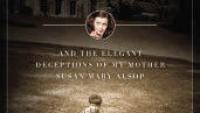
Jonathan Mirsky on Nancy Kohner's new book What could be more poignant than this? ‘You know nothing of what is happening here, and I can’t explain it to you. Just be glad that you’re as far away as you are. What is happiness? Happiness is what once was, once upon a time when we lived such a beautiful, peaceful time. It’s a good thing that no one can take away our memories.’ In August 1940, Valerie Kohner wrote those words to her family, Jewish Czechs, who had escaped from Czechoslovakia to Britain. Alone in Nazi-occupied Prague, she knew what was coming. Two years later, shaven-headed and naked, the 68-year-old woman was murdered in Treblinka, where 12,000-15,000 Jews were gassed and burned every day.

Where statesmen and authors met

Blair Worden reviews Ophelia Field's latest book What a wonderful subject Ophelia Field has found, and how adroitly she has handled it. In the Kit-Cat Club, the coterie of Whig writers and politicians that began in the last years of the 17th century and lasted into George I’s reign, she finds both a mirror and a source of great movements of taste and power. The club’s founder was the cultivated publisher Jacob Tonson, who gathered and fed his authors at the Cat and Fiddle in Gray’s Inn Lane (‘kat’ being slang for a small fiddle).

The invisible muses

Philippa Stockley on the new book by Ruth Butler  Hortense Fiquet, Camille Doncieux, Rose Beuret. Who are they? The wives of Paul Cézanne, Claude Monet and Auguste Rodin.The third is the best known; the others have largely been omitted from history. Demonstrably, in Fiquet’s case. Cézanne’s first biographer, Georges Rivière, was Fiquet’s daughter-in-law’s father. Rivière wrote the biography while she was alive, yet did not mention her once. Without the women that these three artists, born mid-19th century, took up with when young, whom they later married (Rodin in old age), many of the paintings or sculptures that made them famous could not have been created.

A country of ruins

Contributers to multi-volume national histories are usually straitjacketed, expected to keep to well-trodden paths. But Robert Gildea’s subtitle is ‘the French’, not France, and in the third volume of the New Penguin History of France to be published he wanders freely. Foreign policy, for example, gets short shrift. Instead, a chapter is devoted to the French view of foreigners. Mathematics, science and medicine are sidelined, but the treatment of women is spacious. The political chapters are there and so are the socio-economic ones. The political narrative down to 1870, awash with names, is a bit helter-skelter. Of little interest to the initiated, it may have green undergraduates reeling.