More from Books

BOOKENDS: Xmas with the exes

‘I only see radiators these days’, announces one of the characters in this novel — ‘You know, people who give out heat and warmth.’ A radiator is a pretty good description of India Knight’s Comfort and Joy (Fig Tree/ Penguin, £14.99), too: a book so kindly and funny and affectionate that you could probably warm your hands on it. ‘I only see radiators these days’, announces one of the characters in this novel — ‘You know, people who give out heat and warmth.’ A radiator is a pretty good description of India Knight’s Comfort and Joy (Fig Tree/ Penguin, £14.99), too: a book so kindly and funny and affectionate that you could probably warm your hands on it.

Taking the long view

While Tony Blair emerged from his memoirs as a chameleon of many colours, there is only one George W. Bush in Decision Points. The book reads like the man speaks. If it has been ghosted — and Bush gives thanks to a multitude of helpers — it has been done with consummate skill to preserve the authentic Bush voice. The result will be unexpected, even unwelcome, to many. This is an interesting and readable book, which clips along in short, spare sentences, with frequent flashes of humour. Don’t take my word for it. It has been praised by none other than Bill Clinton.

Follow your star

In these straitened times it looks as if a great many more hours of most people’s days will have to be spent waiting in queues. In these straitened times it looks as if a great many more hours of most people’s days will have to be spent waiting in queues. The perfect companion for such a penitential exercise is the Divine Comedy of Dante Alighieri. Should you be able to read Italian, get hold of the pocket version known as the Dante Minuscolo Hoepliano, originally issued in 1904 by the enterprising Milanese publisher Ulrico Hoepli, with excellent notes by Professor Raffaello Fornaciari of Florence University and now in its umpteenth printing.

The spur of the moment

A memorable image by André Kertész shows a steam train passing over a high viaduct behind a row of peeling French houses next to a demolition site while a man in a suit and hat with his back to the train walks across the foreground, a mysterious painting-shaped item wrapped in newspaper under one arm. It is a moment caught. The viewer, naturally, tries to connect the disparate elements. And to us it is not merely a moment but a moment in a place, from the past — when steam trains chuffed and men wore hats with suits — in this case 1928 at Meudon, a Parisian suburb. In this way, photography attains the highest form of art to which painters aspired in post-Renaissance theory: that of history painting.

Unpredictable pleasures

As befits a magazine with an erudite and international readership, I shall begin this review with a short salutation in the Western Greenland Eskimo language: ‘Ata, sûlorsimavutit!’ The phrase, as some of you — although I fear reprehensibly few — will know means: ‘Well, now you have again relieved yourself in your trousers.’ One can, I think, deduce two things from this. As befits a magazine with an erudite and international readership, I shall begin this review with a short salutation in the Western Greenland Eskimo language: ‘Ata, sûlorsimavutit!’ The phrase, as some of you — although I fear reprehensibly few — will know means: ‘Well, now you have again relieved yourself in your trousers.

So far from God . . .

Ciudad Juárez, Mexico’s second largest border city, is clogged with rubbish, fouled with car exhaust and, increasingly, flooded with narcotics. Ciudad Juárez, Mexico’s second largest border city, is clogged with rubbish, fouled with car exhaust and, increasingly, flooded with narcotics. Mexican drug cartels are now so deeply ingrained in the city’s political and social fabric that not a single bar or shop remains ‘un-narcotised’. Mexico in the 21st century, according to Ed Vulliamy, is a nation shadowed by gangland enterprise and the rat-tat-tat of Kalashnikovs. To live on the US-Mexican border, how ever, calls for special qualities of endurance.

How we roared!

To most people Christopher Plummer means Captain von Trapp in The Sound of Music. Plummer would not be in the least ashamed by this. A year or so ago he found himself forced to watch the film at a children’s Easter party: The more I watched, the more I realised what a terrific movie it is. The very best of its genre — warm, touching, joyous and absolutely timeless. Here was I, cynical old sod that I am, being totally seduced by the damn thing — and, what’s more, I felt a sudden surge of pride that I’d been a part of it. It is an odd book, though. The production is calamitous: some of the illustrations are blurred to the point of mystery; unforgivably, there is no index; if an editor has been anywhere near the text there is no evidence of his existence.

Change, decay and success

After having for so long been treated with such disdain by the French literary establishment, Michel Houellebecq has at last been embraced by it. Last week La carte et le territoire, his fifth novel, was awarded the Prix Goncourt, a distinction any of his previous novels might just as well have merited. Perhaps it has been possible to do him this belated justice because La carte et le territoire is less explicitly scandalous than its predecessors, more conventionally substantial even. If his previous novels have insolently portrayed life in our faithless, free-market world as a race between sex and death, here that race is over. There is almost no sex in this book.

Books of the Year | 20 November 2010

Philip Hensher The English novel I liked best this year was Martin Amis’s The Pregnant Widow (Cape, £18.99) — humane, rueful and wonderfully resourceful in its wit. Jonathan Franzen’s Freedom (Fourth Estate, £20) was simply a marvel of technique, observation and sympathy. At the other end of the artistic spectrum, Lydia Davis’s Collected Stories (Hamish Hamilton, £20) were a must for anyone seriously interested in the means of fiction. All three were, among other things, masterpieces of comedy. The memoir of suffering now has its own section in bookshops. Few of them deserve one’s attention, but Candia McWilliam’s magnificent What To Look For In Winter (Cape, £16.

BOOKENDS: Flesh and blood

Flesh. Lots of flesh. That was the simple promise of a Hammer horror film. In this collection of classic Hammer posters (The Art of Hammer by Marcus Hearn, Titan, £24.99) we have cleavages, writhing torsos and shining thighs aplenty. But it’s not just that kind of flesh. Over most of our female subjects leers a monster (usually played by the magisterial Christopher Lee), threatening to butcher their curves and leave behind a carcass. Little wonder that the blood-red acrylic is applied so liberally. More interesting, although generally less striking, are the posters that don’t follow the formula. The horribly sensationalist advert for The Camp on Blood Island (1958) carries the tagline, ‘Jap war crimes exposed!

The man and the myth

Tolstoy’s legend is not what it was; but sometimes the world needs idealised versions of ordinary men, argues Philip Hensher The truism that Tolstoy was the greatest of novelists hasn’t been seriously questioned in the last century. The nearest competition comes from Proust and Thomas Mann, I suppose. But when you compare two similar moments in the writings of Tolstoy and one of these other supreme novelists, a difference emerges. Both War and Peace and In Search of Lost Time culminate in a glimpse of the next generation.

Deadlier than the Mail

This is an effervescent, elegantly written and faultlessly researched romp through the life and times of someone whose name in Britain was spoken with genuine fondness by an urbane few, with self-righteous anger by some and with disdain or fascination by almost everybody who can read — as, like it or not, very few people don’t enjoy gossip. This is an effervescent, elegantly written and faultlessly researched romp through the life and times of someone whose name in Britain was spoken with genuine fondness by an urbane few, with self-righteous anger by some and with disdain or fascination by almost everybody who can read — as, like it or not, very few people don’t enjoy gossip. Tim Willis has caught the atmosphere of the Dempster decades with uncanny precision.

Positively Kafkaesque

This is a companion to a collection published earlier this year of Nadine Gordimer’s non-fiction, called Telling Times. This is a companion to a collection published earlier this year of Nadine Gordimer’s non-fiction, called Telling Times. Short stories are, of all her endeavours, the most successful. Their heyday was in the Seventies, when they perfectly realised the awful but fascinating contrasts of South African life. As a boy I lived in Johannesburg just two streets away from Gordimer. She was a towering figure, known to be very close to the ANC. Her presence cast a certain penumbra over our modest house.

The odd couple

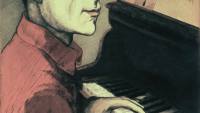
Some years ago now I bought from the artist Robert Buhler a pastel portrait of the composer Lennox Berkeley (reproduced above). Since I knew neither of the two men well (although in the case of each I admired the work without having an irresistible enthusiasm for it), even today people often ask me why I made the purchase. The answer is that in that one work Buhler shows so much more than his usual blithe accomplishment; he is perfect not merely in his portrayal of his sitter’s outward features but also in conveying an inner character of brooding spirituality. Tony Scotland’s book performs the same feat.

A split personality

By the 1970s Ronald Fraser had established himself as an expert on modern Spain and an authority on its oral history, when that discipline was an exotic new concept. As a radical socialist, and a friend of the Marxist historian Perry Anderson, he published a series of distinguished books on popular risings and guerrilla warfare in 19th-century Spain. It was society seen from below. But no one reading the first edition of Fraser’s memoir, published in 1984, would have guessed any of this. Only in a new introduction does he mention his friendship with Gerald Brenan, whose The Spanish Labyrinth was a sacred text to all of us who wrote on 20th-century Spain.

A going-away present

A great time ago when the world was young there was a pleasant and harmless custom by which a British ambassador when leaving his post could sit down and write a valedictory dispatch to the Foreign Secretary. This was not compulsory; often an ambassador withheld his opinions until he was leaving not just a particular post but the foreign office as a whole. The motives of the valedictory dispatch varied. Some ambassadors concentrated on summarising the country in which they had last served; others attempted to sum up the whole period of their service. Some took the opportunity to deplore the present state of Britain; others told amusing stories; almost all thanked the staff who had supported them, and in particular their wives.

Piling Pelion on Ossa

Bettany Hughes is the Nigella Lawson of the classical world — all tumbling raven curls and smoky-voiced seduction, as she takes telly viewers through the greatest hits of the olden days; recent programmes have covered the Spartans, Athens and the Bible. Bettany Hughes is the Nigella Lawson of the classical world — all tumbling raven curls and smoky-voiced seduction, as she takes telly viewers through the greatest hits of the olden days; recent programmes have covered the Spartans, Athens and the Bible. She’s just been on Radio 4 talking about Britain under the Romans. She’s no slouch on the academic side, either: a scholar at Oxford and a research fellow at King’s College, London, she got rave reviews for her first book on Helen of Troy.

Murder in Madison Square Garden

In Victorian and Edwardian England architects did not get themselves murdered. They weren’t playboys, they didn’t have it off with their clients’ wives, they were in no way fashionable even if designing for fashionable people.They were solid members of the professional classes. Lutyens, with his grand marriage and his socialising, was an exception, but his Peter-Pan philanderings with Lady Sackville in the 1920s pale beside the stormy sex life which brought Frank Lloyd Wright into the headlines in 1909. No English architects inspired a novel or a film; a Secret Life of William Butterfield would be unthinkable; John Galsworthy’s Bosinney had no model in real life.