More from Books

The original special relationship

Of all the cities in all the world, Paris dominates the American imagination more than any other. Although Americans may admire Rome or London, more have enjoyed a love affair with the French capital since Benjamin Franklin represented the 13 rebellious colonies at the court of Louis XVI. Josephine Baker captured that sentiment with her

Government health warning

Few men are prepared to die for the right of others to say what they strongly disagree with; and most people’s faith in multiparty democracy is at best a lukewarm recognition that the alternative is much worse. Secretly most men would like their ideas (which they naturally believe to be correct) to rule absolutely and

Not for sissies

Nigeria is not exactly a tourist destination. A colleague chortles over the memory of trying to wangle his way in — without a journalist’s visa — during Sani Abacha’s military regime. ‘Purpose of visit?’ barked the immigration man. ‘Tourism,’ he lied. ‘No one comes to Nigeria for tourism,’ said the official. He was promptly expelled.

Entry to the sacred grove

Some readers may wonder if we need this book. Surely, the argument might go, one can summon up potted ‘lives’ on the internet, while serious biographies take book form. And how can even 294 lives of novelists offer, as the cover to this book claims, ‘a comprehensive history of the English novel’? Reason not the

Amazing grace

It was in 1814 that the Benedictine monks arrived in Stratton-on-the-Fosse in Somerset from Douai in Flanders where, in 1606, they had established an exiled, but English, monastic house. They were forced to leave the Continent in 1795 after revolutionary France had declared war on England. They wandered a bit until they finally bought a

Life & Letters: Shakespeare’s women

Gordon Bottomley, Georgian poet with an unpoetic name, wrote a play called King Lear’s Wife with which he hoped to inspire a poetic revival in the theatre. It might be interesting to see it revived — though most 19th- and 20th-century verse-dramas proved forgettable. Nevertheless, he surely happened on an interesting subject, though one which

At opposite ends of the scale

A book which opens in the bushes of a Venetian garden and ends, more or less, in the cafés of Parma with chocolate panettone and biscotti dipped in coffee knows how to command attention. Given that what unfolds between these sensory episodes is densely constructed and formidable in scope, this is just as well: Peter

S is for Speculative

Margaret Atwood has written 20 novels, of which three (The Handmaid’s Tale, Oryx and Crake and The Year of the Flood) are science fiction. Indeed, the first— and far the best of them — won the inaugural Arthur C. Clarke award, Britain’s chief prize for books in the genre. She has, however, long resisted any

Lust for life | 3 December 2011

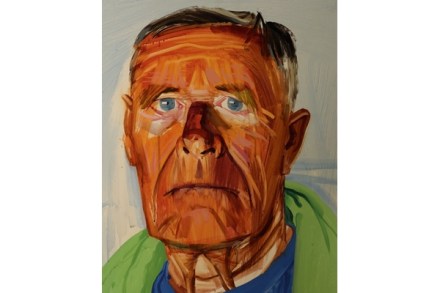
Seduced by the hayseed hair and the Yorkshire accent it’s tempting to see the young David Hockney as the Freddie Flintoff of the painting world: lovable, simple, brilliant, undoubtedly a hero, and delightfully free of angst. In this enjoyable book, which sets out to to ‘conjure up the man he is and in doing so

The woman in black | 3 December 2011

The history of the royal family is punctuated by dramatic, premature deaths which plunge the monarchy into crisis. The most disastrous of these — historically more significant by far than the death of Princess Diana — was the death of Prince Albert in 1861. By the time he died, aged 42, this minor German prince,

Trading places | 3 December 2011

Thirty years ago Sir Keith Joseph, portrayed by Sir Ian Gilmour, a fellow minister, as owning ‘a Rolls-Royce mind without a chauffeur’, sent a newly published book to every Cabinet colleague. Most groaned, some murmured oaths, and a lucky few skimmed it. The book was English Culture and the Decline of the Industrial Spirit (1850-1980)

Saladin: hero or infidel?

In Baghdad in the 1980s there was a children’s book published called The Hero Saladin. The cover bore an image of Saddam Hussein, identified, in what his biographer drily describes as ‘the second and longer part’ of the book, as ‘Saladin II Saddam Hussein’. Given that Saladin was actually Kurdish — and knowing what we

Cookery Books: Back to classics

The truth is, we could probably all get by with three or four cookbooks; half a dozen at most, which makes my own collection of dozens seem a bit OTT. But what you need among them is a book that covers all the essentials, so that if you’re stuck to know what to do with

A literary curio

Jean-Louis Lebris de Kerouac, better known as Jack Kerouac (1922-1969), the son of French-Canadians spiced with the blood of Mohawk and Caughnawaga Indians and subdued, no doubt, by migration from Quebec to Lowell, an old mill town in Massachusetts, eventually fulfilled his adolescent ambition to live the life of the eccentric ‘artist’ . . .

What’s going on?

An early sentence in this collection of stories, first published between 1979 and the current issue of Granta, runs thus: We were in the late stages now, about 45 minutes out, and I was thinking it could still change, some rude blend of weather might yet transform the land, producing texture and dimension, leaps of

Bookends: Not filthy enough

The Pursued (Penguin, £12.99) is a lost crime thriller by C. S. Forester, the author of the Hornblower novels. It was written in 1935, rediscovered in 2003 and is now published for the first time. Marjorie, a suburban wife and mother, comes home after a ‘jaunt’ in ‘town’ to find her sister dead in the

Rumbled in the jungle

This book is a mess. Simon Mann may have been brought up on John Buchan, educated at Eton and Sandhurst, and taken Conrad and the Iliad with him on his African travels, but his style is appalling — a sort of demotic militarese. Short sharp sentences. Few verbs. Acronyms sprinkled like confetti. The third sentence