More from Books

When the Rains Came

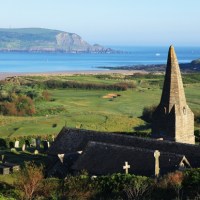
When the rains continued the rivers rebelled, the swans moved inland and even the bank was sandbagged and we saw images of villages cut off and deserted schools and people being carried out of old folks homes and the cathedrals that somehow began to look like galleons; and as each day drenched we began to wonder how trees remained tethered by root systems and there were stories of people who refused to leave their cottages and a man and his dog got stuck in a chimney and from a distance the Malvern Hills began to look like an island.

When the English cricket team toured Nazi Germany – and got smashed

Why have the Germans never been any good at cricket? This entertaining account of the MCC’s 1937 tour to the Fatherland gives some clues. Any country po-faced enough to have a ‘Society for the Encouragement of Playing Ball’ will struggle from the start. Certainly the Germans back then seemed to understand neither cricket’s equipment (‘why so much luggage?’ asked one reporter of the tourists) nor its terminology — later, during the war, letters home from British PoWs about games at their camp were censored because ‘OMWR&A’ was thought to be code. It actually stood for ‘overs, maidens, wickets, runs and average’.

Research Centre

Beyond the measured stretch of lawns and hedges are cultivated rows where snug plastic tunnels creep. Indoors, the fantastic spores fluff up on jelly: fungus rages under glass and germination bristles. In a sealed hot-room, in tanks lined with foil predators quietly chew and scrat; aphids suck their fill of sap. A forest of corn in pots jostles in the breathless light of the glasshouse, each plant drip-fed, wired to dream on growth. This is calm towering work, where light is monastic, clean or flares briefly on a clear pane, a white coat. All builds, for the one to burst into the room with a bouquet, steal the studied scene.

If you prefer banal symbols freighted with meaning to plot, Nicola Barker is your woman

Readers familiar with Nicola Barker’s hyper-caffeinated style will be surprised by the almost serene first few chapters of her latest novel. It’s 1984 and we are in Pett Level, Hastings, a marginal location even by Barker’s standards (previous novels have been set in Luton, Ashford, and the Isle of Sheppey), and a well-travelled man named Franklin D. Huff is investigating a series of events that took place there many years earlier. The events themselves are nebulous. Something about miracles, romantic affairs, and a saintly child deformed by thalidomide. Before Huff can find any answers, though, countryside serenity is replaced by the quirks of Barker’s reckless imagination. As is usual with Barker’s fiction, the story is a blurb-writer’s nightmare.

The Paris of Napoleon III was one big brothel – which is why the future Edward VII loved it

Stephen Clarke lives in Paris and writes book with titles such as 1,000 Years of Annoying the French. Dirty Bertie is a book in the same line — a comic history which manages to combine his brand of jaunty, bawdy humour (not mine, I confess) with being genuinely informative about French history. Clarke claims that there is a gap in the biography of King Edward VII. Biographers have not said nearly enough about Bertie’s jaunts to Paris. He is absolutely right about this. To Bertie’s British biographers Paris is a collection of clichés about grandes horizontales and a few well-worn anecdotes.

Reliving the most famous last stand of the French Resistance

Published to mark the 70th anniversary of the Battle of Vercors, perhaps the most famous stand of the French Resistance in the second world war, there is an awful inevitability to this book. Tragedy looms like the great plateau itself, overshadowing the individual stories of the people who lived, fought and died in these mountains. The strategic and tactical failings that led to their defeat run like strata through the history: a lack of clarity in Allied communications; failure to deliver sufficient heavy weapons or reinforcements; the mistaken use of a guerrilla army as a fixed, defensive force and, above all, the tendency to let diplomacy and politics trump military common sense.

The best new children’s books

A children’s author and illustrator, Jonathan Emmet, created a stir recently by saying that women are effectively gatekeepers of children’s books — chiefly picture books. They constitute the majority of the buyers, reviewers and prizegivers – and the result is that boys are shortchanged. Too few pirates and dragons — or the wrong sort — and too little peril, too little technology, too little non-fiction. Naturally, he’s had to spend a good deal of energy since explaining no offence was intended. Actually, I think he’s right, and not just about picture books.

What made Romans LOL?

At the beginning of The Art of Poetry, Horace tells a story that, he promises, will make anyone laugh: ‘If a painter wanted to put a horse’s head on a human neck, would you be able to keep your laughter in?’ Would you? I certainly would. That’s the thing about Roman jokes: they’re not really very funny now. In 2008, when the comic Jim Bowen did an act based on the fourth-century AD Roman joke book, Philogelos (or The Laughter Lover), the jokes hadn’t improved with age: ‘A man complains that a slave he was sold had died. “When he was with me, he never did any such thing!” replies the seller.’ Did that really have them rolling in the aisles in the Colosseum?

The repression, anger and bloodshed of our own Game of Thrones

When I took up archery it was a relatively niche sport. Then Game of Thrones came along, and everyone wanted a longbow. Since the HBO series put the Wars of the Roses back on the map, we have had novels by Philippa Gregory and Conn Iggulden, and this autumn there will be a history of the wars by Dan Jones. Now comes the first of Toby Clements’s Kingmaker stories, set in the febrile age of mad King Henry VI of the House of Lancaster. Winter Pilgrims takes us to Lincoln, where Thomas, a 20-year-old monk and book illuminator, and Katherine, a young nun who has had enough of emptying her prioress’s chamber-pot, find themselves discharged from their respective cloisters and their duties to God.

Nature inspired P.J. Kavanagh – but so did ghosts, dreams, grief and God

P.J. Kavanagh, if not dismissed or relegated, is often shall we say bracketed, as a ‘nature poet’. The truth is, he’s as much of a nature poet as William Cowper was: in other words a good deal more than ‘a man who woos a rural muse’. While Kavanagh is also mentioned as a successor to Louis MacNeice and Edward Thomas, and is known for his portraits and tips of the hat to many other poets, such as Robert Lowell, Ivor Gurney and Yeats, it is, in fact, Cowper whose echo I myself hear most clearly.

Narcotically-induced mischief in an urban wasteland

Fifteen minutes by rail from Paddington, Southall is a ‘Little India’ in the borough of Ealing. An ornate Hindu temple there, the Shree Ram, is set back from the beep and brake of traffic on King Street. When I visited, a pooja (prayer meeting) was underway. Incense fumes — a sweet suffocating presence — wafted round statuettes of the blue-skinned Krishna. The priest was surprised to see me: ‘You are coming from — ?’ ‘Paddington.’ ‘But you don’t look particularly Indian.’ ‘I’m not Indian.’ (With his sandalwood caste-mark and Nehru shirt, the priest himself was of Gujarati origin.) Racially diverse, Southall is distinctly out-at-elbow and peeling paint, but bustling all the same.

Original Sin

When first they ushered me into that hall To take my place on a cheap fold-out seat, My eyes clamped shut, and so missed all The conjured stillness of the school: young feet Unshuffled, heads dropped down in donned respect, And teachers, too — attendant, cramped in rows Of less observant hush. A time to reflect On whispers, echoed hymns, light-cold windows. In truth, I pitied most the ones on-stage: for though I felt secure behind my teen- Devout, dismissive, atheistic rage, I couldn’t quite pretend I hadn’t seen the way they thumbed the book — unsure of it, The prayer, the weary Morning, all. Please sit.

Looking for the meaning of life? Come to Constantine Phipps’ poetic theme park

A favourite game of mine is to imagine Virgil and Homer today, plying their trade among the supermarkets and office blocks. What would they sing? Can modern life aspire to the epic, and can such a form still be understandable, even useful? C.S. Lewis, though he did translate the Aeneid beautifully, didn’t quite manage a similar feat with his bizarre modern epic, Dymer. It’s not a field many wish to enter. And yet Constantine Phipps, in his third book, What You Want, has made not only an epic, but a didactic epic, accessible, relevant and involving. In precise, lucidly flowing iambic pentameters, the poem is a meditation on the nature of being, married with a strong narrative. It stands aware of its influences: Lucretius is its guiding spirit and Dante its model.

For Roger Bannister, the four-minute mile was just the start

The title of this reflective and readable memoir refers to the author’s lifetime interests in sport and medicine — tracks which advanced not in parallel but with intersections. Few will be unaware that Roger Bannister was the first man to run a mile in under four minutes. The image of him breasting the tape scarcely needed reproducing on both the front and back cover of his book; even 60 years on, this moment is firmly imprinted on the country’s psyche. But how many will also be aware of his contribution to the study of the autonomic nervous system — or even what that system is, unless tempted to turn to Brain and Bannister’s Clinical Neurology, an 800-page encyclopaedia?

A truth too tender for memoir

It has been 14 years since Akhil Sharma published his first, widely acclaimed novel, An Obedient Father. Though its subject matter is very different, Family Life more than fulfils the expectations raised by that grim but compelling story of financial, political and moral corruption in India. Growing up in Delhi in the 1970s, the eight-year-old Ajay Mishra believed that his father ‘had been assigned to us by the government. This was because he appeared to serve no purpose.’ Everything changes when Mr Mishra leaves for America in 1978, followed a year later by Ajay, his 12-year-old brother Birju, and their mother.

Rod Liddle reminds me of old women moaning on the bus

Books by bellicose columnists with the initials R.L. are like buses — none comes along for ages, then two come at once. Having been given the heave ho from my last column some years back, I was looking forward to putting this regularly employed, high-profile Pushmi-pullyu through its paces before filleting it thinly and serving it up sliced seven ways. The best way to read the Liddle book is as a self-loathing joke, otherwise the sheer level of sumptuous hypocrisy may choke you; this is, after all, a book bewailing modern-day selfishness by the man who left the mother of his children months after their wedding in order to be with his young mistress.

A Colder War, by Charles Cumming – review

The title of Charles Cumming’s seventh novel is both a nod to the comfortable polarities of Cold War and also a reminder that our modern world is in some ways even chillier and less stable than the one it replaced. Once again, the central character is Thomas Kell, the MI6 agent who was trying to claw his way back from unmerited disgrace in Cumming’s previous novel, A Foreign Country. Even now, Kell is still on unpaid leave — which, though tiresome for him, is convenient for Amelia, the current ‘C’. They are old colleagues and, up to a point, friends, and she knows him for what he is: a fine intelligence officer caught between his own demons and the shifting, often ruthless expedients of his job.

From Anthony Trollope to Meryl Streep: the theatre of politics on stage and screen

On 1 October 1950 the BBC broadcast a seemingly innocuous little play by Val Gielgud. A light-hearted and critically unremarkable political comedy, Party Manners carried a number of pointed criticisms of Labour policy, taking pot shots at egalitarianism, tax-and-spend and big government. With Clement Attlee’s party enjoying only the slimmest of parliamentary majorities and a fresh election in the offing, some BBC executives feared that Party Manners might swing the balance in the Tories’ favour. Lord Simon of Wythenshawe, chair of the BBC governors and a Labour party member, cancelled a planned repeat showing, unleashing a storm in the House of Lords.