More from Books

The ultimate guide to Cornwall

Before writing this review I spent an hour looking for my original Pevsner paperback on Cornwall, published in 1951 (the first in the ‘Buildings of England’ series). It was falling apart, but I always took it with me on an architectural jaunt, together with my father John Betjeman’s Shell Guide to Cornwall, of course. The two books were good companions. The Pevsner was littered with notes in the margin, made by my dad, like ‘absolute balls,’ ‘what?’ or ‘wrong’ underlined. (I did not find the tattered book and can only conclude that some light-fingered book dealer has stolen it within the last year.) Admittedly there were inaccuracies but with no official buildings ‘list’ at the time, Nikolaus Pevsner was out on his own.

The long and disgraceful life of Britain’s pre-eminent bounder

In his time, Gerald Hamilton (1890–1970) was an almost legendary figure, but he is now remembered — if at all — as the model for the genial conman in Christopher Isherwood’s novel Mr Norris Changes Trains (1935). ‘There are some incidents in my career, as you doubtless know, which are very easily capable of misinterpretation,’ Arthur Norris tells the book’s narrator, and Hamilton affected to be deeply shocked by the assorted vices attributed to his fictional alter ego. He nevertheless exploited the connection throughout his long and disgraceful life. When Isherwood met him, Hamilton (né Souter) was employed in Berlin by the Times as its German sales representative.

This diary of a prime minister’s wife offers a front-row seat to the Great War

When Margot Asquith’s name crops up these days, it is usually in a retelling of the story about her meeting Jean Harlow, sexy star of the silver screen, who repeatedly called her Margotte. Eventually, Margot became irritated. ‘No, my dear,’ she corrected. ‘The “t” is silent, as in Harlow.’ It’s a good story, but apocryphal and, I was always told by those who knew her (she was my great-grandfather’s second wife), quite untypical of her. No matter. She had plenty of good lines that were unquestionably her own, as this diary vividly attests. She was at her best when analysing friends and enemies, which were sometimes interchangeable categories.

The Russian literary celebrity who begged Tolstoy to spare Prince Andrei

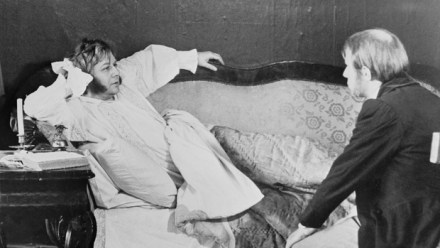
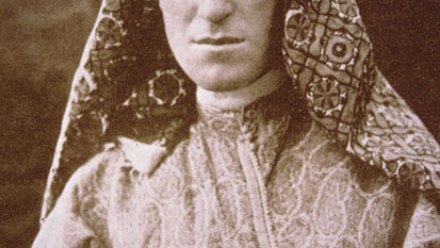
Nadezhda Alexandrovna Lokhvitskaya was a literary celebrity in pre-revolutionary St Petersburg. She chose the pen-name ‘Teffi’ because it was androgynous, and because it was the kind of name a ‘lucky’ fool would have; in Russia, fools were held to tell truths, albeit obliquely. ‘Teffi’ wrote for newspapers, most notably the Russian Word. By 1911 she was writing more fiction than journalism; her short story collections achieved instant popularity. In 1919 the Russian Word was closed down. Teffi was evacuated, ending up, like so many ‘lesrusses’, in Paris. She never returned to Russia, except in her stories. Teffi’s fame evaporated almost immediately after her death in 1952.

Genghis Khan was tolerant, kind to women – and a record-breaking mass-murderer

Genghis Khan, unlike most Mongols in history, is a household name, regularly misappropriated as a right-wing totem. If we recall the genocidal killing sprees of, say, Stalin and Mao, perhaps it would be more historically accurate to say ‘to the left of Genghis Khan’. In the popular imagination he is the despot’s despot, a one-man killing machine who led his army of mounted archers to triumph after triumph, terrorising and slaughtering by the million to carve out an empire that stretched from the Caspian to the Pacific. His martial conquests place him in the top trio of world conquerors, alongside Alexander the Great and Tamerlane.

My Grandmother Said

It was the First World War. Her husband was away. So she knew fear, but also found new freedom in the day. On Thursdays, with the farmer’s wife, old basket in her lap, by butter slabs, she rode to Brigg, shawled, in the pony trap. Oh how I envied her! I whined to Brigg by bus, for school, no pony’s dancing knees, first sun in elder bush. She would have crossed the Ancholme, seen the canal glint wide. She could buy apples and white thread, jog home, to new moon’s rise. ‘But I was frozen, to my bones, all winter.’ Was that all? My grandfather took up the reins. She settled in her shawl.

A guide to marriage, moving and fatherhood – and also not a bad tool with which to beat your solicitor to death

Over the past 12 months, I’ve proposed to my girlfriend, moved house, got married, and become a father. The most stressful of these tests, without a doubt, was moving house. Forget strappado (a torture whereby you’re strung up by your arms behind your back) or flagellation or sensory deprivation. Moving to Acton: that’s what’ll break you down. I really wish, back then, I’d had a copy of Tim Dowling’s How to be a Husband to hand. I might have used it, I think, if I’d gripped it at the maximal angle, to beat my solicitor to death. Sadly, this hybrid book — half-memoir, half-manual — is lacking in tips on how to inflict agony on lawyers (I would tentatively suggest strappado) but it’s solid on my other three recent rites of passage.

The nervous passenger who became one of our great travel writers

Sybille Bedford all her life was a keen and courageous traveller. Restless, curious, intellectually alert, she was always ready to explore new territories, her experiences recounted in a sophisticated style that Jan Morris in her introduction refers to as ‘a kind of apotheosised reportage’. Bedford’s first book, A Visit to Don Otavio, describing an expedition to Mexico, was to become a classic of travel literature, and the essays in Pleasures and Landscapes show many of the same exceptional qualities. Over three decades, from 1948 to 1978, Bedford journeyed through Italy, Switzerland, France, Denmark, Portugal and Yugoslavia.

You’ll never look at dried pasta in the same way again

A calculated ordinariness unites the protagonists in Graham Swift’s new collection of short stories. In each of these mini fictions, as in his novels, Swift revisits his conceit of the narrator as man (or woman) on the Clapham omnibus. Invariably he endows these blank ciphers with aspects of the extraordinary — percipience, insight or understanding — or exposes them to feelings and events which place them in extraordinary positions and offer them opportunities to behave remarkably while remaining apparently run of the mill. Swift revels in the trappings of Pooterishness while denying his protagonists Mr Pooter’s silliness. His vision may be contrived but it never patronises.

A tribute to the King – or a compendium of journalistic bad habits?

With Elvis has Left the Building, the longstanding editor of GQ has inexplicably written a book that could serve as a handy, if perhaps overly comprehensive, compendium of bad journalistic habits: from the over-arching flaw of failing to decide what you want to say to such specifics as the excessive use of the phrase ‘American dream’ and wildly random scene-setting. (In the lengthy section on 1977, the year of Presley’s death, we learn that ‘five days before Luciano Pavarotti made his first appearance on American television, the rings of Uranus were discovered’.

A paean to the British passion for our very own ‘castles’

‘Phlogiston’ is an interesting, if obsolete, word. Of Greek origin, it referred to the ‘fire-making’ quality thought to be present in, among other things, the ashes gathered by London dustmen. In the mid-18th century these ashes were mixed with earth and even ‘excrements taken out of the necessary houses’ to create the vast numbers of bricks needed for the explosion of house-building taking place at the time in London and elsewhere. The dramatic rise in building is pivotal to this densely detailed observation of the British obsession with their ‘home’ and ‘comfort’ which, we’re told, Robert Southey describes as particularly English and untranslatable.

The completely ludicrous – and sometimes believable – world of the First World War spook

There can’t have been this many books about the first world war since — just after the first world war. One publishing craze of the 1920s was books about spying, in which retired war spooks gave away their trade secrets and told tall stories about dead-letter drops and invisible ink. Melanie King has read them all, filleted them and collated her researches in Secrets in a Dead Fish (Bodleian Library, £8.99, Spectator Bookshop, £8.54). ‘Ingenious methods of communication were developed,’ she writes. ‘The entire Western Front, from its windmills to its laundry lines, must have seemed charged with secret meanings.’ This is Le Carré, but a Janet and John version.

The soundtracked novel that won’t sit still

The Emperor Waltz is long enough at 600 pages to be divided, in the old-fashioned way, into nine ‘books’. Each book has a date, sliding from 1922 to 1979 to next year to 203 ad to last month. This might suggest an overly systematic novel in the mode of David Mitchell’s Cloud Atlas or Eleanor Catton’s Booker Prize-winning breezeblock The Luminaries. But Hensher has always been a writer with a wandering, curious eye (on its most exhilarating display in 2011’s King of the Badgers), and The Emperor Waltz is a novel that, despite its superficial restraints, won’t sit still.

The cruellest present you could give a hated old in-law

It takes a special sort of talent to be able to make drawings of your own 97-year-old mother on her deathbed funny. The person with that gift is Roz Chast. Subscribers to the New Yorker will already be familiar with her marvellous cartoons, which often feature elderly and over-neurotic parents shouting dire imprecations to their rather dazed and mild-looking adult offspring. Their warnings tend to concern such mortal perils as crossing the road, running to answer the telephone or touching the handrail on public transport (the germs!). The subjects are from Brooklyn, but the appeal is universal: visiting a friend in Athens the other day, I saw a Chast cartoon stuck to the fridge door. Can’t We Talk About Something More Pleasant? is a graphic memoir of Chast’s own parents.

Lillian Hellman lied her way through life

Lillian Hellman must be a maddening subject for a biographer. The author Mary McCarthy’s remark that ‘every word she writes is a lie, including “and” and “the”’ wasn’t far off. Navigating through the hall of mirrors that Hellman left behind, trying to sort fact from self-aggrandising fiction, seems to have worked Dorothy Gallagher into a fury. Perhaps this book is her revenge. One of America’s most successful playwrights, Hellman had her first Broadway hit before she was 30. She was a close friend of Dorothy Parker and her long-term lover was Dashiell Hammett. Ardently left-wing, she was summoned before Joseph McCarthy’s House Un-American Activities Committee to answer questions about her links with the Communist party.

A coming of age novel? Or an age of coming novel?

At a time when feminism is grimly engaged in disappearing up its own intersection (two transsexuals squabbling over a tampon is the image that comes to mind) Caitlin Moran is to be bravo’d till the sacred cows come home for bringing her super-brightness to bear on this most vital of subjects. Like the rest of the western world and its stepdaughters, I loved How To Be a Woman and was excited to see what she would come up with next; when I heard it would be a novel, I was a little underwhelmed, having read her previous attempt at Young Adult fiction, The Chronicles of Narmo.

From Edwardian idyll to meetings with Nehru: the life of Lady Ursula D’Asbo

This is the Real Thing, an evocative account of English upper-class life throughout the 20th century. It begins amidst the Edwardian feudal splendours of Belvoir Castle, where Ursula d’Abo spent much of her childhood with her beloved grandfather ‘Appi’. At the coronation of George VI she was a maid of honour to the Queen. During the second world war she worked with 2,000 women making bullets. Postwar life was hardly less varied and amazing, with an other-worldly stay in princely India, and meetings with Nehru. Married life at West Wratting Park and Kensington Square, two beautiful Georgian houses she restored, was followed in her widowhood by five years with Paul Getty at Sutton Place.