Elif Shafak

With Elif Shafak

From our UK edition

29 min listen

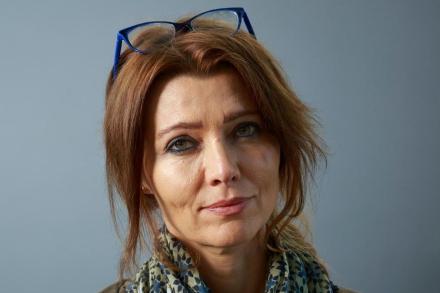
Elif Shafak is a novelist, political scientist and essayist. She has published 21 books – 13 of which are novels – and her books have been translated into 58 languages. Her most recent novel There Are Rivers in the Sky, is out now.  On the podcast, Elif tells Liv about the significance of food and drink in her writing, the many places she takes culinary inspiration from and reveals her love of heavy metal music.
The Christmas Special

From our UK edition

49 min listen

How will the UK's economy recover from Covid-19, and what has the pandemic revealed about the West? (01:20) Was 2020 the year we dealt a mortal blow to future viruses? (15:05) And finally, what makes Mary Gaitskill a brilliant writer, and why does Elif Shafak work to heavy metal music? (29:25)With The Spectator's political editor James Forsyth, deputy political editor Katy Balls, writer and biologist Matt Ridley, behavioural psychologist Dr Stuart Ritchie, The Spectator's literary editor Sam Leith and writer Elif Shafak.Presented by Lara Prendergast. Produced by Max Jeffery and Sam Russell.

What is so special about heavy metal?

From our UK edition

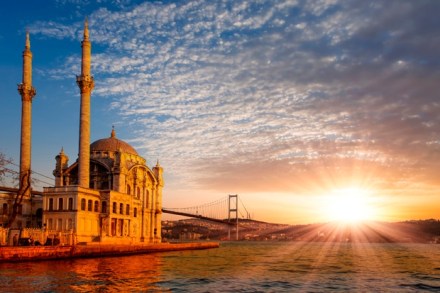
Ever since my early youth I have loved, followed and respected a certain music genre that some people consider strange, even dangerous: heavy metal. The journey started in Istanbul, at a small, stuffy music store on a side street in Taksim, nestled between an Ottoman mosque and a fish market, where I would buy cassettes of Iron Maiden, Judas Priest, Led Zeppelin, Megadeth, Twisted Sister, Metallica... and then go home and listen to them endlessly while eating sunflower seeds, because that’s what we Istanbulites do to pass time. Over the years I veered towards less-well-known sub-genres, such as industrial metal, symphonic metal, metalcore, gothic metal, Viking/pagan/Nordic metal; and while the cassettes disappeared, my love for heavy metal remained solid.

Turkey is at an existential crossroads

From our UK edition

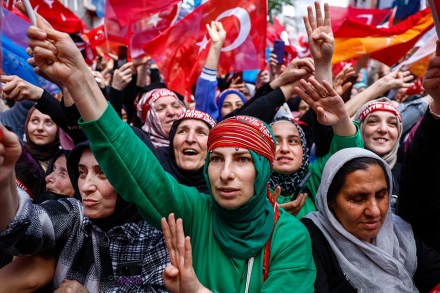
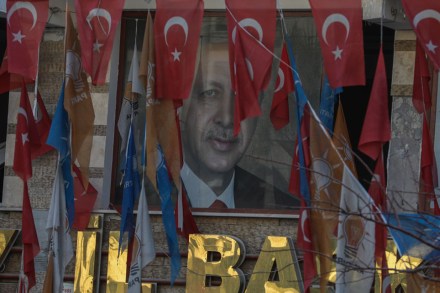
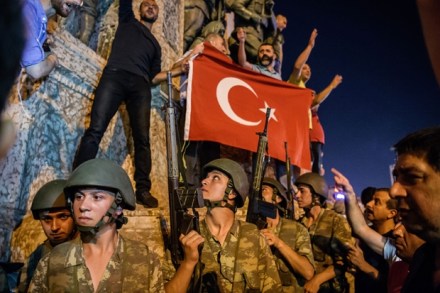
The wonderful Barbara Kingsolver wrote that hope is something you should not admire from a distance, but rather live inside of, ‘under its roof’. Last week I lived under the roof of hope as the campaigns for the first round of the Turkish presidential elections drew to a close. This is an existential crossroads for Turkey, my motherland. The AKP under Recep Tayyip Erdogan have been in power for two decades. Although they started off on their journey with promises of liberal reforms, a democratic constitution, and plenty of rhetoric about joining the EU, they have become increasingly nationalist, Islamist, patriarchal and authoritarian with each passing year.

After Sturgeon

From our UK edition

40 min listen

This week: What next after Sturgeon? In her cover piece for the magazine, The Spectator's political editor Katy Balls considers what Sturgeon's exit means for the future of Scotland – and the Union. She is joined by Iain Macwhirter, author of Disunited Kingdom, to discuss whether Scottish independence can survive after Sturgeon (01:09). Also this week: Elif Shafak writes a moving diary in The Spectator, reflecting on the terrible earthquakes that hit her homeland Turkey, and neighbouring Syria. She is joined by Turkey correspondent at the Financial Times Adam Samson, to assess President Erdogan's reaction to the disaster (15:03).

The government’s guilt over Turkey’s devastation

From our UK edition

Early last week I bought myself a teapot. I have several, but I could not resist this with its turquoise Mediterranean charm. Alongside I purchased tea glasses — not mugs or cups, but glasses. The Turkish way. It comes with a milk jug. The English way. Excited to use them for the first time early in the morning, I went to the kitchen where I found my 74-year-old mother, who was visiting us from Ankara. Her eyes were red and swollen from crying. She spoke in a voice so low that I struggled to hear at first. ‘There has been an earthquake.’ The glass in my hand felt small and fragile. We both knew what the next question was: ‘Did anyone die?’ I asked. She started crying again.

The Elif Shafak Edition

From our UK edition

39 min listen

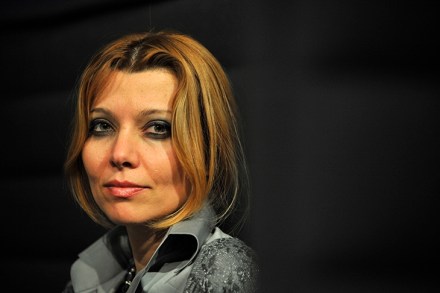
Elif Shafak is an award-winning Turkish-British novellist, essayist and activist. On the episode, she talks to Katy about what it was like to grow up in conservative Ankara under the strong women in her family; her prosecution by the Turkish government; and why she thinks too much information is not necessarily a virtue.

Gone for a song: A short story

From our UK edition

It was the week after New Year’s Eve, strings of fairy lights still dangling from the trees and silver stars decorating the windows, when they discovered the dead birds. Dozens, at first. Then more. Four thousand, six hundred and twenty-eight in total. Goldfinches, greenfinches, bullfinches, skylarks, reed buntings, yellowhammers, grey wagtails and red-throated pipits — those long-distance migrants with their rusty breasts and high-pitched songs, cut short. The Slovenian officer who made the discovery was a wisp of a man with soft brown eyes and a halo of grey-white hair. His name was Marko.

A diamond set in sapphires

From our UK edition

I was a young, aspiring writer when I decided to leave everything behind and move to Istanbul more than two decades ago. I rented a tiny, dingy flat at the bottom of the Street of Cauldron Makers not far from Taksim Square, the heart of the modern city. That first night, I sat by the window under the anaemic light from a streetlamp, and wondered what this urban sprawl held for me. At midnight, I heard a loud voice from outside, full of anger and emotion. A transvestite was walking down the street, her miniskirt glittering in stark contrast to her raven hair. She was limping furiously, holding in one hand a shoe with a broken heel. The other shoe she insisted on wearing.

What makes Turkey tick

From our UK edition

I remember an American author once saying she wrote about love and friendship because, after all, these were the fundamental things that people talked about when they gathered around dinner tables. Not quite so in Turkey. Over lengthy breakfasts and suppers, lunches and drinks, we Turks tend to talk about something else: politics. The truth is, we cannot get enough of politics. Even though politics dampens our spirits and darkens our minds, we return to the subject, like moths to their flames. Politics is a fast-running hare: we chase it as fast as our legs can possibly carry us, never quite managing to get hold of it. Everything happens too fast in Turkey. From one week to the next the mood alters. Yesterday’s heroes become tomorrow’s betrayers, and then suddenly, vice versa.

Turkey’s continental drift

From our UK edition

In Turkish the word ‘yurt’ has two definitions. It means ‘place’, ‘land’, ‘territory’, ‘homeland’. It could also indicate a round, portable tent, the likes of which have been used by nomadic tribes for centuries. In my imagination I have always liked to combine the two definitions, wondering if motherlands could be just as peripatetic as their people. I know, for one, that no matter how itinerant I might have been all my life, it follows me like a shadow, this sad motherland of mine. Turkey’s many problems occupy my mind, crush my chest, weigh down my soul, invade my dreams. Not only me, of course. There are so many who just cannot help worrying about this beautiful country.

Sleepless by the strait

From our UK edition

In my novel Three Daughters of Eve, a well educated housewife with kids looks at her motherland, Turkey, and thinks: ‘They are not that different. My own life and this land of unfulfilled potentials.’ I wrote this novel in English first. It was then translated into Turkish by a professional translator, after which I rewrote it with my own rhythm and vocabulary. It’s a bit crazy, this constant commute between English and Turkish. There are things I find much easier to express in English — e.g. humour, irony, satire — and others I find easier to say in Turkish — melancholy, loss. The book is published in Turkey this summer before being published in the UK in winter. So I fly from London, where I live, to Turkey for a week long book tour.