More from Arts

A blow for fidelity

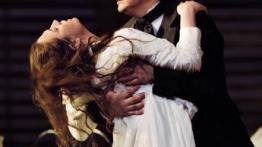
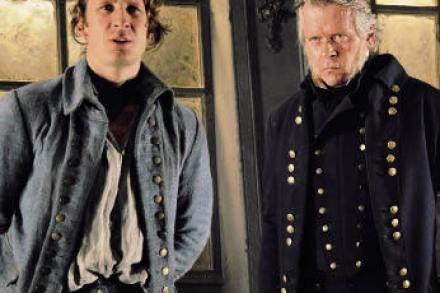
Così fan tutte In rep until 17 July Billy Budd In rep until 27 June Glyndebourne Glyndebourne has opened this year with two troubling operas, but ones which disturb in quite different ways. Così fan tutte is described by Max Loppert, in an excellent essay in the programme, as ‘the cruellest and most disturbing opera ever written’, and, though I can think of a couple of others that might equally lay claim to that title, there is no doubt that Così is a harrowing work, ever more so the more one knows it: which is not at all to deny that it is a comedy — that is what makes it so terrible.  This revival of Nicholas Hytner’s 2006 production is superb, if not in every respect quite as fine as the first time round.
Extreme violence

The Killer Inside Me 18, Nationwide Michael Winterbottom’s latest film has already caused outrage and charges of misogyny, and while I did not like it at all, and did spend a good portion of the time hiding my head in my hands moaning, ‘Oh, sweet Jesus, please make it stop,’ I can’t say it’s a bad film. I want to say it’s a bad film. I long to say it’s a bad film and that, as a woman who once marched to reclaim the night — even though the night never marched for me — I was both repulsed and offended by the explicit, prolonged violence. But?

Reality deficit

Ingredient X Royal Court, until 19 June Canary Hampstead, until 12 June In the old days the Royal Court knew that the best way to entertain local millionaires was to stage plays that wallowed in distress and squalor and featured four crack addicts in a squat stabbing each other to death with infected needles. Things changed under Dominic Cooke, who introduced a lighter touch and brought wit, intelligence and a sense of fun to the theatre. But nostalgia is back. The Court has revived its crack-house quartet formula in Nick Grosso’s new play, Ingredient X. The setting is a London high-rise. There’s no plot. The action concerts the attempts of two characters to overcome their enthusiasm for alcohol and powders while the other two booze merrily away.

Camp Bastion takeover

It’s the details that resonate. Grass seed and weedkiller’ have been added to the shopping lists of operational managers based in Camp Bastion in Afghanistan. It’s the details that resonate. ‘Grass seed and weedkiller’ have been added to the shopping lists of operational managers based in Camp Bastion in Afghanistan. The grass seed is for the memorial sites planted on the actual places where soldiers (and their support teams) have been killed on active duty (the number has now risen to 289). The weedkiller is to kill off the intrusive summer weeds that are making life more difficult for those trying to seek out the Taleban. Bank Holiday Monday on Radio 1 was given over to British Forces Broadcasting Service live from Camp Bastion in Afghanistan.

Shakespeare in school

I really wanted to like When Romeo Met Juliet (BBC2, Friday). Television loves new clichés, and since the success of Gareth Malone in The Choir it has decided that getting a bunch of people who wouldn’t know art from a hole in the ground and persuading them to do something artistic makes for great viewing. Up to a point. It also proves that people will do almost anything — even learn to sing, or memorise a script — if they might get on to television. This remains true, even though there are now something like 90 channels. As a friend of mine put it, rates on some of these are so low that you could advertise your missing cat, except that nobody would see it.

New wave challenge

Maggi Hambling: Sea Sculpture, Paintings and Etchings Marlborough Fine Art, 6 Albemarle Street, W1, until 5 June  Stephen Chambers: The Four Corners Kings Place Gallery, 90 York Way, N1, until 11 June Ceri Richards: Retrospective Jonathan Clark & Co., 18 Park Walk, SW10, until 5 June For the past eight years, the sea has been Maggi Hambling’s principal subject. She draws it regularly, makes portraits of it and now has turned to capturing it in bronze. As Norbert Lynton observed (in another context): ‘The idea of the sea as matter for sculpture should give us pause: not even [Medardo] Rosso, master sculptor of the momentary and the contextual, attempted anything like that.

Roving revolutionary

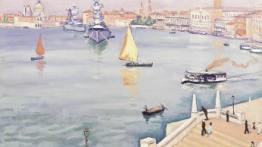
Albert Marquet Connaught Brown, 2 Albemarle Street, W1, until 26 June Amid the usual hype about the record price achieved by an Andy Warhol self-portrait at Sotheby’s New York on 12 May, another artist’s record passed unnoticed. At the Impressionist & Modern Art sale the week before, Albert Marquet’s ‘Le Pavillon Bleu’ fetched $1.5 million. ‘Albert who?’ some of you may be asking — but when Marquet painted this picture in 1905 he was a founder member of the first revolutionary art movement of the 20th century, one of the gang of young painters in pure colours surrounding Matisse who would be branded ‘Fauves’ at that year’s Salon d’Automne.

Religious skirmish

Love the Sinner Cottesloe, until 10 July Ditch Old Vic Tunnels, Waterloo Approach Road, until 26 June Bickering vicars at the National. A new play by Drew Pautz invites us to consider whether the Church should ordain gay clergypersons. It’s a paradox that an organisation run by men in skirts is so vexed by the prospect of admitting homosexuals to their club. Pautz’s play neatly dramatises this contradiction in the person of Mike, a Protestant lay volunteer, who has a fling with a rent boy while attending a conference in Africa. The rent boy follows Mike home, claims sanctuary in his local church and compels him to help with his asylum claim.

Carry on up the Nile

Antony and Cleopatra Courtyard Theatre, Stratford-upon-Avon, in rep until 28 August In this deplorable new production, it is not just the great general Antony who’s taken leave of his senses but Michael Boyd, its director and generalissimo of the RSC, too. In prospect, the casting of the diminutive character actor Kathryn Hunter as the serpent and seductress of Old Nile always seemed weird, if not actually crazy. In practice, it is an unmitigated disaster. It is doubtless some kind of record that Hunter is playing both the Fool in Lear and Cleopatra in the same season. But this is a foolishness too far, and it does not stop there. Hunter is an accomplished director and an actor of prodigious, protean skills.

Rescued by Balanchine

Triple Bill Royal Ballet, in rep until 11 June After a number of successfully conceived and well-performed mixed programmes, the Royal Ballet’s latest triple bill, its last offering of the season, was a bit of a let-down. This was a pity, for the dancing was good and sometimes phenomenal. One of the problems was that none of the three ballets matched any other. Wayne McGregor’s postmodern heavyweight Chroma, at the beginning, thwarted the thin modernist lyricism of Christopher Wheeldon’s Tryst, which, with its slightly tiresome and uneven thematic layout, was no match whatever with George Balanchine’s Symphony in C, a sparkling tribute to pure classical dance.

Murder most fine

Tosca English National Opera, in rep until 10 July La Fille du régiment The Royal Opera, in rep until 3 June Tosca has had several new productions at ENO in the past 20 years which have proved rapidly perishable. It’ll be interesting to see whether the new production, with set designs by Frank Philipp Schlössmann and the direction in the hands of Catherine Malfitano, proves more durable, though I think it is certain that one major modification will be effected. The opening chords, giving the audience a pretty vivid impression of what it would be like to be a torture victim of Scarpia’s, were tremendous, immensely loud and crushing, and throughout the evening the chief source of my pleasure was in the orchestral playing.

New World vision

Miami Beach seems an unlikely venue for a noble, idealistic artistic venture. Yet it is here that the New World Symphony has made its base for more than 20 years. It’s a sort of equivalent to our own National Youth Orchestra, with the same sense of joyous dedication wherein hard work becomes fun; but with the important difference that these young players are geared from the start towards the professional life of an orchestral musician. Rehearsals are strictly timed, there is a weekly stipend and players will all be seeking, and hopefully finding, positions in fully grown-up institutions all over the United States and the wider world, where many alumni are already placed.

Surface pleasure

I know this is going to get me into an awful lot of trouble, but I really don’t think the TV adaptation of Martin Amis’s Money (BBC2, Sunday, Wednesday) was that bad. I know this is going to get me into an awful lot of trouble, but I really don’t think the TV adaptation of Martin Amis’s Money (BBC2, Sunday, Wednesday) was that bad. Of course, though, I do see the main problem — which was neatly described in the Telegraph by Michael Deacon. Deacon quoted two of the paragraphs that made the book the defining English novel of the Eighties: Deafened with caffeine, I was just a hot robot, a ticking grid of jet-lag, time-jump and hangover.

Stalwarts of the airwaves

The BBC was not included in the Guardian’s poll of the UK’s ‘leading arts institutions’ at the weekend, which asked for their opinions on the new Coalition government and the prospect for ‘culture’ in an era of crunch. The BBC was not included in the Guardian’s poll of the UK’s ‘leading arts institutions’ at the weekend, which asked for their opinions on the new Coalition government and the prospect for ‘culture’ in an era of crunch. Strange? Perhaps the editor regards the BBC as invulnerable? Or, more probably, its programmes have become so much part of the wallpaper of our lives that their contribution to the thinking health of the nation is taken for granted.

Life enhancing

William Crozier at 80 Flowers, 82 Kingsland Road, E2, until 29 May Agnes Martin Timothy Taylor Gallery, 15 Carlos Place, W1, until 22 May William Crozier is Scottish born, but has lived much abroad, spending his formative years in Paris and Dublin, and later working in Spain and America, though always keeping a foothold in England. His sensibility is broadly European, perhaps influenced by the Scottish predisposition to plangent colour, and his work has an intellectual base and emotional breadth that sits easily in an international context. Step into the East End premises of Flowers and be prepared for a blaze of pure visual excitement and pleasure. The effect of this 80th birthday celebration is exhilarating.

Dying gracefully

La Traviata Royal Opera House, in rep until 24 May; and with cast change 8 July to 17 July This year, when operatic fare in the UK has become sparser and less adventurous than at any time since I remember, it’s no surprise that the old stand-bys should be wheeled out regularly. Top scorer in 2010, without question, has been La Bohème, with productions ranging from the brilliantly resourceful minimalism of The Cock in Kilburn, which has been running nightly since early December, to the elaborate squalors of the Royal Opera’s quarter-century-old production, which improves with every advance into decrepitude; with many other versions in between.

Classical peaceniks

The Three Classicists RIBA, until 29 May The Berlin Wall separated two sets of people who shared a history and language. In the same way, architecture has been divided into two groups, Classicists and Modernists, each convinced of their own rightness, and refusing to acknowledge the other’s existence. But suddenly it seems that they are offering each other flowers. The exhibition Three Classicists opened recently with an array of Ionic volutes, Corinthian acanthus and sash windows. For the Royal Institute of British Architects this show would once have been as unthinkable as giving the Royal Gold Medal for Architecture to the Prince of Wales, and two major professional journals, having despised classicism for 50 years and more, have commented politely.

Speech impediment

The demise of French as a useful way of communicating with the wider world has been one of the features of my years as a travelling musician. I can recall many conversations around Europe, the southern Mediterranean and Russia that would not have taken place 30 years ago if I and the local people had not been able to deploy French, which for both sides was a second language. It was then still possible to have the feeling that it was as valuable to know French as English. This was never quite the case with German or Italian (which I did use in Tripoli); nor Spanish — potentially the most useful — which was too site-specific. The speed of this collapse is one of the remarkable things about it.