More from Arts

Chelsea challenge

As you make your sandwiches and get out your comfortable shoes ready for a day at the Royal Horticultural Society’s Chelsea Flower Show next week (24–29 May), do spare a thought for the 600 exhibitors of show gardens, plants, floral arrangements, educational exhibits and sundries. As you make your sandwiches and get out your comfortable shoes ready for a day at the Royal Horticultural Society’s Chelsea Flower Show next week (24–29 May), do spare a thought for the 600 exhibitors of show gardens, plants, floral arrangements, educational exhibits and sundries. Theirs is not an especially happy lot.

Figuring it out

Being a figurative painter today is probably no more challenging or rewarding than it has ever been. When immersed in the business of putting paint on a surface you are faced with the same problems: colour scheme, composition, gesture and the task of communicating the idea. Although it can help in finding the right audience for my work, I am slightly uncomfortable with being typecast as a figurative painter — i.e., someone who makes paintings with obvious references to the real world — principally because of the connotations: the idea that figuration means accurate photographic representation. I don’t hold with that reverence for accuracy; there has to be room for the artist’s interpretation.

Caravaggio the confessor

Caravaggio’s paintings were inextricably bound up with his life and provide a virtual narrative of his turbulent development, a story fraught with ambiguities and alternative readings. Caravaggio’s paintings were inextricably bound up with his life and provide a virtual narrative of his turbulent development, a story fraught with ambiguities and alternative readings. This almost confessional aspect of his works, along with the immediacy and extraordinary power of their emotional impact, have surely contributed to his current popularity. His documented career spanned only about 15 years, ending with his lonely death on the seacoast at Porto Ercole on 18 July 1610.

Classic treasure

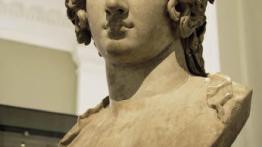
The Greek and Roman Collections Sculpture Promenade 2010 Fitzwilliam Museum, Cambridge, until 28 January 2011 Virgil was wrong — don’t be afraid of Greeks bearing gifts, particularly if you’re a British regional museum. While our government has cut its grant to the Fitzwilliam by two per cent, Greek zillionaires have stepped admirably into the breach to subsidise the renovation of Cambridge’s heart-stopping Greek and Roman gallery, untouched since the Sixties. The Greek Ministry of Culture has chipped in, too; it may want the Elgin Marbles back but it’s happy to pay for Cambridge’s classical treasures to stay put, even while the Greek economy is on the skids. Its prized euros have been well spent.

Scottish clash

Highlands and Islands: Paintings and Poems Fleming Collection, 13 Berkeley Street, W1, until 5 June Pictures are usually exhibited with closed-shop segregation from the other arts, so it is a joy to find the bounds broken by this exuberant celebration of one of the oldest and most beautiful places on earth. The show announces the publication of Highlands and Islands (Eland, £8.99), a poetry anthology (mostly 20th-century, not all by Scots) from Beccan mac Luigdech of Rum (died 677) to the present, selected and annotated by Mary Miers, the architectural historian and authority on Highland and Island culture. Her family home is on South Uist, so she brings a native passion to her subject.

Into the woods

Robin Hood 12A, Nationwide Ridley Scott’s Robin Hood is ‘the untold story of the man behind the legend’, and if it had remained untold I do not think it would have been a tragedy. At nearly two and a half hours it is horribly long. (If they ever ask me to give a talk at a film school, the first thing I would say to the students is: kids, if you can’t tell a story in 90 minutes, go open a kebab shop.) The dialogue is often mumbled and unfathomable, which may be in its favour, but how would I know? It is serious to a fault. Russell Crowe, as Robin, lacks warmth and charisma and wit but at least makes up for it with...nope, nothing.

Harmless fun

Dirty White Boy: Tales of Soho Trafalgar Studio 2, until 22 May Holding the Man Trafalgar Studio 1, until 3 July Blogs and blogging, bloggers and bloggery. What’s it all about? At first sight blogomania looks like an entirely new literary form. A second glance reveals that it’s the oldest genre of the lot: oral history. A few years back, Clayton Littlewood opened a menswear shop in Soho and when business was slow he amused himself by writing an internet journal about the loafers and oddballs who popped in for a cigarette and a moan. Blog became book. Book became play. The material is rather like the novelty jockstraps Littlewood sells to passing woofters: it’s harmless fun and there’s not much of it. The characters preen and mince in predictable fashion.

Contemporary crackers

Triple Bill Royal Opera House, last perf. 15 May There was a time when the thrill of a ballet première could be sensed the moment you entered the theatre. Today, the disillusioned public, tired of the high percentage of choreographic garbage it is frequently subjected to, takes little or no notice. It’s a pity, for I think that Liam Scarlett’s Asphodel Meadows deserved a buzzier atmosphere than the one that greeted its opening last week — even though there were a good number of ovations and calls at the end. Set to Poulenc’s bubbly Concerto in D minor for two pianos and orchestra, the new ballet is a visually enticing example of outstanding choreographic composition, in which the classical idiom is cogently manipulated, though never betrayed.

Word power

It’s like entering another country, listening in to the BBC’s World Service, and such a relief to escape for a while the interminable chattering about what’s going to happen in Westminster. It’s like entering another country, listening in to the BBC’s World Service, and such a relief to escape for a while the interminable chattering about what’s going to happen in Westminster. On the half-hourly news bulletins, the Eurozone, elections in the Philippines, a mass grave in Serbia take the lead, while our very own British muddle almost disappears. On The Strand this week, the daily arts programme, Harriet Gilbert introduced us to the new Writer in Residence at Bush House, the World Service’s centre of operations in the heart of London.

Tales of the unexpected | 15 May 2010

The closest I’ve come to seeing a ghost was a few months ago when we went to stay in a haunted house. The closest I’ve come to seeing a ghost was a few months ago when we went to stay in a haunted house. We had a deeply uncomfortable night during which it was cold and hard to sleep, and in the small hours my wife was awoken by a mysterious pressure on her chest, almost as if she was suffocating, and which may have been the tortured spirit of whoever it was who had died horribly there or which might have been the heavy quilt. Dunno. Couldn’t say. I’m itching to have a 100 per cent, cast-iron ‘Yes I saw a ghost and it was definitely a ghost’ experience, but this wasn’t it. Otherwise, this intro would have been more exciting.

Out of time

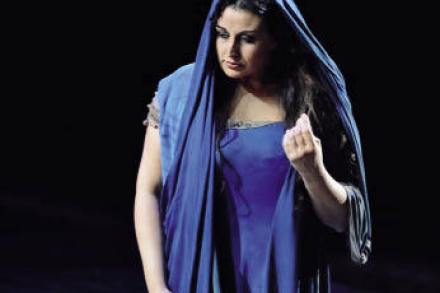
Aida Royal Opera House, in rep until 16 May Powder Her Face Linbury Studio, in rep until 12 May In the programme for the Royal Opera’s new production of Aida, George Hall tells us that ‘the total number of complete or substantially complete recordings of Aida, made either live or in the studio, currently stands at over 250’, a statistic that shook me, hardened discomaniac as I am. There can’t be more than one or two other operas which achieve such a tally. What adds to my surprise is that Aida is so far from being Verdi’s finest opera, and that it does urgently need seeing as well as hearing.

A world apart

John Tunnard: Inner Space to Outer Space until 6 June St Ives and Beyond until 31 May Pallant House Gallery, Chichester John Tunnard (1900–71) is one of that shamefully extensive body of distinguished 20th-century British artists whose work is largely unfamiliar today. For reasons best known to itself, the Tate doesn’t see it as its duty to bring such artists before the public for reassessment, so the job is left to others. Thankfully, there are smaller museums in this country with the necessary initiative and interest, notably Pallant House in Chichester, currently mounting the first museum show of Tunnard in more than 30 years.

Damp squib | 8 May 2010

Four Lions 15, Nationwide Four Lions is Chris Morris’s comedy — comedy of terrors? — about a group of home-grown Muslim suicide bombers, an idea so thrillingly audacious that, when I first read about it, I thought, as you probably did: where is Mr Morris going to hide? In Salman Rushdie’s sock drawer? But while thrilling and audacious on paper, the film itself never properly gets going in any truly risky or satirical way, which is fair enough — what if Rushdie’s sock drawer were full, and Mr Morris had to hide in Rushdie’s pants drawer; would you like to hide out among Mr Rushdie’s pants? — but it feels like a missed opportunity all the same. Morris is an incendiary talent.

Tangled threads

Women Beware Women Olivier, in rep until 4 July Hair Gielgud, booking until January 2011 Women Beware Women deserves a subtitle: spectators beware seldom revived classics. Thomas Middleton’s 1622 play is set in the duke’s court at Florence, where greed, lust, incest and the hunger for power are running rampant. Middleton is much admired, little adored. He’s one of those dramatists who sends actors, directors and literary professors into rhapsodies but who doesn’t attend to the basics of entertainment. There’s no central character in this play just a grand human theme, corruptibility. He wraps up the script in great cobwebby entanglements of interrelated storylines.

Leaders of the pack

Two programmes about singing this week, and they could scarcely have been more different. I’m in a Rock’n’Roll Band! (BBC2, Saturday) was the first in a series about groups, and it kicked off with lead singers. Thank heavens, they skipped most of the ponderous, portentous, pretentious nonsense that is often spouted about rock bands. You can’t get rid of that altogether when Sting is around (he identified the main qualities of the lead singer as ‘arrogance and immense courage’, which is 24-carat luvvie-talk — ‘For God’s sake, the sheer guts it takes to go out in front of an audience gasping for you to be Lady Teazle!’) but for the most part people were pleasingly direct.

Reality check

What Gordon needs now (whatever happened on Thursday night and Friday morning) is a bit of radio therapy. I don’t suppose he had time to listen to The Vote Now Show (Radio 4) in the rumbustious run-up to the election, but he’d have done well to tune in for a bit of a laugh and a health-inducing reality check. Steve Punt and Hugh Dennis’s nightly paean to the political shenanigans of the previous 24 hours took us back to the heyday of Week Ending, before the PC Brigade and/or Russell Brand made it so difficult to be funny, decent and pertinent all at the same time.

Lovers’ tangle

Elegy for Young Lovers Young Vic, in rep until 8 May Albert Herring Blackheath Halls Hans Werner Henze’s Elegy for Young Lovers, with a libretto by Auden and Chester Kallman, is less familiar than one might expect. Never recorded complete, it has rarely been performed in the UK since Glyndebourne staged it in 1963. Yet in the excellent new production at the Young Vic, the concentration awarded by the audience was instantly apparent, and maintained throughout the three hours the piece lasts. ENO has got Fiona Shaw to direct, and one of the results is that the performers behave like human beings rather than opera singers, and even speak their lines — there is a considerable amount of spoken dialogue — naturally.

Metal fatigue

Iron Man 2 12A, Nationwide Iron Man 2 is a mighty dog’s dinner, which would be OK — or, as my dog Mr Woofie puts it, ‘Don’t knock it till you’ve tried it’ — but it is also fantastically boring. It’s the sort of boredom that starts at pore level and then seeps its way, via the lymph system, down into the very marrow of your bones. It’s the sort of boredom that makes you sad to be alive. It’s the entire axis of boredom. It’s the boredom that accrues when an incoherent plot, flimsy characters, a dumb script and an excess of CGI fighting nonsense all gang up on you. I think even Mr Woofie would have found Iron Man 2 boring and his standards, when it comes to any kind of entertainment, are quite low.