More from Arts

Money well spent

Science, you may have noticed, has been getting a bad press of late. Scientists losing raw data, scientists withholding data, scientists cherry-picking data, scientists torturing the evidence till it says what they want it to say, scientists acting more like political activists than scientists. And, of all the world’s media institutions, none has been quite so shameless in justifying, excusing or covering up this appalling behaviour than that supposed bastion of neutrality and authority, the BBC. Still, the BBC can’t get everything wrong all the time, and its new series The Story of Science is a case in point.

The battle continues

It sounded as if a World Heavyweight Championship was just about to begin. The roaring mob. The pent-up energy. The buzzing excitement at the prospect of an upset, a defeat, a knockout blow. The tension was palpable, seeping through my study, as the contenders squared up to each other for Round Two. I don’t have Sky and wanted to experience The Prime Ministerial Debate live, as it was happening, rather than wait up until 11.30 last Thursday night to watch it on BBC2, so I had no alternative but to listen to Gordon, Dave and Nick thrashing it out on Radio 4 instead of watching them on screen. I must admit I wasn’t looking forward to it.

Arboreal glory

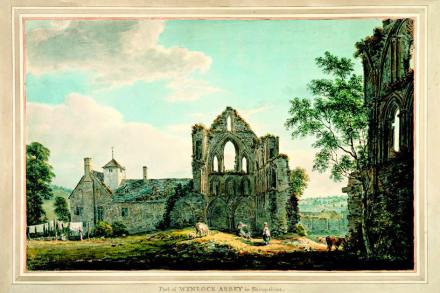
Paul Sandby: Picturing Britain, a Bicentenary Exhibition Royal Academy, until 13 June As Paul Sandby’s dates 1731—1809 suggest, last year was his bicentenary, when this exhibition started out in Nottingham. Sandby lived in that illustrious city before heading north to Edinburgh, when he was appointed draughtsman to the Military Survey of North Britain in 1747. It is therefore most appropriate that this exhibition travelled from Nottingham to Edinburgh before coming south to the RA. It follows Sandby’s own trajectory in this. He moved to London in 1751, to stay with his elder brother Thomas at Windsor and in Soho, and became involved in the St Martin’s Lane Academy.

An insider’s view

A Critic’s Choice Selected by Andrew Lambirth Browse & Darby, until 7 May The bravest thing an art critic can do is to show their own work; the next bravest is to mount a show of the artists they admire. Publishing one’s critical opinions in print is one thing; hanging up the physical evidence in public is quite another. One normally fearless critic of my acquaintance, when invited to do it, declined with a shudder and a quote from ‘The Charge of the Light Brigade’. Cork Street didn’t feel like the Valley of Death when I visited Andrew Lambirth’s Critic’s Choice last week.

Porn and propaganda

Porn — The Musical Theatre 503, until 1 May Posh Royal Court, until 22 May Here’s the rule. Provocative title equals lousy show. The playbill Porn — The Musical filled my heart with misgivings as I made the long trek south of the Thames to a venue at a Battersea boozer. The room above the pub was huge and empty, but the theatre wasn’t here but higher up, via a trapdoor, wedged in under the beery roof-eaves. A fug of lavender and sawdust hung over the creaking benches and the stage was the size of a card-table. As I took my seat, a furry insect expired in midair and landed in the retro hairstyle just ahead of me. A moth in a beehive. Then the show began and everything perked up.

Blood and guts

Centurion 15, Nationwide You know how it is. There are two sword-and-sandal films opening in cinemas, and you just can’t decide which one to see. Will it be Alejandro Amenábar’s Agora, which looks poised, if a little sterile? Or will it be Neil Marshall’s Centurion, which is all about the action, action, action? So you do as I did, and reach for a coin in your pocket. Heads, it’s Agora; tails, Centurion. You throw. The coin somersaults in the air, plunges back towards your hand, and... Centurion is Marshall’s fourth feature, and it remains faithful to the horror-cum-comic-book stylings of his previous three. In Dog Soldiers (2002), it was soldiers versus werewolves. In The Descent (2005), it was potholers versus subterranean monsters.

Jarring Janacek

The Adventures of Mr Broucek Edinburgh Festival Theatre Prima Donna Sadler’s Wells There is no composer to whose works my reactions fluctuate so much as Janacek. I don’t mean the various compositions in his output, I mean specific works on different occasions. When I saw a concert performance of his comic opera The Adventures of Mr Broucek at the Barbican in 2007, conducted by Jiri Belohlavek, I became an instant, passionate convert to a piece that I had previously thought was mostly a dismal flop. And I felt the same when the CDs of that performance were issued.

Speed limit | 24 April 2010

I’ve hardly dared switch the radio on over the last few days so blissful has been the quiet engendered by the Ash Crisis. I’ve hardly dared switch the radio on over the last few days so blissful has been the quiet engendered by the Ash Crisis. The absence of noise is uncanny; this new soundtrack of life so deep, stretching way up into the empty skies. Why spoil it by turning on the radio? Yet an election looms, my sister’s stuck in Sri Lanka and I discover that my mind is just too addicted to grazing on news and ideas, facts and opinions to stop listening.

Cookery class

The other day there were four cookery programmes in prime time on the terrestrial channels. Why? What on earth makes this subject of such relentless fascination? At least on the similarly ubiquitous antiques shows you can look at the antiques. But so far you can’t taste the food, though no doubt they’re working on that as the next big thing after 3D. Instead of buying HD-ready televisions, we’ll get oven-ready sets. ‘Press the red button for venison in a raspberry coulis, or the blue button for turbot in a beurre blanc...

Wild at heart

On the face of it, the phrase ‘forest garden’ is a contradiction in terms, since trees in mature forests do not allow enough sun through the canopy for satisfactory gardening. On the face of it, the phrase ‘forest garden’ is a contradiction in terms, since trees in mature forests do not allow enough sun through the canopy for satisfactory gardening. But it is meant simply as a shorthand for ‘a garden of useful plants (trees, shrubs and perennial vegetables) in an environment similar to a young natural woodland’ — which, if not exactly snappy, is certainly an interesting concept whichever way up you hold it.

Tears of the soul

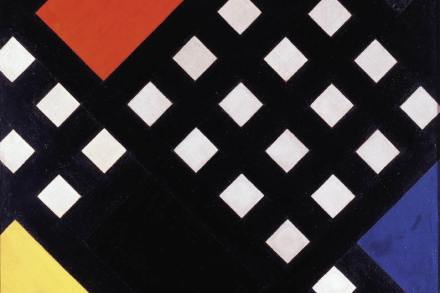
Arshile Gorky: A Retrospective Tate Modern, until 3 May Van Doesburg and the International Avant-Garde: Constructing a New World Tate Modern, until 16 May Arshile Gorky (1904–48) was a great and versatile painter, either the last major surrealist or the first Abstract Expressionist. In truth, he was a bit of each, an Armenian who fled to America where he became a focus of European influence and an innovator of considerable potency. André Breton called him ‘the eye-spring’, and wrote: Gorky had the extreme sensitivity to be such a conducting wire, but his brief career was cut short by tragedy — a studio fire, cancer, a broken neck sustained in a car accident — and he committed suicide aged just 44.

Hypermanic Rossini

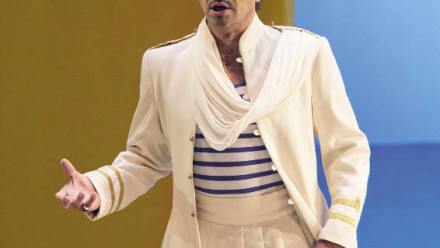
Il Turco in Italia Royal Opera, in rep until 19 April Commentators on Rossini’s Il Turco in Italia tend to take a defensive line, comparing its absence from the repertoire for many decades with that of Così fan tutte, and even comparing the two works directly, as well as pointing out that Mozart’s great opera was playing in Milan at the time that Rossini was composing Turco.

Sound effects | 17 April 2010

The Tallis Scholars’ 50th concert in New York City — the first was in 1988 — took place in St Bartholomew’s Church, Park Avenue, on 26 March. The Tallis Scholars’ 50th concert in New York City — the first was in 1988 — took place in St Bartholomew’s Church, Park Avenue, on 26 March. Since we have sung now in 15 different spaces in NYC — more than in any other city in the world and including the Lincoln Center and the Metropolitan Museum of Art — this was an unusual choice of venue for a celebration. St Bart’s is famous for a number of things, but since reverberant acoustics is not one of them I feared we would have an uphill task appealing to a new audience.

Rotten truth

The Empire Royal Court, until 1 May Polar Bears Donmar, until 22 May The Royal Court’s stuffy little upstairs theatre is hosting a new play about cultural imperialism. D.C. Moore sets his scene in Helmand where a young English corporal finds himself morally compromised by his desire to torture a Taleban prisoner. The twist is that the prisoner is a norf-Lunnin geezer, of Asian extraction, claiming to have been kidnapped by insurgents while ‘holidaying’ in Kandahar. This device neatly brings the war back home and turns the play into an examination of the competing religious factions in Britain. And though the script is never less than absorbing, and often very funny too, it takes a while to hit cruising speed and the plot lacks complexity.

Spell bound

Cinderella Royal Opera House, in rep until 5 June I know that old fairy tales are not popular or fashionable any more. But last Saturday, at the opening of the Royal Ballet’s new run of Frederick Ashton’s Cinderella, I was shocked to overhear two nicely behaved children ask their grandparents why the good fairy had asked Cinders to fetch a pumpkin and why there were dancers dressed as white mice pulling her coach. It’s true that, in Ashton’s superb choreographic adaptation of the old story, the transformation scene is not as graphic as it is in Walt Disney’s animated film. Yet the youngsters’ questions were symptomatic of the cultural, psychological and political trends that inform children’s upbringing today.

Missing humour

After listening to an advance copy of tonight’s Archive on 4 I’m almost beginning to look forward to the general election of 2010. After listening to an advance copy of tonight’s Archive on 4 I’m almost beginning to look forward to the general election of 2010. A Night to Remember looks back over 60 years of Election Night Specials, guided by the curiously comforting voice of Anthony Howard, whose reflections and rummaging through the archives make dusty, devious politics begin to sound quite exciting. His programme is a useful reminder that what happens on the night of 6 May might actually make a difference.

Men only

I think it’s about time someone explained to women how to watch war films. I think it’s about time someone explained to women how to watch war films. They just don’t get them, in much the same way men don’t get handbags or expensive girl-shoes. They think it’s all boring and that the characters all look the same, so how can you care about them? They think there’s far too much shooting and killing and violence and horror and bang bang bang and it’s like watching paint dry. They’d rather let you watch on your own, if you don’t mind, while they go upstairs and read in the bath.

Sacrificing art for ideas

Richard Hamilton: Modern Moral Matters Serpentine Gallery, until 25 April This year is the 40th anniversary of the Serpentine Gallery, that most welcoming of exhibition venues — the gallery in the park — with its wide views and well-appointed rooms. Expectation rises as the visitor walks through gardens burgeoning with spring, even if it is raining. To start its anniversary year, the Serpentine has mounted an exhibition of Richard Hamilton’s political work entitled (in homage, presumably, to Hogarth) Modern Moral Matters. The show is a real disappointment: the blinds are down to focus the visitor’s attention inward, which might be acceptable if there were riches to be seen.