More from Arts

Digital deadline

It was such a shock. At first I couldn’t understand what was going on. Why were they all talking about Sid as if he was in the past? It was such a shock. At first I couldn’t understand what was going on. Why were they all talking about Sid as if he was in the past? I’d only been away for a few days. Surely nothing really major could have happened in Ambridge in the meantime? And especially not to Sid, who as far as I knew was safely ensconced in New Zealand on the trip of a lifetime to meet his new grandson. I listened to the next episode and still had no clue. A party for Sid? But he’s not around. Jolene in tears? But she’s usually such a toughie. A very nasty trick has been played on us by the scriptwriters.

Molière with a US accent

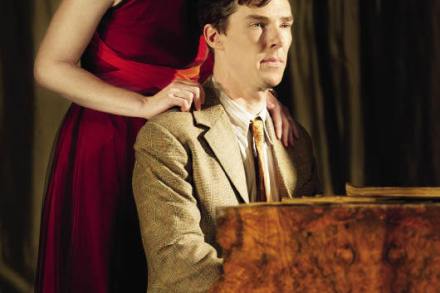
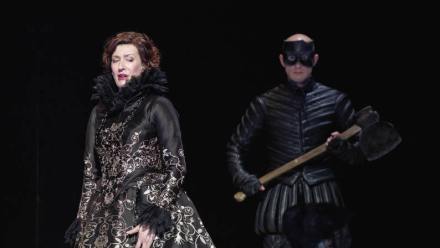
Matthew Warchus tells Henrietta Bredin why he is directing an American play inspired by Molière Rehearsing is an extraordinarily intensive, exploratory, deeply engaging business and director Matthew Warchus, emerging from a long day’s work on his new production of La Bête, by David Hirson, takes a while to change gear, blinking slightly dazedly as we walk towards the Old Vic in search of somewhere quiet to talk. ‘It’s a slippery play, this one,’ he says. ‘The text is so dense and highly wrought and it’s changing shape as we go along. The acting of it creates dimensions that just aren’t apparent on the page.

Lost lives

Ajami 15, Key Cities This week I’m reviewing an independent foreign film of the kind which is possibly only showing in a cinema several miles away from you, but do not complain, as the walk will do you good and also put colour in your cheeks. This film is Ajami, and while it is set in one of those male-dominated communities defined by crime, violence and drug-taking and I am growing weary of films about male-dominated communities defined by crime, violence and drug-taking (Gomorrah, A Prophet, and so on) I am happy to forgive it because the sun is out, which always makes me cheerful, and because there are no vuvuzelas in it, which has to be good. Also, it is exceptional, and well worth the walk.

Theatrical wizardry

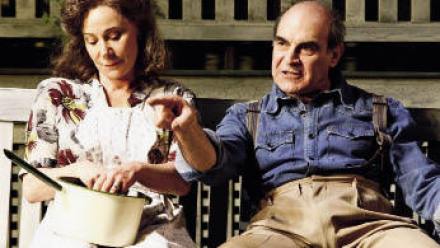
The Late Middle Classes Donmar, until 17 July Lilies of the Land Arts, until 17 July Plotless plays are usually the work of beginners or nutcases. Very occasionally they’re produced by seasoned theatrical wizards. Simon Gray belongs to the third type. The Late Middle Classes is an absorbing and often hilarious portrait of the buttoned-up English bourgeoisie of the 1950s. Celia and her pathologist husband Charles have pitched up in Hayling Island but they can’t wait to swap its provincial torpor for the glamour of London. Their big move is dependent on their son Holly’s ability to get a full scholarship to a public school.

Lesson from Venezuela

The idea that one can take guns and syringes out of the hands of disaffected youths and replace them with musical instruments, which they then delight to play, is so utopian that most people’s reaction was to laugh it off. The idea that one can take guns and syringes out of the hands of disaffected youths and replace them with musical instruments, which they then delight to play, is so utopian that most people’s reaction was to laugh it off. Yet, as everyone knows, this is exactly what has been happening in Venezuela since 1975, and is still happening. The lives of many young people have been improved by the opportunities offered by El Sistema, and no doubt the mood in society as a whole has been vastly improved.

Changing minds

‘Do you remember listening to the radio for the very first time?’ asked David Hendy at the beginning of his thought-provoking series of late-night essays on Radio 3 (which you should still be able to catch on Listen Again). ‘Do you remember listening to the radio for the very first time?’ asked David Hendy at the beginning of his thought-provoking series of late-night essays on Radio 3 (which you should still be able to catch on Listen Again). His question was not intended to conjure up memories like my own glimpse back to the draughty kitchen of the vicarage where I grew up when Uncle Mac announced on Children’s Favourites my brother’s request for ‘Greensleeves’.

Game for a laugh

In spite of the hype, I enjoy the World Cup. But I don’t enjoy the omnipresent James Corden, who played the clingy, footie-loving, curry-scoffing, lager-glugging, belly-baring, deeply annoying best friend in Gavin and Stacey. In spite of the hype, I enjoy the World Cup. But I don’t enjoy the omnipresent James Corden, who played the clingy, footie-loving, curry-scoffing, lager-glugging, belly-baring, deeply annoying best friend in Gavin and Stacey. That was funny. Bringing the same persona into his World Cup Live programmes (ITV, too often) is just embarrassing. Corden is from that school of comedians who think that laughing a lot is, in itself, funny.

Conversation piece

Another Country: London Painters in Dialogue with Modern Italian Art Estorick Collection, 39a Canonbury Square, London N1, until 20 June In recent years there has been something of a vogue for encouraging contemporary artists to respond to particular works by artists of the past, and to make paintings as part of that response. The prime example of this curatorial trend was Encounters: New Art from Old, staged by the National Gallery in 2000, and including such painters as Balthus, Patrick Caulfield, R.B. Kitaj, Cy Twombly and Euan Uglow.

Mozart magic

Le nozze di Figaro Royal Opera House, in rep until 3 July The Pearl Fishers English National Opera, in rep until 8 July A Midsummer Night’s Dream English Touring Opera, in Cambridge The Marriage of Figaro, in a fine performance, makes an impression different from that of any other opera. Almost all the characters are in a state of anxiety or rage or misery or frustrated lustfulness throughout, and they are vividly portrayed in the round; yet the listener is in a constant state of joy, from the mutinous opening scurryings of the overture onwards.

Secret admirer

When life becomes slightly too challenging, I’m sure I’m not alone in leaning towards comfort music. When life becomes slightly too challenging, I’m sure I’m not alone in leaning towards comfort music. You don’t want anything too jagged, or awkward, or dissonant, or glum. Nothing that makes the veins in your forehead throb. It needs to be something you know backwards but, ideally, haven’t played for years and years. And it might be something you will only consider playing when everyone is out, curtains are drawn and all covert listening devices have been safely neutralised. We are speaking, obviously, of Dire Straits’ ‘Sultans of Swing’. This is a generational thing, I understand.

Awkward questions

Greenberg, 15 Nationwide If you have ever wondered what the point of Ben Stiller is — and who hasn’t, at some stage in their life? Who hasn’t woken at 4 a.m., asking over and over: what is the point of Ben Stiller? What, what? — here is the answer: Roger Greenberg. There is nothing much to like about Roger Greenberg. He’s a narcissistic, prickly, nervy pain in the butt. But Stiller’s astonishing performance makes him so true that, if we can’t care exactly, we are fascinated by him, and his pained and painful struggle simply to get through the day. Just a look and we understand more about Greenberg than Greenberg does himself. I would not have guessed Stiller had it in him; not in a million years. He’s one cheeky little Focker all right.

The need to know

Simon Cowell spent the weekend bemoaning Britain’s lack of talent. Simon Cowell spent the weekend bemoaning Britain’s lack of talent. He obviously doesn’t listen to Radio 4. As Cowell should know, there are other kinds of talent, more useful in these gloomy economic times and more durable, which have no requirement to cake on tubloads of fake tan and sing along to Celine (or Whitney). What about our engineers and R&D cohorts, for example? We also have more than our fair share of extraordinary scientists, thinkers and communicators of big ideas.

History like it used to be

Because I was taught history properly by my prep-school teacher Mr Bradshaw, my head is full of easily accessible dates which I know I’ll never forget. Because I was taught history properly by my prep-school teacher Mr Bradshaw, my head is full of easily accessible dates which I know I’ll never forget. Obviously, I know Crécy (1346) and Agincourt (1415), but I also know one or two more obscure ones like those of Blenheim, Ramillies, Oudenarde and Malplaquet. This is because of a cunning acronym Brad taught me — a phone number BROM 4689 — which I dare say I remembered mainly because at the time I lived in Bromsgrove. According to the new history-teaching orthodoxy, of course, dates are an unwelcome imposition on a child’s creative spirit.

Drawing for drawing’s sake

Fra Angelico to Leonardo: Italian Renaissance Drawings British Museum, until 25 July The latest exhibition in the Round Reading Room is an awe-inspiring collection of Italian Renaissance drawings, the kind of display likely to be seen only once in a lifetime. It is a large show of relatively small things, offering 100 examples of the finest drawings made between 1400 and 1510, entirely selected from two collections: the Gabinetto Disegni e Stampe degli Uffizi in Florence, and the British Museum itself. Here we see the birth of drawing as an independent art form, and not simply as a preliminary study for a painting.

Hippie dream

By and large, I try to keep the night job out of this column. I love musicals, and even derive a gruesome gallows pleasure from the really bad ones but, since I review them for the Telegraph, it feels wrong to write about them here. And I don’t often listen to cast recordings of great shows at home either. If I want to hear numbers from the great American songbook — and I often do — I prefer the interpretations of Ella Fitzgerald, Billie Holiday, Sarah Vaughan and Fred Astaire, the last a man who sang as well as he danced, and always served the song rather than his own ego. An exception, however, must be made for the current production of Hair, now playing in the West End with the same American cast who first opened this glorious revival on Broadway.

Extreme violence

The Killer Inside Me 18, Nationwide Michael Winterbottom’s latest film has already caused outrage and charges of misogyny, and while I did not like it at all, and did spend a good portion of the time hiding my head in my hands moaning, ‘Oh, sweet Jesus, please make it stop,’ I can’t say it’s a bad film. I want to say it’s a bad film. I long to say it’s a bad film and that, as a woman who once marched to reclaim the night — even though the night never marched for me — I was both repulsed and offended by the explicit, prolonged violence. But?

Reality deficit

Ingredient X Royal Court, until 19 June Canary Hampstead, until 12 June In the old days the Royal Court knew that the best way to entertain local millionaires was to stage plays that wallowed in distress and squalor and featured four crack addicts in a squat stabbing each other to death with infected needles. Things changed under Dominic Cooke, who introduced a lighter touch and brought wit, intelligence and a sense of fun to the theatre. But nostalgia is back. The Court has revived its crack-house quartet formula in Nick Grosso’s new play, Ingredient X. The setting is a London high-rise. There’s no plot. The action concerts the attempts of two characters to overcome their enthusiasm for alcohol and powders while the other two booze merrily away.