More from Arts

Gardens: Beguiled by olive trees

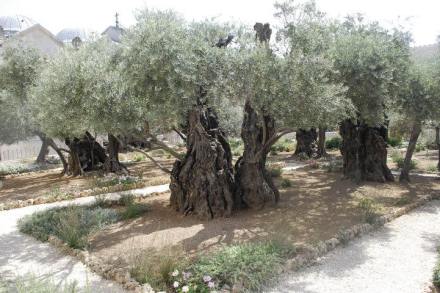
Fashion may be Folly’s child, but that never stopped gardeners, when the urge was on them, from planting something à la mode. Fashion may be Folly’s child, but that never stopped gardeners, when the urge was on them, from planting something à la mode. That must be why olive trees (Olea europea), natives of the rocky dry soils of the eastern Mediterranean, are now so widely planted in British gardens. Prince Charles has them at Highgrove and they can be seen each year at Chelsea Flower Show so, hey, we all have to grow them, don’t we?

The road to ruins

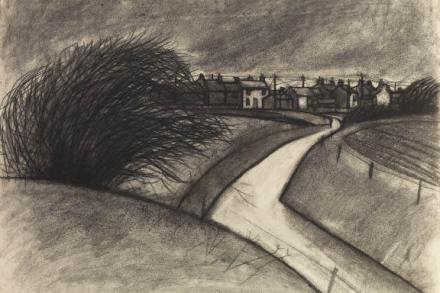
Director Patrick Keiller made his name with London (1994) and Robinson in Space (1997), semi-documentaries recounting the peripatetic investigations into ‘the problem of England’ conducted by the unseen narrator and his fellow academic Robinson. The late Paul Scofield’s voiceover, rich in literary reference and understated satire, combined with meticulous shot composition to produce unclassifiable portraits of a country forever in decline from its literary and industrial pre-eminence. In the new film Robinson in Ruins, Vanessa Redgrave assumes Scofield’s role as narrator.

Exhibitions Round-up: lifting the heart

The run-up to Christmas is the perfect season for an exhibition of Andrew Logan’s joyful and extravagant art. The run-up to Christmas is the perfect season for an exhibition of Andrew Logan’s joyful and extravagant art. At Flowers (82 Kingsland Road, E2, until 31 December) is an installation of glittering sculptures which lightens the spirit and brings a song to the lips. Fashion meets fantasy in Logan’s signature mirror sculptures, his unique blend of resin, glass, fibreglass, paint and glitter. For the past 40 years, Logan (born 1945) has brought colour and light into people’s lives. He was a pioneer of the sensational long before the YBAs toddled into view; revealingly, Sir Norman Rosenthal, chief enabler of the YBAs, is a long-time admirer of Logan.

Broken hearts

In a bleak St Louis tenement, the Wingfields are buckling beneath the Depression and their mother’s old-fashioned aspirations. A framework of fire escapes and raised walkways provides convenient perches from which Tom (Leo Bill) can narrate and look on with foreboding as his lame sister is dressed and groomed for the long awaited ‘gentleman caller’. In a bleak St Louis tenement, the Wingfields are buckling beneath the Depression and their mother’s old-fashioned aspirations. A framework of fire escapes and raised walkways provides convenient perches from which Tom (Leo Bill) can narrate and look on with foreboding as his lame sister is dressed and groomed for the long awaited ‘gentleman caller’.

Playing it safe

Put the life of a legendary music-maker/campaigner in the hands of a controversial choreographer and you’ll possibly end up with some explosive stuff. Put the life of a legendary music-maker/campaigner in the hands of a controversial choreographer and you’ll possibly end up with some explosive stuff. This is what the Broadway producer Stephen Hendel might have had in mind when he asked Bill T. Jones to direct and choreograph a musical about Fela Kuti. But whether or not he saw his dream realised, I am not sure. Fela! hails from Broadway where it has been a long-running sizzling hit. It has great music, an almost endless stream of colourful numbers and an engaging storyline.

Treasure trove | 27 November 2010

One afternoon in the winter of 1992 I was on a bus traversing London’s Millbank when an extraordinary sight caught my eye. A bright red Triumph Spitfire had been driven up the imposing front steps of the Tate Gallery and abandoned there. Not for the first time in my life I wished I had a camera with me. Only later did I learn that some disaffected artist or taxpayer had committed this spectacular act as a protest against the Turner Prize. One afternoon in the winter of 1992 I was on a bus traversing London’s Millbank when an extraordinary sight caught my eye. A bright red Triumph Spitfire had been driven up the imposing front steps of the Tate Gallery and abandoned there. Not for the first time in my life I wished I had a camera with me.

Vertically challenged

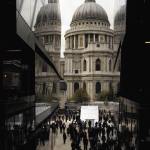
St Paul’s Cathedral is quite rightly something of a national obsession. No other building has protected ‘view corridors’ as a result of legislation in 1935, when new building regulations allowed the surrounding buildings — notoriously a telephone exchange to the south — to overtop the cathedral’s cornice line. These corridors, extending like an unseen net as far afield as Richmond Hill, make architects unaccountably cross, as if they were an unfair curb on the alliance of art and Mammon. Thank God they are there, and that the tallest buildings, springing up once again like genetically modified beanstalks, are at least corralled east of Bank. St Paul’s Cathedral is quite rightly something of a national obsession.

Visual pleasure

According to the programme note, the message in Thierry Smits’s To the Ones I Love ‘does not direct itself to the mind but to the senses’. According to the programme note, the message in Thierry Smits’s To the Ones I Love ‘does not direct itself to the mind but to the senses’. Well, his work is certainly a pleasant sensory experience. Neat patterns of colour, possibly recalling the chakras or energy centres that, in Eastern philosophy, govern our senses and feelings, mark the sections of this one-hour dance. The undeniable prowess of the nine handsome black male dancers with their superbly co-ordinated movements, derived from a mix of idioms, adds to the visual pleasure.

World Music

Sitting at my computer, headphones in hand and wearing top-half concert dress, bottom-half pyjamas, this is shaping up to be the most bizarre performance I have ever given. I’m about to join Eric Whitacre’s Virtual Choir, made up of singers from all over the world recording themselves singing his composition Sleep. Sitting at my computer, headphones in hand and wearing top-half concert dress, bottom-half pyjamas, this is shaping up to be the most bizarre performance I have ever given. I’m about to join Eric Whitacre’s Virtual Choir, made up of singers from all over the world recording themselves singing his composition Sleep.

Gather ye roses

Can there be many spare bedrooms in the country that do not have at least one, and probably four, prints of Redouté rose engravings hanging on the walls? I know ours does. Can there be many spare bedrooms in the country that do not have at least one, and probably four, prints of Redouté rose engravings hanging on the walls? I know ours does. People who do not think they know the name of a single botanical artist will have heard of Pierre-Joseph Redouté, the 19th-century Belgian-born artist who did so much to instil the French (and later the English) with an enduring love for the rose. He did this by painting roses most faithfully and sensitively, in watercolour on vellum.

Middle East meets West

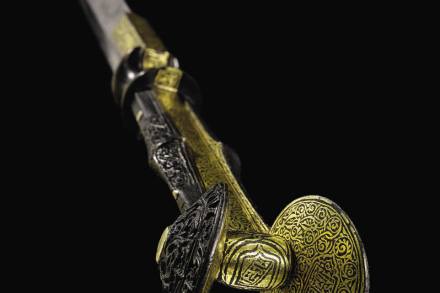
The Islamic-art market has seen some changes since it emerged in the late-19th century. At that time, anything Middle Eastern was likely to be classified as ‘Persian’, while for most of the 20th century the preferred term was ‘Islamic art’. Now, it is ‘art of the Islamic world’, and the market is stronger than ever. Last month at Sotheby’s saw a new record for an Islamic weapon: almost £4 million for a dagger from 15th-century al-Andalus. The Islamic-art market has seen some changes since it emerged in the late-19th century. At that time, anything Middle Eastern was likely to be classified as ‘Persian’, while for most of the 20th century the preferred term was ‘Islamic art’.

Double diamond

Emanuel Gat’s Winter Variations is not just another male duet. It is also an intense dance piece which captivates viewers from the opening sequence with its unique interplay of movement, music and enthralling performance. Emanuel Gat’s Winter Variations is not just another male duet. It is also an intense dance piece which captivates viewers from the opening sequence with its unique interplay of movement, music and enthralling performance. Created in collaboration with Roy Assaf, who performs it with Gat, this new work explores the choreographic motifs and ideas first seen in Gat’s 2004 Winter Voyage. But you don’t need to be familiar with the previous creation in order to appreciate the sheer beauty of the new piece.

All in the mind | 6 November 2010

‘All of us have had the experience of confusion or bafflement when we repetitively forget something, do something that (consciously) we absolutely did not want to do or lose something important to us.’ Indeed. ‘Freud took these episodes seriously and showed how these apparently innocent events provide windows into our unconscious minds.’ Ah. ‘All of us have had the experience of confusion or bafflement when we repetitively forget something, do something that (consciously) we absolutely did not want to do or lose something important to us.’ Indeed. ‘Freud took these episodes seriously and showed how these apparently innocent events provide windows into our unconscious minds.’ Ah.

The mighty Bausch

Sadler’s Wells Contrary to some claims, the late Pina Bausch did not invent Tanztheater. Contrary to some claims, the late Pina Bausch did not invent Tanztheater. Nor did all her productions stick to the mind-boggling aesthetic she is universally known and remembered for. Just look at the Iphigenie auf Tauris she created in 1974, shortly after being appointed director of dance for the Wuppertal theatres. Although the germ of what eventually bloomed as Bausch’s own Tanztheater is detectable in this dance–opera, pure dance still reigns supreme; the choreography is not as rhapsodic as it is in her later creations, and the only words one hears are those delivered — more or less beautifully — by the singers.

Friends indeed

Jarrow playwright Peter Flannery’s superb television serial Our Friends in the North started life as an RSC production in Stratford in 1982 and has finally been re-released on DVD. The £8 million, ten-hour adaptation that reached the small screen after 14 years used the overlapping lives of four Geordies to explore the country’s changing political climate between 1964 and 1995. It was delayed in part because of the BBC’s caution over subsidiary characters clearly based on real people, not least the late former home secretary Reginald Maudling. Our Friends in the North’s feel for how communities far outside the capital struggle with societal change earned it legitimate comparisons to German film-maker Edgar Reitz’s similarly ambitious Heimat.

Senses working overtime

Postmodernism must be the key motif of this year’s autumn dance season in London, because almost everything there is to see at the moment abides by the uncertain rules of that much-debated artistic movement. Postmodernism must be the key motif of this year’s autumn dance season in London, because almost everything there is to see at the moment abides by the uncertain rules of that much-debated artistic movement. There is no such thing as a standard aesthetic when it comes to the postmodern dance genre. While vintage American, early-1960s choreography is celebrated by both Dance Umbrella’s retrospective on Trisha Brown and the Hayward Gallery’s exhibition Move: Choreographing You at Sadler’s Wells, the spotlight is on Middle-European postmodernism.

Eastern promise | 23 October 2010

The Singapore Symphony Orchestra is like a teenage athlete just about to hit peak form. This could be one of the great orchestras of the 21st century. So could its rival, the Malaysian Philharmonic. We all know that Asia produces dazzling soloists. But orchestras? I was sceptical until I heard the Singaporeans at the Southbank Centre this month. Accompanying Stephen Hough in Mendelssohn’s First Piano Concerto, they matched his virtuosity with their bouncy brio. The conductor, Lan Shui (above), had the sections swaying like stalks in a gale in Rachmaninov’s Isle of the Dead and Debussy’s La Mer. The encores: Bernstein’s Candide overture, taken at a lick that would have raised even Lenny’s eyebrows, and Stokowski’s arrangement of Air on a G String.

Postmodern spirit

Once upon a time, in America, a group of dancers and performance artists gathered in the Judson Church Theater and challenged long-held artistic tenets. The historical significance of their provocative aesthetics led scholars to label their art ‘postmodern dance’, even though there was more to their creations than just dance. A few decades later, their works have not lost their appeal, even though their principles have been regurgitated and tiresomely plagiarised. Take, for instance, Trisha Brown’s Flower of the Forest, the choreographic installation that greeted viewers outside the Queen Elizabeth Hall over the weekend.

Tales from Afar

If you heard Australian bluesman C.W. Stoneking’s first album, King Hokum, then you will know what to expect from his second: Jungle Blues. If you heard Australian bluesman C.W. Stoneking’s first album, King Hokum, then you will know what to expect from his second: Jungle Blues. If you didn’t, then let me point out that Stoneking is a prize mimic. With a banjo in his hands, and the wail of a Howlin’ Wolf or Robert Johnson in his throat, this 36-year-old (white) man (raised by American parents in an Aboriginal community) sets about recreating every lurch and inflection of 1920s blues and calypso music. The horns swoon, the drums shuffle — and you’d swear you can hear the crackle of old vinyl, dusty between its grooves.

Body language

The Dance Umbrella season has always been a unique window on international choreography, as well as a great platform for national talent. This year is no different, and the number of international visitors is delectably high. As always, blockbusters share the season with smaller but no lesser entities. Last week I went to see two from the latter category and was utterly intrigued, though not equally impressed. Those who have faithfully followed Phoenix Dance Company for the past decade might recall the Portuguese performance-maker Rui Horta and his somewhat mind-probing aesthetics. His Talk Show is a rather dramatic development of the formulae first seen and applauded in Phoenix’s performance of Can You See Me.