More from Arts

Murdering Mozart

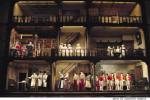
While the Royal Opera is touring Japan, its home team opened what looks to be mainly an unadventurous season with revivals of two celebrated productions by Jonathan Miller, for which Miller himself returned, having, it seems, modified his view of Così fan tutte drastically, while there probably aren’t two ways of looking at Don Pasquale. While the Royal Opera is touring Japan, its home team opened what looks to be mainly an unadventurous season with revivals of two celebrated productions by Jonathan Miller, for which Miller himself returned, having, it seems, modified his view of Così fan tutte drastically, while there probably aren’t two ways of looking at Don Pasquale.

In search of lost time

My friend Mickie O’Brien, late of 47 and 44 RM Cdo, died the other day. My friend Mickie O’Brien, late of 47 and 44 RM Cdo, died the other day. I’m not sure how old he was — late 80s, I would imagine — but, whatever, it was good going for a man who should have been killed at least twice in the 1940s, once at the Battle of Kangaw when the Japs shot away half his stomach and once when he walked deliberately into a minefield to rescue a French farmer. For one exploit or another Mickie won an MC. The question I used to ask Mickie most often was how he managed to cope with so much fear and horror. He always replied that he had the perfect temperament for wartime soldiering: ‘a strong sense of fatalism and no imagination’.

Out of the ordinary | 11 September 2010

Frederick Cayley Robinson: Acts of Mercy National Gallery, until 17 October The free exhibitions in the Sunley Room offer a programme of meditations on the National Gallery’s permanent collection, either through works of art directly inspired by or related to the old masters, or connected in a more oblique way. Frederick Cayley Robinson (1862–1927) is a little-known early-20th-century English painter in oils, tempera and watercolour who deserves wider recognition: this loan exhibition is the first show of his work for more than 30 years.  A traditionalist with a feeling for the more modern statement, Cayley Robinson was using the same methods and materials as the old masters, but wanted to create something of relevance to his period.

Stale buns

Tamara Drewe 15, Nationwide Tamara Drewe is directed by Stephen Frears and is based on the graphic novel by Posy Simmonds and so you may think, as I did, what’s not to like?, to which I would now have to reply: where do I start? Where, where, where? I wanted to love this film. I strained with every fibre of my being to love this film and, had the fibres of your being been available — which they rarely are; you are quite stingy with your fibres — I’d have strained with those too, but Tamara Drewe is just so determinedly superficial, uninteresting and predictable that, in the end, it could not be done. Or, as one of my fibres later told me, ‘I strained like a mad thing but, alas, it was not to be.

Liberation day

‘We’re women, not ladies,’ the Women’s Libber, still in campaigning mode after 40 years, reminded us sharply. ‘We’re women, not ladies,’ the Women’s Libber, still in campaigning mode after 40 years, reminded us sharply. She was for the first time in the same room as Peter Jolley, who had helped to organise the notorious 1970 Miss World contest. He, too, does not seem to have changed much in the intervening decades. ‘So much work went into it, my dear,’ he insisted, riling his fellow conversationalists, perhaps deliberately.

Seaside renaissance

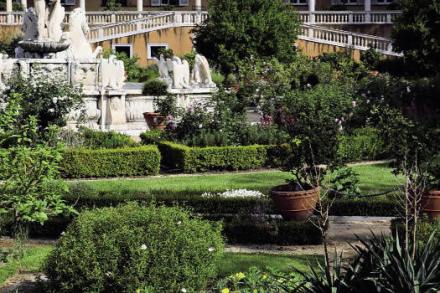
Roderick Conway Morris on how Genoa’s glorious Villa del Principe has been brought back to life Palazzo Doria Pamphilj houses the most important private art collection in Rome. But the family possesses another treasure, the Villa del Principe in Genoa. The Doria side of the family moved to Rome in 1760, when they inherited the Pamphilj titles and estates, after which the Villa del Principe suffered a slow decline, punctuated by two major disasters. But after 16 years of work it has now been restored and reopened to the public.

Shared affection

The Switch 12A, Nationwide As a rule, Richard Burton acted stupendously well in stupendously bad films. Jennifer Aniston has mastered half that duality. The Switch, her latest film, is comfort-zone Aniston: a charmless rom-com with a crass attempt at eroticism — Toy Story’s more titillating, to be honest. Cliché is The Switch’s currency. A pallid dawn rises over New York’s landmarks and we are taken back seven years. It is breakfast time. An aging girl-next-door (Aniston) tells her lachrymose friend and former lover Wally (Jason Bateman) that she is seeking a sperm donor. ‘The clock has struck,’ she says, to crown the cliché.

Comfort-zone Aniston

The Switch 12A, Nationwide As a rule, Richard Burton acted stupendously well in stupendously bad films. Jennifer Aniston has mastered half that duality. The Switch, her latest film, is comfort-zone Aniston: a charmless rom-com with a crass attempt at eroticism — Toy Story’s more titillating, to be honest. Cliché is The Switch’s currency. A pallid dawn rises over New York’s landmarks and we are taken back seven years. It is breakfast time. An aging girl-next-door (Aniston) tells her lachrymose friend and former lover Wally (Jason Bateman) that she is seeking a sperm donor. ‘The clock has struck,’ she says, to crown the cliché.

Bliss with Stravinsky

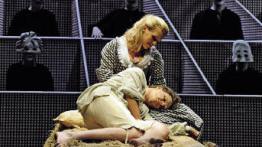
Renard; Mavra; The Rake’s Progress Glyndebourne Anyone who was lucky enough to go to Glyndebourne on one of three days last week had the option of seeing not only the opera they had booked for, but also, before it, a couple of brief works by Stravinsky that were put on by the Jerwood Chorus Development Scheme, with the Britten Sinfonia and young singers, in the Jerwood Studio. It was rigged up as a circus tent, the action of the pieces taking place in the arena, while the small orchestra — a little too backward — played behind that. The two together made 45 minutes of bliss, Stravinsky at his insouciant best, though with imposing moments or more of ritual. The works were sung in English translation, but the feeling of Russianness was very strong.

Let Hester fester

In the Blood Finborough, until 4 September Zelda Leicester Square Those who oppose state-funded theatre in Britain sometimes imagine that America, with its far smaller subsidised sector, is spared the sort of pious, jokeless, grind-yer-nose-in-it plays which our handout theatres use to punish audiences for the sin of being affluent. But American theatre turns out to be richly contaminated with underclass miserablism too. Suzan-Lori Parks is a supreme purveyor of the goods and, like many second-rate talents from minority backgrounds, she’s been given more prizes than Chekhov. She’s won the Pulitzer. She’s been nominated for a Tony.

Opiate for the masses

One of the few things I respect about mainstream TV is how utterly shallow and addictive it is. In many ways it’s like crack: it doesn’t pretend that it’s good for you but it gets you to where you want to go way more effectively than tofu or wheatgrass juice or organic dolphin-friendly tuna caught with rod and line. Sometimes it achieves high artistic standards too, but this is usually a fluke, which happens despite the medium rather than because of it. TV isn’t like film or opera or theatre or sculpture or any of that poncy stuff. Its main job is to get you out of it as quickly as possible — an opiate for the masses. I got a sense of its true purpose the other day when I ventured up to the Rat’s lair to call him down for supper.

Pick up a Penguin

What must it have been like for Allen Lane to wander into a bookshop in the 1940s and see the serried ranks of pale-blue, cerise, green, yellow, dark-blue and grey Penguins on display, knowing that he was responsible for all of them? His genius idea had in less than a decade transformed not just bookselling but also what everyone in Britain (and soon the English-speaking world) was reading. Penguins were cheap to buy, just 6d a throw, or the price of a packet of cigarettes, yet were literature of the highest quality and broadest range — from Maurois, Hemingway, Marx and Homer to Dorothy L. Sayers, Agatha Christie and Compton Mackenzie. Until 1935, such books had been available only in expensive hardbacks or on temporary loan from the library.

Well met in Mexico

The Surreal House Barbican Art Gallery, until 12 September Surreal Friends: Leonora Carrington, Remedios Varo and Kati Horna Pallant House Gallery, Chichester, until 12 September It may not come as a surprise to readers to learn that ‘the individual dwelling [is] a place of mystery and wonder’, yet this is the premise of the Barbican’s latest attempt to pull in the punters. A portmanteau surrealism show that tries to blend art, film and architecture, its reach exceeds its grasp, though the designers must have had great fun carving up the space into dark cabins and voids. Some of the best exhibits — apart from fine things by de Chirico, Magritte and Giacometti — are the films.

Sound bites

Tête à Tête: The Opera Festival Hammersmith Studios It’s 11 years since I first went to a Tête à Tête evening, then at the Battersea Arts Centre, a most agreeable location, but not used by Tête à Tête since 2004, I think. Nowadays there is a whole festival each year in August, the operatic low season, planned by the founder and artistic director, Bill Bankes-Jones, whose enthusiasm knows no bounds. Sometimes I wonder if it might not be a good thing if it knew at least one or two. The first, and excellent idea he had was to encourage young composers with an interest in writing opera to write a short one, say 20 minutes long, with a pithy text.

Hollow loser

Scott Pilgrim vs. the World 12A, Nationwide Scott Pilgrim vs. the World has a running time of 113 hateful minutes — actually, make that 112 hateful minutes; the first minute was fine, and not too loud — but, in its defence, it probably wasn’t made for someone as hopelessly middle-aged and frighteningly not with-it as me. (I’ve even started saying ‘Ooh, that so hits the spot’ when I take a first sip of tea.) It’s based on the graphic novel by Bryan Lee O’Malley, should that mean anything to you, and is a frantic, frenetic mash-up of comic-book iconography, video games, music videos and, I’m guessing, whatever else young people are into today but I just didn’t get. I do not know if this film failed me or I failed it.

National treasure

Chopin is a difficult composer to celebrate, at least in the festivals of larger format. Countless piano recitals don’t really fit the bill and the music which includes orchestra is not the best of him. He surely was a miniaturist — perhaps the most compelling there has ever been. Which other composer can set a mood so securely in the very first bar, and then sustain it as a single shaft of thought to the end? He is like a painter who with three strokes of the brush has told you all you need to know about what is to follow, so that what does follow already seems like a familiar and longed-for friend. Of course this kind of writing doesn’t work very well in a building the size of the Albert Hall.

The price of fame

The X Factor is back on ITV, and it’s fascinating, being a paradigm of British life. The X Factor is back on ITV, and it’s fascinating, being a paradigm of British life. Persons of little or no talent are assembled to be jeered. Those who have a modicum of ability are praised as if they had just sung Wagner’s Liebestod faultlessly at Covent Garden. This audience would applaud Beachcomber’s Directory of Huntingdonshire Cabmen if whoever was reading it remembered to tear up around the letter B. Rather like in Nineteen Eighty-Four we have the two minutes of hate followed by a great wave of sentimentality, as if a knickerbocker glory packed with cream and raspberry sauce had been laced with castor oil.

No easy answers

An unsettling interview with Moazzam Begg, the British Muslim held prisoner in Guantanamo Bay for three years, and with his father Azmat, began with the haunting cry of the muezzin as it rang out across a cityscape, unnamed and unidentifiable, and the clashing of heavy iron gates being shut. Two sounds that perhaps sum up what’s been happening in the world since the events of September 2001. British Muslims, Father and Son (Radio 4, Monday) gave us a refreshingly frank account of Begg’s life before and after his ‘extrajudicial’ imprisonment.