More from Arts

Dreaming in the Renaissance

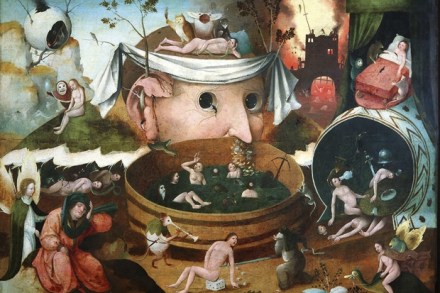
The exhibition The Renaissance and Dream at the Musée du Luxembourg in Paris (until 26 January 2014) explores how artists have wrestled with the furthest limits of the imagination, in forms ranging from the muscular elegance of Michelangelo to the luminous naivety of Lorenzo Lotto. In tackling a subject as inexhaustibly popular as dreams, the exhibition has avoided being either nebulous or anachronistic. Freudian psychoanalysis is mentioned only once in passing, and the paintings are allowed to speak for themselves. What’s more, these artists were not depicting their own dreams. They were plundering from history, myth and religion in a quest for vision unimpeded by time, place or conventional imagery.

BFI has got carried away with its live broadcasts

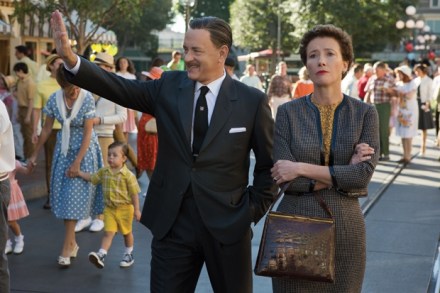
Live broadcasts into cinemas have become something of a commonplace, and a welcome one: operas, theatre performances, even radio programmes. But a live broadcast into cinemas of the audience entering another cinema is a new one on me. The idea is part of this year’s BFI London Film Festival, not as an avant-garde experiment but as a way of adding lustre to the closing-night gala: Saving Mr Banks, a sort of biopic of the film Mary Poppins with Emma Thompson as author P.L. Travers and Tom Hanks as Walt Disney (see image).

Pearls: if you’ve got ’em, wear ’em

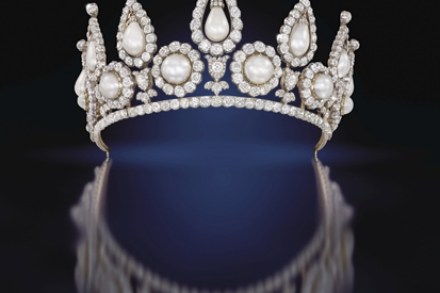
‘Women spend more money on their ears in pearl earrings than on any other part of their person.’ So said Pliny the Elder, who disapproved of the increasing fashion for pearls in the 1st century. It’s lucky he’s not around now to see the V&A’s new exhibition Pearls (until 19 January), where there are natural, cultured and freshwater ones in abundance (including, at the end of the show, eight buckets stuffed with cheap freshwater ones from China, which produces  — overproduces — more than 2,000 tons of pearls a year).

Carlos Acosta’s Don Quixote lacks the wow factor

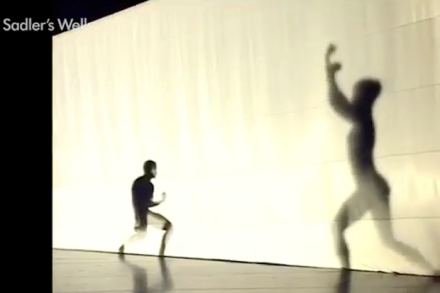
Superstar Carlos Acosta makes little or no reference to Don Quixote’s established history in his programme note about the genesis of his new ballet. As a dancer hailing from Cuba, he is certainly familiar with the work’s performance tradition, but a greater historical awareness would probably have helped Acosta rethink his realistic approach to the 1869 work. However, history is frequently frowned upon in today’s culture. Don Q, as it is affectionately known, is regarded by dance highbrows as the compendium of all those theatrical and choreographic conventions that give ballet a bad name.

A modern take on Victoriana

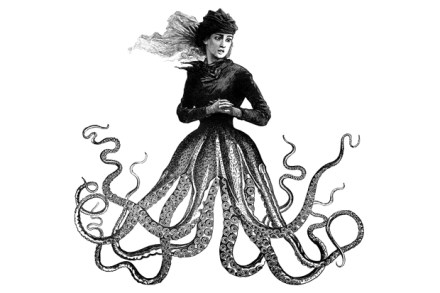
Britain is still an essentially Victorian country (see Daily Mail for details). So it’s no surprise that we keep returning to the period for inspiration. Victoriana: The Art of Revival at the Guildhall Art Gallery (until 8 December) is a collection of modern pieces channelling the age when corsets were tighter than George Osborne’s purse strings. Many of them pick up on the era’s sinister undertones. The blurb for Dan Hillier’s engraving ‘Mother’ (a woman with octopus tentacles instead of legs, above) talks of ‘prim order barely concealing a dark underbelly of animalistic impulse’. There’s also a wedding cake made from human hair and a wing-back chair adorned with stuffed ferrets.

Blitz Requiem première in St Paul’s

Of all folk memories the Blitz remains one of the most enduring. In the autumn of 1940 the Luftwaffe strafed London on 57 consecutive nights, leaving (if that is the word) 20,000 dead and whole streets pounded to rubble. ‘You do your worst,’ Churchill told the Hun, ‘and we shall do our best.’ Noël Coward put it another way: ‘Every blitz, your resistance toughening, from the Ritz to the Anchor and Crown. Nothing ever could override the pride of London town.’ London prevailed, and the spirit of the capital was captured in the memorable image of St Paul’s Cathedral standing proudly untouched amid the smoke and fire of a city under nightly bombardment. Francis Warner was only three when Hitler’s hordes came calling that September.

Another Self-Portrait isn’t just for the Bobsessives

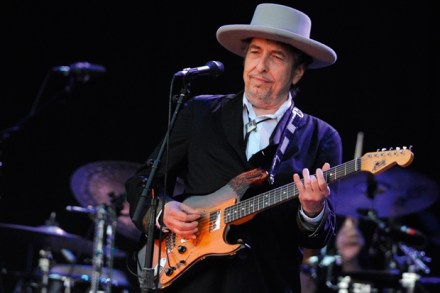
So, there’s this guy called Bob Dylan and, across just seven years in the 1960s, he’d released nine albums that were already legendary. The Times They Are a-Changin’, Highway 61 Revisited, Blonde on Blonde… yeah, you know them all. But then, at the start of the 1970s, came his Self Portrait. With a title like that, it promised to be mythic and definitive, except it wasn’t. It was a pick ‘n’ mix of country standards, concert snippets and Simon & Garfunkel covers. Dylan subsequently distanced himself from this weird confection. But, through these hindsight goggles I’m wearing, Self Portrait doesn’t look half so bad now.

At home with President Nixon

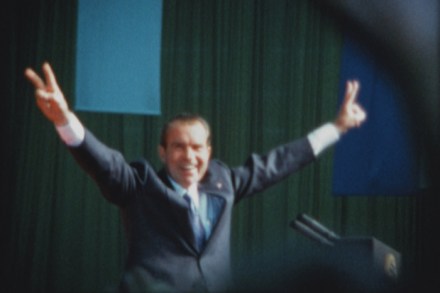
The most paranoid of presidents, Richard Nixon must have been feeling unwell when he allowed three of his closest aides to shoot personal Super 8 footage of their time in the White House. Bob Haldeman, John Erlichman and Dwight Chapin — all of whom later went to prison for their involvement in the Watergate affair — together shot more than 200 rolls of film between 1969 and 1973, the highlights of which form the backbone of a new documentary Our Nixon, and show us a team of go-getting young Republicans you wouldn’t recognise from Oliver Stone’s murky biopic. As the director Penny Lane says: ‘There aren’t any bad guys in home movies.

The Venice Film Festival from your desk

Venice may be the oldest film festival in the world but it is still breaking new ground. This week film-lovers across the globe will sit down in the comfort of their own homes to watch films that are being streamed live from the Lido. It is the second year of Venice’s Web Theatre; this offers members of the public the chance to buy tickets to stream films  — picked largely from the festival’s Horizons section — at the same time as festival attendees see them on the big screen (www.labiennale.org for details). Horizons, though not the main category in the festival, still has some worthwhile films to watch. Wadjda, the hit Saudi Arabian film, was one of last year’s gems.

London life

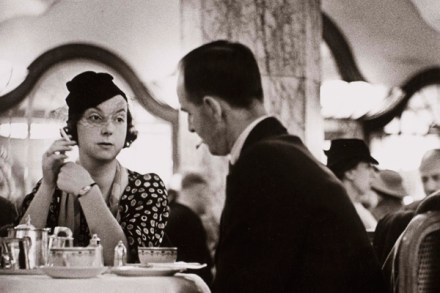
Whoever coined the phrase ‘nothing is ever black and white’ had quite obviously never stepped over the threshold of Tate Britain this summer. Another London (until 16 September), a selection of photographs taken by some of the 20th century’s most celebrated photographers, including Henri Cartier-Bresson and Irving Penn, is a two-tone world; a black and white sea of parks and landmarks, crowds and individuals; London’s many faces in the last century (Wolfgang Suschitzky’s ‘Lyons Corner House, Tottenham Court Road’, 1934, above). There’s something unnerving about seeing London, a city recognised for its vibrancy and multicoloured diversity, depicted in stark monochrome.

Martha Wainwright’s family affair

Martha Wainwright was keeping it in the family at the Union Chapel in Islington last week. Arcangelo, the singer-songwriter’s three-year-old son, joined her on stage and had the audience eating out of the palm of his tiny hand; the spectral presence of her mother, the folk legend Kate McGarrigle, was never far away; and the evening was peppered with references to intense sibling rivalry with her irritatingly talented brother Rufus. Wainwright stole the show, though. A gutsy set drew mostly on her recent album Come Home to Mama, a paean to motherhood written in the aftermath of her mother’s death and the scarily premature birth of her son. She effortlessly seduced the audience with a combination of whip-smart humour, smutty talk and an endearing line in self-deprecation.

A masterclass in stage presence from the Bolshoi

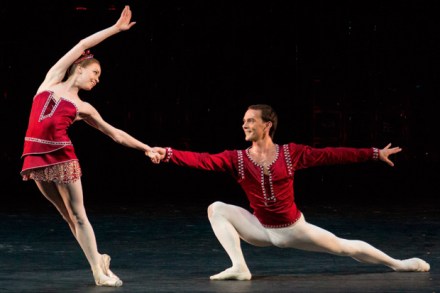
Jewels is everything a George Balanchine admirer could ask for. The sumptuous triptych, set to scores by Fauré, Stravinsky and Tchaikovsky, is a compendium of what Balanchine’s style is about; each part — Emeralds, Rubies and Diamonds — provides unique insights into the subtleties, signature features and inventiveness that inform the art of the Russian master who fathered American ballet. Yet on these shores Jewels is seldom a sell-out production. Unless, of course, it is danced by the Bolshoi Ballet. Comparisons are odious, but seasoned dance-goers could not help noticing that, on Monday, the Royal Opera House was packed to the brim.

Climb aboard the runaway train

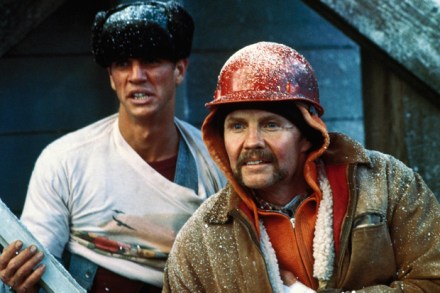
Brother, can you spare me a train? Or maybe just a Pullman carriage or two? There are so many brilliant films set on trains that I’d love to screen some of them in loco locomotive, as it were. Shanghai Express (1932), The Lady Vanishes (1938), The Narrow Margin (1950), Night Train (1959)… I’ll stop there. Just grab a ticket and scramble aboard. Andrey Konchalovsky’s 1985 film Runaway Train, which has just been released on Blu-ray and DVD, would certainly be included on the programme. It has the qualities of other rail-bound films: the heavy sense of momentum, the restrictiveness of the carriages, and so on. But it’s several times gruffer than the rest.

Send George Osborne to the Tower

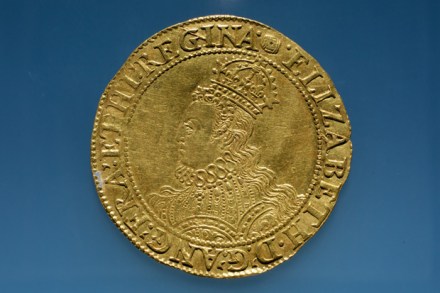
Send George Osborne to the Tower, then he might learn that currency manipulation rarely ends well. Coins and Kings occupies four small rooms in a Yeoman Warder’s house on the site of the old mint, which was established by Edward I in the 1270s in response to endemic counterfeiting, coin clipping and general skulduggery. This permanent exhibition progresses through the Middle Ages to Elizabeth I’s attempt to restore confidence after her bankrupt father had debased the currency and caused inflation, riots and misery (on display is an Elizabeth I half pound coin, above). The Reformation saw traces of continental popery being removed from coins, and the crown take even greater prominence as the nation state began to form.

The Bolshoi remains faithful to the classics

Tradition is often frowned on. Yet, if properly handled, it can be sheer fun and pure bliss, as demonstrated by the Bolshoi Ballet’s current season in London. Far from being museum pieces, the classics so far presented stand out for their vibrant and captivating theatricality. According to an enlightening note by Yuri Grigorovich, the father of Russian contemporary ballet, much of it depends on an approach that favours performance tradition over sterile philology. In other words, care is taken to note the cuts, the interpolations, the revisions and the additions that have helped each ballet stand the test of time, instead of going for a much idealised ‘original’.

Punchdrunk’s bizarre spectacle

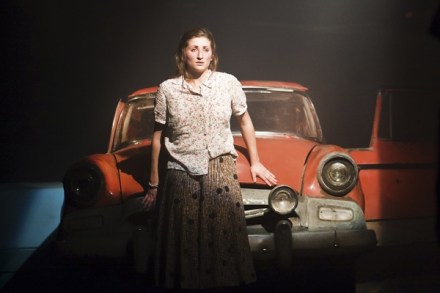
Standing enthusiastically by as a naked man writhes in agony might not be everyone’s cup of tea. But this is the sort of bizarre spectacle that devotees of immersive theatre group Punchdrunk sign up for. Like previous efforts including 2007’s The Masque of the Red Death, Punchdrunk’s latest venture, The Drowned Man: A Hollywood Fable, requires theatregoers to don masks and chase actors down disorienting, low-lit passageways, happening haphazardly upon non-sequential ‘scenes’. Rummaging is encouraged, talking is not. And every individual sees something different. The Drowned Man (playing until 31 December; www.nationaltheatre.org.uk) is a delirious fever-dream, replacing dialogue with dance and abandoning most audience/actor interaction.

A secret gallery at Hyde Park Corner

A rare jewel sits in the middle of the Hyde Park Corner roundabout. The Quadrant Gallery, run by English Heritage, occupies the Wellington Arch. The gallery is showing a series of exhibitions to mark the centenary of the 1913 Ancient Monuments Act, a landmark in conservation. The present show (until 15 September) examines efforts to protect Georgian Britain during the early 20th century. The Luftwaffe (see Holland House library after an air raid, 1940, above) was nothing compared to rapacious British developers. Photographs show sledgehammers being taken to Adelphi Terrace, from which Robert Adams’s striking doorframe was salvaged.

Is Richard Rogers still a rebel?

‘Lounge suit’ is normally a reliable signifier of supine gentility. But there it was on the invitation to Richard Rogers’s 80th birthday retrospective. Can this be the same architect once praised by a president of RIBA for his admirable ‘sod you’ approach to the public? The same man the Parisians sniffily called an ‘English hippie’ when working on the Centre Pompidou? Surely not the architect who had to buy a cheap suit and borrow a tie to visit his new client, Lloyd’s of London? And there he was at the head of the receiving line. Balsamic brown face, steel-grey buzzcut like a Florentine cab-driver, baggy grey cargo pants, signature violent-green collarless shirt and DayGlo pink sneakers with some sophisticated ventilation thing going on.

Bear hunting on Shaftesbury Avenue

Shaftesbury Avenue might not be traditional bear-hunting territory, but young adventure-seekers would be well advised to beat a path this summer holidays to the Lyric Theatre where Michael Rosen’s much-loved classic We’re Going on a Bear Hunt has been imaginatively translated to the stage by Sally Cookson (until 8 September). The story follows an intrepid family who surmount various obstacles — long grass, oozy mud, a deep, cold river, a swirling snowstorm and a big dark forest — in their quest to find a bear. When they finally track him down in a gloomy cave, they take one look at his shiny wet nose and goggly eyes and scarper, hotfooting it back the way they came to take refuge at home under a large pink eiderdown.

Are rugs becoming the new must-have art objects?

Tapestries once had a place of honour in fine art, but that was during the Middle Ages and the Renaissance. Oil paintings, for a time, were viewed as the poor man’s tapestry. Now, that equation may be turning round. ‘Tapestries serve a lot of purposes,’ said Donald Farnsworth, president of Magnolia Editions, which has produced tapestries for artists such as Chuck Close, April Gornik, Alex Katz, Ed Moses, Gerhard Richter, Kiki Smith, William Wiley and others. ‘They absorb sound and add warmth to a room.’ But can they also be taken seriously as works of art? They are certainly priced like them.