More from Arts

Fifties domestic harmony

Our love affair with the 1950s has been going on for years and shows no sign of abating. Pangolin London, the city arm of the Gloucestershire foundry, has cleverly used the visceral appeal of Fifties design — if ever a period merited the term gay in its original sense, this one does — to show how sculpture can be incorporated into a domestic setting (until 17 May). All too often works of sculpture, whatever their size, are put on pedestals or instinctively relegated outdoors or to public spaces.

John Deakin is no genius – and he has not been forgotten

Every so often, John Deakin, jug-eared chronicler of Soho and hanger-on at the Colony Rooms, is breathlessly rediscovered as the unknown giant behind Bacon and the forgotten man from Soho’s  generation of genius. All that is so much tosh: Deakin is no genius and he has not been forgotten. In fact, he can never be forgotten, most importantly because Bacon commissioned photographs from Deakin that he used to make his paintings but also because Deakin himself was the subject of one of Freud’s greatest portraits (above) and because Deakin’s photographs capture Bohemian Soho in aspic for the mental tourist of the future.

Thanks to Audio Description, the blind have the best seat in the house

I did not mean to snort so loudly. There I was watching the amazing Simon Russell Beale in King Lear at the National Theatre and things were all getting a bit nasty — what with daughters scheming and people having their eyes gouged out. And then, through a small earpiece, which no one else could hear, I heard the immortal words, said in a deep and quiet voice: ‘Lear enters to find Goneril clenched in tight embrace with Edgar. He clasps her tightly.’ At my snort, a very serious man behind me tapped me on the shoulder and ‘shushed’ me. He had no idea that I was tuned into the wonderful world of audio description, or AD as the industry refers to it. For the uninitiated, AD has been around for some time.

Exploring the world of Jean Paul Gaultier

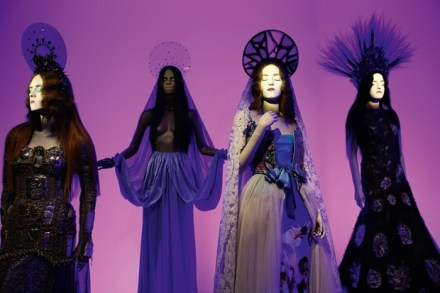
‘London,’ says Jean Paul Gaultier, ‘was my vitamin. I love the freedom of London...The energy, the character, all the people that are different.’ It was perhaps inevitable, then, that the first major exhibition of his work should come to the city that so inspires him. From the moment you enter the Barbican, you are struck by the sheer energy of Gaultier’s designs. He’s called the enfant terrible of fashion, and his amazingly imaginative works — from tribal feathered headdresses to bondage wear and men in skirts — demonstrate why. Gaultier has become most famous for his love of pop culture: from punk mohicans to Amy Winehouse, his influences are obvious.

Modern dance vs Shakespeare

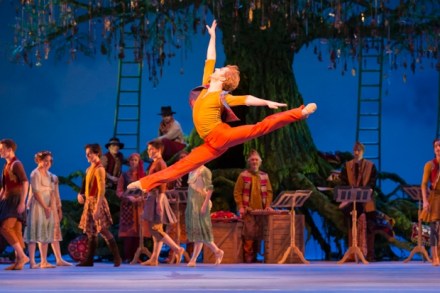
In a dance world that has chosen to dispense with stylistic and semantic subtleties, ‘narrative ballet’ and ‘story ballet’ are often used as synonymous. Yet there are differences — and major ones at that. In a ‘narrative ballet’ it is the choreography that carries the story. Each movement idea is thus conceived in relation to the dramatic demands of the thread and charged with meaning. This is, at least, what the genre’s forefathers recommended back in the 18th century, and what most major dance-makers through history strive to do. A story ballet, on the other hand, mirrors and tackles the basic needs of an immediate, directly accessible and even naive story-telling that is at the core of today’s culture.

Brains on a lithographic slab

The Blyth Gallery is situated in the Sherfield Building, deep in the South Kensington campus of Imperial College London. The Sherfield Building is a labyrinth of concrete, linoleum and glass. Its atmosphere is oppressively institutional. You walk around to the percussion of slamming fire doors and the click-clock of unseen footsteps. The air carries the faint scent of yesterday’s boiled vegetables. It’s an unprepossessing place. The gallery is up on the fifth floor, in an anteroom between the lobby outside the central lifts and the Seminar and Learning Centre. There is no natural light. The floor is bare. The walls are white. A partition splits the room in half.

Ferdinand Kingsley interview: ‘Yeah, but mum’s dad was totally bald too!’

The day before I’m due to meet Ferdinand Kingsley, actor son of Sir Ben, he sends me a message to introduce himself via Twitter. ‘I’ll try not to be a complete a***hole!’ he quips merrily, for absolutely no reason at all since I hadn’t actually imagined that he would be. Does he normally behave badly during interviews, I query, suddenly hoping rather mean-spiritedly that he does. I can see the ‘thespian heir acts up’ headline already. ‘Oh, yeah, I’m a total moron.’ Sadly, Ferdy Kingsley, 26, is, in this regard, a disappointment.

From egg, to caterpillar, to chrysalis, to butterfly

South Kensington is teeming with butterflies at the moment, or at least the specially constructed tropical enclosure at the Natural History Museum is. Sensational Butterflies (until 14 September) takes you on a journey through the life cycle of, you guessed it, the butterfly: from egg, to caterpillar, to chrysalis, to butterfly. Butterflies had a good time of it last year, because of the warm sunny weather — the best for seven years — but the year before had been one of the worst ever for these insects (and for us), with their numbers crashing. The outlook is good for this summer. Fingers crossed.

Michael Craig-Martin pokes a giant yellow pitchfork at the ordinary

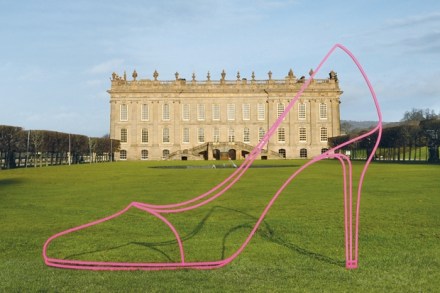
Visitors to Chatsworth House this spring might wonder if they have stumbled through the looking-glass. The estate’s rolling parkland has been invaded by an army of vibrantly coloured, outsized garden tools, whose outlines seem to hover, mirage-like, over the landscape. These painted-steel 2D ‘sculptures of drawings’ are the brainchildren of the conceptual artist Michael Craig-Martin. Craig-Martin finds poetry in the everyday and here he has taken 12 commonplace objects — a wheelbarrow; a spade; a lightbulb — and transformed them into something extraordinary. He also believes that context is everything when it comes to art and the works have been carefully positioned.

European postmodern dance can be just as boring as American postmodern dance

What’s in a definition? As far as theatre dance is concerned, quite a lot. Labelling — and often labelling for the mere sake of it — is integral to our dance culture. Take, for instance, the various A-level dance syllabuses, the curricula of most dance-studies departments and, most of all, those dance-history manuals that slavishly perpetuate simplistically formulated principles and equations. Any of those will provide you with a neat definition of postmodern dance, stating that it started in the early Sixties, when some US-based artists decided to fight convention by stripping dance of its most traditional characteristics. What most of these sources don’t tell you, though, is that there’s also European postmodern dance.

The art of data

When you’re next waiting for a train at King’s Cross, don’t waste time window shopping on the concourse. Instead, pop round the corner to the British Library to see Beautiful Science: Picturing Data, Inspiring Insight (until 26 May). It’s not an enticing name for an exhibition, I grant you. But the show is beguiling: small, thoughtful and free. As ever with the British Library, the viewer is treated to rare historic publications. Robert Fludd’s The Great Chain of Being (1617) is particularly memorable for its depictions of the ‘tree of life’, a diagram that encapsulates what this show is about: data representation as a means of storytelling, as artful and beautiful as the finest novels and poetry in the library’s collection.

Kings of Dance: a show to keep the Sun King happy

Louis XIV might have been a narcissistic and whimsical tyrant, but he did a lot for dance. An accomplished practitioner, he made ballet a noble art and turned it into a profession with the creation of the Académie Royale de Danse, the first institution of its kind, though not the first ballet school as some badly scripted television programmes would lead us to believe. More significantly, he showed the world that ballet can be a male art, something that 2014’s Kings of the Dance proves too. Ever since French Romantic choreography relegated male dancing to a lesser status, ridicule of and prejudice against guys in tights are still rife.

Jeremy Deller is lost in Walthamstow

At the Venice Biennale last year, Jeremy Deller presented English Magic in the British Pavilion. It was an aggressive look at contemporary Britain and featured protest art based on socialist politics. It’s fitting, then, that the show has transferred to the William Morris gallery in Walthamstow; no doubt the libertarian socialist would be proud to see Deller’s work displayed in his old house. Despite thoughtful intentions, though, the transfer doesn’t quite work, and Deller’s art seems uncomfortable in its new setting. The mural depicting Morris in the Venetian lagoon, clutching Roman Abramovich’s enormous yacht (above), makes little impact.

The dancers who said ‘no’ to postmodernism

It all started in 1971, when a group of physically and artistically talented youngsters decided to create a dance company and call it Pilobolus, after a fungus. Not unlike this barnyard micro-organism, which ‘propels its spores with extraordinary speed and accuracy’, the company was soon propelled to international success. But it was not an easy time to make ‘new dance’ in the US. On the one hand, living monuments such as Martha Graham, Merce Cunningham and Paul Taylor were still in full creative mode and dominated modern dance. On the other hand, the innovators of postmodern dance had given new meanings and directions to the art. Pilobolus took something from both.

Rome, Open City still shocks

Roberto Rossellini shot his neorealist landmark Rome, Open City while the war still raged and rubble littered the freshly liberated capital. Based on real experiences from the ten-month German occupation, the film follows ordinary Romans, some active dissenters, some just trying to get by, as the Nazis and the Italian fascist authorities mount a search for a Resistance fighter freshly arrived from outside the city. Actress Anna Magnani established her screen persona as the indomitable battler from the streets, and renowned stage comedian Aldo Fabrizi (above) turned in a performance as great as any in cinema as Don Pietro, the priest whose faith in God and his fellow man never wavers, even in the face of death.

Bare and authentic or full and fake? The dilemma of preserving writers’ houses

Every year, tens of thousands of visitors flock to the Mark Twain House in Hartford, Connecticut, in order to see where he lived and wrote. Many famous writers’ homes are preserved for visitors, some of whom are devoted readers (and some who know they are supposed to read his or her books). Twain, we can imagine, sat in that chair while writing Huckleberry Finn. However, only a small portion of the objects one sees were actually there when the writer lived in the house. Most of the original pieces were either sold off or dispersed to family members. The cost of building this 1874 house and furnishing it, in fact, was too much for Twain, and he and his family needed to sell most of it and move abroad in 1891.

Behind the scenes at Spitting Image

If Margaret Thatcher is remembered by many more as a caricature than as her actual self, then blame Spitting Image. The show, which ran from 1984 to 1996, portrayed her variously as a cross-dresser, a fascist and a bully but, to her credit, she never complained. Or, if she did, there’s no record of it. Of course it wasn’t just politicians who were targeted; anyone in the public eye was also ripe for a takedown, from Kylie to the Queen. Deference — what’s that? To mark the programme’s 30th anniversary, BBC4 has created an Arena documentary that takes viewers behind the scenes of the Spitting Image process; introducing us to the people who made the programme come to life, and the hellish hours they worked keeping the show on the road.

Do critics make good artists? Come and judge ours

Artists make good critics, but do critics make good artists? It’s hard to tell, when most are too chicken to try. For over 20 years, Spectator critic Andrew Lambirth has been making collages. He caught the habit from the British Surrealist Eileen Agar in the late 1980s and kept it private, until forced to go public last year when Eileen Hogan selected six of his works for The Discerning Eye. Now 20 are going on show at the Minories in Colchester in a joint exhibition with his friend and fellow Suffolk resident Maggi Hambling (8–14 March, closed Sundays). Hambling’s contribution to the show is a new five-day series of paintings grappling with her old adversary, the ‘raging beast’ that is the North Sea.

Tutus, loo rolls and a roomful of balloons

A tip: go see Martin Creed’s retrospective at the Hayward in the company of a child. I didn’t, but I tagged on to a merry gaggle of five-year-olds being guided round by their mums. I watched as they pointed at the enormous rotating beam with a neon sign that reads ‘MOTHER’. ‘Jump up and touch it, Mummy,’ said one girl. As we carried on, we came across a machine playing rude raspberry sounds. Peals of laughter rang out. Nearby, a man was playing the piano slowly, semitone by semitone. The little girl in the tutu tapped him on the shoulder and asked if he was part of the show. He was, he said. Upstairs, the mothers heeded the warning suggesting those under 18 avoid the outdoor video installation.

Take a look at John Maynard Keynes’s armchair

Discoveries: Art, Science and Exploration at Two Temple Place (until 27 April) is like a giant cabinet of curiosities. Maps, gizmos and memorabilia are spread across two floors of this glorious high-Victorian building on the Embankment. There are drawings from doomed polar expeditions, bones and teeth of fish from the Woodwardian Collection (see above), early botanical diagrams, hoards of medieval gold, the loot of empire (the Sufi snakes-and-ladders board in ebony and mother-of-pearl is memorable) and John Maynard Keynes’s armchair. The exhibits are drawn from the eight museums of the University of Cambridge. Much is made of the fact that this is the first time the university’s museums have collaborated — not bad for an institution that is 800 years old.