More from Arts

Gusto galore from Boston Ballet

Those who lament sluggishness in contemporary stagings of Balanchine’s ballets — and those who are responsible for it — should have seen and learnt from Boston Ballet last week. Forget the funereal tempi we, in the old world, are forced to accept because of the killjoy aesthetics favoured by artistically challenged ballet directors and teachers. Boston Ballet’s Serenade had all one would wish for: quick, sparkling tempi, a splendid use of the space, majestic flow and gusto galore. It’s true that precision might have gone astray now and then, but never in a major way; besides, real artistry has always had little to do with precision.

Our shameful treatment of Alan Turing, the man behind the Enigma Code

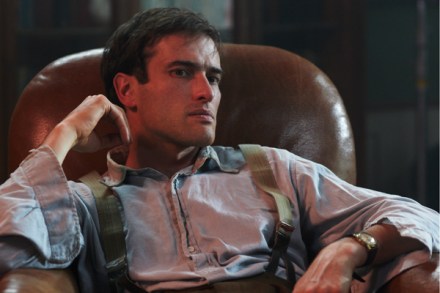
Alan Turing, the man who developed the Enigma code that saved the Allied war effort, was not merely disregarded by his country. A homosexual, he was convicted of ‘gross indecency’ in 1952 and chemically castrated via forced oestrogen injections. Under unimaginable duress, he committed suicide. That it took until 2009 for the British government to apologise only compounds the scandal. Turing’s story is told in Codebreaker, a docudrama that combines reenactments of conversations between Turing, played by Ed Stoppard (above), and his psychiatrist (the German Jewish refugee Franz Greenbaum), and interviews with experts on his life and work. One after another, they attest to Turing’s brilliance as the man who created modern computing.

Chronicle of a Summer: Reality TV decades before it had a name

Here’s a documentary called Chronicle of a Summer. Which summer? Why, the summer of 1960, in Paris, when fag-end colonial struggles were burning away in Algeria and other parts of Africa. And how is it chronicled? An anthropologist and a sociologist, Jean Rouch and Edgar Morin, put cameras on the streets and ask questions of the people they find. Who are you? Are you happy? The usual French existential stuff. The results are gripping, even from a distance of more than 50 years. Rouch and Morin focus on the personal; the everyday lives of factory workers, artists, immigrants, models and students. But when France’s present and recent past break into shot, it’s as dramatic as could be.

Dance: William Forsythe’s new work is choreographic narcissism

As someone who once raved about William Forsythe’s innovative approach to ballet and fondly admired his groundbreaking choreographic explorations, I felt let down by last week’s performance by his company at Sadler’s Wells. Things did not start badly, though. The way gestural solutions unfold and develop in a crescendo of movement variables, variants, similes and opposites in N.N.N.N. (2002) is rather engaging. The game of quick interaction between four male dancers moves rapidly from the simplest hand movement to demanding acts of powerful physicality; there are humorous moments and tense ones, as well affectionate references to the neoclassical oeuvre of George Balanchine — whom Forsythe has often referred to as a major source of inspiration.

Laura Marling at Secret Music: a concert without croquet is a concert not worth attending

The word ‘concert’ means different things to different people. For some it evokes dinner jackets and not clapping between movements; for others, jumping up and down in a stadium, desperately trying to spot the band through a sea of blinking smartphones. But Secret Cinema’s latest brainchild, dubbed Secret Music, is something else entirely: its inaugural production brings Laura Marling’s new album to life and places you right at its core. Stepping into the grounds of a grand Victorian hospital in East London, transformed for the night into a 1920s hotel, you’re left to explore its various rooms, with their eclectic and unfailingly interesting occupants, at your leisure.

We should be teaching kids to make programs like Word, not how to use them

Technology is turning the human urge to consume information into an unhealthy addiction. Some of this consumption — reading, following the news, exposing ourselves to culture — has obvious merits; I’d have no trouble downloading the entire works of Shakespeare in the time it would have taken someone ten years ago to find their keys before setting off to a bookshop. But with so much around us to consume we seem to have lost the ability to make things ourselves. How can we be creative when every waking moment is spent trying to keep up with the feeds, updates and new releases volleyed at us from all sides? Take, for example, the iPad, that pinnacle of consumption, that manages to fit TV, record store and library into a retina display and a single button.

Herzog at the BFI: Mad men in the rainforest

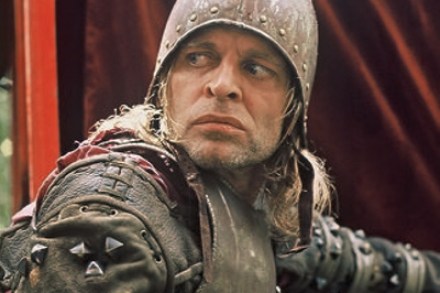
‘I am the wrath of God. The earth I pass will see me and tremble.’ Not my words, Mr Speaker, but those of demented conquistador Klaus Kinski in Werner Herzog’s electrifying Aguirre, der Zorn Gottes (1972). Now back in cinemas nationwide in a restored print that makes its rainforest setting a real feast for the eyes, Aguirre heralds a two-month Herzog season at the BFI Southbank. Five weeks of location shooting in Peru effectively meant the film crew endured the same hardships as the characters: heat, hunger and the unpredictable behaviour of Kinski, scarcely any less a madman than the treasure-seeking Aguirre. The director claims that Kinski only calmed down enough to finish the film after Herzog threatened to shoot the star and then himself.

Culture note: Curiosity: Art and the Pleasures of Knowing, Turner Contemporary, Margate

An oversized St Bernard’s body masked with a sheep’s head and a regal peacock with penguin feet and flippers punctuate the start and end of Curiosity: Art and the Pleasures of Knowing at Turner Contemporary, Margate (until 15 September), curated by Brian Dillon. Art and artifacts from around the world represent the glory, revelations and threat of mankind’s inquisitive nature. Thomas Grünfeld’s taxidermy misfits are just two examples of a witty and wondrous collection of objects that we wouldn’t usually have the opportunity to view outside their own dedicated museums or private homes.

Catherine the Great’s purchases returned to Houghton Hall

When the Marquess of Cholmondeley inherited Houghton Hall, the Palladian palace by Colen Campbell and James Gibbs, he started rootling through the cupboards and drawers. In one drawer, he found a treasure map — the original picture-hanging plan for the house, as built by his ancestor Sir Robert Walpole, Britain’s first prime minister. The only problem was, he didn’t have the pictures any more — Walpole’s cash-starved grandson had flogged them to Catherine the Great in 1779, in a sale arranged by James Christie, founder of the auction house. Now the best pictures have been brought back, mostly from the Hermitage, in a show (until 29 September) that is less an exhibition, more a recreation.

Le Corbusier was ashamed of the house he built

On the outskirts of La Chaux-de-Fonds, an industrial town in the Swiss Jura, stands one of the most beautiful houses I’ve seen. Elegant and understated, La Maison Blanche is the kind of house you dream of living in. Wide windows overlook a wooded valley. The rooms are bathed in silver light. The ambience is serene and timeless, more like a temple than a townhouse. You’d never guess the man who built it was the bogeyman of modern architecture — the man who began a movement that replaced terraced streets with tower blocks. In this lovely house, and the art-nouveau villas he built beside it, you can see the traditional architect Le Corbusier could have been. Le Corbusier was born here in La Chaux-de-Fonds in 1887.

Dance review: Raven Girl, Symphony in C

Last Friday, ballet’s overcrowded aviary welcomed a new addition: Raven Girl.  Sexy, sleek, troubled and troublesome, she is the creation of the bestselling author Audrey Niffenegger and Royal Ballet’s resident choreographer Wayne McGregor.  Expectations were high, as McGregor is not a choreographer one would normally associate with balletic storytelling. The work, with stunning designs by Vicki Mortimer, splendid lighting by Lucy Carter, great video design by Ravi Deepres and a lusciously seductive score by Gabriel Yared, enthrals the senses and sits perfectly with McGregor’s vision of a creatively synergetic unity of the arts. It’s a pity that neither the choreo-graphy nor the dramaturgy were as impressive.

From Harvey and the Wallbangers to Covent Garden: Christopher Purves interviewed

One of ‘the great operatic artists of the present’ sips coffee in his quiet Oxford kitchen. The artist is Christopher Purves, the description Michael Tanner’s (Arts, 13 March). In recent years, Purves’s fluid, eloquent baritone and considered acting have received rolling acclaim: Glyndebourne, La Scala, Teatro Real Madrid; Falstaff, Mephistopheles, Beckmesser and more. This year has seen his psychotic Protector in Written on Skin at Covent Garden, and now Walt Disney in Philip Glass’s The Perfect American at English National Opera. But first we talk about his children, whose pictures mosaic the kitchen cabinets, and mine. Purves is my cousin Edwina’s husband, and my son Benedict’s godfather.

Culture notes: The glory of the Flaming Lips

Man, I love the Flaming Lips. Psychedelic rock sublimity. They movingly address the deepest human concerns without a whiff of irony, while also seeing the point of confetti cannons, dancing penguins, having the lead singer surf the crowd in a giant plastic bubble, and so on and so forth. This week, mind you, they played the Camden Roundhouse the day after a tornado killed 24 people in their hometown and (in other news) they had to cancel a gig because singer Wayne Coyne had so bad a cough he couldn’t speak. No wonder they weren’t entirely bouncy. The material from their new album The Terror saw their usual ecstatic lift and soaring melancholy give way to a sort of minatory chug — like Led Zep played through an industrial rock-breaker.

The stamp of quality – Terence Stamp at the BFI

If ever a director’s decision to cast an actor based solely on looks could be excused, it would be Pier Paolo Pasolini’s choice of Terence Stamp for the lead in 1968’s Theorem. As the mysterious, nameless, selfless houseguest of a well-off Milan family, Stamp (above) combines the insouciance of Malcolm McDowell in A Clockwork Orange with a passive saintliness appropriate to Pasolini’s satirical intent. Stamp didn’t even have to be able to speak Italian — his character barely talks, and everyone’s dubbed anyway. Somewhere between the profound and the Pythonesque, Theorem ticks all the boxes for a 1960s European art film: allegorical Christ figure exposes middle-class hypocrisy with his sexual magnetism and non-linear narrative.

Dance: Hansel and Gretel

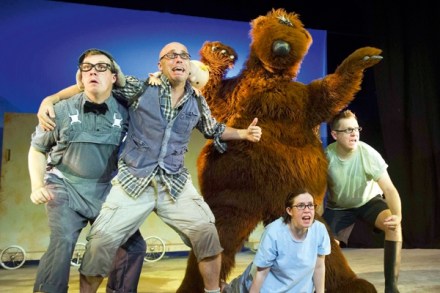
As far as memory serves, in my 46 years of being both in and at the ballet I have encountered only seven ballet adaptations of the Grimm Brothers’ Hansel and Gretel. Alas, each was less memorable than the one before. Happily, the new version by the Royal Ballet’s first artist-in-residence, Liam Scarlett, which had its première last week, has dispensed with the dance numbers for cuddly forest animals and cute gingerbread men that turned the versions of his predecessors into laughable creations. Instead, he has opted to exploit the dark tones of the Grimms’ narrative — abandoned children, cannibalism, a hyperbolic excess of unhealthily sugary food, etc.

The Jaguar F-Type is no E-Type

In 1951, Arthur Drexler, an influential curator at New York’s Museum of Modern Art, organised an exhibition called 8 Automobiles. Drexler, who used to wear a bow tie, was one of the people who helped make ‘design’ the credible subject it is today. The press release said it was the ‘first exhibition anywhere of automobiles selected for design’ — as, indeed, it was. Eight fine cars were presented on a dramatic fake roadway with huge photographic enlargements of details as a backdrop.

Knightriders on DVD

A knight and his lady awaken, naked in the forest. She pins up her embroidered gown while he begins his ablutions in a pond. Thwack! Thwack! Thwack! He plants a stick between his shoulder blades before getting dressed himself. On goes his tunic, gauntlets and plated armour. And then they both climb on to his motorbike before riding out into the morning mist. Hang on a second – a motorbike?! It sounds ridiculous, but that’s how it is in George Romero’s Knightriders (1981), now out on DVD for the first time in the UK. Our knight in the forest is actually Ed Harris’s Billy, the leader of a troupe of men and women who travel around America putting on shows in small towns.

The two sides of painter Joan Eardley

There were two Joan Eardleys, according to a new biography of the Scottish painter by Christopher Andreae. There was ‘the tender and gentle Joan’, as revealed by her bosom friend Audrey Walker, and ‘the tough, cussing, swearing, bulldozing, indomitable creator of what may be masterpieces’. Both are reflected in the Portland Gallery’s new exhibition of drawings and paintings from the last 20 years of her short life (until 17 May). The tough Joan chose the challenging subject matter, dividing her time between the rotting tenements of unreconstructed Glasgow and the leaky fisherman’s cottages of Catterline, south of Aberdeen.

Trading places | 25 April 2013

The Philippines: An Archipelago of Exchange at the Quai Branly Museum in Paris (until 24 July) brings together an impressive range of objects that demonstrate the fluidity of ideas and forms dispersed through exploration, trade and the blood of battle. The exhibition focuses on the fertile interactions between Filipino tribes and naval traders preceding the 16th-century Spanish colonisation. Housed under the canopy of Jean Nouvel’s extraordinary building, the display treads a fine line between fetishisation and objective examination. On entering, you are surrounded by semi-circles of carved wooden rice gods, expanding outwards like shockwaves; you leave through a dark chamber lined with funerary objects.

Champion of the people

Welsh miners, Basque child refugees (above), Tyneside shipbuilders, Paul Robeson: In the Shadow of Tyranny at the Scottish National Portrait Gallery (until 16 May) offers a compelling portrait of Britain in the mid-20th century, as seen by an émigrée communist Austrian Jew, who also happened to be a Soviet espionage operative. Edith Tudor-Hart, who had fled her homeland in 1933 after marrying an English doctor, worked with spymaster Arnold Deutsch from 1926 onwards. As a photographer, her political sympathies were evident throughout her career, from early work documenting protest marches of ‘Red Vienna’ and its subsequent Nazification to representations of British inequality and deprivation.