More from Arts

Perfect dancing but boringly beautiful

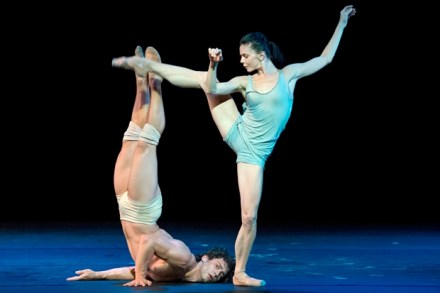
Aesthetically speaking, last week’s performance by the Nederlands Dans Theater 1 was one by the slickest of the season. Fashionably engineered juxtapositions of black and white, sets that stun on account of their elegant simplicity and mechanical complexity, chic costumes that de-gender dancers, scores decadently à la mode and clockwork dancing came together seamlessly to

Isn’t it time we asked the National Theatre to support itself?

[audioplayer src=”http://traffic.libsyn.com/spectator/TheViewFrom22_10_July_2014_v4.mp3″ title=”Lloyd Evans and Kate Maltby discuss the National Theatre’s funding” startat=1261] Listen [/audioplayer]Two glorious playhouses grace the south bank of the Thames. Shakespeare’s Globe and the National Theatre stage the finest shows available anywhere in the world. Both are kept in business by the play-going public who last year helped the Globe to

Seeing London afresh, one bridge at a time

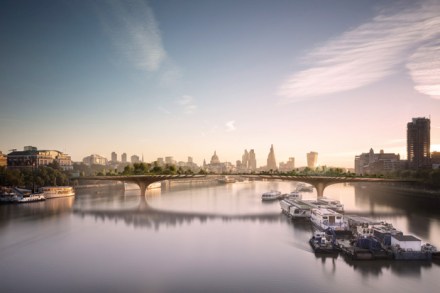
Bridges aren’t necessarily something you think of as being beautiful, particularly if you consider them primarily as the means to cross a river, rather than as works of art. London, however, has always been famous for its bridges, many of which are architectural marvels. From medieval London Bridge, piled high with shops and houses, to

A swan to die for at Sadler’s Wells

Swans, swans, more swans. If the lifespan of a dance critic were calculated by the number of performances of Swan Lake attended, I’d be a few centuries old. Obviously, the list includes many revisions and re-creations of this quintessential ballet, which is the second most revisited in history after The Rite of Spring. In her

Has the rake progressed?

Hogarth’s A Rake’s Progress has been a rich resource for artists. Film-makers recognise his modern moral subjects as an ancestor to the storyboard. But in this age of mass media can the format still hold its own and tell us something about ourselves? A new exhibition at the Foundling Museum (until 7 September) suggests so.

The song that fought apartheid

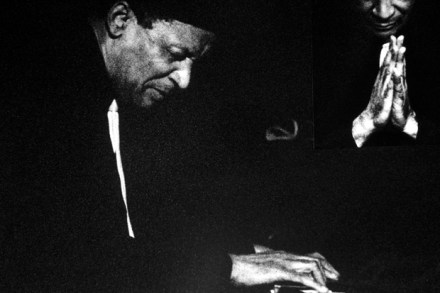
This month marks the 40th anniversary of the release of Mannenberg, the seminal album by the Cape Townian jazz pianist Abdullah Ibrahim (formerly known as Dollar Brand). Recorded against a backdrop of forced removals as the apartheid government evicted Coloured families from District Six, the title track was inspired by and named after the township

New wonders among old shelves at the London Library

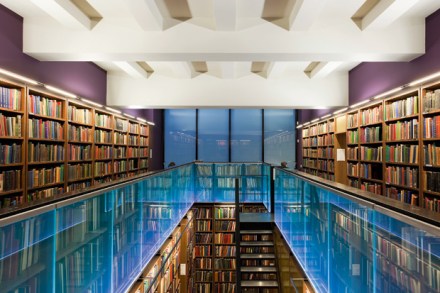
The Royal Court Theatre, the Young Vic Theatre and the London Library (above) are buildings of varied character and rich history. What they have in common is that each has been unpicked and reassembled by the architects Haworth Tompkins, recently announced as winners of the RIBA London Architect of the Year. This firm, founded in

Uncovering a Royal treasure trove

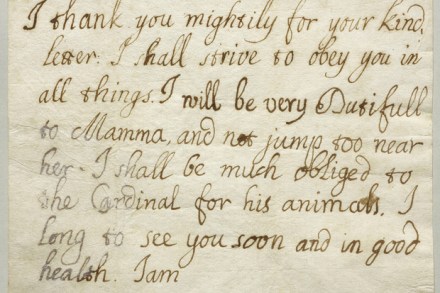
It’s rare for the public to be given access to the Royal Archives. They are housed in the forbidding Round Tower at Windsor Castle, and direct contact with them is normally reserved for erudite academics adept at buttering up the Keeper. With about two million documents relating to 700 years of the British monarchy, it

When Van Gogh lived in London

Eighty-seven Hackford Road, SW9, is unremarkable but for a blue plaque telling the world that Vincent van Gogh once lived there. The building has been empty since 2012 but now the Dutch artist Saskia Olde Wolbers has filled it with voices. ‘Yes, these Eyes are the Windows’ (until 22 June) is an Artangel-commissioned installation that

Norman Thelwell: much more than a one-trick pony

‘The natural aids to horsemanship are the hands, the legs, the body and the voice.’ But a Thelwell pony sometimes required some, er, additional aids. Norman Thelwell’s first pony cartoon was published in Punch magazine in 1953 and struck a nerve with readers; so much so that the editor asked Thelwell for a double-page spread

Romeo, Juliet and Mussolini

George Balanchine’s Serenade, the manifesto of 20th-century neoclassical choreography, requires a deep understanding of both its complex stylistic nuances and its fascinatingly elusive visual metaphors. Many recent stagings have failed to meet such criteria,  but not the performance I saw last week. Things did not exactly start especially well, as the opening group of ladies

Fifties domestic harmony

Our love affair with the 1950s has been going on for years and shows no sign of abating. Pangolin London, the city arm of the Gloucestershire foundry, has cleverly used the visceral appeal of Fifties design — if ever a period merited the term gay in its original sense, this one does — to show

John Deakin is no genius – and he has not been forgotten

Every so often, John Deakin, jug-eared chronicler of Soho and hanger-on at the Colony Rooms, is breathlessly rediscovered as the unknown giant behind Bacon and the forgotten man from Soho’s  generation of genius. All that is so much tosh: Deakin is no genius and he has not been forgotten. In fact, he can never be

Exploring the world of Jean Paul Gaultier

‘London,’ says Jean Paul Gaultier, ‘was my vitamin. I love the freedom of London…The energy, the character, all the people that are different.’ It was perhaps inevitable, then, that the first major exhibition of his work should come to the city that so inspires him. From the moment you enter the Barbican, you are struck

Modern dance vs Shakespeare

In a dance world that has chosen to dispense with stylistic and semantic subtleties, ‘narrative ballet’ and ‘story ballet’ are often used as synonymous. Yet there are differences — and major ones at that. In a ‘narrative ballet’ it is the choreography that carries the story. Each movement idea is thus conceived in relation to

Brains on a lithographic slab

The Blyth Gallery is situated in the Sherfield Building, deep in the South Kensington campus of Imperial College London. The Sherfield Building is a labyrinth of concrete, linoleum and glass. Its atmosphere is oppressively institutional. You walk around to the percussion of slamming fire doors and the click-clock of unseen footsteps. The air carries the