More from Arts

Question time | 25 January 2018

Last year was a bit of a year for Radio 4 anniversaries; maybe most notably, Desert Island Discs celebrated 70 years on air. But oddly enough, so did another show. Round Britain Quiz, which you may remember vaguely from your childhood, or possibly your parents’ childhood, also reached 70 in 2017. There have been one or two breaks, but this abstruse and, let’s face it, unashamedly smart show has survived the slings and arrows of outrageous Radio 4 controllers. Every year we fret and worry, hoping beyond hope that it will be recommissioned. Every year, I’m glad to say, it is. I say ‘we’ because, for the past few years, I have been part of the merry crew that makes the programme. It’s one of the very best jobs in the world.

Ferrari – heavy, expensive, wasteful, dangerous and addictive

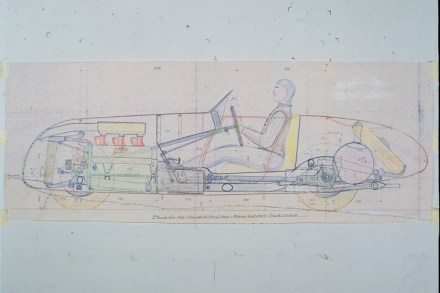
Has a more beautiful machine in all of mankind’s fretful material endeavours ever been made than a ’60 Ferrari 250 Granturismo? Go to the Design Museum and decide. I have driven many Ferraris and the experience is always unique. They are alive, demanding, feral, sometimes even violent or truculent. Addictive, too. Once, in Haverfordwest, I arrived sweating and puffing after seven hours in traffic. I parked the 246 GT at the hotel for a moment but then, unable to ignore the hot, seductive car, I got back in and drove up and down the coast road; up and down, up and down. Just because it was there. Kierkegaard thought that ‘the best demonstration of the wretchedness of life is obtained through a consideration of its glory’. Thus, the motor car.

Les Troyens

Grade: A-   Berlioz’s Les Troyens, one of the greatest operatic masterpieces, manages to be neglected even if it is quite often performed. The vast reputations of the most popular operatic composers seem to grow ever larger with the years, but Berlioz somehow always needs defending. Listening to this latest CD set, ‘live’ from Strasbourg, I was struck as always by the magnificence of much of the music, and the characteristic lurches into banality or irrelevance that account, I suspect, for the work being so often underrated.

Second life

You can pay homage to a ballet classic or you can tear it up and reinvent it. Both approaches were on offer in London a fortnight ago: a revival of Frederick Ashton’s Sylvia, set to Léo Delibes’s 1876 score, and a Swan Lake from Michael Keegan-Dolan that ditches Tchaikovsky, tutus and toe shoes and relocates the story to a dysfunctional community in the Irish midlands. There’s an eerie, gaslit vibe to the Royal Ballet’s Sylvia. Look along the row and you half expect the audience to be styled to match its Second Empire pastiche: epaulets, lorgnettes, rickets. When Ashton made Daphnis et Chloé, his other nymphs’n’shepherds ballet, in 1951, he professed himself bored by ‘people running around in tunics’ and opted for modern dress.

Now that’s what I call music

One of the members of the government’s HS2 Growth Taskforce is remembering the first time he went to a gay club. ‘There was a club in Coventry that was only open on a Sunday night, at the Quadrant, and a mate of mine said, “There’s a DJ there who plays some fantastic music that I know you’ve never heard, so why don’t we go down?” It was a gay club, or a queer’s club as it was known then. I loved it. Oh, I loved it. I couldn’t believe that blokes were dancing with each other. The music was awesome.

Oh, what a circus

‘There’s a sucker born every minute.’ That was the P.T. Barnum battle cry. It has come to have a ring of contempt, but no one loved a sucker more than Barnum. Entertain them, he said. Thrill them, shock them. Make ’em laugh, make ’em cry. Give ’em the old razzle-dazzle. And if, in the course of the evening, you extract from them a penny, a shilling, a dollar… Well, have you not given them a story to tell their friends tomorrow? His critics called him a scoundrel, a humbug, a con man. To the Times he was ‘the most adventurous and least scrupulous of showmen… an apotheosis of notoriety’. His defence? What he did wasn’t cheating or swindling: it was show business.

Bah, humbug!, Tiny Tim

Here we go again. Partridges in pear trees. Lovely big Christmas turkey. The Queen’s speech. And then, at some point during the Yuletide season, some version or other of Dickens’s ghost story A Christmas Carol. This year’s glut of Scrooge stories includes the Old Vic’s major production starring Rhys Ifans (reviewed by Lloyd Evans in last week’s Spectator) and Michael Rosen’s retelling of the tale, Bah! Humbug! There is a new film, The Man Who Invented Christmas, featuring Christopher Plummer as Scrooge and Dan Stevens, he of Downton Abbey fame, as Mr Dickens himself. It plots the months running up to the publication of A Christmas Carol in Yuletide 1843.

Björk: Utopia

Grade: A A dimbo pop reviewer for one of our national newspapers suggested that on this album, her ninth, Björk was ‘continuing her exploration of structurelessness’. It doesn’t sound wildly enticing, does it? Do go on, etc. It is true that on Utopia there is nothing that has the glorious, simple, pop sheen, and hook, of ‘Venus As A Boy’ from all those years ago. It is true, too, that she looks like a mental on the album cover and cavorts in her videos like a member of the smafolk — dwarfish and ethereal winged creatures from Scandinavian folklore. But then she was never going to act like Bachman-Turner Overdrive, or Kasabian, was she? This is Björk, as she always was.

Fighting talk | 23 November 2017

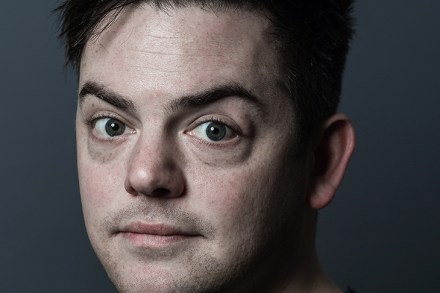
There’s a scene in Alfred Hitchcock’s Marnie in which Tippi Hedren is emptying a safe while a cleaning lady silently drags her mop towards her. Can Hedren, playing the disturbed Marnie, slip down the stairs before the woman turns her head? I felt a twinge of the same panic last week interviewing the composer Nico Muhly, whose opera Marnie — based more closely on Winston Graham’s novel than on Hitchcock’s film — was given its world première by English National Opera last Saturday. Would I make it out of the room without asking the Wrong Question? Muhly, who made his name as the cherubic, prodigiously gifted but prickly protégé of Philip Glass, is scary to interview. This is well known in New York.

The play’s the thing | 16 November 2017

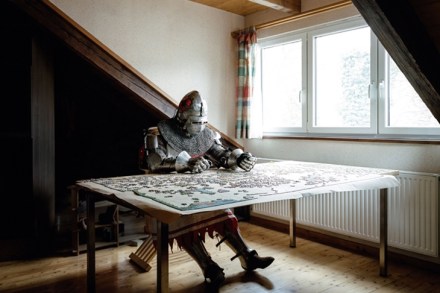
‘It’s all wizards and elves, right? Dungeons & Dragons stuff?’ Such is the general response when you mention larp, or live-action role-play — the peculiarly Scandi pastime that conjures up images of people dressed up in the forest play-fighting with sticks. Well, they wouldn’t be completely wrong. It’s a weird world and with the help of artists it’s becoming even weirder. In the past few years, larp has become more visible in mainstream culture. And in Britain, it has noticeably begun to infiltrate the art world, becoming popular among artists interested in the potential of play.

Ill wind

A kindly cowboy, an East Coast bride, adultery, murder and madness. The Wind, Dorothy Scarborough’s 1925 Texas gothic novel (and Sjöström/Gish movie), offers rich pickings for dance narrative and was selected by Arthur Pita for his Covent Garden main stage debut. What could possibly go wrong? Pita has made some terrific dance dramas — notably 2011’s Metamorphosis for a treacle-glazed Edward Watson — but The Wind is a massive disappointment, looking thin and underwritten despite hefty production values. A miniature railway dollies pointlessly around the stage perimeter and the wind of the title is supplied in tedious abundance by two custom-built threshing machines (the cold front could be felt in the upper circle).

Taylor Swift: Reputation

Grade: D+ I was suckered in by the brio of Taylor Swift’s first big single, ‘Love Story’, despite the clunking lyrics, which one forgave because of her youth. Just a nice slice of maybe overproduced FM country rock with a simple, but effective, chorus. Forgive me. I did not see the monster she would become. The morphing, over nine years, into a hideous colossus, a purveyor of ever more derivative and anodyne Kardashian pop. Music built not upon a compelling melody or rhythm or slice of lyrical wit but upon the exploitation of the image she has built for herself (cleverly enough, it has to be said). She has spent the past few years on the front pages doing and then undoing a parade of slebdom’s most eligible and handsome men. Good, I have no objection to that.

May’s day

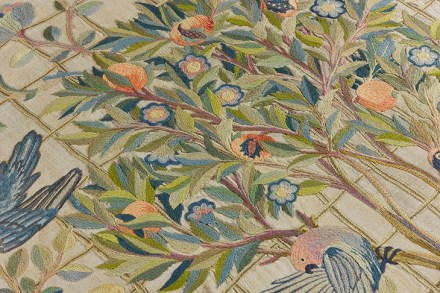
You may think you don’t know May Morris, daughter of William, but you’ll probably have come across her wallpaper. Her honeysuckle design was and remains a Morris & Co. bestseller, and it not only features in homes to this day, it’s been nicked by designer Jonathan Anderson for a Morris-inspired range for the very expensive fashion house Loewe. It’s all a bit dispiriting for a woman whose aesthetic sensibility, like her father’s, was bound up in her socialism. But it was embroidery that was May Morris’s art and craft and now a new exhibition at the Morris Gallery in Walthamstow lets us see it in its own right.

The death of cosy Christie

This is not Midsomer Murders. The new film adaptation of Agatha Christie’s Murder on the Orient Express is thick with violence and sexual innuendo. It elevates Hercule Poirot, the diminutive, fastidious Belgian detective, with his egg-shaped head and pot belly, to part-time action figure, a man who chases bad guys down dizzying descents in exotic snowscapes before straightening his magnificent moustache with a twinkle in his eye. This is less cosy, golden age detective fiction than a cross between Daniel Craig’s 007 and Scandi noir. Kenneth Branagh, who stars and directs, has brought his experience playing the dejected Swedish police inspector Wallander to the fore, giving the usually reserved detective unusual passion and vulnerability.

Liam Gallagher: As You Were

Grade: C+ There was a certain thrill to be had from that first Oasis album, Definitely Maybe. Liam’s yob howl and Noel’s magnificent pillaging of T. Rex, the New Seekers, the Pistols, Zep and, of course, the Beatles. By the time the second one came along, you could count me out, what with the asinine, boring, big-bollocked ballads and Noel trying to get terribly meaningful — all reaching a crescendo of stupidity on the dismal Manc whine of bloody ‘Wonderwall’. Their later stuff was snidely put down as ‘Quoasis’ by their rival Damon Albarn — but chance would be a fine thing. At least Quo had a bit of a laugh. So, fast forward20 years. The fractious brothers are, as ever, estranged.

Life after death | 2 November 2017

According to the accountants’ ledgers, DVDs are dying. Sales of those shiny discs, along with their shinier sibling the Blu-ray, amounted to £894 million last year, which is almost a fifth lower than in 2015 and less than half of what was achieved a decade ago. And last week we finally said goodbye to the postal DVD service Lovefilm, too. The explanation for this decline is the explanation for many modern declines: digital is taking over. Nowadays, downloads and streaming services make more money than the old physical formats. But accountants don’t know everything. From a different perspective, through the bloodshot eyes of a cinephile, DVDs are thriving — and they’re doing better in Britain than in most other countries.

Wayne’s world

Ballet would have been an obvious revenue stream for Sadler’s Wells when it reopened back in 1998 but straight-up classics have been few and far between over the past two decades — the Rothbart of the Royal Ballet of Flanders’ Swan Lake wore a live owl on his head. And yet, while the theatre’s programming fights shy of tutus and toe shoes, its fiercely contemporary output can sometimes bridge the notorious gulf that has traditionally divided classical and contemporary audiences. Wayne McGregor has been resident choreographer at the Royal Ballet since 2006 but combines this role — and countless international projects — with his directorship of his own company, whose Autobiography premièred at the Wells earlier this month.

Football focus

The early 1970s was football’s brute era of Passchendaele pitches and Stalingrad tactics. The gnarled ruffians of Leeds United — wee hatchet man Billy Bremner, the graceful assassin Johnny Giles, Norman ‘Bites Yer Legs’ Hunter — embodied the age. Not that you’d guess this from the badge on the club’s shirt: the letters LU were styled into a grinning emoji in goofy yellow. In 1973, the club kit (pristine white, which they had changed to a decade earlier to mimic the lordly Real Madrid) was designed by Admiral, the company that dreamed up the wallet-emptying concept of the replica shirt. Admiral went in for hectic piping and busy collars.

Rattle’s hall

Even in a Trump world where reality is what you say it is, the London Symphony Orchestra’s announcement of a new concert hall occupies a bubble of pure fantasy. New York architects Diller Scofidio + Renfro have been awarded a contract for a project that has no funding. Concert hall, what concert hall? The only cash on the table is £2.5 million from the Corporation of the City of London. The hall is hot air. There has been no public consultation, no actuarial study of demographic need, no consideration of best possible sites or size. There is not even a consensus within the classical sector that a new hall is a top priority when audiences consistently fail to fill the Barbican and Royal Festival Hall.