More from Arts

The old ways

I’m sitting across a café table from a young man with a sheaf of drawings that have an archive look to them but are in fact brand new. His Jacob Rees-Mogg attire — well-cut chalk-stripe suit and immaculate tie — sets him apart from the others in the room, who are mostly architects and architectural fellow travellers like me. We don’t dress like that. But George Saumarez Smith is indeed an architect, a very good one. He just happens to be a trad. A traditionalist, mostly a classicist. And now is very much the time of the architectural trads. They have crept up on us. There’s a revival going on, and I’m very happy about that.

London calling | 26 October 2017

Madame Monet was bored. Wouldn’t you have been? Exiled to London in the bad, cold winter of 1870–71. In rented rooms above Shaftesbury Avenue, with a three-year-old son in tow, a husband who couldn’t speak English, and no money coming in. Every day roast beef and potatoes and fog, fog, fog choking the city. ‘Brouillardopolis’, French writers called it. Camille Monet had offered to give language lessons, but when she hadn’t a pupil — and Claude hadn’t a commission — she let him paint her, listless on a chaise-longue, book unread on her lap. Her malaise was ‘l’exilité’ — the low, homesick spirits of the French in England.

The Bilbao effect

Twenty years ago I wrote of the otherwise slaveringly praised Guggenheim Museum in Bilbao: I’m in a minority of, apparently, one. It strikes me as a consummate gimmick… a fantastically elaborate and rather wearisome joke. Has mankind spent all these centuries perfecting Euclidean geometry and orthogonal engineering in order to have it overthrown by massively expensive crazy cottages clad in titanium? Apparently mankind has. So much for the building. What of the ‘Bilbao effect’, an epithet that I am accused of having coined (I can’t remember, but it’s inappropriate because there is, typically, no effect).

St Vincent: Masseduction

Grade: A The old Tulsa sound was a rather agreeable low-key, shuffling, blues-inflected rockabilly — primarily J.J. Cale and Leon Russell. Which then somehow mutated into the anglophile pop of Dwight Twilley. Here’s the third wave of it — probably the best yet, much though I admire all the aforementioned. A strange lady, St Vincent — in real life plain ol’ gender-fluid Annie Clark from Oklahoma. And this is another rather wonderful album from the woman. She may be this decade’s Prince, for the breadth of vision and the invention and crucial ability to wring melodies out of the dead ground. Here and there the listener must navigate around slabs of generic R&B, such as the tiresome title track.

Pretty vacant

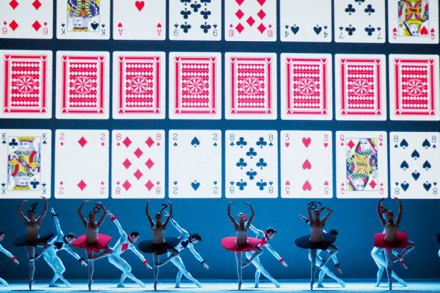
Alice is at it again. Christopher Wheeldon’s 2011 three-act ballet began another sell-out run at Covent Garden last week. It’s a joy to look at and packed with featured roles that show off the Royal Ballet’s strength in depth. If only it weren’t such a bore: thinly written characters; anodyne choreography and zero dramatic tension. To be fair, the episodic dream logic of the original doesn’t make for a coherent or involving narrative. Wheeldon and his scenarist, Nicholas Wright, have done their best to correct for this by tacking on a Wizard of Oz-style prologue in which the Caterpillar, Dormouse et al. are human guests at an Oxford tea party.

Vital signs

Exhibit A. It is 1958 and you are barrelling down a dual carriageway; the 70 mph limit is still eight years away. The road signs are nearly illegible. You miss your turning, over-correct, hit a tree and die. The following year, graphic designer Margaret Calvert is driving her Porsche 356c along the newly built M1. The motorway signs are hers. It is information design of a high order, possibly even life-saving. The clarity and intelligence of Calvert’s British road signs remain unmatched nearly 60 years later. And the font she created became the NHS, and later rail and airport, standard. Exhibit B. The French are worried about nuclear waste. Given the half-life of radio-active detritus, warning signs must be legible in 100,000 years when written language may be redundant.

LCD Soundsystem: American Dream

Grade: B+ Number one. Everywhere, just about. You have to say that the man has a certain sureness of touch. Hip enough not to be quite mainstream, rock enough not to be quite pop. The knowing nods — to Depeche Mode, Eno, 1970s post-punk and 1980s grandiosity and always, always, Bowie. Fifteen years on from James Murphy’s first excursion in these clothes and the man from New Jersey, now grizzled and greying, has come up with an album as good as any he’s made — which is a qualified nod of admiration: I often find his tunes too eager to please, the neatly corralled stabs of funk a little forced. Murphy always wants to have his cake and eat it, get the dance crowd in and the indie kids too. You have to say that, commercially, this formula works.

Fickle fortune | 21 September 2017

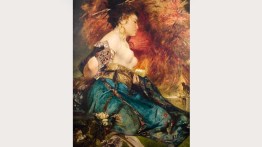
Here’s an intriguing thought experiment: could Damien Hirst disappear? By that I mean not the 52-year-old artist himself — that would be sensational indeed — but the vast fame, the huge prices, the hectares of newsprint, profiles, reviews and interviews by the thousand. Could all that just fade from our collective memory into a black hole of oblivion? The answer is: yes, quite easily. Artists vanish all the time. Take the case of Hans Makart (1840–1884). He was a contemporary of Monet, Manet and Degas, but enormously more acclaimed in his lifetime than any of those. A period of Viennese life was dubbed the ‘Makart era’, a fashionable idiom was named the ‘Makartstil’. One reason for his success was that he was a master of PR.

Frills and furbelows

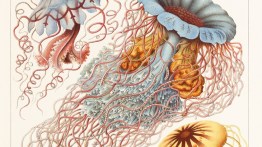
Over the winter of 1859–60, a handsome young man could be seen patrolling the shores of the Gulf of Messina in a rowing boat, skimming the water’s surface with a net. The net’s fine mesh was not designed for fishing, and the young man was not a Sicilian fisherman. He was the 25-year-old German biologist Ernst Haeckel from Potsdam searching for minute plankton known as Radiolaria. In February he wrote excitedly to his fiancée, Anna Sethe, that he had caught 12 new species in a single day — ‘among them the most charming little creatures’ — and hoped to make it a full century before leaving. Haeckel had a degree in medicine but no interest in treating patients, whose visits he curtailed by holding surgeries from 5 to 6 a.m.

The icemen cometh

You wouldn’t want to stumble upon the Scythians. Armed with battle-axes, bows and daggers, and covered in fearsome tattoos, the horse-mad nomads ranged the Russian steppe from around 900 to 200 BC, turning squirrels into fur coats and human teeth into earrings. At their mightiest, they controlled territory from the Black Sea to the north border of China. They left behind no written record, only enormous burial mounds, chiefly in the Altai mountains and plains of southern Siberia. Chambers that weren’t looted in antiquity were preserved in the permafrost only to be discovered millennia later. It is thanks to Peter the Great and the expeditions he launched that so many objects have now been retrieved from the ice.

The National: Sleep Well Beast

Grade: A– There are plenty of websites where fans try to discern, without any success, what in the name of Christ The National are actually singing about. Thousands of words have been expended on just one — rather lovely — song, ‘Vanderlyle Crybaby Geeks’, from the album High Violet. The answer is, they’re more often than not singing about nothing. They’re just nice words that sound good next to each other. It’s euphonious gibberish. The Cincinnati boys are back doing the same stuff with their first album in four years. The lead single is entitled ‘The System Only Dreams in Total Darkness’, which may be the most pretentious and pompous name for a pop song I’ve ever heard — and I remember Yes only too well.

Arcade Fire: Everything Now

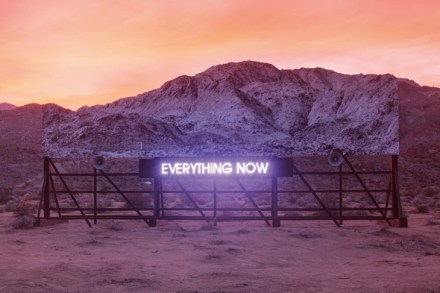
Grade: D+ Well, this is truly awful. Perhaps the worst album by a major band since Mardi Gras by Creedence Clearwater Revival back in ’72. And that’s a lot better than this pompous, trite and at times desperate drivel. Their first album, Funeral, was quirkily anthemic and packed with memorable tunes. The second — Neon Bible — reminded me, chillingly, of Echo and the Bunnymen outtakes. The decline has continued apace. This time, Daft Punk have stapled on some bangin’ beats in an attempt to make the band seem hip. This stratagem has not worked. It makes them seem like dads at a rave. They still plough that post-punk early-1980s furrow for inspiration, but the soil is by now exhausted: hell, at times they sound like U2. And bad U2, at that.

Hit and miss | 24 August 2017

Truman Capote should have been called Truman Persons. His father, Archulus, abbreviated his first name and introduced himself as Arch Persons. ‘And that,’ scoffed his son, ‘sounded like a flock of bishops.’ The young scribbler was thrilled when his divorced mother married a rich Cuban, Joseph Capote, whose zippy and eccentric name he gladly adopted. He got a job at the New Yorker and found the magazine’s celebrated wits, including Dorothy Parker and James Thurber, were embittered molluscs who hated each other. Capote’s literary life, as related by Bob Kingdom, is a parade of inspired bitchiness. He had the knack of getting to a character’s core problem. For Gore Vidal it was the knowledge that he had never written a masterpiece.

Not vintage Mariinsky

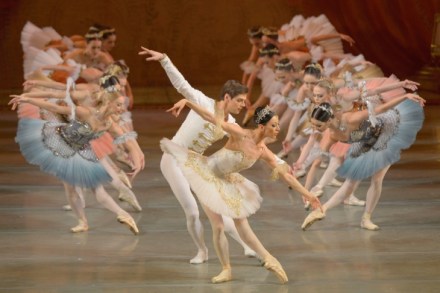
Not really a vintage Mariinsky season — an odd choice of repertoire and some hit-and-miss male casting — but the Covent Garden run ended on a glorious high. Marius Petipa’s La Bayadère is a lightly curried love triangle about a handsome warrior torn between his betrothed (a Rajah’s daughter) and a beautiful temple dancer. Old-fashioned? You bet. But the scenery is chewed with such relish and the choreo-graphy delivered with such radiant commitment that the three hours roll by in a lime-lit haze — you half expect an audience in dress uniforms and tiaras.

England Lost/Gotta Get A Grip

Two songs in which Sir Michael informs us that he is distressed by both Brexit and Donald Trump. Released with, according to the 70-year-old singer, ‘urgency’: he can see that we are in trouble and was naturally anxious to help us out. The first, ‘England Lost’, is at least redeemed by a soupçon of wit. Jagger explains that he went to see England play football but that they lost, and he got wet in the rain. But it then turns into a sort of state of the nation thing, by the simple addition of an apostrophe and the letter ‘s’. England’s lost, he bemoans, and chucks in an incoherent allusion regarding our preoccupation with immigration. Then there’s ‘Gotta Get A Grip’, unburdened by any kind of wit at all.

Cathedral of creation

Sometimes, it pays to rediscover what’s already under your nose. I’ve been umpteen times to the Natural History Museum but I don’t think I’ve ever seen it properly, not even at the evening parties I’ve been to under Dippy-the-Dinosaur, until now. I visited the new and refurbished Hintze Hall and it was a revelation. The thing that strikes most visitors is that there isn’t a dinosaur any more — Dippy is on tour — and he’s been replaced by Hope, who is a) a blue whale, b) female and c) genuine (the dinosaur was fake). Swings and roundabouts. We have lost a dinosaur, but we’ve gained an entirely new perspective on an astonishing building, what a Times leader in 1881 called a ‘Temple of Nature’.

Mad about the boy | 3 August 2017

Tall, handsome boys with long legs and beautifully arched feet do not grow on trees (if only). Every ballet director knows this and yet tall, handsome Xander Parish spent five years blushing unseen in the Covent Garden chorus. The London critics soon spotted him — a rogue tulip in the ensemble — but it was only when the Mariinsky’s Yuri Fateyev was guest coaching the Royal Ballet in 2010 that his potential was realised. Within months he had joined the Mariinsky in St Petersburg — the first British dancer ever to do so. After four years he was made soloist, then first soloist and, last Thursday, on the Royal Opera House stage, he was promoted to principal after a performance of Swan Lake.

Beethoven: Missa solemnis

When you first encounter it, Beethoven’s Missa solemnis can sound like the Ninth Symphony with more singing but no tunes. But the more I listen to it, the more I agree with the composer that it’s his greatest work — or, at least, up there with the last two piano sonatas and his String Quartet Op. 131, my other nominees. Despite its titanic scale, the Missa solemnis inhabits their intimate sound world: it is built from the harmonically ambiguous motifs of Beethoven’s ‘third style’. Nothing in it is as catchy as the ‘Ode to Joy’.

A tale of two artists

Wherever one looked in the arts scene of the 1940s and ’50s, one was likely to encounter the tragicomic figure of John Minton. Whether he was dancing to the trad jazz of his pupil Humphrey Lyttelton — who recalled his style on the floor as ‘formidable and dangerous’ — or drinking at the Colony Room where Francis Bacon once poured champagne over his head, the painter and illustrator was ubiquitous. Even if he never produced a great picture, Minton deserves the exhibition at Pallant House, Chichester, marking the centenary of his birth, and the fine accompanying book by Frances Spalding and Simon Martin. In its way, failure can be as interesting as success, as well as more poignant.

Yes sir, we can boogie

It’s dance — but not as you know it. A giddy mass of flying limbs, sashaying hips and pouty faces. Hands now stretched up high and fluttering as in flamenco, now on the ground buttressing cantilevered bodies and holding on to legs that seem to want to escape their owners. ‘I saw things I never saw before,’ David Byrne said after viewing a voguing battle in 1989. Don’t be fooled by the playfulness of the camp. Voguing is an art, a sport, a way of life — a combative display of agility that grew out of the American drag ball. Its first blaze of mainstream glory was in the 1980s, when the scene hypnotised fashion and pop and catapulted voguing to becoming the flamboyant subcultural export it is today.