More from Arts

Cypress Hill: Elephants on Acid

Grade: A+ Easily album title of the year, maybe album of the year. A true bravura offering from these supposedly tired old men. Cypress Hill are now in comfortable middle age, almost as old as me, ffs. But they were ever ludicrously inventive and idiosyncratic, right back to that first album in 1991, which wrote the template for many lesser and even more profane hip hop gods. This one is mired in psychedelia, as even Charles Moore might have guessed from the title. There are very knowing nods to, especially, early Jefferson Airplane — although the guitar sounds more like Barry Melton than Jorma Kaukonen — and Sly and the Dead and Moby Grape.

Christine and the Queens: Chris

Grade: B– Ooh goody — a parade to rain on! You wouldn’t believe the hyperbole expended by the rock critics on this middle-class French lass, real name Héloïse Letissier. Or maybe, being used to such mass gullibility, you would. ‘Bogglingly intelligent’ and ‘a thrillingly uncompromising artist, playing with ideas of gender, identity and individuality to pop-bright melodies’, for example. Her first album in English, Chaleur humaine, was similarly bestrewn with pop-hack ejaculate, to the extent that it resembled a plasterer’s radio. Why? Oh, check out the back story. Very gender fluid. Leftie. French. Channelling early 1980s electro pop and dance. And here she is with her hair cropped and calling herself Chris.

MacMillan’s #MeToo minefield

Kenneth MacMillan’s Mayerling is a #MeToo minefield. Crown Prince Rudolf of Austria-Hungary is a serial seducer, a man of many mistresses, a grabber of princesses. Were he alive and kissing today, he’d check himself into an Arizona rehab clinic. In 1889, it was laudanum and a loaded pistol. Rudolf ought to be tormented, driven by ennui and the oppression of the imperial court to darker and darker thrills. Ryoichi Hirano, who opens the Royal Ballet’s 2018/19 season as the Crown Prince, is not dark enough. It is his debut as Rudolf and his performance is studied and contained. Hirano is handsome, tall, Apollonian.

Ballet’s Antichrist

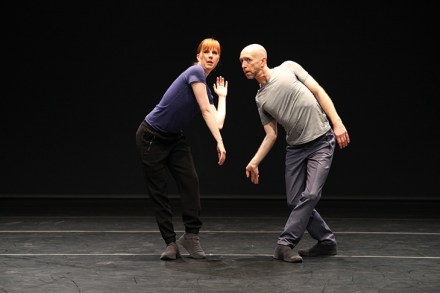
William Forsythe has been called a lot of things in his four decades as a dancemaker: wilful provocateur, ‘pretentious as hell’, even ballet’s Antichrist. But nothing, he claims, to warrant US government officials showing up, unannounced, at his door and threatening him with arrest. Had he been reported by an angry dance purist, perhaps? After all, this is the choreographer who has done more than any other to push the limits of what ballet can be, the great forward-thinker hailed for his athletic, sometimes bewildering, deconstructions of an art form that goes back centuries. It’s gained him an army of devoted (read obsessive) fans, but also some vocal detractors.

Divine comedy | 27 September 2018

‘Ballet is woman’ insisted George Balanchine, but ballet can also be a big man in a dress as any fan of Les Ballets Trockadero de Monte Carlo will testify. The Trocks began life in 1974, dancing for a select few in pop-up performance spaces in Manhattan, but the troupe’s irresistible blend of low comedy and high art soon outgrew its coterie audience. By the mid-1980s it was a fixture on the national and international tour circuit. Japan, with its ancient tradition of cross-dressing onnagata, is practically a second home. Classical ballet has long been a soft target for physical comedy — think of Freddie Starr retrieving a packet of Rothmans from the ‘lunchbox’ at the front of his tights or Morecambe and Wise joining the four little swans.

Monkey Tennis and tarot

Alas, the great Alan Partridge never got to make Inner-City Sumo, despite his famously desperate pitch to BBC TV commissioners. ‘We take fat people from the inner cities, put them in big nappies, and then get them to throw each other out of a circle… If you don’t do it, Sky will.’ Nor did we ever get to see Cooking In Prison. Arm Wrestling with Chas and Dave. Youth Hostelling With Chris Eubank. Or — the ne plus ultra — Monkey Tennis. Some ideas, it seems, are just too strange for telly. Fortunately, there’s a place for them on YouTube. Plenty of people have uploaded videos of themselves playing tennis with monkeys. You’d be surprised at what prisoners are cooking in prison. Chris Eubank made an online advert for Hostelworld.

Neil Diamond: Hot August Night III

Grade: C+ Mumrock. A lucrative genre, dating from the beginning of the 1970s, when Mums suddenly wanted something a little bit hip. My own mother briefly succumbed to the inane imagery and kindergarten melody of ‘Song Sung Blue’, sometime in 1972, before she moved on to more sophisticated stuff (Gilbert O’Sullivan, as I recall). This is Diamond’s 40th anniversary collection of hits, live or otherwise, and his third Hot August Night containing the same songs. Hasn’t everybody got all this hideous dross by now? Is the only selling point this time that he’s singing them at 71, the voice still throatily pompous, the medallion still on display? Was he ever any good?

Teenage Fanclub reissues

Still got your record player? Dig it out. The crunchier the music, the better it sounds on vinyl: a broader noise, bigger than you get from a CD and many times fuller than what you’d hear from an execrable mp3 player. Technology does not always improve stuff. Five Teenage Fanclub albums have been re-released on vinyl, each one with its retinue of freebie extras, unreleased singles and so on, at about £18 a pop. I’ve chosen the three best. The raw Bandwagonesque set the power-pop template: The Byrds, Alex Chilton and Crazy Horse compressed into very agreeable three minutes slabs. It gave them an unrepeated US hit in ‘Star Sign’ and a concert staple in ‘The Concept’.

Living the highly expensive life

It was Le Corbusier who famously wrote that ‘A house is a machine for living in’ (‘Une maison est une machine à habiter’). But it was a visit to a masterpiece of his great rival among modernist architects — Ludwig Mies van der Rohe — that brought home to me how literally accurate that celebrated aphorism was. His Villa Tugendhat at Brno is one of the great monuments of early modernism. To run smoothly, however, this luxurious dwelling required almost as much machinery as a small ocean-liner. The building has been restored with rigorous scholarship to look exactly as it did when its first owners, Fritz and Grete Tugendhat, moved in 88 years ago.

Sacha Baron Cohen

Sacha Baron Cohen’s latest series Who Is America? isn’t funny. But then, nor was his terrible 2016 movie The Brothers Grimsby. Nor was his rubbish 2012 film The Dictator. Nor, let’s be honest, were his classic original characters Borat, Brüno or even Ali G. Obviously, they had their moments: the ‘mankini’ — that bizarre, electric green, giant-thong-like swim wear worn by Borat; the classic late-Nineties catchphrase ‘Is it because I is black?’ And sure it must have taken some nerve — even in character — to explain to a clearly impatient and unimpressed Donald Trump his business plan for some anti-drip ice-cream gloves. But how often, even at his best, does Baron Cohen ever make you laugh?

Go slow

You remember slow TV? Pioneered by the Norwegian Broadcasting Corporation, with its classic Bergensbanen — minutt for minutt (2009), which simply stuck a camera on the front of a train and recorded the seven-hour journey from Bergen to Oslo, slow TV is a nice idea, unless you’re in a hurry, or you have an actual life. The advantage of what you might call Slow YouTube is that it’s pretty damn quick in comparison to the original hardcore Scandi stuff. Slow YouTube — a term I’ve just invented — tends to consist of short documentary-style pans and long shots of everyday things, places and people, a bit like watching your uncle’s old cine-footage of your aunt walking down the street sometime in the 1970s.

Lily Allen: No Shame

Grade: B+ Here we go again, then, I thought — another gobbet of self-referential, breast-beating respec’ me bro sputum against a backdrop of the usual overproduced r&b pop schlock. What used to be called ‘indie’ singer-songwriters are always moaning about how utterly useless they are, taking Radiohead’s ‘Creep’ as a kind of self-flagellating worldview. Chart singer-songwriters, meanwhile, can’t stop telling everyone how absolutely bloody marvellous they are, despite being traduced, which fits right in with the extraordinary narcissism of our current youth culture, its bovine #MeToo grandstanding and exquisite sensitivities. I don’t mind Allen, despite her irritating sub-adolescent Corbynista politics.

Antony Gormley

Antony Gormley has replicated again. Every year or so a new army of his other selves — cast, or these days 3-D fabricated, in bronze, iron, steel — emerge from his workshop. Some lucky clones find themselves in wild and beautiful places; others are trapped in private collections. The latest clutch, generation 2018, find themselves in the new galleries at Kettle’s Yard, Cambridge (until 27 August), one sticking out horizontally from a wall, another, an airy stack of steel bars, staring down through a window into town. It’s called ‘Subject’, this work (also the title of the exhibition), and Gormley’s intention is that it acts as an invitation to each gallery-goer to pause; to become aware of themselves as subjects too.

Meet your makers

Older readers will perhaps recall the once popular Sunday evening TV programme Scrapheap Challenge, in which oily, boilersuited blokes competed to build machines out of materials scavenged from a scrapheap. Even older readers will recall The Great Egg Race, presented by Professor Heinz Wolff, in which bejumpered and bewhiskered engineers competed to build machines from materials scavenged from a BBC studio. These days, engineers and inventors call themselves makers, live and work on YouTube, are covered in tattoos and piercings, and the best of them are women. Laura Kampf posts videos about once a week. She makes bicycle sidecars and the sort of quirky furniture that probably seemed like a good idea at the time and goes down well in Cologne.

Father John Misty: God’s Favourite Customer

Grade: A+ While the young bands plunder the 1980s for every last gobbet of tinny synth and hi-hat, the singer-songwriters remain happily anchored in that much more agreeable decade which came directly before. The 1970s was the era of the introspective, self-pitying, prolix, hairy and winsome singer-songwriter — both the good ones (Young, Martyn, Buckley) and the, ahem, less gifted (Taylor, Forbert, Stevens). Father John Misty, aka Joshua Tillman and once the drummer in the most boring and epicene band I have ever seen (Fleet Foxes), is all of those adjectives I mention above. On this album the production values are purloined from mid-1975, right down to the occasional spasm of glam guitar, the tasteful piano, the strummed acoustic, the strings.

Johann Sebastian Bach

I don’t get Johann Sebastian Bach. I mean, I get that he was good — no Mozart, sure, but definitely up there in anyone’s top five 18th-century composers. But that’s not enough. Bach must be revered as the One: the supreme and universal musical genius. When John Eliot Gardiner celebrated the millennium by performing Bach’s complete cantatas, it wasn’t a cycle or a series but a ‘pilgrimage’, if you please. (He's back with more cantatas this weekend at the Barbican.) Playing Bach, we’re told, requires profound selflessness — though if you’ve ever witnessed a solo violinist hijacking an orchestral concert to saw through all 15 tortured minutes of the D minor Chaconne, you might call it something else entirely.

Man of war

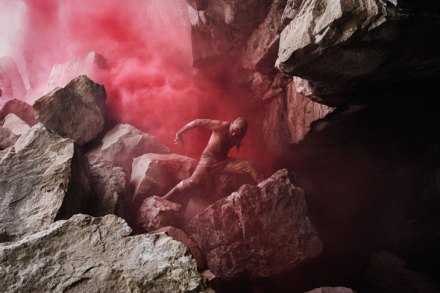
‘Sunil Lanba, Salman Quaraishi, Omar Syed…’ Names play from a crackling gramophone. We hear what they were before the war. Teacher. Engineer. Dancer. And what they endured during it. ‘I put down telephone cables in the mud,’ says one man. ‘Voices in the mud. Half of them already dead, sir.’ Already dead repeats and repeats. A juddering stuck record. Akram Khan’s forgotten soldier — one of 1.5 million Indian men who fought in the trenches in the first world war — is also stuck. In Xenos, Khan’s last performance, though he will continue his career as a choreographer, a shell-shocked Indian sepoy has returned home in body — the Indian scene is set by percussionist B.C.

Chvrches: Love Is Dead

Grade: B Another load of SJW moppets keening over 1980s synths. ‘It only takes two seconds to say: I don’t agree with white supremacy,’ they told the Guardian. Chvrches, a Scottish trio relocated to New York, are led by the elfin and relentlessly concerned Lauren Mayberry. The Eurythmics fronted by Owen Jones, then, kind of. Just what you wanted, isn’t it? Chvrches have never had a hit but they do have a presence and reputation, acquired through endless gigging. They haven’t had a hit because their songs are not very good, if we’re honest. With this new album they have tried very hard indeed to change that by bringing in shiny producers and delivering a set that sounds, at times, like the most witless Europop (especially on ‘My Enemy’).

Wings of desire | 24 May 2018

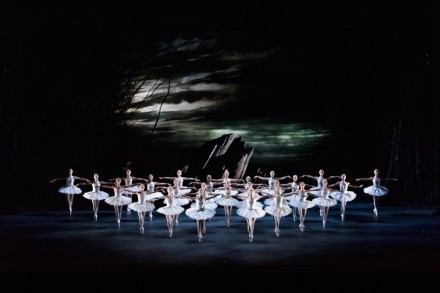
The Royal Ballet’s 2016 Frankenstein was a masterclass in how not to make narrative dance and the news that Liam Scarlett had been chosen to spring-clean and ‘reimagine’ Swan Lake had many balletomanes reaching for the smelling salts (it doesn’t take much, to be honest). It was sighs of relief and trebles all round when the new production premièred at Covent Garden last week: proper tutus; gorgeous designs; first-rate dancing. The critical response has been largely positive but not everyone had a five-star evening. The Daily Telegraph gave it a niggardly three stars, finding the designs ‘variable’ and bewailing the absence ofa dramaturg (which has to be some sortof first).

Academic questions

What is the Royal Academy? This question set me thinking as I wandered through the crowds that celebrated the opening of the RA’s new, greatly extended building. After all, there is nothing else quite like this institution anywhere else in the world. It was a terrific party: a mêlée of artists, journalists, politicians and media types such as I have not seen since the inauguration of Tate Modern 18 years ago (with the unexpected addition of DJs and high-volume music). The whole gang was there, and rightly so. This is a significant addition to the amenities of London, including, among other things, two new suites of galleries at 6 Burlington Gardens, behind Burlington House.