More from Arts

PewDiePie

The most subscribed to channel on YouTube — by far — belongs to a rather strange young Swede named Felix Arvid Ulf Kjellberg, better known as PewDiePie. Kjellberg has over 60 million subscribers, whom he refers to, alas, as the ‘Bro Army’. Most of his videos consist largely of him sniggering, putting on silly voices and making comments about other YouTubers. He is, of course, absolutely brilliant. For older readers, just imagine if Clive James on Television had been scripted by the Monty Python team, with the production values of Spike Milligan’s Q… Outside the PewDiePie cult, he’s more famous for his casual racism. When a clip of him using the N-word appeared last year many thought it should be all over for him.

Kylie Minogue: Golden

Grade: D– Kylie has a place in my heart for having made the second-best single to feature the chorus ‘na na na na na na na na’. The best was Cozy Powell’s ‘Na Na Na’ (all the better for being capitalised), but Kylie’s magnificently vacant synth pop disco lament ‘Can’t Get You Out of My Head’, written by the ubiquitous Cathy Dennis, ran it close. Everything else the pouting Aussie sockpuppet chanteuse has done has been utterly excremental, so credit to the lass for maintaining a certain consistency with her latest album Golden. It has received half-decent reviews in some quarters, but only, I suspect, from people who have either had their frontal lobes removed with a soupspoon or areso jaded they have forgotten up from down.

A Manon to remember

The Shaolin monks are no strangers to the stage. Their home in Dengfeng is a major stop on the Chinese tourist trail and their lives of quiet contemplation (and shouty martial arts practice) are regularly punctuated by spells on the international circuit with Kung Fu extravaganzas like Wheel of Life and Shaolin Warriors. Quite how they square this six-shows-a-week-plus-matinees life with the whole monk ethic is a question for their Abbot or, just possibly, their agent (Shaolin Intangible Assets Management Co. Ltd. Yes, really). But they put on a very good show, the best of which is Sutra, devised by Belgo-Moroccan dancemaker Sidi Larbi Cherkaoui and performed in an installation by Turner-winning sculptor Antony Gormley.

Hobbit houses and 3-D homes

Since 2006, someone called Kirsten Dirksen has been posting weekly videos on YouTube about ‘simple living, self-sufficiency, small (and tiny) homes, backyard gardens (and livestock), alternative transport, DIY, craftsmanship and philosophies of life’. But don’t let that put you off. Basically, Dirksen makes short films about people’s quirky homes: ‘Tiny Parisian rooftop terrace transforms for work and leisure’, ‘Extreme transformer home in Hong Kong’, etc. Fear not: this not some shoestring Grand Designs. There is little or no enthusing, there are no vacuous summings-up, there is no false jeopardy. The videos vary in length: some of them last for less than ten minutes, others for close to an hour. Many are in Spanish (with subtitles).

Judas Priest: Firepower

They’re still alive, then. Chuggedy-chug, grawk, screech screech, chuggedy-chug. First mention of demons — line one, song two. Song one is about blowing people to bits with firepower, cos they’re really EVIL. There are spurts of lead guitar that sound like knives slashing at an empty plate and those strange, pompous, strangulated vocals — operatic diva meets Freddy Krueger — common to most UK heavy metal. Anything to hide the Brummie accent, I suppose. Thank you, the West Midlands, for foisting on the world the blind alley of HM, blues with the rhythm, wit and soul replaced by volume and bellowing and posturing and almost continual references to the poor fucking devil (who clearly didn’t get all the best songs).

Heaven and earth | 28 March 2018

In Nicolas Poussin’s ‘Noli Me Tangere’ (1653) Christ stands with his heel on a spade. He appears, in his rough allotment smock and sandals, to be digging up carrots. In Abraham Janssens oil painting (c.1620), Christ strides among parsnips and pumpkins, cauliflowers and marrows. Mary Magdalene kneels in an artichoke bed. In Fra Angelico’s fresco version — or, rather, vision — for San Marco in Florence (c.1438–50), Christ shoulders a hoe as he hovers above a millefiore carpet of wildflowers. His pristine robes give him away. No gardener would wear white to turn the compost. The Noli Me Tangere scene is the loveliest in the cycle of Christian paintings that tell the story of Easter.

Vince Staples

Grade: B+ Another ex-Long Beach crip replanted in pleasant Orange County via the conduit of very large amounts of record company money and thus now able to draw on his time as a gangsta, while telling us all it was a very naughty thing to have done. The difference between Staples and much of the similarly uprooted West Coast hip-hop crew is twofold. First, off-stage the man is thoughtful, articulate and refuses to hunker down beneath the comfort blanket of black victimhood. Further, he eschews all drugs and alcohol and loathes the glorification of gang culture — something he calls coonery — and is a Christian. (Although it is hard to imagine Jesus Christ cheerfully singing along with this little number.) And second, he has words.

His dark materials | 8 March 2018

He looks like an absent-minded watchmaker, or a homeless chess champion, or a stray physics genius trying to find his way to the Nobel Prize ceremony. He’s in his early sixties, tall and stooping, a bit thin on top, wearing a greatcoat and a crumpled polo-neck jumper. A blur of whiskers obscures the line of his jaw. He has a bulbous, Larkinesque skull and battleship-grey teeth; and if you wanted to cast someone as Spooner, the literary vagrant in Pinter’s No Man’s Land, you’d struggle to find a closer match. This is Michael Boyd, former director of the RSC, who was knighted in 2012 for services to drama. We meet in a dressing-room in a west London studio where he’s rehearsing the Cherry Orchard for Bristol Old Vic. He has deep roots in the Russian theatre.

Nils Frahm: All Melody

Grade: A Here we are in that twilit zone where post-techno and post-ambient meets modern classical, a terrain that has its fair share of tuneless charlatans and chancers. Frahm is not one of those. There are of course the repetitive synthesiser arpeggios familiar to anyone who has had the misfortune to sit in some achingly hip Dalston café: slightly too many for my liking on ‘#2’, which Frahm may consider the centrepiece of this album. But the German is obsessively attuned to nuance. Beneath those Glass-like riffs there is plenty going on: descant melodies, counterpoints burbling up out of the ether.

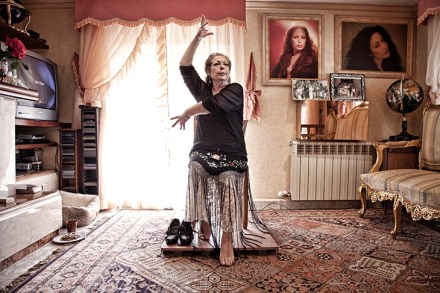
Queen of flamenco

A frail old woman sits alone on a chair on a darkened stage. There are flowers in her hair. She closes her eyes and the small, wrinkled hands begin to clap. The rhythm seems simple at first but her feet take up the beat, deconstructing it, multiplying it, embroidering it into fresh miracles of speed and precision. The packed house holds its breath until the rattling feet gradually dwindle to the gentlest percussive purr then stamp to a halt. A fresh explosion of sound — from the other side of the footlights this time — as Sadler’s Wells rises to its feet to welcome back La Chana (‘the wise one’), queen of flamenco, after an absence of 30 years. The smiling woman I meet the next morning is neither as old (a mere 71) nor as grand as her stage persona suggests.

Franz Ferdinand: Always Ascending

Grade: A Yay, people with a modicum of wit. They come along so very rarely these days. A decade on and that punky, guitar-driven power-pop funk has long since been expunged. Singer Alex Kapranos expressed a wish for Franz Ferdinand to reinvent themselves — and has turned to the same source inspiration as did their recent collaborators Sparks when they, too, needed a swift reboot at the end of the 1970s: Giorgio Moroder. But Kapranos and co. have laced those metronomic German beats with camp glamour and swirling, unpredictable melodies — and, of course, the frequent touch of Bowie. This is a disco-pop album.

Wronged women

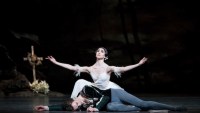
A bumper fortnight for Covent Garden florists thanks to a 20th-anniversary flower shower for the Royal Ballet’s Marianela Nunez and bales of bouquets to mark major debuts by new(ish) principals Francesca Hayward and Yasmine Naghdi. Giselle, the timid village beauty whose ghost returns to forgive her duplicitous lover, was never an obvious vehicle for Nunez’s sunny virtuosity, but she has always had absolute command of the role’s fiendish mix of crisp footwork and melting lines. Naghdi and Hayward both gave polished, intensely felt performances, their innate musicality enhanced by Koen Kessels’s responsive handling of the Adam score. Hayward is marked for misery from the moment she opens the cottage door.

When content-creators fight

None of us is above YouTube, and nothing is beneath it. We have of course all long since submitted to a universal medium whose sole purpose appears to be the promotion of the universal below-average, but this doesn’t mean that there isn’t pleasure to be had from watching content created by so-called ‘content-creators’ whose created content is often pretty much content-free. Indeed,a large part of the obvious appeal of user-generated content is that it is generated by people who are just like you and me and who therefore make stuff that isn’t actually very good. We no longer marvel at skill. What we admire is chutzpah.

Seeing the light | 22 February 2018

The impermanence of works of art is a worry for curators though not usually for artists, especially not at the start of their careers. But Anthony McCall was only in his mid-thirties when his creations vanished before his eyes. It was in New York in the early 1970s that McCall came up with the idea of ‘solid light works’, animated projections of simple abstract shapes in which the beams of projected light assumed a physical presence. Not being taken seriously by commercial galleries — ‘It did occur to me that I hadn’t made a terribly wise career decision’ — McCall’s solid light works were initially shown in the sorts of dusty, smoky downtown lofts where devotees of ‘expanded cinema’ gathered.

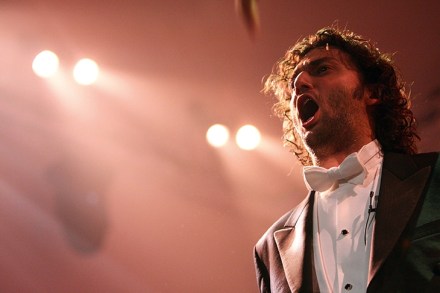
‘I was really, really scared’

‘Hi, it’s Jonas.’ When the great tenor rings from Vienna, I ask if there are any topics he wants me to avoid, such are his minders’ anxieties. ‘Ask anything,’ laughs Jonas. ‘I’m not shy.’ He is heading in from the airport to see a physio — ‘these concerts, you have to stand there all the time’ — before taking Hugo Wolf’s Italian Songbook on a seven-city Baedeker tour: Vienna, Paris, London, Essen, Luxemburg, Budapest, Barcelona. I wonder if he is aware that Wolf is a hard sell to English audiences. ‘Not just the English,’ he replies. ‘Even in Germany promoters say to me, please don’t do a Wolf-only recital, no one will buy tickets.

MGMT: Little Dark Age

Grade: B Horrific memory, flooding back, halfway through the track ‘TSLAMP’ (Time Spent Looking at My Phone). It was the nastily burbling bass guitar that did it. I had been wondering what I was listening to and then it dawned — a Level 42 tribute band. Naffer than T’Pau. Whitey does bland, tuneless funk. And this from a duo who were once so effortlessly cool. But then the rest of the album similarly pillages that godawful decade: ‘One Thing Left To Try’, which is at least tuneful, brings to mind Tears for Fears. Elsewhere it’s Japan, the Human League and A Flock of Seagulls. Why do you like the 1980s so much, you sweet and tender young lefties? It was eight years of Reagan and one of Bush Snr. Really you should hate them.

Justin Timberlake: Man of the Woods

Grade: B– Hey, here comes Justin, the ‘President of Pop’ and ‘one of the greatest all-around entertainers in the history of show business’, according to the Hollywood Reporter. Sheesh, shows how far a white man can go by pretending — pretending very, very hard — to be black. Maybe there’s a market in the States for the black and white minstrels after all. ‘Off to Alabamy with a banjo on ma knee’, etc. It’s at times like these I’m with the SJW kids on the subject of cultural appropriation — but only because I can’t stand this tripe. This is Timberlake’s first album in almost five years and it’s awful, of course, but not quite as gut-wrenchingly awful as I had expected.

Craig David: The Time Is Now

Grade: D– You’re in a minicab, on the way home from some bash that was considerably less pleasing than you had anticipated. The driver has the radio on and this limp, witless, landfill R&B crap is hammering into your sinuses. You want to tell him to turn it off right now but don’t because you are too polite, too aware of sensitivities. You want your driver to like you. I don’t know why. You sort that out with yourself. But anyway, that stuff on the radio — it’s actually Portsmouth’s gift to the world of music, digging like a maniac into the enamel of your teeth. Craig David, recently reinvented (as being slightly more boring than he was originally) and back with a new album: The Time Is Now.

Her big, fat Highland wedding

Gurn loves Effy, Effy is engaged to James but James is away with the fairies: a recipe for love tragedy. Tamara Rojo’s English National Ballet hasn’t danced August Bournonville’s La Sylphide since 1989 (before most of today’s dancers were born or thought of). The easy elevation and unshowy brilliance of the Danish style do not come naturally to them but their accents have improved since the dispiriting première in Milton Keynes last October. The character ensembles look perkier although the garish tartan choices make poor Effy’s big, fat Highland wedding look like a lock-in at a Royal Mile souvenir shop. The sylph’s 18 sisters were unfailingly tidy but the sense of otherworldly lightness was missing.