Antony Beevor

Is the world safer than in 1945?

From our UK edition

11 min listen

80 years ago this week Japan surrendered to the allies, ushering in the end of the Second World War. To mark the anniversary of VJ day, historians Sir Antony Beevor and Peter Frankopan join James Heale to discuss its significance. As collective memory of the war fades, are we in danger of forgetting its lessons? And, with rising state-on-state violence and geopolitical flashpoints, is the world really safer today than in 1945? Produced by Patrick Gibbons.

The love that conquered every barrier – including the Iron Curtain

From our UK edition

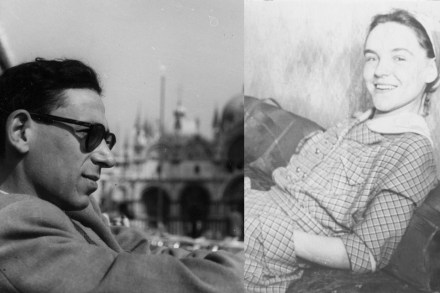
In our age of cosmetic fantasy, a dramatic love story between two bespectacled art historians sounds implausible. But add in the Montague-Capulet effect of the Iron Curtain, along with a fearless Russian heroine who proved that love can conquer every barrier, and you have an enchanting tale: a completely true one, beautifully written by the art historian and novelist Iain Pears, the author of An Instance of the Fingerpost among many other books. Pears, who had been a pupil of Francis Haskell, began to visit his former tutor’s widow Larissa Salmina on a regular basis after 2000. He soon realised from odd remarks just how extraordinary their lives had been. He pointed to a photograph of a boy in naval uniform. ‘Ah,’ Larissa replied, ‘that’s my cousin. He was eaten by a bear.

Farewell to arms: Britain’s depleted military

From our UK edition

39 min listen

This week: In his cover piece for the magazine, Andrew Roberts says that the British Army has been hollowed out by years of underfunding and a lack of foresight when it comes to replacing the munitions we have sent to Ukraine. Historian Antony Beevor and author Simon Jenkins join the podcast to discuss Britain’s depleted military (01:04).  Also this week: do religion and politics mix?  In The Spectator Isabel Hardman asks why it is that only Christian politicians are forced to defend their beliefs. This is of course in light of the news this week that Kate Forbes’s bid for SNP leadership may be derailed by her views on gay marriage.

‘The most powerful and disturbing book that I have ever read’

From our UK edition

I had assumed, after 40 years of researching and writing about war in the 20th century, that I was prepared for just about any horror. But Christina Lamb’s research, into the mass rape of women and young girls in more recent wars and ethnic cleansing shook me to the core. This is the most powerful and disturbing book that I have ever read, and it raises important questions. Lamb takes us from one zone of racial and religious aggression to another. The attackers have different motives and each persecuted minority is culturally unique, yet the pain and suffering of their victims are terrifyingly similar.

Diary – 5 April 2003

From our UK edition

I used to be amused and appalled by the Pentagon-speak which developed during the Vietnam war. But now the almost Stalinist euphemisms and aggressive acronyms have given way to a less extreme form - a military version of corporate-speak. Perhaps this is Donald Rumsfeld's influence. The new form of allied blitzkrieg is termed Rapid Decisive Operations. A few years ago, it would have been Rod or Raid. But these terminological subtleties make little difference to the grunt on the ground: he is just trying to cope with the shock of war. 'You go through all that training,' said one American the other day after coming under fire for the first time. 'You know you are in Iraq, but until you hear bullets and see those tracers, you don't think any of it is real.