Features

The Queen’s strength was that she did not change

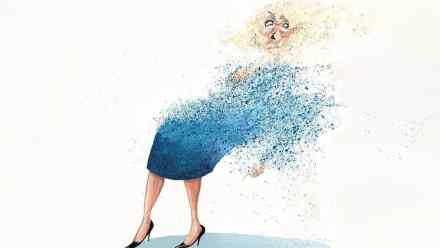
Her task – did she ever quite realise it? – was to preside over a country in decline; and not merely to preside over it, but to be the nation’s anaesthetic, creating the illusion that the nightmare was not happening. When she was born, at 17 Bruton Street, by Caesarean section, on 21 April 1926, Britain commanded the mightiest, richest empire in the history of the world. By the time she died, Britain had ceased even to be what Gore Vidal once called it, an American aircraft-carrier. It was simply a muddle of a place, which had lost most of its manufacturing industrial wealth, all its political influence in the world, and any sense of national identity.

The Queen’s life was anchored by Christianity

King Charles III began his first speech as monarch by recalling the pledge made by his mother on her 21st birthday in 1947. Speaking from Cape Town on the occasion of her 21st birthday, Princess Elizabeth declared ‘before you all that my whole life, whether it be long or short, shall be devoted to your service and the service of our great imperial family’. She ended by saying: ‘God help me to make good my vow and God bless all of you who are willing to share in it.’ We know now that the Queen was given a long life during which the world, as it was when she was 21, was transformed. Cape Town is now part of an independent post-apartheid South Africa. The Empire dissolved, to be replaced by a Commonwealth.

How to tackle illegal migration

Immigration policy is a mess. For at least the past decade, it has been characterised by unrealistic targets and broken promises. Every government has promised to reduce dramatically the number of foreigners who arrive here in search of work, or justice, or hope. Every government has failed. The numbers keep going up. David Cameron promised to reduce immigration to below 100,000 a year. So did Theresa May. Boris Johnson claimed his version of Brexit would see immigration fall precipitously. None of them came close to keeping their word. Curbing immigration, both legal and illegal, is an immensely difficult problem, so perhaps it is not surprising that successive governments have failed. What is surprising is the stupidity of many of the policies which they have claimed would succeed.

Green screen: the march of TV ‘planet placement’

Britain’s film and TV industries want to help save the world. That’s hardly news. But one organisation is ensuring the industry focuses its efforts on environmental sustainability: Albert, which also goes by the name of Bafta Albert. You might have seen the logo – a black footprint – at the end of many TV programmes, from BBC’s Newsnight to Sky Sports News. It’s a rapidly expanding body that few people other than industry insiders have heard of. But Albert is increasingly influential in determining how media institutions programme content, conduct their working practices and set their goals. It describes itself as an environmental organisation which aims to encourage TV and film companies to reduce their carbon footprint.

In defence of pigeons

I have done absolutely nothing this past year except pound away at a book. For complicated logistical reasons that are far too boring to go into, I discovered last summer – rather in the manner of a Bank of England economist blindsided by the inflation rate – that I had badly miscalculated how long I had to finish it. A deadline that I had initially thought was February 2023 turned out to be July 2022. As a result, I have done nothing these past 12 months except write about the Romans. I have incinerated the Temple of Jerusalem, destroyed Pompeii, inaugurated the Colosseum and built Hadrian’s Wall. What I have not done, however, is much exercise – and so no sooner had I breasted the tape of my deadline than I was off for a 20-mile walk across London.

Flat broke: my Help to Buy disaster

‘Do you want a cup of tea?’ The surveyor shook his head. It would take me longer to boil the kettle than for him to do a valuation of my 400 sq ft, one-bedroom flat. I paced awkwardly around. A minute later, he gave me the thumbs-up. Valuation complete, he left. I boiled the kettle anyway. Four years after the purchase of the flat, via the ‘Help to Buy: Equity Loan’ scheme, I couldn’t be more desperate to sell. Would I make a profit? I just want to escape its clutches and avoid a loss. Why sell? Let’s start at the beginning. Why buy? Perhaps it was an early midlife crisis. At nearly 30 years old, I thought it time to leave the familial roost. It was unfair on my parents to have me, the resident ghost daughter, living at home for ever.

Are the rumours of human sacrifice in Bolivia true?

La Paz One summer a few years ago, I joined a group of miners in Potosí, Bolivia, to toast the Andean Mother Earth. I had just moved to La Paz, the country’s political capital, to try my hand as a journalist. As we chatted, a cup of warm beer and shots of spirits were handed around the circle. Before drinking, we had to pour a little on the earth and a little on the head of the white llama that was trussed up between us. My notebook from that day is specked with brownish stains. After we’d finished passing around the spirits, the llama was held down and its throat was cut. ‘The most important part of the llama is the blood,’ one miner said. ‘Blood is life, and the gods don’t bleed.

China vs the US: who will win the chip war?

There is a joke in Taipei that if China invades Taiwan, the best place to shelter will be in microchip factories, because they are the only places the People’s Liberation Army can’t afford to destroy. The country that controls advanced chips controls the future of technology – and Taiwan’s chip fabrication foundries (‘fabs’) are the finest in the world. Successful reunification between the mainland and its renegade province would give China a virtual monopoly over the most advanced fabs. Given Xi Jinping’s designs on Taiwan, it is no wonder that the US government is worried. For this reason, in recent months the United States has taken various steps to thwart China’s attempts to make advanced semiconductors.

‘Those Jedi mind tricks don’t work on me’: Dominic Raab on Truss, Sunak and his own future

If Liz Truss is named prime minister next week, her administration will look rather different to the government of the past few years. Rishi Sunak has suggested he won’t accept any job offer. Michael Gove, a Sunak supporter, has pre-emptively ruled himself out. Other prominent backers are expected to join the pair on the backbenches – such as the Deputy Prime Minister and Justice Secretary, Dominic Raab. Truss’s allies say he deserves what’s coming his way for having likened her economic plans of immediate tax cuts to an ‘electoral suicide note’. Yet for a man on political death row, Raab is remarkably cheery when we meet at The Spectator’s offices.

Trussonomics: a beginner’s guide

When polls started to show Liz Truss miles ahead of Rishi Sunak in the Tory leadership contest, her team adopted a cautious campaign strategy. Why gamble on another interview with Nick Robinson when last time she had struggled to name a single economist who backed her economic plans? Eventually she landed on Professor Patrick Minford, an academic at Cardiff Business School and a bullish Brexiteer. Minford went on the record calling for interest rates to rise to 7 per cent, which Truss then had to defend and deflect. But that moment in the Robinson interview, widely reported as a humiliation, turned out to be one of the most helpful points in her campaign. Within days, like-minded economists were grouping together to praise her tax-cutting agenda.

Drama queens: the return of Meghan and Harry

We’ve all spent months bracing ourselves for what our leaders assure us will be a dreadful winter. As the weather turns, we can look forward to ruinous energy bills, runaway inflation, collapsing health services, strikes, blackouts, more strikes, violent crime, and perhaps even – why not? – a nuclear war with Russia. As if that weren’t bad enough, Meghan and Harry are back, wafting over all the way from Montecito, California on billowy clouds of bonkers publicity, self-pity and self-help mumbo-jumbo. On Monday, as Britain announces a new prime minister, Meghan and Harry will attend a ‘One Young World’ summit for youth leaders in Manchester, where Meghan will deliver the keynote address.

The pleasures of doing nothing

Doing nothing is glorious. It is one of life’s deepest pleasures and ultimate goals. Yesterday, I walked a couple of miles to a stretch of beach at the end of Cape Cod, where the tide sweeps in and out to create vast warm shallow pools of water surrounded by marshes. I brought a book, which was in fact a collection of Cicero’s essays on life and death and old age, but never opened it. I’d already started, and Cicero’s defence of getting old amounts to the idea that you can keep working productively until the day you drop dead, which was not exactly the theme I was after when I picked it up, but I left it in my knapsack for other reasons. One of those was to use my eyes beyond reading. Words, words, words, anything to be free of them from time to time.

Why your more successful friends will drop you

You might have noticed the numerous glowing pieces by friends of Salman Rushdie about their ‘brave’ and ‘brilliant’ friend. I too would like to write a glowing piece about my brave and brilliant friend Salman Rushdie, but there’s one little problem: I’m not a friend of his. In fact I don’t have any famous novelist friends. I used to. There was the occasional lunch with Nick Hornby and the odd debauched evening with Will Self. I’ve drunk whisky with Norman Mailer and smoked pot with Ken Kesey, author of One Flew Over the Cuckoo’s Nest. (And I have a lovely thank-you letter from Edward St Aubyn – does that count?

The lockdown files: Rishi Sunak on what we weren’t told

When Britain was being locked down, the country was assured that all risks had been properly and robustly considered. Yes, schools would close and education would suffer. Normal healthcare would take a hit and people would die as a result. But the government repeatedly said the experts had looked at all this. After all, it wasn’t as if they would lock us down without seriously weighing up the consequences, was it? Those consequences are still making themselves known: exams madness, the NHS waiting list surge, thousands of unexplained ‘excess deaths’, judicial backlogs and economic chaos. Was all that expected, factored in, and thought by leaders to be a price worth paying?

What’s on Ukraine’s new school syllabus

For the first time since Russia’s invasion, schools in Ukraine are starting to re-open. For many parents, including my own, this presents a dilemma. Is it safe for pupils to return? My brother is seven and has spent the past year doing ‘remote learning’, which is hard enough in countries at peace, let alone those fighting an invasion. A return to school would be good for his education, but then again, might there be the danger of Russian air strikes? Parents at my brother’s school have been asked to vote on whether they would prefer pupils to continue with online learning, or return, with all the risks involved. It’s estimated that at least 3,000 of Ukraine’s 12,800 schools will reopen their doors.

Why I donated a kidney to a stranger

One year ago I walked into an operating theatre, dressed in a tiny surgical nightie. Over the next three hours, through various keyhole incisions in my belly, my left kidney was cut from its pillow of protective suet and extracted from below the belt line. The kidney was rinsed through, put on ice and boxed up. It was then zoomed by car from my Bristol hospital to Birmingham, where a surgical team was waiting with a prepped male patient. Over the next few hours, the kidney was plumbed into the groin of a man whose name I still don’t know. He was in his forties and extremely ill. That evening I was told by my transplant nurse that my kidney had begun its new life.

Cow attacks are no laughing matter

One of the worst things about being attacked by a cow is that no one takes it very seriously afterwards. My partner Claire and I found that out the hard way after a walk in Devon. We were making our way through a large field on a public footpath, heading towards a herd of cows milling around a stile. Most were ignoring us, but one seemed different – larger and more malevolent than the others. It began to stare intensely at us, and as we carried on, it started to walk slowly in our direction. Hoping it might be a curious cow, rather than an aggressive one, we branched out to the left to give it a wider berth. But the cow then broke into a full-on run. At this point we froze, thinking it might slow down if we didn’t spook it.