Ivo Dawnay

Gone fishing: In the Andean foothills of Northern Patagonia, the wild trout are biting

The casa grande could be an ancient chalet in the Austrian Tyrol. A steeply gabled roof to slough off the winter snow, dandelion-yellow paintwork, and inside a treasure trove of all an outdoorsman loves. Antlers jostle for space on every wall. There is a tack room thick with the leathery tang of saddles, a bathroom with 1950s rifle magazines for idle reading, and everywhere photos of family, ancient and modern, often with a trophy – deer, vast mountain goat, or even puma. But it is the array of polo cups that gives away the location.

Sending out an SOS

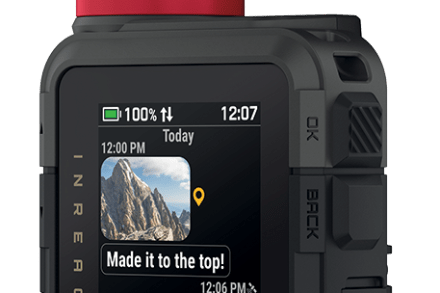
Even in my own hilly, albeit domesticated National Park of Exmoor in south-west England, you can easily get lost. And when the light fades and the clouds descend, the marshy bogland can be not just unpleasant, but lethal. Garmin’s inReach Mini 3 Plus is now not so much a luxury as a necessity for any outdoorsman, whether they be long-distance trekker, mountaineer, off-piste skier, scuba diver, or otherwise solo traveler. This tiny, satellite-connected tracking device has been around for some years, but its latest, just-released version, the Mini 3 Plus, pretty much completes any shortcomings of earlier editions.

Letter from Argentina

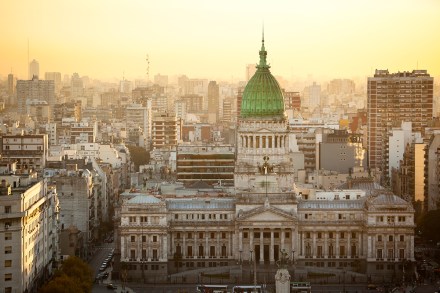
Buenos Aires, Argentina My last visit to Buenos Aires was a whistlestop assignment exactly 40 years ago. All I can remember was that the generals had gone, but the ache of the Falklands/Malvinas debacle had not yet subsided. Most memorable was the haunting story told me by my wealthy, upper-middle-class host about the loss of his twenty-something daughter. By his account, he was called sometime after midnight by a local police chief and told that she had been at a party of rowdy youngsters taken to the station to sober up. He was not to worry: she would be released in the morning. When she hadn’t returned by midday the next day, he called the station again. No one had any recollection of the late-night phone call and he never saw his daughter again.

Am I too sleepy for wellness?

From our UK edition

‘Melt your heart,’ said Simone, the Kiwi sleep therapist, stretching her generous body as elegantly as she was able on the yoga mat. Waves lapped the beach nearby. ‘Glow it violet, then allow the violet to flow up, up, up into your chest, your belly, now your legs and arms…’ Well, I tried, honestly I tried, but my heart stubbornly refused to melt, or even, for that matter, to glow. As sturdy English hearts of oak appeared to be melting all around me, I felt I was rather letting the side down. And as for the violet? Nada. The beginning and end of this ju-ju ordeal was bracketed by bells tinkled around our heads like some vaguely asiatic-version of a Catholic mass Faith is at the heart of the health business, but why does no-one call out the Emperor for his déshabillage?

Kate Andrews, Igor Toronyi-Lalic and Ivo Dawnay

From our UK edition

17 min listen

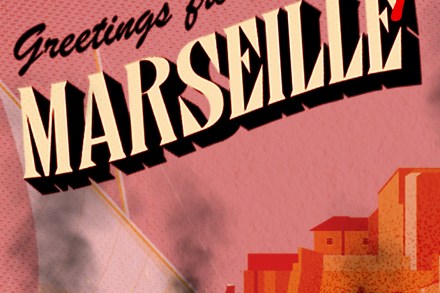
This week: Kate Andrews on the NHS and the celebrations that marked its 75th birthday (01:05), Igor Toronyi-Lalic is in Marseille watching with interest as the riots happen around him (06:57) and Ivo Dawnay describes how being related to Boris is cramping his style oversees (11:13). Produced and presented by Linden Kemkaran.

Why Europe riots

From our UK edition

36 min listen

This week: In the magazine we look at the recent protests in France. The Spectator's Douglas Murray argues that racism is not the problem but that a significant chunk of the unintegrated immigrant population is. He is joined by Dr Rakib Ehsan, author of Beyond Grievance: What the Left Gets Wrong about Ethnic Minorities, to investigate why Europe riots. (01:16) Also this week: Journalist Ivo Dawnay and The Spectator’s associate editor Toby Young discuss the plight of 'politically exposed persons' in the magazine this week. This is of course in light of the news that Nigel Farage has had his bank account closed, with many speculating he has been 'debanked' simply because of his political views and associations.

How my brother-in-law Boris got me cancelled

From our UK edition

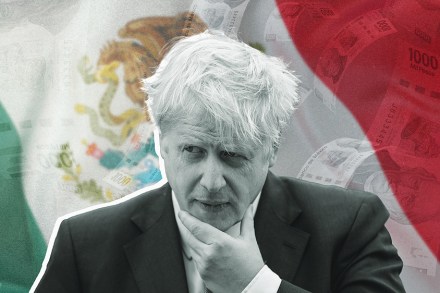
Nigel Farage and I don’t have too much in common beyond liking a pint and a cigar. Yet I now discover a link: we are both PEPs, or ‘politically exposed persons’. Such a handle may not be a total surprise to Nigel. (He may not have been surprised, either, when Coutts said that it had closed his bank account simply because he didn’t have enough funds.) But it certainly was to me – especially as I found out from an official at the bureau de change in the baggage hall of Mexico City airport. As I proffered a couple of grubby $100 bills to change to pesos, I filled in a short form – name, address etc – then noticed the cashier looking quizzically at my passport. He called over a supervisor. My passport was analysed by a machine.

The Great Caucasian Game

From our UK edition

Stroll around the elegant capitals of Georgia and Armenia and you could be almost anywhere in Europe. The grand boulevards, familiar luxury brands, fast-food outlets, smart restaurants and gridlocked traffic suggest that you might be in Hungary or the Czech Republic. Only the cruciform shape of the domed and ancient churches place you elsewhere; that, and in Georgia’s Tbilisi at least, the ubiquitous anti-Russian, anti-Putin graffiti. The Ukraine conflict has meant large numbers of Russians have arrived in Georgia – not to everyone’s delight. ‘What makes them so maddening is their arrogance,’ my hostess said one night. ‘A friend of mine lent a Russian refugee family her flat – for free.

Tbilisi is a tinderbox

From our UK edition

Never judge a country by its airport road. Georgia’s, from international arrivals to the heart of Tbilisi, is impeccable. The George W. Bush highway (yes, really) is smooth asphalt, with chic electric cars humming down avenues, punctuated by spanking new Lukoil petrol stations with fuel at dirt-cheap prices. It is impeccably clean. And when you reach the parliament building downtown, they have almost finished clearing up the detritus from three consecutive nights of protests, rubber bullets, tear gas and riot police. Tbilisi’s highway was built during the country’s most recent economic sugar rush, when a good-looking young president, Mikheil Saakashvili, was in his brief but glamorous heyday.

The endless possibilities of our new EU relationship

From our UK edition

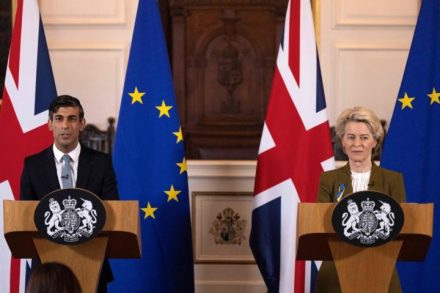
Rishi’s deal changes everything – even, even if it is eventually sunk by DUP obduracy. What really matters is the change of tone. Many of my fiercest Brexiteer friends shared with me a horror at the very unBritish, almost yobbish aggression in the UK’s dealing with the EU in these torrid years since the referendum. To some, it seemed, it was not enough to want our sovereignty back, it was also necessary to hate Brussels and all EU members: to question their motives. Who knows what could be achieved now the tone of our dialogue has warmed For those of us born in the early ‘50s, the memories are still fresh of the mounting desperation with which the Conservative party battled to join the European Economic Community: the shock that came with De Gaulle’s infamous 'Non'.

How cricket came to Corfu

From our UK edition

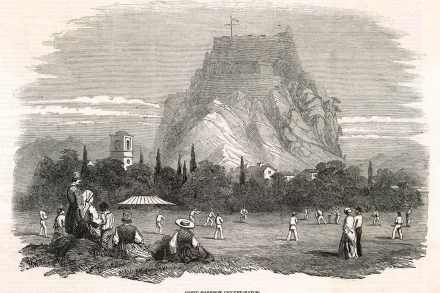
If you are ever at one of those dinner parties where the company is competing to slag off the iniquities of the British Empire, counter with the two words: ‘Corfu’ and ‘cricket’. Although never an actual colony (but rather a British protectorate), Corfu and the Corfiots are that rare thing – unashamedly Anglophile. There are several good reasons for this, not least including the British creation of the island’s celebrated university and Corfu town’s water and sewerage system. But for some, the protectorate’s greatest gift was cricket. This year Corfu will be celebrating the bicentenary of the coming of the game to the jewel of the Ionian Sea – making Greece one of only four countries in the world to have played the game for that long.

It’s time for the chop, Boris

From our UK edition

Thinking about it, there is only one thing that my father-in-law Stanley and I really agree about: it’s the hair. His oldest son’s policies, achievements, claims (and other things) strike us both in very different ways: in Stanley’s case with a farmyard cockerel’s swelling red-breasted pride; in mine with a deep-rooted despair of the type the dwellers in the Cities of the Plain must have felt before Jehovah smote them. But we agree about the hair. When it first went on the public stage, the hair was a glorious diversion, like Tommy Cooper’s Turkish fez, Rod Hull’s Emu or, perhaps more nobly, the playful, streaming flags and banners of the French aristocrats on the eve of Agincourt.

P.J. O’Rourke’s death marks the end of a great satirical era

From our UK edition

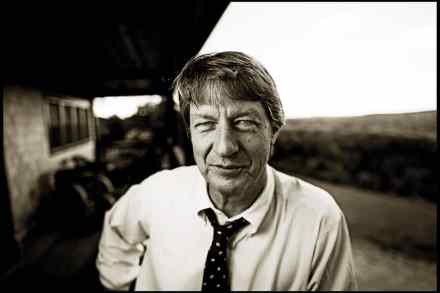
There was something old school about P.J. O’Rourke, who died on Tuesday, something that felt like a leftover echo of the American Revolution. Visiting him in his ancient, low-ceilinged, clapboard farm-house in Sharon, New Hampshire, one half-expected Paul Revere to burst breathlessly into the kitchen warning that the British were coming. Though he was by birth an Ohio boy, New England felt like the tweedy satirist’s natural environment — a pioneer sensibility that combined American impatience with the Old World with a nostalgic yearning for the oak-panelled values and certainties of yesteryear.