Features

What’s wrong with eating dog? 

From my desk, as I write this, in a lofty room in a soaring new hotel in Phnom Penh, I can look down at the bustling streets and see the concrete, mosque-meets-spaceship dome of the Cambodian capital’s famous Central Market. Which also happens to be the place where, 20 years ago, I ate the single most disgusting thing in my life. A dried frog. This thing, this whole dried frog, was so repulsive in taste and texture – like eating a tiny, desiccated alien made of poisonously rancid rubber – that I seldom choose to recall it. But today I am forced to, because of the intriguing news from South Korea that the Seoul government is going to ban the eating of dogs.

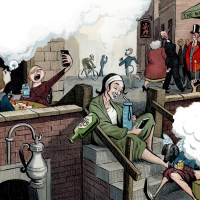
Hell is the multi-faith prayer room at Bristol Airport

When the Roman Emperor Justinian finished building the Hagia Sophia church in Constantinople in 537 he compared it to the great temple in Jerusalem. ‘Solomon, I have surpassed thee,’ he declared. Some 400 years later, as visiting ambassadors from Kyiv were led into the same ethereal structure, they remarked: ‘We did not know if we were in heaven or earth.’ There will be no such confusion when people enter the newly opened ‘multi-faith area’ in the free waiting zone car park of Bristol Airport. To the casual observer it looks like a bus stop with greyed-out Perspex glass windows and walls that do not quite reach the ground (presumably to prevent the homeless finding somewhere dry to sleep).

How China cornered the green market

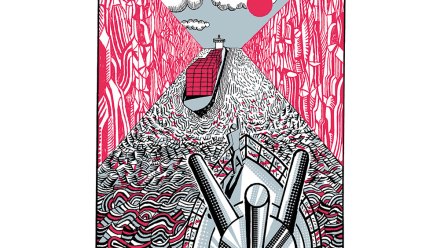
When Rishi Sunak announced that the 2030 ban on new petrol and diesel cars would be delayed by five years, he framed it as a common-sense move. What he didn’t say is that he had been advised that, had the original deadline stuck, Britain’s electric vehicle (EV) market would have been handed over to China. Going green, Sunak was told, would mean going Chinese. At the COP climate summit in Dubai starting this weekend, other leaders will have reached the same conclusion. They’re all a bit late. With little fanfare and a lot of state help, Chinese companies are now world leaders in wind, solar, hydro, lithium batteries and electric cars – dominating either the sectors or the supply chains that support them.

The deep affinity between Japan and Israel

Tokyo Japan and Israel have a curious bond, which recent events have highlighted. A video showing a group of Japanese senior citizens singing ‘Japan loves Israel, and Israel loves Japan’ (in Hebrew) while waving Japanese and Israeli flags has received more than 900,000 views. The group, believed to be Christians, may be at the extreme end of Japanese philo-Semitism but their passion is generally shared. A crowd of 1,200 (big for Japan and probably greater than the number of Jews in the entire country) demonstrated in support of Israel in Tokyo earlier this month, just one of several similar events. The philosophy of the kibbutzim chimed with Japan’s collectivist culture There have been pro-Palestine demonstrations, but they have been small-scale and placid.

The joy of an archive

It’s amazing how quickly you become ancient history. Thirty years after I left Oxford, my old college, Magdalen – alma mater of Oscar Wilde, Edward VIII and my fellow undergraduate George Osborne – sent out a request to former students. The college archivist asked for ‘Academic work. Records of student societies. College magazines and newsletters. Posters and programmes. Menus and tickets. We need them.’ Hard-copy memories have been increasingly replaced by digital records, as the British Library has discovered to its cost. It has just suffered a ransomware attack, paralysing its online systems. The library’s curator of digital publications, Giulia Carla Rossi, is concerned about the fragility of digital publications.

How I missed out on parenthood

‘Do you have children?’ This stock question still floors me. When confronted, I don the mask, breathe deeply, get a grip and try to answer honestly. It doesn’t always work out that way. In a supermarket queue, my bored fellow shopper seems happy with my breezy reply: ‘Yes! One’s at university, the other teaches English as a foreign language, online.’ Lying doesn’t come happily or naturally to my husband or me. Where it won’t land us in trouble, inventiveness has become our coping strategy for what seems a casual disregard of the possibility that we might not have children and that our childlessness might not be voluntary. When I must be honest, I brace for the invariable slight pause after my answer, the fleeting look of something I can’t quite fathom – disapproval?

Madeira is wonderfully lacking in Scrooges

My wife and I arrived in Madeira for a week’s peace and quiet, but the driver from the airport had other ideas and was soon telling us how difficult it was to own a taxi these days. Cars are much more expensive to buy than in Spain, for example, and there is a lot of red tape involved in running a cab. He was happy to be out of the Madeiran capital, Funchal, where the police were busy doing spot-checks. Sure enough, his pal soon called to complain that he’d just been fined for some minor breach of regulations. Then we were on to Portuguese politics. The Prime Minister, Antonio Costa, had recently resigned following corruption allegations. Parliament would be dissolved and a new election organised, or else the Socialist party would be asked if they wanted to appoint a new PM.

How to date a widower

When is it acceptable to consider dating a widower? How do you know if they are still grieving and not ready to move on? According to statistics, men die earlier than women, so I was surprised this year to meet several whose wives had died before them. Divorced since the early 1990s, I had no intention of remarrying, but thought of striking up some sort of liaison with a widower. I had heard of women behaving in a desperate and undignified way, charging round with casseroles I had rejected two non-widowers, whom my grandmother would have described as ‘cast-offs’, meaning exes one mustn’t go back to.

Why so many teenagers support Palestine

I’m a sixth-former in one of Britain’s largest comprehensives and know no one who supports Israel over Palestine. Some readers might find that shocking. Consider, though, how my generation gets its news. TikTok is today by far the no. 1 source of news for teenagers; YouTube is next, Instagram third. Studies show the average teen spends two hours every day glued to their screens. Few my age buy or read a newspaper, or would ever think of doing so. Even the idea of sitting down to watch television news seems alien to us. We view the world through smartphones; we understand current affairs through video snippets. In theory, the videos TikTok shows you relate to what you have previously watched: if the algorithm sees that you like something, it gives you more.

Virology poses a far greater threat to the world than AI

Sam Altman, the recently fired (and rehired) chief executive of Open AI, was asked earlier this year by his fellow tech billionaire Patrick Collison what he thought of the risks of synthetic biology. ‘I would like to not have another synthetic pathogen cause a global pandemic. I think we can all agree that wasn’t a great experience,’ he replied. ‘Wasn’t that bad compared to what it could have been, but I’m surprised there has not been more global coordination and I think we should have more of that.’ He is right. There is almost no debate about regulating high-risk virology, whereas the world is in a moral panic about artificial intelligence. The recent global summit at Bletchley Park essentially focused on how to make us safe from Hal the malevolent computer.

Sanctions against Russia have backfired

Does a British government department have the right to punish individuals who have broken no laws on the basis of their political views? Are private companies allowed to discriminate against customers on the basis of their nationality alone? For the past two years, the answer to both these questions has been yes – if they have a connection to Russia. In the immediate aftermath of Vladimir Putin’s invasion of Ukraine in February last year, the then prime minister, Boris Johnson, called the war ‘a tragedy for Ukraine, and a tragedy for Russia’. Directly addressing the people of Russia (and speaking in surprisingly well-accented Russian), Johnson said: ‘I do not believe this war is in your name.

The greatness of C.S. Lewis

He died on the very day that President Kennedy was assassinated, Friday 22 November 1963, so it is not surprising that the event was overshadowed at the time. With the passage of 60 years, C.S. Lewis’s reputation is undiminished and the sheer range of his achievements as a writer and teacher appears ever more prodigious. For many, he is most beloved as the creator of the seven Narnia books: for others as the author of the science-fiction Space trilogy, which is not only a page-turner but horrifyingly and accurately prophetic. For still others – and for a long time this would have included myself – the great work is his scholarly but always readable contribution to literary studies.

What prison taught me

I confess I never expected to see myself going to the lavatory on prime-time national TV. In fact, the expedition was a failure. Sharing a cell, especially with a young man with a record for GBH, is a very constipating experience. But when I accepted Shine TV’s proposal that I should submit to living alongside a large number of former prisoners, in a real but decommissioned jail, I had agreed to almost anything that might happen. Including that. Dozens of cameras covered us the whole time from every angle. We wore microphones around our necks. It is impossible to guard your tongue the whole time, and so my exclamation of ‘at last!’ slipped out. And I can see why they used it.

Hope is not yet extinguished in Jaffa

When I first heard of the 7 October attacks, I feared it would be the beginning of a war on several fronts: in Gaza, in northern Israel, and in the West Bank. My biggest concern was that the high casualties from the retaliatory Israeli airstrikes would cause violence within Israel itself, as Palestinians in mixed cities such as Jaffa, where I live, took to the streets. This was exactly what happened two years ago, when mob violence erupted in Jaffa, Lod, Acre and other areas where Jews and Muslims live side-by-side, in response to the clearance of the Muslim neighbourhood Sheikh Jarrah in East Jerusalem. During those riots, three people – two Jewish and one Arab – were killed. In some of the most gentrified parts of Jaffa, Palestinian youths torched cars and set up barricades.

The 2024 veep show has already started

Vice presidents are meant to be dependable – and in a funny way Kamala Harris is exactly that. Joe Biden knows that, no matter how bad his poll numbers, hers will be worse: she’s the most unpopular vice president since polling began, according to one recent survey. Biden can afford to be pitifully vague in public partly because she is so painfully annoying. He loses his thread; she loses the plot.  That’s one of the reasons why, for all the alarm in Washington circles about the Commander-in-Chief’s ‘job performance’ and the distinct possibility that he might lose to Donald Trump next year, the Biden-Harris ticket seems locked in place for 2024. Why would Biden nominate someone else when Harris is so reliably unthreatening?

How to get rid of your saggy tattoo

Sagging angels, wilting lilies, drooping lines from love sonnets, withered swallows, flaccid snakes, limp dragons, shrivelled babies’ names: this will be the view inside the British bathroom, and at the British seaside, and in British hospital beds and morgues, in 2060, when today’s tattoo-wearers now in their prime will be in their seventies and eighties.  None of us thinks we’re going to grow old, but (as happened so cruelly to 1960s rock stars) age will creep up, and the skin will stretch, even that of the handsomest, healthiest tattoo trendsetters with the best body art money can buy.

Why I love terrible towns

There are plenty of reasons to visit Catania in Sicily, and some of them are positive. The town is impressively ancient – dating back to the 8th century bc. It boasts a handsome, lavishly voluted Baroque core. A few steps from that main piazza you can find the picturesque fish market, the Pescheria, which sequins the black tufa cobbles with silvery fish scales, and has been selling inky squid for centuries. What else? The city has a striking location, with Mount Etna squatting on the horizon, apparently benign, but occasionally sending out chuffs of smoke to remind you of its menace, like a volcanic version of Tony Benn, puffing his pipe at the edge of British politics.

Back to the future: Sunak’s big gamble

On Remembrance Sunday, former prime ministers are given ceremonial roles. When everyone assembled last weekend, it was a reminder of the recent mayhem within the Tory party. Labour’s 13-year era seemed neat by comparison: Tony Blair, then Gordon Brown. The Tories’ 13 years in power were represented by a more chaotic line-up: David Cameron, Theresa May, Boris Johnson, Liz Truss, Rishi Sunak. If Tory rebels have their way, they might even try to squeeze someone else in before time runs out. ‘I was the future, once,’ the now Lord Cameron said on his last day in office in July 2016. He did himself a disservice: he is the future once more, after being recalled to serve in Sunak’s government in a plot twist that no one saw coming.