Ali Kefford

Ali Kefford is a naval journalist, who specialises in submarine warfare. She has joined six Royal Navy nuclear submarines at sea, including a Trident deterrent boat.

The Sindbad disaster didn’t have to happen

From our UK edition

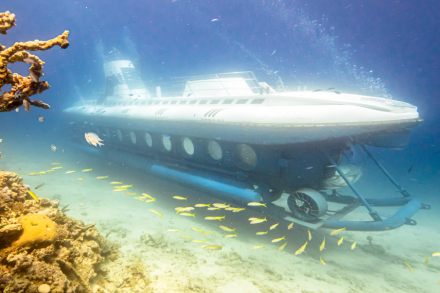
For tourists aboard the Sindbad, the final moments of their planned jaunt below the waves will have been a hellish, adrenaline-fueled lunge for survival. Six Russian tourists, including two children, died yesterday when the submarine abruptly capsized in seas one kilometre off the coast of the Egyptian city of Hurghada at around 10 a.m. Sea water is said to have begun pouring in through open hatches as passengers boarded the boat at a floating platform on the edge of a Red Sea coral reef. It then appears that she plunged to the seabed at a depth of around 20m. Those on board will have had to swim out of the hatches of the stricken submarine. Doing this at this depth would be hugely testing for highly trained sailors, let alone terrified families with small children.
Our nuclear submarines are spending too long at sea

From our UK edition

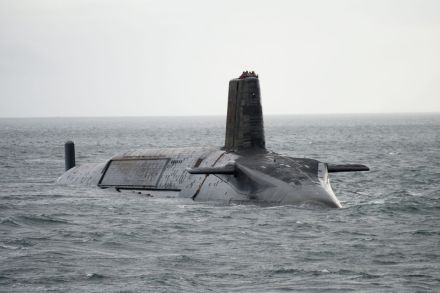
A Vanguard-class submarine used for Britain’s nuclear deterrent has resurfaced after a record-breaking 204 days at sea. Relatives gathered on the Rhu Narrows point yesterday to welcome back their loved ones as the sailors returned to HM Naval Base Clyde, in Scotland. When the submarine departed last year, it was still summer, President Biden was in office and Chancellor Rachel Reeves had yet to deliver her first budget. The boat would have sailed out to open sea, dived and followed a pre-planned route known only to the commanding officer and a handful of others on board, meticulously avoiding any other vessel in her path. She will have remained underwater for the entirety of the next 204 days.

Christmas II: Andrews Watts, Marcus Walker, Ali Kefford, Roger Lewis, Ayaan Hirsh Ali and Christopher Howse

From our UK edition

48 min listen

On this week’s Christmas Out Loud - part two: Andrew Watts goes to santa school (1:11); Marcus Walker reads his priest’s notebook (7:20); Ali Kefford spends Christmas on patrol with submariners (12:34); Roger Lewis says good riddance to 2024, voiced by the actor Robert Bathurst (20:57); Ayaan Hirsh Ali argues that there is a Christian revival under way (32:41); and Christopher Howse reveals the weirdness behind Christmas carols (38:34).  Produced and presented by Patrick Gibbons.

Christmas Special 2024 with Rod Liddle, Lionel Shriver, Matthew Parris and Mary Wakefield

From our UK edition

71 min listen

Welcome to a special festive episode of The Edition podcast, where we will be taking you through the pages of The Spectator’s Christmas triple issue. Up first: our review of the year – and what a year it has been. At the start of 2024, the outcome of the US election looked very different, the UK had a different Prime Minister, and The Spectator had a different editor! Luckily, The Spectator’s regular columnists are on hand to declare what they got right – and wrong – throughout the year, and whether they’re optimistic for 2025. Rod Liddle, Matthew Parris, Mary Wakefield and Lionel Shriver take us through everything from Trump to trans (03:24).

Christmas on patrol with the Royal Navy’s submariners

From our UK edition

This Christmas, a Royal Navy Trident submarine will be quietly prowling the seas as part of the Continuous At Sea Deterrent mission. She will have slipped out of HM Naval Base Clyde in Scotland in late August. Her location is a secret, known only to a handful of officers aboard. Even the highest ranks of the navy, such as the Chief of Defence Staff and the First Sea Lord, remain unaware of where their ‘bomber’ is. For the rest of the crew, the submarine’s whereabouts are a mystery, with only the temperature of the water against the hull offering them a vague sense of geography.

Is a Russian threat floating off the English coast?

From our UK edition

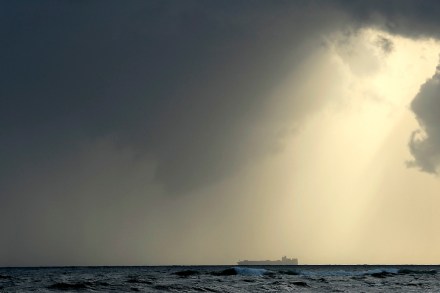
It is a little unsettling that the merchant ship MV Ruby is anchored off Margate, carrying 20,000 tonnes of Russian ammonium nitrate. This is seven times the amount of ammonium nitrate that caused the Beirut explosion in 2020, which killed 218 people and injured 6,000. While ammonium nitrate is usually sold as plant fertiliser, it can also be used in explosives. Some worry that there is a bomb a third of the size of the one detonated over Hiroshima within striking distance of London. Since leaving the White Sea port of Kandalaksha in July, the 23,760-tonne MV Ruby has exhibited unusual behaviour. Sailing under a Maltese flag, she was grounded during a storm, damaging her rudder and propeller and causing cracks in her hull.

How did the superyacht Bayesian sink?

From our UK edition

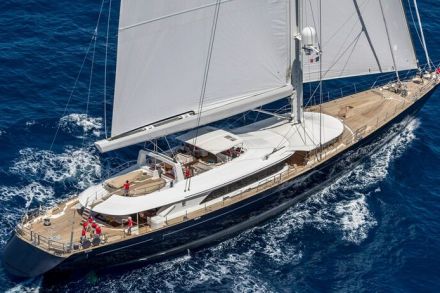
On Monday morning at 5 a.m. the superyacht Bayesian sank off the coast of Sicily, leaving one man dead and six people missing. Among the unaccounted for are the British tech tycoon Mike Lynch, who had been enjoying a celebratory cruise after a US jury acquitted him of fraud charges in June, and his 18-year-old daughter, Hannah. Fifteen people, including a baby, were rescued from the ship, after being found crammed into a nearby lifeboat. The incident would have played out in a handful of horrific minutes. How did the 56 meter Bayesian come to sink? Each of the current theories suggest the incident would have played out in a handful of horrific minutes.

The Titan deaths were utterly avoidable 

From our UK edition

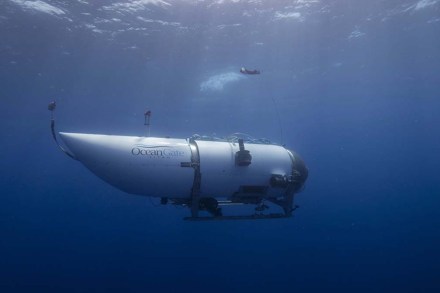
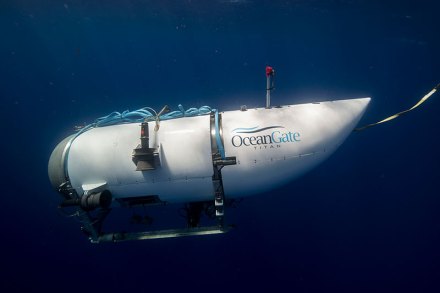
When the news broke that the Titan submersible was missing, naval experts immediately recognised that the chances of saving the lives of those on board were, realistically, tantamount to non-existent.  With rare agreement, they swiftly concluded that the kindest outcome for the five passengers would be that the submersible had imploded.  Hard-hearted as this may sound, their deaths were vastly preferable to the terrifying demise of gradually suffocating in a cold, inky darkness Ruptured parts of Titan’s titanium end caps found yesterday, mere metres from Titanic’s wreck, show that the vehicle did suffer from an abrupt, catastrophic hull collapse.  It may be that those on board were aware of a problem.

There’s still little hope that the Titan will be found

From our UK edition

The thought of laying eyes on the wreck of Titanic has tantalised the world since the ship’s rediscovery in 1985. Now the five people aboard the submersible Titan, currently lost in the Atlantic, will almost undoubtedly end up paying the ultimate price for their desire to see the sunken liner on the ocean floor.   Superpowers spend billions, largely in vain, to track each others’ nuclear deterrent submarines through far shallower waters Having joined nuclear submarines at sea myself, I feel physically sick thinking about what is probably playing out aboard OceanGate Expeditions’ stricken vehicle. Realistically there is the slenderest of chances that the five people onboard will be rescued before their oxygen runs out.