Features

Wife sentence

As Katie Holmes emerged from her New York apartment in a pair of strappy heels, a contingent of women scattered throughout the world will have punched the air with joy. I searched through the pictures of her first appearance since filing for divorce feverishly on my iPad. ‘Come on, come on, let’s see the feet,’ I muttered, as I scrolled down. I need not have worried. There they were, gloriously arched in a pair of ostentatious, leopard-print stilettos. The battle was joined. The fightback had begun. Let there be no mistake. This Cruise divorce is a battle of ideas in which everyone will take sides. Our very belief systems are on trial. Scientology will be put under the spotlight as never before. Perhaps even more crucially, so will controlling men.

Stuck in the middle

Understanding the American class system is elementary. In Ruggles of Red Gap, the striving American wife instructs her new English butler on the duties she expects him to perform for her husband. ‘I want him to look like somebody,’ she explains. ‘Like who, madam?’ asks the perplexed servant. ‘Like somebody,’ she repeats firmly. There you have it. Our upper class are Somebody, our lower class are Nobody, and our middle class are Everybody. Not for us the traditional middle-class composition of doctors, lawyers, judges, business owners and academics. All of these are Somebody to our rank-and-file middle class, who make the cut simply by self-identification.

Rise of the juristocracy

Who should we get to sort out our venal and cavalier bankers? It’s an interesting question. The Labour party wishes to inflict upon them a plague of lawyers, to use Jeremy Bentham’s apt expression, presided over by some bewigged and self-regarding judge. A judicial inquiry, then, which will end up costing the equivalent of a whole bunch of bankers bonuses and then some. The argument seems to be that the government, in preferring the inquiry to be carried out by parliamentarians, is affording the matter too little seriousness. Select committees are all well and good for the minor stuff, but such is the public outrage on this particular matter that the inquiry should be carried out at a higher level, a level beyond parliament.

Chancellor on the charge

Walk into George Osborne’s suite of offices in the Treasury and you are struck straightaway by a new excited mood. People who a month ago looked worn down by the burdens of office are now full of life.  In no one has the transformation been more dramatic than the Chancellor himself. He strides out of his room, shoulders back, a smile playing across his face, and says, ‘Come on, stop gossiping with the political advisers. Let’s get on with it.’ It is remarkable to think that just a few weeks ago colleagues were discussing whether his enthusiasm had been permanently dented by events. This new enthusiasm is the result  of the Libor scandal.

Notes from Salzburg

Gratefully we cast our bread upon the blue-green waters of the Salzach to give thanks to this festival city. Across the river the famous castle stands fortress over the old town. On the terrace of the Cafe Bazar one hears the tongues of France, Italy and Spain as well as Austria, because this is old Europe. Not ‘European’ as defined by the EU, European as in the Arnoldian sense, handing on from one generation to another the best that has been thought, or said, or done. There is a European way of living, and it is easy to find it here. ••• No city of comparable size (150,000 souls) enjoys so elevated an international ranking. That Mozart was born here has something to do with it, even if he longed to get away.

Paris en famille

Paris for lovers, tick. Paris for gastronomes, tick. Paris for the fashion-conscious, obviously. But children? Funnily enough, I find it one of the most child-friendly cities we go to. The proprietors of grand boutiques and restaurants who cold-shoulder grown-ups are all smiles when it comes to children. Propping up a bar with my two on the Rue St Honoré on a damp Sunday evening, the young man sitting next to us with his girlfriend chatted with my five-year-old daughter, treated her and the brother to an orange juice, presented her with €10 to buy a croissant and was rather hurt when I gave it back.

Istanbul: Going Deeper

You’ve done the sights: the Hagia Sofia and the great imperial mosques, the Topkapi Palace and the Grand Bazaar, the Bosporus cruise and Basilica Cistern. With the tourist boxes ticked and the past squared away, it’s time to start exploring the real, living city. You may have had enough of museums, but Orhan Pamuk’s new Museum of Innocence in the Bohemian neighbourhood of Cihangir is worth a visit, if only for the abiding oddness of the concept as much as anything in the exhibits. The museum and Pamuk’s eponymous novel were conceived at the same time, and as Turkey’s Nobel Prize-winning author wrote the book about love and obsession set in 1970s Istanbul, he also collected artefacts.

All the rage | 30 June 2012

New York The western world seems not just unhappy, but intoxicated with anger. It is the kind of anger that feeds on itself. Offence is not just taken but relished, and multiplied as in a hall of mirrors. I have a name for this kind of anger. A few years ago, in a book about how Americans had learned to brush aside their old ethic of self-control and plunge into the delights of sneering and rage, I christened it the ‘new anger’. It was as if the snarling John McEnroe at Wimbledon in 1981 had become the embodiment of national ideals. Of course, it wasn’t entirely new. The emotionally flamboyant have always attracted notice, and a certain type has always wanted to out-Herod Herod. The difference is that we used to think that habitual and unbridled choler was a fault.

Paying for PFI

There is nothing as dangerous, they say, as the zeal of the newly converted. So it was when Labour under Tony Blair suddenly discovered capitalism. What had been a small-scale pragmatic policy under John Major’s government, the Private Finance Initiative (PFI), was taken up with huge gusto in order to see the rebuilding of hundreds of schools and hospitals. Gordon Brown loved it too, because, although less wedded to private enterprise, he spotted a way of fiddling his borrowing figures: by shifting billions of pounds of new investment off the government’s books. We ended up with a deficit of £160 billion anyway. But on top of that, the real cost of PFI is becoming ever more apparent.

Meet the new boss

On my first visit to Egypt, soon after Hosni Mubarak succeeded the assassinated Anwar Sadat as president, a cruel joke was circulating among Cairo’s cognoscenti. ‘When Nasser came to power, he looked around for the most stupid member of his party and appointed Sadat as vice president. When Sadat came to power, he looked around for the most stupid party member and chose Mubarak. But when Mubarak came to power, he looked around… and couldn’t find a successor.’ On this point, at least, Mubarak was prescient: there would be no successors from his clapped-out party. Instead, when the Egyptian people had the first chance to express their democratic will, they elected a parliament dominated by Muslim fundamentalists.

At home with the Stalins

We all know what a city does when a local boy or girl has done good. But what do you do when the local boy turns out to have done very bad indeed? This is the dilemma facing the Georgian authorities in the city of Gori, not far from the boundary line of South Ossetia. For as well as being the first target of Russian forces during Vladimir Putin’s 2008 invasion, Gori is best known for giving birth to Joseph Stalin. It is now two years since the large statue of its most famous son was taken down from in front of Gori’s town hall. But there remains a dilemma over what to do with his opulently preserved birthplace and the connected museum commemorating his life. The Georgian authorities are eager to look towards Europe and away from their Soviet-occupied past.

China’s civilising mission

Last week, a distinguished Chinese thinker arrived in Oxford University to give a talk. His mission was audacious: to explain to Britain’s brightest young things that far from being a repressive or unhappy place, China is in fact pretty perfect. More to the point: now that Europe is on the rocks, China will be the next great world-shaping civilisation. He began boldly: ‘China is a unique country,’ he said. ‘It is the world’s longest continual civilisation. It is like the Roman Empire, but as if the Roman Empire had continued to this day! The western media presents China as insecure, as if the people are unhappy and the leadership afraid, but it’s not true. The Chinese are happy.

Chavs and toffs together

We live in thoroughly PC times, when tweeting rotten things about a black footballer can land you in jail and opposing gay marriage can see you branded a bigot. But there are still two groups of people it’s OK to hate: chavs and toffs. The tracksuit-wearing poor and the tweed-covered rich. The blinged-up yoof who haunt urban bus stops and the Burberry-sporting poshos who get blotto in Chelsea. These two sections of society are being buried beneath a mountain of media abuse. Perhaps it’s time for a chav/toff alliance to fight back against the haters? The respectable and the right-on, who make up the vast bulk of the media and political elite, love nothing more than mocking chavs and toffs.

Welcome to the doll’s house

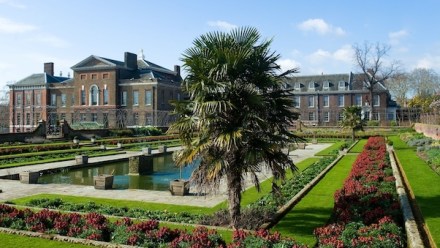
What do Historic Royal Palaces think they are doing? They’re the people who look after the five royal palaces not occupied by the Queen, and their activities have been constrained by the fact that most of the contents are owned by her. But the recent reopening of Kensington Palace has gone to their heads. It’s as if, after decades of patiently interpreting the arcana of royal households, they’ve burst out of their corsets and gone wild. Kensington Palace, remember, is an edifice of such established importance that it’s not even listed. The only thing that is listed there is the statue of Queen Victoria in Kensington Gardens. Kensington Palace was scheduled as an ancient monument long before listing came into existence.

‘If no one helps us, we will turn to the devil’

Homs province Between the distant pop of the mortar when it’s fired, the pressure wave, and the roar of the blast five or six seconds later when it lands, the rebel fighters recited the Shahadah, the Muslim declaration of faith. ‘There is no God but Allah and Mohammed is his messenger.’ ‘We do this in case one hits us,’ the group’s leader tells me, smiling. ‘So we go straight to paradise. No delays.’ The rebels and I were hiding out in the apricot orchards along Syria’s border with Lebanon. Every night, the Syrian army sent a few dozen mortars crashing down. And although the rebels had no heavy weapons of their own to return fire, they took comfort in stories about the army’s inability to aim in a straight line.

Whispering death

It is midsummer, and England are playing the West Indies at cricket. The teams have completed a three-Test series, which England won 2-0, and they are now playing five matches of 50 overs a side, a form of the game that suits the big-hitting Caribbean batsmen. You would have thought that West Indian supporters would be flocking to the ground, yet they are staying away in their thousands. At Lord’s, Trent Bridge and Edgbaston, which staged the Test matches, the West Indian supporters could have arrived on a decent-sized bus. Returning to Lord’s last week, for a one-day game against Middlesex, played in excellent weather, you could count the black faces on the fingers of four hands.

Butterfly effects

Under such headlines as ‘British butterfly defies doom prediction to thrive in changing climate’, the usual suspects (e.g. the Guardian and the Independent) recently publicised a study claiming that, thanks to global warming, ‘a once-rare British butterfly’, the Brown Argus, ‘is becoming a common sight in the English countryside’. A paper from York University, it was reported, showed that these butterflies have moved so far north that they can now be seen ‘within a few miles’ of York.

Next right

If you wanted a preview of the future of British politics, you should have headed through the back alleys of Westminster to Lord North Street on the last Monday in February. There, in the slightly cramped premises of the Institute of Economic Affairs, you could have seen the early stirrings of a Tory revolution. A group of MPs, most of whom had been in parliament for less than two years, were explaining why nothing less than ‘fundamental structural reform’ of the economy would solve the country’s woes. Holding a public meeting a few weeks before your own government’s budget to announce what you would do if you were in charge would normally be seen as an act of monstrous vanity.