Features

From Prussia with love

In a baroque palace in Potsdam, on the leafy outskirts of Berlin, those industrious Germans are throwing a spectacular birthday party. The Neues Palais is a flamboyant folly, built by Frederick the Great to celebrate Prussia’s victory in the Seven Years War, and this summer it’s become the forum for a huge exhibition celebrating the 300th birthday of Prussia’s greatest monarch. But this lush retrospective isn’t just a slice of historical nostalgia. It signals a change in that complex creature the German psyche. For the first time since 1945, when Prussia was erased from the map, Germans are becoming proud of being Prussians once again. Throughout the Cold War, Prussia was a dirty word on both sides of the Iron Curtain.

Down with Chelsea

It’s that depressing flower show again, full of forced plants and taking over the television schedules Have you been to the Chelsea Flower Show this year? Did you find it a little bit depressing? I thought so. For me, it’s like New Year’s Eve — every year I feel I should go and have fun, and every year, almost without fail, it’s a disappointment. The biggest problem is the crowds. They make the struggle around the show ground a test of stamina and ingenuity. Whenever I hear someone say ‘I just love people-watching’, I suggest they visit the flower show’s loudly trumpeted gardens on Main Avenue. That’ll soon cure them.

Travel special – Peak district: Away from the flock

Derbyshire’s landscape is hauntingly beautiful, says Stuart Reid, so long as you can make your peace with the sheep Sheep are ugly, dirty, stupid and cowardly, but by far the nastiest thing about them is that in the countryside they are given precedence over dogs. Take your dog for a romp in the Peak District, for example, or on the North York Moors, and he will tear about like a mad thing, tongue out, eyes wild with excitement, his whole being alive with unconditional gratitude. Then you see a notice saying that dogs are to be kept on a lead, and the bottom falls out of your world and you feel angry and aggrieved.

Travel special – Lake District: All quiet on the Westmorland front

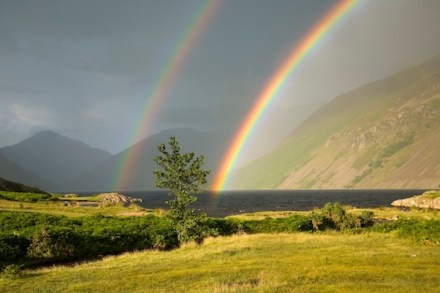
The Lake District is, to my mind, the most relaxing place in England. I think it’s the good walking, sheep gambolling on the fell-side and exceptional food that makes it so very therapeutic. At any rate, I think we can all agree that there are few things better in life than a day’s walking on the fells punctuated by a Huntsman’s pie and a pint of Hawkshead bitter. I spent countless childhood holidays in the lakes, swimming in the Duddon and climbing mountains, fuelled by that same Kendal Mint Cake that propelled Edmund Hillary and Sherpa Tenzing to the top of Everest. But I only realised recently, since my parents have returned there, how fond I am of the place.

Travel special – Scottish borders: On the edge

It’s odd, but most of the English faces we see in our wee corner of the Scottish Borders are merely ‘stopping’ for a night or two on their way north. What is the point, they wonder, in driving all this way only to settle a hair’s breadth past that gaudy ‘Welcome to Scotland’ sign? If they must visit Scotland, they think, they might as well do the thing properly. The Borders aren’t really Scotland, after all — just that last tedious leg of the A68 on the way into Edinburgh. They are, of course, gravely mistaken. You will find as strong a sense of Scotland here as in the grimmest Hebridean backwater. There is something surprising about the Borders, a quiet, unspoiled beauty, which sets them apart from the rest of the North.

Greek fire

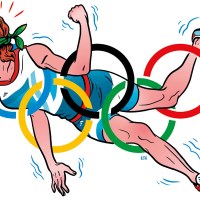
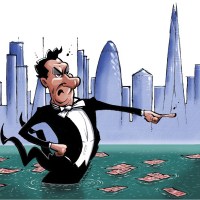
Just eight years ago, when Athens hosted the Olympic Games, the capital celebrated with an orgy of stadiums, hotels  and other infrastructure purchased by what seemed, at the time, to be the fruits of a long economic boom. Today the Helliniko Olympic complex in Athens stands as a monument to this hubris, a decaying white elephant which costs £65 million a year just to maintain. Nearby is one of a handful of new clinics set up to cope with the effects of Greece’s extreme poverty. Dr Giorgos Vihas, a volunteer cardiologist at the clinic, sometimes cannot believe the problems he’s treating: men and women sick from eating out of bins; five-month-old babies underweight because the parents can’t afford milk.

The defeatists

Nato’s leadership is now united in readiness to surrender Afghanistan The leaders of the 50 or so countries attending Nato’s spectacular jamboree in Chicago this weekend will arrive knowing that they can at least agree on one issue: ending Nato’s ill-fated mission to Afghanistan at the earliest possible opportunity. Normally Nato summits have a habit of degenerating into unseemly squabbles between the 28 member states over important areas of policy. Only last year, there was an open rift among the big Nato powers over Libya, with pro-regime-change countries such as Britain and France falling foul of the more pragmatic Germans, who questioned the wisdom of removing the Gaddafi clan when the West had no clue as to who might emerge as the new masters of Tripoli.

Windsors in a spin

The royal family’s PR operation is in danger of becoming too successful Is anyone else sick of the love-fest between the modern royal family and the press? That might sound churlish, even unpatriotic, especially when everybody is preparing for next month’s Diamond Jubilee jamboree. But to me the House of Windsor looks less and less like a monarchy, more and more like a PR operation. In the last few weeks we have seen a number of royal publicity stunts, orchestrated to endear the Windsors to us, the drooling masses.

Experts in suffering

It’s unwise to treat victims of tragedy as universal sages It really is no surprise to learn that Sara Payne favours restrictions to keep online pornography away from children. There cannot, after all, be a sentient adult who would not prefer our babies to spend more time with Peppa Pig than with Swedish Dolls. But although you and I might think that internet service providers should stick their greed where the sign don’t shine, our thoughts would not make headlines like last week’s: ‘Sara Payne backs call to block online porn’ — headlines which, given a moment’s thought, can only invite the question, well, so what? This is a woman who knows a great deal more than we do about things that we must pray we never know better.

Private grief

Two or three mornings a week I walk our four-year-old down to his Catholic primary school in Camden Town. As we pass an expensive though rather bad private school, we have to squeeze our way through the mayhem of north Londoners decanting their pampered progeny from their double-parked 4x4s. I can’t say I like the look of the boys that much. If I were teaching them, I would tell them to do up their ties and get their ruddy hair cut. But it is the parents I find seriously disturbing, for they have absolutely no sense of the impact their cars, children and dogs have on our neighbourhood. I am ashamed to admit that as I peer in through the tinted windows of their Porsche Cayennes at the vacant, entitled mothers texting their pedicurists, I feel the red mist descending.

Minority report

As a member of the Riots, Communities and Victims Panel, I believe that we failed to address the deeper causes of last summer’s violence Will the riots happen again? That was the question many people asked after last summer. As one of the appointees to the government’s Riots, Communities and Victims Panel, set up in the wake of the riots, I think I know. But a number of my conclusions differed from those of my fellow panellists, and some of the politicians who set us up. We spent six months travelling around the country speaking to people about what happened. Those who spoke to us cited many issues, including poverty, inequality, consumerism, entitlement, policing, discipline and ‘the X Factor society’. The panel rightly addressed many of these in its report.

Jerusalem Notebook

Jerusalem is a wonderful city for hat-spotting. There are the black fedoras and other varieties worn  by Hassidic and ultra-orthodox Haredi Jews, sometimes magnificent in height and breadth, and there is also an almost infinite gradation of birettas, hoods and bonnets and headgear defying easy definition worn by Christian clergy of various denominations. We had an ecclesiastical fashion show one afternoon while lingering in an alley leading to the Church of the Holy Sepulchre. Unexpectedly, along came the King of Jordan’s cousin Prince Ghazi bin Muhammad on an official visit, proceeded by a dragoman who banged the ground with a staff and rather roughly pushed us out of the way, and accompanied by differently bearded and clothed representatives of Christendom.

Boarding the sinking ship

How Obama drove central and eastern Europe towards the eurozone – at the worst possible time On 1 January last year, while the euro was staggering drunkenly across the exchanges, the Baltic republic of Estonia joined the single currency. It was like watching a sturdy little lifeboat ferrying new passengers determinedly towards the Titanic after the ship had struck the iceberg. What could they possibly mean by it? ‘For Estonia, the choice is to be inside the club, among the decision makers, or stay outside of the club,’ the Estonian prime minister told reporters. ‘We prefer to act as club members.’ Not just any old EU or euro club either, but the inner sanctum of solvent, growing, and prosperous creditor members of the euro such as Germany and Finland.

Beastie girl

My husband Peter manages rock bands, including the Red Hot Chili Peppers, who were inducted into the Rock and Roll Hall of Fame in Ohio last month. I went with him to the ceremony. Other bands I’d known and loved as a teenager were being inducted, too, among them Guns N’ Roses and the Beastie Boys. Two of the three-man rap band — Ad-Rock (Adam Horowitz) and Mike D (Michael Diamond) — were there to accept their awards. But they wouldn’t go on stage without Adam Yauch. That day, Yauch had entered hospital for the last time. When he died, the international media overflowed with grief. Yauch made television news bulletins in Britain and the front page of the New York Times; he was a worldwide ‘trending topic’ on Twitter for more than a day.

Englishmen rule

I discovered I was pregnant the same day I met the Queen. It was one of those lightless December afternoons when the sky clamps down on London like the lid on a cast iron pot. I went straight from my doctor’s surgery in Shepherd’s Bush to a media reception at Buckingham Palace where I was ushered up the stairs into a large drawing room hung with Old Masters and rammed with journalists sucking back free champagne, trying to look blasé. The courtiers gently herded us all into a queue, prised flute glasses from sticky fingers and prodded us one by one into the adjoining room. And suddenly there she was: Elizabeth II, tiny and smiling beatifically in a mint-green skirt suit and gloves.

Savile Row revolutionary

 ‘You can’t imagine how insecure it makes our politicians when they consider that they haven’t been elected.’ The man in the Savile Row suit and the hand-made shirt gave me a shrewd grin. Even the price of his haircut would have kept a ­Chinese farmer going for a year. ‘What’s the answer?’ I had to whisper, because Tony Blair was at the lectern, going on about how important China was. The man beside me shrugged and spread his hands. His name was — is, of course, but since his arrest people talk about him in the past tense — Bo Xilai, and I’d just bumped into him again after meeting him some years earlier. He was China’s minister of trade, and seemed to be heading for the very top.

Target man

John Bellingham dressed fastidiously. On the day that he committed murder, he wore exactly what the fashion magazine Le Beau Monde advised for a gentleman’s morning wear in 1812 — a chocolate broadcloth coat, clay-coloured denim breeches and calf-length boots, the whole set off by a waspish black-and-yellow waistcoat. By contrast, his victim, clad in the equivalent of a business suit — blue coat and dark twill trousers — was almost ­anonymous. But Spencer Perceval had no need for display. Not only was he prime minister and chancellor of the exchequer, but, thanks to the insanity of George III and the loyal support of a majority of MPs, he had achieved a unique degree of political power.