Features

Bone idols

New York The Manhattan tattoo artist Craig Dershowitz had already spent $60,000 fighting a desperate legal battle with his ex-girlfriend for custody of their ‘son’ before he appealed to the public a few weeks ago. He needed another $20,000 so he can keep going, he said. Had the helpless victim at the centre of this tug-of-love been a real boy, Mr Dershowitz could have kissed his campaign goodbye. But Dershowitz junior is actually a puppy, Knuckles, part pug, part beagle, all ‘puggle’ — so Craig’s in with a chance of getting the cash. A $25 donation will get you a Save Knux T-shirt, $10 will buy you a ‘virtual smooch’ with the puggle. But Knuckles is not alone.

I was never a rebel

It’s a hot and crowded afternoon in Manhattan. Martin Amis is in the New York Public Library, relaxing on a small purple sofa. He’s tired, but he takes the time to answer a few questions about his new novel Lionel Asbo about poetry, porn and modern Britain.  Spectator: You grew up in 1960s Britain with all that rebellious rock ’n’ roll culture, but your father, Kingsley Amis, was part of the establishment and knighted to boot. How did you reconcile those worlds? Amis: I was never a rebel. I mean not in my life, in my writing a bit, perhaps. My father was a communist when he was young. And by the time I was a teenager, he was an anti-­communist. So there was no question of being very left-wing.

Drop the dead donkey

In 1992, I wrote a book called The Conservative Crack-Up, and my liberal adversaries were joyous. Which is not to say they read the book. American liberals never read a book by a conservative, not even an essay, not even a letter to the editor. What gave wings to their spirits was that 1992 was an election year, and they thought I had somehow provided them with ammunition. They neglected to note that some years before I had written another book, The Liberal Crack-Up, in which I had said that the future for liberals looked even gloomier. At the risk of bragging — of all the virtues, humility is the one I find mysterious — I think I can now say my predictions were accurate. Twenty years on, as President Obama is about to find out, American liberalism is facing extinction.

The train to nowhere

The fact that you cannot perform a U-turn in a train is one of the limitations of that form of transport. When the line ahead is blocked, locomotives form long queues, unable to go anywhere until the problem is solved. It is scarcely any easier performing a U-turn with a high-speed rail project, especially after you have spent several million pounds compensating people who live in blighted properties along its route, and several years promoting it as central to your vision for a modern Britain. But it is a U-turn which it is becoming increasingly clear that the government is now resigned to making. To the outside world, ministers are admitting nothing. But the signals are there, for those with an eye to see them.

The main event

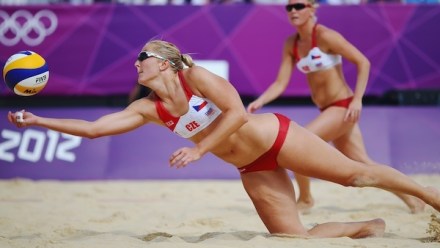
The tickets have all been handed out fairly and efficiently. No one has grumbled about crashing websites or foreign tour operators snaffling the best seats. There are no snatch squads of lawyers and police ready to pounce on inappropriate signs and seal off London’s A-roads for a few VIPs. Yet the overall crowd figure will stretch into the millions, with billions more watching around the world. The promotional value is incalculable. And the cost of this global event? The taxpayer is being charged £1 million for administration bills plus whatever it costs to police the public. At worst, the entire thing might cost, say, half a beach volleyball arena.

The Queen and I

Well it’s all too terribly, terribly exciting: 60 glorious years on the throne of England and almost more than that in my consciousness. I first became aware of the then Princess Elizabeth when I was a young evacuee in Ilfracombe. In my parents’ sudden mad rush from London to escape the Blitz, unnecessary things like toys were left behind. I made do by playing with conkers and skipping on an old frayed rope but it was all rather boring until the woman next door produced a treasure — an old cutting-out book from the 1937 coronation of King George VI. Inside were two pretty cardboard figures of the young princesses, Elizabeth and Margaret Rose, aged about 11 and eight.

The Silver age

I was ten years old during the Silver Jubilee in 1977. That perfect, daft summer formed and cemented my view of the country I live in, and still makes me feel a wave of unconditional affection every time I think back to it. Social historians seem almost contractually obliged to present England during that time as a tatty, shambolic, declining realm, a dreary windswept concrete shopping precinct where everything was brown and orange. But that is not what we ten-year-olds saw. We saw the vivid bright green of Slime (a fashionable novelty toy then) and the mellow purple of our Chopper bikes and the thrilling scarlet from our LED digital watches. And in the summer of 1977, there was a ubiquity of red, white and blue.

Libya notebook

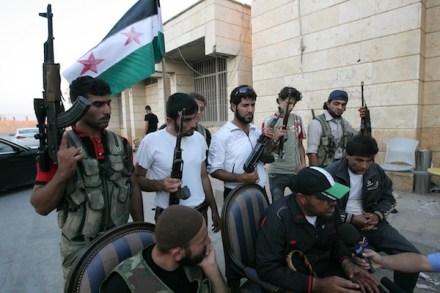
The battle had the busy, obsessive yet irrelevant air of a point-to-point. It was a social event, held outdoors, a good place to see and be seen. The jeunesse dorée of the western Libyan town of Zuwara were out in force. People had come from miles around. Rather than tweed suits and barbours they were wearing battlefield fatigues and clung to machine-guns and rocket-launchers. As artillery rounds and bullets whistled overhead, the Zuwarans made informed comments, ducking when the shooting got too close. Half a mile ahead, street fighting had already claimed some 20 lives and inflicted 300 casualties. Welcome to post-revolutionary Libya.

Queen of the world

A Jubilee for the Commonwealth – and beyond Recently I took a flight to my native Malaysia to celebrate my mum’s 79th birthday. I knew that, since I am currently living in London, a birthday present that screamed BRITAIN was in order — a ‘Keep Calm and Carry On’ notepaper set wrapped in tartan and placed in a Harrods shopping bag, say, or silver tea caddies in the shape of double-decker buses. At one of the tourist shops in Heathrow, my eyes fell on a shelf of bone china Diamond Jubilee plates all emblazoned in gold, many with HRH Elizabeth II’s visage beaming from the centre. I bought one.

Divided we stand

Many Native American tribes would consult a shaman before embarking on a hunting expedition. In one tribe, a shaman would take a caribou bone, carve on it images of the kind of prey the tribe were keen to find (buffalo, deer, trailer-park video-poker addicts) and then place it on a fire. At some point the heat of the fire would cause the bone to split. The hunting party would then set out unquestioningly in the direction of the line of the crack. This is of course a completely insane practice; the kind of irrational, superstitious nonsense that would have Richard Dawkins foaming at the mouth. Except it isn’t. In fact, it’s rather brilliant. One hundred years ago there was no surefire way of predicting where to find a buffalo herd.

Right thinking

David Frum has spoken for American conservatism for a generation – now he despairs of it David Frum has been a major force in American conservatism for more than 20 years. He was a speechwriter in President George W. Bush’s first administration and is said to have coined the phrase ‘axis of evil’. In the last few years, however, he has fallen out with the leading conservative magazine, National Review, the leading conservative think tank, the American Enterprise Institute, and the leading conservative TV network, Rupert Murdoch’s Fox News. He is an active political blogger at Newsweek and The Daily Beast, where he regularly deplores Republican intransigence and bloody-mindedness.

Old Man of Corfu

‘The woes of painters!’ lamented Edward Lear in a letter to a friend in 1862. Earlier that day, he was pottering around his apartment in Corfu Town, when, glancing out of the window, he spotted a troop of soldiers marching past. One of them, a certain Colonel Bruce, spied Lear and saluted. At which, forgetting he had a clutch of paint-brushes in his hand, Lear saluted back — ‘& thereby transferred all my colours into my hair and whiskers, which I must now wash in turpentine or shave off’. As a cameo, it sums him up. In that age of pomp and protocol, he always had (or felt he did) paint in his bushy beard.

Being Blunt

Emily Blunt is jolly busy. This year, she’s in three movies – Salmon Fishing in the Yemen, with Ewan McGregor; The Five-Year Engagement, with Jason Segel; and the offbeat My Sister’s Sister. Her fans, I tell her, must be really excited. Emily seems unsure: ‘D’you think so?’ she says, wrinkling her nose. ‘It might be just incredibly boring. I can imagine people’s faces when the next film comes out. “Ugh, not her again!”’ We are having coffee in the Four Seasons Hotel in Beverly Hills, Emily and I. Emily looks every inch the movie star in a white pencil skirt and a vintage top. But as it turns out, she isn’t a diva at all. She spends much of the interview sending herself up — not the usual form in filmland.

#JustStopIt

‘You know, if becoming an MP has taught me one thing it’s respect, admiration for political opponents,’ tweeted Louise Mensch, the Tory MP for Corby, last week. ‘My Labour colleagues best people ever.’ It’s ironic that she should have vouchsafed these thoughts in a tweet, because it is Twitter that is fast destroying whatever respect or admiration one might once have felt for politicians, by revealing the sheer bathos of so many of their lives. There is a place for tweeting in politics, to make short, rapid-response — albeit usually populist — points; William Hague tweeted with some effect during the Libyan crisis, for example.

Thirty days to live: An encounter with mortality

Death is a beautiful woman, always by my side. She’ll kiss me one day, I know. She’s a companion who reminds me not to postpone anything — ‘Do it now, do it now, do it now.’ Her voice is not threatening, just constant. It tells me what matters is not how long I live, but how I live. I was once stranded in the Mojave Desert, running out of water, and without having read any of the manuals that tell you how to survive in the arid lands. And once, I got lost while climbing in the Pyrenees. Both times, I thought I would be leaving this life, but I didn’t. Five months ago, I went to the doctor for a medical check-up. I would never have done it on my own accord; my best friend forced me to.

Age of the addict

When future generations look back at the early 21st century, they may well decide that its political turmoil — the collapse of the euro, the spread of Islam, the rise of China — pales into insignificance next to a far more important development: a fundamental change in the relationship between human beings and their social environment. This was the moment in history, they may conclude, when our species mastered the art of manipulating its brain chemistry to produce intense bursts of short-term pleasure. As a result, billions of people began to have more fun than their minds and bodies could handle — and developed insidious, life-sapping addictions.

Ukip’s new deal

Nigel Farage is relishing the chance to sow discord in Tory ranks Nigel Farage looks round with mild disgust at the antiseptic Westminster restaurant in which we’re meant to be having lunch. The leader of the United Kingdom Independence Party tilts his head back and sniffs the air theatrically, then whispers, ‘Why don’t we just go to the pub?’ We head off down the street. Farage is in a pinstripe suit with a Ukip golf umbrella under his arm. He puffs on a cigarette, his gait — half-jovial, half-military — straight out of an Ealing comedy. When we get to the pub, he greets his pint of bitter with an enthusiastic cry of ‘First of the week!’ before taking a lip-smacking gulp.

The price of gold

On 27 July millions will drown in syrup as Jacques Rogge, President of the International Olympic Committee, delivers his usual platitudes about international togetherness and sport without boundaries. He might, for example, do something close to reciting the mission statement of the IOC’s world conference on Sport for All, held in Beijing last September: ‘to build a better world by encouraging the practice of sport for all, particularly in the developing world’. Then, once the last firework has been discharged and the stands are cleared away, we can get on with the business of the Olympics: rich countries hauling in the medals which they bought with mountains of public and private cash.