Features

Recipe for revolution

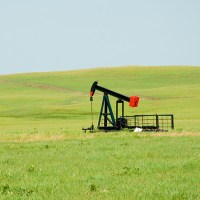
It started in America. The Midwest has for weeks been suffering what is now the worst drought in living memory. Prices for maize and wheat have soared by 50 per cent and the G20 will next week decide whether to call an emergency meeting to discuss what the United Nations believes could be a repeat of the 2008 food price crisis. It is being spoken of as a humanitarian disaster, and rightly. But the last few years have taught us that, when hunger strikes, political upheaval will not be far behind. Even now, the Arab Spring is seen as a popular outcry for political freedom, but those of us who lived in the Arab world in the years leading up to it know better. The first signs of popular agitation begin at the grocery stall, not at a public debate.

The vagina fad

In the Musée d’Orsay in Paris, there’s a picture that, last time I looked, was curtained off. A couple of Japanese girls came out from behind the curtain, stuffing their hands into their mouths to stop the giggles. I went in to see the cause of the girly mirth and there it was, Gustave Courbet’s ‘Origine du Monde’, a painting of a woman’s open legs, with dark pubic hair and a glimpse, but only a glimpse, of th e labia. It’s obviously provocative: you could say that Courbet has cut to the chase as far as male viewers are concerned. He’s got his Mount of Venus, lots of hair and a bit of bottom and, further up, there’s some uncovered breast.

Psychedelic revival

Acid is back. For the first time since the 1960s there are signs of a rekindling of serious interest in psychedelic drugs — conferences, clinical tests, and a full-blown study is planned, with human subjects. LSD belonged to history — to grizzly-haired hippies and travellers, the ‘counter culture’. Now, an informal alliance of psychiatrists, therapists and psychopharmacologists are seeking to shine a fresh light on to psychedelics, the group which includes LSD and psilocybin (magic mushrooms). MDMA (ecstasy) is also in this category. There are two main areas of interest: what psychedelics reveal about how the brain works; and their potential as medicines.

Reykjavik notebook

Anybody hunting for Britain’s lost summer need look no further than Iceland. I spent last week there salmon-fishing, in torrid sunburn conditions caused by a northward shift of the Atlantic jetstream which means that the place has scarcely seen rain since spring, and not many salmon. I failed to hook a single fish, which caused unkind critics to mutter that it is lucky I write books rather than cast a fly for my living. But if I were a Greek, irrespective of the rotten angling conditions, I would head north for a look at Iceland. Since its bank collapse and debt default four years ago, normality has returned amazingly quickly. Tourism is booming, thanks to the currency devaluation.

Unionist gold

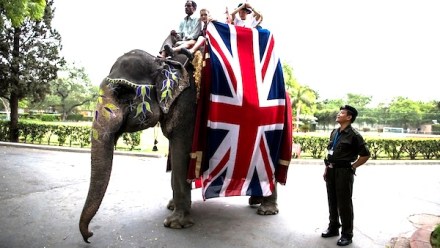
Britishness was supposed to be finished, its last flickering embers to be snuffed out by Alex Salmond when he holds his 2014 referendum on breaking up the Union. The London Olympics, the Nationalists claimed, would be the last at which the Scots, English, Welsh and Northern Irish would be teammates. The Scots, supposedly on the brink of a nationalist awakening, would cheer on their countrymen but feel no more pride in an English win then they would a French one. Pete Wishart, an SNP MP, served notice that ‘Scotland has absolutely no interest in Team GB’. But as the Games draw to a close, the SNP will have learned a lot about Scotland and its interests.

Fat society

Considered historically, debt and fat are twin phenomena. Thirty years ago neither was a problem; today, they are two crushing burdens on the western world. Britain has a trillion pounds of debt. A quarter of our population is obese. If you were to remove the excess fat from our bloated citizens and put it on scales it would weigh about 400 million pounds. The gloomier official projections show Britain’s national debt rising until at least 2030. Over the same period the number of obese people will double to just under half the population. Obesity is responsible for over 50 illnesses including type 2 diabetes, heart disease and cancer.

Breast beating

Recently, I took my baby daughter to the park. When I pulled out a bottle to feed her, some nursing mothers a couple of picnic blankets away stopped their conversation to gawp. They exchanged derogatory looks and clutched their suckling children closer to their bosoms. The message was clear. The sooner I left, the better. I have a similar experience in the park almost every day. Breastfeeding mothers see me bottle-feeding, and they disapprove. ‘Isn’t it sad?’ I overhead one woman saying. ‘Some mothers don’t understand the importance of breastfeeding.’ Some go further — they intimate that the connection I have with my bottle-fed daughter could never be as strong as the one they have with their child.

Pussy Riot were wrong

It’s hard to tell which is the more absurd over-reaction to Pussy Riot’s 51-second performance of political and religious blasphemy in Moscow’s St Saviour’s Cathedral in February — that of the Russian state or that of the western media. It should go without saying that the treatment meted out to the three retro-punks — five months’ pre-trial detention at the mercy of unkind jailers, isolation from their families, heavily embroidered charges, their display in an aquarium-style dock under threat of a seven-year maximum sentence before a clearly biased judge — has been cruel, oppressive and grotesquely out of proportion to the offence they committed. But it cannot any longer go without saying.

‘We are one body’

Near Damascus ‘Remember: what we do, we do for God,’ said the rebel commander to the huddle of his men at the foot of the mountain. They divided up their ammunition. They had so little — one clip’s worth was shared between two Kalashnikovs. They set off, a line of men stretching into the dark, breathing heavily on the steep slope: another night’s gruelling walk to bring them closer to Damascus. The Free Syrian Army’s failed offensive in the capital had been the week before. Fighters poured in, only to run out of bullets. The city did not rise up to help them. Government forces hit back with tanks, artillery and jets; but time and again the regime has tried to crush the uprising using ever greater violence, only to cause a bigger reaction.

The office of last resort

Beijing There is no mistaking the place. It isn’t just the crowd of men and women sitting on the steps of the small official building; it’s the way they look as individuals. Once you’ve come across a group of petitioners in China, you can always spot them again. They are usually middle-aged or elderly and poor. Their clothes are worn and dusty. They look discouraged, sad, beaten down by life. And yet there’s something else about them — something which says a great deal for the human spirit. They’re defiant. They’ve crossed the intangible barrier which divides the weak of purpose from those who are determined to see their project through, no matter what it costs.

‘Drone warfare is coming’

Quite soon, it will be impossible to ignore the fact that a revolution is taking place. You’ll look up one day and the skies will be full of flying robots: pilotless drones or UAVS (Unmanned Autonomous Vehicles) — all programmed to carry out different tasks. There’ll be security drones circling shops, streaming video back to base, Royal Mail drones flying parcels to and fro. Even the birds and bees may not be what they seem. The tiniest drones on the market right now are called MAVs (Micro Air Vehicles) and their designs are inspired by nature. There are robot flies with camera eyes — perfect for corporate espionage; mosquito drones that can inject a payload of poison; hummingbird drones that perch and listen on windowsills.

The despair bubble

Economists, we should all have learned by now, are mostly quacks. They practise neither a science nor an art but a bad game of darts. Boozed up on shoddy theory and meaningless statistics, they wobble to the oche of public life, hurl an arrow at the backboard, then blame the flight, the lighting, anything but their own incompetence, when it falls to the floor. So why listen? Why bother with their endless fainting fits over the slightest flicker in the numbers? When they try to tally the Office of National Statistics’ claim that the British economy shrank by 0.

No man’s land

Fredericksburg, Virginia Walt Whitman once observed, ‘In America, the men hate the women and the women hate the men.’ That sounds like a commentary on feminism and probably was. Although Whitman was caught up in personal sexual conflicts more befitting a sensitive poet, he lived through most of the 19th century, when women were in vociferous pursuit of the vote, so he probably muttered his share of ‘If I hear “vote” one more time… .’ To judge from our current cris de coeur, his remark about the battle of the sexes rings truer for our own time than for his.

Peloponnese: Return ticket

I first visited the Peloponnese in the spring of 1959, at the beginning of my gap year. I was 18. Having been accepted for university as a classicist, I decided I might as well combine business and pleasure by visiting the great sites of the Mycenaean era before going on to my studies. It was mind-blowing. Olympia, Argos, Tiryns, Mycenae! I went from place to place with the Oxford edition of Homer’s Odyssey weighing down my rucksack, and  each day brought a new revelation.  But I had to leave out the great Palace of Nestor near Pylos on that first peregrination through the Peloponnese. The buses didn’t seem to go that way. And a year wasn’t long enough to do and see everything.

Athens: Love among the ruins

A very long time ago, still in my teens, I knew a beautiful Athenian girl whose eyes were green and her hair golden blonde, and she was madly in love with a friend of mine. He loved her just as passionately but then he went away to school in Switzerland, and you can guess the rest. It sounds a bit opportunistic, even shabby, but I stood by her, listening to her laments late at night, and then, one evening under a moonlit Acropolis, we kissed. She told me she felt guilty for having done it, but on we went, the moon, the ruins, the Attic breezes all helping me along. It was a case of patience and perfect timing. (The retsina also helped.) Which brings me to the point I wish to make. Now is the time for all of you to visit Athens.

Dead Jews don’t make news

I’ve a question. You’ll see in a moment why I’m tempted to call it a Trivial Pursuit question. Can you tell me when the worst suicide bombing in Europe since the 7/7 murders took place? I doubt you’d believe me if I said it was last week. I can hear your response: ‘What suicide bombing? What murders?’ Last week, six people died and nearly 30 were injured when a suicide bomber, widely thought to be acting on ­Iranian orders, set off a device on a bus taking a group of tourists from their charter flight to their hotel. But if you got your news from the British media — the story was huge elsewhere — you would know almost nothing about it. The BBC news channel did mention the incident for a short while.

Mad Frogs and Englishmen

The English like nothing better than the idea that the French hate us. Bradley Wiggins, an Englishman, wins the Tour de France, and we are full of in-votre-face triumphalism. British journalists search the French media for sour grapes. How the frogs must be fuming! Beaten by a rosbif on their own turf! Yet if the French were all so bitter about Wiggins, why did thousands of them line the Champs-Elysées on Sunday to cheer him home? Far from being grouchy, France seemed eager to hail Wiggins as the likeable and quirky champion that he is. It’s true that some French papers complained about the boringness of this year’s Tour. But that was part of a ­longstanding gripe about the contest being too technical and unromantic, i.e. not French.