Features

Is Poland’s revival a mirage?

In 1988, when I was six months old, my British father and Polish mother took me to meet my family in Krakow. My parents brought an extra suitcase filled with disposable nappies because such luxuries weren’t sold on the other side of the Iron Curtain. At the time, there was only one shop in Krakow that sold foreign goods, but my father was pleased to discover that a gallon of whisky could be bought for only $8. He was a member of the House of Lords and, I’m told, we were trailed for our entire stay. Everywhere we went, a large Polski Fiat 125 driven by a suited man followed us. My parents always said that apart from drinking in people’s homes, there wasn’t a lot to do in Krakow back then. There were a couple of run-down cafés in the main market square but that was it.

Who stamped out the postal service?

Tried to send a parcel lately? Or a letter? If it involves a trip to a post office, all I can say is, give it time. A fortnight ago, I was posting a book to a friend and took it to the nearest post office – the central, City of London one. It’s housed in a convenience store: handy if you want a samosa but lacking dignity, somehow. All the electronic terminals were out of action, four or five of them. The queue was patient but prohibitively long. Thinking bad thoughts about privatisation, I made my way to the post office in Kensington Church Street, which is a proper outfit; that was closed. I tried the Kensington High Street branch, but its machines were out of action too. I gave up.

My hunt for the perfect ‘mum van’

I spent my childhood being ferried around in my mom’s minivan, a hunter green Ford Windstar. Compared with most family cars on the road today, it was like Air Force One: magisterial and bigger than was strictly necessary. I loved that minivan. It was roomy and comfortable, with a two-seater half-bench in the middle row to allow access to the full three-seater third row. The Windstar saw my two sisters and me through our primary years, to twice-weekly basketball and volleyball practice. In the summer, we would head to the lake, all the kit housed neatly in the back. Apart from the handful of times I threw up in the back seat, my memories of that van are happy ones. The ‘multi-purpose vehicle’ (MPV) was commonplace in my millennial childhood.

How Pakistan’s most powerful man provoked India’s missile attack

From a western perspective, memorising all 114 chapters of the Quran might seem an unusual qualification for a national leader. Yet this is a defining feature of the résumé of General Syed Asim Munir, Pakistan’s chief of army staff since November 2022. To become a Hafiz – one who knows by heart the entire Quran – requires committing 77,430 words to memory, each recited with precise pronunciation in classical (not modern) Arabic. This accomplishment earns the revered title of Hafiz Sahb or Sheikh and reflects deep religious devotion. To put it into perspective, it would be akin to Sir Keir Starmer memorising the biblical books of Genesis, Numbers and Judges – together totalling more than 72,000 words. Why compare a British prime minister with a Pakistani general?

Welcome to Scuzz Nation

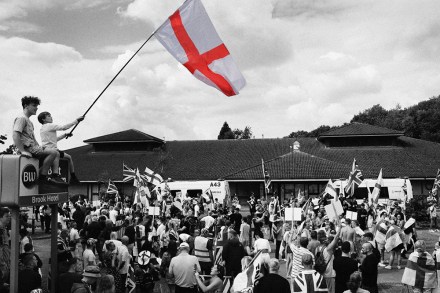
Reform’s success in last week’s local elections has been attributed to many causes. Labour’s abolition of the winter fuel payment for pensioners. The hollowing out of the Conservative party’s campaigning base. Nigel Farage’s mastery of social media. But if you want an emblem of why voters turned their back on the political establishment let me give you Goat Man. In one ward in Runcorn, the seat Labour lost to Reform by just six votes, residents found that no one would listen when a neighbour filled his derelict house with goats and burned the animals’ manure in his garden. Despite repeated appeals to authority, no action was taken.

‘It is sad that we are sometimes seen as just killers’: an interview with Japan’s last ninja

Getting an interview with Jinichi Kawakami, the man known in Japan as ‘the Last Ninja’, was no easy task – but nor should it have been. Ninjas, Japan’s legendary covert operatives and assassins, were renowned for their elusiveness, so it would have been disappointing if tracking one down had proved a cinch. It took a good deal of research and persistence before I was granted an interview by landline telephone – which also seems appropriate since ninjas were reputedly able to make themselves invisible. Kawakami is head of the Banke Shinobinoden school of ninjutsu (ninja culture), director of the Iga-ryu Ninja Museum and Ninja Council, and a professor of Ninja Studies at Mie University.

What does Putin want? Whatever he can get away with

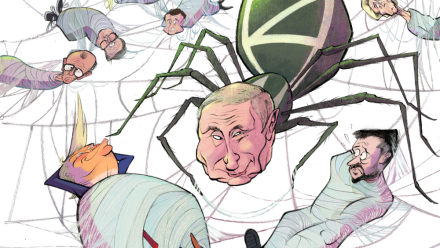
The US general Mark Clark knew a thing or two about dealing with Russians. In the aftermath of the defeat of Nazi Germany, Clark commanded the American occupying forces in Austria. His Soviet opposite number, and nominal ally, was Marshal Ivan Konev. The two war heroes were tasked with pacifying the conquered and divided country at the dawn of the Cold War. ‘The Russians were not interested in teamwork,’ recalled Clark in his 1950 memoir, Calculated Risk. ‘They wanted to keep things boiling… They were accustomed to the use of force. They were skilled in exploiting any sign of weakness or uncertainty or appeasement. This was their national policy.’ Two things infuriated Clark more than anything.

The secrets of ‘God’s influencer’

Assisi In a medieval church built of white stone, pilgrims and tourists shuffle past the body of a 15-year-old boy in a tomb with a glass side. The boy is handsome, with dark curly hair, and wears a blue tracksuit top, jeans and Nike trainers. Everyone peers through the glass and some realise, with a start, that the perfectly preserved face and hands are eerily lifelike silicone. The real remains, decomposing for almost 20 years, are inside the effigy. This is Carlo Acutis, the Italian teenager known as ‘God’s influencer’, who is about to become the first millennial saint of the Roman Catholic Church. The tomb is held up from behind and so appears to levitate, surrounded by a corona of bright light.

AI killed the Easter Bunny

On the grounds of advancing age, I had decided to ignore all the chatter about artificial intelligence and devote my remaining time to things I could properly understand. Then I discovered that one of my own copyrighted properties, the fruit of a year’s work, had been scraped into the AI maw without so much as a by-your-leave, and it became personal. I wrote to my MP who responded with template blandishments. This government… committed to blah blah… exciting prospects… safeguarding… potential opt-out system… a close watch, yadda yadda… Feeling impotent and no further forward, I returned to my knitting. It took the murder of the Easter Bunny to rouse me from the torpor of denial.

The creeping Dubai-ification of London

In December 2023, a TikTok influencer called Maria Vehera opened a packet of ‘Dubai chocolate’ in her car and filmed herself eating it. Since then, 124.6 million people have watched her swallowing this pistachio-based gloop. Oh Maria, what have you done? A butterfly flaps its wings – or an influencer eats some chocolate – and soon people are setting their alarms for 5 a.m. to queue outside Lidl for the ‘drop’ of LIDL’S OWN DUBAI CHOCOLATE. Guess what? M&S made one too (£8.50). Morrisons then had the bright idea of creating a pistachio cream Easter egg. Waitrose’s Dubai chocolate was so popular it had to ration it to two bars per person. Knock-off brands now feature at the counter of almost every news-agent in London.

How China bought Britain

Somewhere in the bowels of the Foreign Office, civil servants are still working on the government’s ‘China audit’. The report was commissioned by the new Labour government to ‘assess trade-offs in the UK-China relationship’ and to ‘ensure consistency across government, business and academia towards engagement with China’. Little is known about its workings or who’s being consulted. Instead of bringing clarity, the process is deepening confusion, and there are worrying reports that the audit has been pared back to support Keir Starmer’s ‘pragmatic’ approach. All the while, there have been a series of troubling events that demand extreme caution about Beijing. The British Steel debacle is only the latest.

Trump’s big gambles are paying off

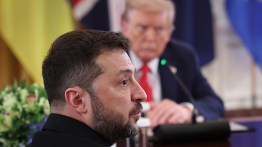
‘I run the country and the world,’ said President Donald Trump last week. That’s not really an exaggeration. In our ever more mediatised age, Trump doesn’t just make the news. He is the news, win or lose. Why did Mark Carney triumph in the Canadian elections? A Trump backlash. What happened at the Pope’s funeral? Trump and Volodymyr Zelensky talked peace. Is the economy tanking? It’s the Trump, stupid. Younger Donald’s ambition was to be the world’s most famous man – to achieve, as his son-in-law Jared Kushner put it, ‘virtually 100 per cent name recognition’. He surpassed that years ago. His aspirations now are far bigger.

Why won’t Hitler conspiracies die?

Eighty years ago, as Red Army shells rained down over Adolf Hitler’s Reich Chancellery garden, a group of his remaining friends and colleagues huddled under the block-shaped exit of his last grim command centre, the Führerbunker. Flames engulfed the bodies of the newlywed Mr and Mrs Hitler, casting a flickering light over the onlookers, who raised their arms in a final straight-armed salute. The enduring cultural and political relevance of Hitler’s death hardly needs restating. It gave us online parodies of the rant scene in the film Downfall and, of course, a wild range of conspiracy theories. I once hoped that my book Hitler’s Death: the Case Against Conspiracy might put an end to those.

Long live the long lunch!

I keep on my bedside table, where others might place religious texts, Keith Waterhouse’s seminal The Theory and Practice of Lunch. Waterhouse, that magnificent chronicler of Fleet Street’s liquid lunches and disappearing afternoons, understood what modern efficiency cultists cannot: that civilisation is measured not by what we produce but by how elegantly we pause. His gospel preaches that a proper lunch requires ‘two-and-a-half hours of quality time at a quality establishment’, a commandment I try to observe with monastic devotion at least twice a week. The book’s spine is cracked at the chapter entitled ‘The Lunch Bore’.

Middle-class parents are creating a new breed of brat

I recently reconnected with an old friend; I went to his house and met his children for the first time. One of them looked up from his screen as we entered the room, faintly curious about the intrusion. The other, with his back to us and his face obscured by a hoodie, didn’t bother. My friend announced their names as if that was sufficient introduction, but it felt weird that the children did not say hello and that one of them did not even show his face. Was something wrong with him? It was a bit creepy. Obviously I let it go. Maybe he was chronically shy or autistic, or facially disfigured. But the brother didn’t behave very differently, so probably not.

How Rome copes with the Conclave

Ordinary Romans, famous for their cheerful working-class familiarity, loved Pope Francis for his common touch. For the first time in living memory, they will have the opportunity of turning out on the streets to say their final farewells to a Pope, as Francis willed that he be buried in the papal basilica of Santa Maria Maggiore on the Esquiline hill rather than in the vaults of St Peter’s. His will be the first papal burial procession to the Basilica since Clement IX’s in 1669. Unlike his predecessors, though, Francis insisted on plainness, economy and simplicity. His first arrival in the Vatican as Pope was by public bus. His departure, in a plain wooden coffin, is likely to be equally low-key and dignified. The mortal Pope dies, but the Eternal City lives. And, indeed, is reborn.

Conservatives all over the Anglosphere are paying the price for Trump

It is the great good fortune of Britain, Canada, Australia and New Zealand to be united by a common language, and a misfortune of even greater magnitude that they share that language with the United States. America is a very different country to the four Commonwealth realms sometimes brigaded together under the ugly acronym ‘Canzuk’. It has a different constitution, a different culture and a very different history. Where for many years the four were partners (if hardly equal partners) in the common project of the Empire, the United States was, from its foundation, a determined and eventually successful enemy of the same.