Features

The next front in the gender wars

April’s Supreme Court judgment ought to have been the final nail in the coffin for transgender ideology. The belief that you can pick your gender, like you would a hat in the morning, seemed to have ended. The highest court unanimously confirmed that for the purposes of the Equality Act, sex is biological – immutable, material and not up for ideological reinterpretation. Yet if the past decade has taught us anything, it is that the gender industry doesn’t give up; it adapts. Numerous organisations, many taxpayer-funded, now exist for the sole purpose of pushing back against any resistance to trans orthodoxy. Defeat is merely a fundraising opportunity. The semantic contortions have already begun.

The brutality of being a bridesmaid

There stands the bride. Perfect hair, perfect nails, perfect fake tan. She may not have slept the previous night or eaten for six months but, still, she’s beaming. And there behind her stand the bridesmaids. All 95 of them. ‘My sister-in-law asked how much weight I could drop because the dresses only went up to a size 12’ When Kathryn McGowan got married in County Down this month, she couldn’t decide which of her pals should have the honour of holding her train and checking she didn’t have lipstick on her teeth. ‘It was quite stressful,’ she said of the dilemma, ‘and then one day the idea came to me.’ Instead of having the average number of bridesmaids (in the UK, this is three to five), she’d have 95 of them, aged between six and 40.

Butlin’s is cashing in on nostalgia

Butlin’s is no longer a holiday ‘camp’. The company has evolved from its postwar heyday and now describes its properties as ‘resorts’ which are crammed with restaurants, bars and venues for live gigs. It’s like a cruise but on dry land. I went to Bognor Regis for a nostalgic ‘Ultimate 80s’ weekend where the performers included half-forgotten acts such as Aswad and T’Pau, and the remnants of the boyband Bros. The site lies 200 yards from Bognor’s shallow, pebble-strewn beach. The town itself is doing all right, if not exactly thriving. The charity shops are cheap, the estate agencies are full of recently vacated bungalows and the funeral parlours offer a special service for customers in a hurry.

Can anything solve Britain’s prisons crisis?

While we were inspecting HMP Elmley on the Isle of Sheppey, a commotion broke out on one of the wings. ‘What’s up?’ one of my team asked the nearest prison officer. ‘Bloke who’s getting out tomorrow has just been told he’s being shipped to Rochester jail.’ The man was manhandled towards a prison van. ‘If I was him, I’d kick off too,’ the officer added quietly. Reducing the prison population will do nothing to stem the flow of drugs pouring into every jail in the country That week things were so desperate in the south of England that the prisoner was being forced to spend one night in a jail 20 miles away so that new arrivals could be squeezed in that afternoon.

The BBC’s war on the SAS

The SAS is under fire, not from terrorists or insurgents, but from ill-informed commentators and our state broadcaster. Our Special Forces are globally respected, they have been a vital part of Britain’s national security capability for nearly 80 years and they run enormous risks so that we might all be kept safe. Nevertheless, an exercise in making sure that they, like all who serve the Crown, are held properly to account risks being used by the ignorant, the sensationalist and the malicious to undermine the regiment and weaken our security.

Labour must learn to love Brexit

The problem with Keir Starmer’s approach to Brexit is that it fundamentally misunderstands the country. It isn’t that the Leave-voting public have realised that they made the wrong choice, foolishly tricked by the slogan on the side of a bus a decade ago. Voters in Grimsby have not suddenly been won round to the virtues of the Common Fisheries Policy. Most Leavers do not suddenly think shorter queues at the airport in Sofia is worth the downward pressure on wages caused by thousands of young Bulgarians who (understandably) will think Britain’s £12.21 minimum wage is more attractive than Bulgaria’s roughly £3 per hour. The reason people feel dissatisfied with Brexit is not that the UK has diverged from the EU but because it hasn’t diverged enough.

Are the ‘lanyard class’ the new enemy?

Globalisation, liberalism, neoliberalism, managerialism, internationalism, multiculturalism, human resources, wokeness, identity politics, progressivism, EDI, DEI, corporatism, proceduralism, elitism, environmentalism, transnationalism: there are a lot of things that voters are said to be protesting against. But now there’s a new buzzword going round. What voters are really annoyed about is the ‘lanyard class’. Lord (Maurice) Glasman came up with the phrase. I visit him in the House of Lords (wearing my parliamentary lanyard, of course) to ask him what he means. ‘The lanyard came into my head about 18 months ago as the symbol of the progressives,’ he says. ‘It was more of a poetic idea: “The Lanyard”.

The short history of short histories

My friend Ruby recently started a TikTok channel called ‘Too Long Didn’t Read’. With boundless enthusiasm and a colourful wardrobe, she prances around Hampstead Heath, summarising classic novels in 60 seconds. The channel ‘sums up anything ever written so you can talk about it to your mates’. Ruby is not alone in her approach of offering such educational digests. Scan the tables at Hatchards in Piccadilly and you will find endless shortest histories, or – for brevity’s sake – ‘shistories’. Popular formulas include ‘The Shortest History of …’, ‘A Brief History of … or ‘A Little History of …’.

Inside the Conservative clubs that are turning Reform

My first job was working behind the bar of the Richmond Conservative Club in North Yorkshire. The place was as you might expect: dark blue doors, no women in the bar – other than on Fridays – and a ban on red ties. There were portraits on the walls of Margaret Thatcher and Winston Churchill. The local MP, William Hague, sometimes held his surgeries there. The Richmond club is still open, but many others have closed since the 1950s, when more than a thousand clubs offered cheap beer, snooker and bingo to almost three million Tory members. The party’s membership is now a fraction of what it once was; only 95,000 people voted in last year’s leadership election. Last month, in the run-up to the local elections, Nigel Farage visited the recently closed Frodsham club in Cheshire.

The Kurds have finally given in to Erdogan

All wars end, one way or another. One of the longest wars in the Middle East, between Turkey and Kurdish separatists, may finally be over. After 40 years of bitter struggle, the Kurdistan Workers’ party, the PKK, has declared that it will disarm and disband. It’s an achievement, of a sort, for the PKK’s imprisoned founder, Abdullah Ocalan: he might become a free man. It’s a triumph for Turkey’s leader Recep Tayyip Erdogan: he might become President for life. The Kurds have adjusted to a new reality in the region. From Ankara to Riyadh, the chess pieces are shifting and the board might end up looking very different. This might even be accomplished without blood being spilled. The PKK is designated as a terrorist group by Britain and many other western nations.

Death comes to the Chelsea Flower Show

It’s a matter of life and death at the Chelsea Flower Show this year. No murders are planned as far as we know, but there will be gravestones and even a coffin. This is to be a celebration of death. The Royal Horticultural Society’s annual Flower Show will include funeral flowers in the Grand Pavilion for the first time since it moved to Chelsea in 1913. The display is being put together by the Farewell FlowersDirectory and, I’m told, there will be no tightly wired whorls of white carnations spelling out ‘LOVE YOU MUM’. Instead, passers-by will be left thinking of country churchyards, wild grasses and meadow flowers; species like campions, cornflowers and cow parsley.

Leo XIV’s papacy is off to a surprisingly promising start

Rome In the days before the conclave that elected Pope Leo XIV, traditionalist Catholics were so worried about interference from evil spirits that, according to reliable sources, they arranged for a priest to conduct what’s known as a ‘minor exorcism’ outside the walls of the Vatican. Such ceremonies, which typically involve the sprinkling of holy water mixed with blessed salt, aren’t such a big deal as the major exorcisms of a demon from a person; they are blessings intended to remove Satan’s influence from places where it may occur. But the fact that some clergy in Rome thought the Sistine Chapel might be one of those places reveals the depth of the wounds inflicted on the Church during the turbulent reign of Pope Francis.

The search for the mother of three abandoned babies

Elsa had been alive less than an hour and her umbilical cord was still attached when she was wrapped in a towel, put in a Boots shopping bag and left on the Greenway, a cycle path built on a Victorian sewage pipe that runs through east London. She was abandoned on 18 January 2024 by a rose shrub on the coldest night of the year. She was not the first baby to be abandoned in that area of the Greenway near Plaistow. On 17 September 2017, a baby boy was discovered wrapped in a towel under a bush about a mile and a half from where Elsa was later found. The hospital called him Harry. Then, on 31 January 2019, someone found a newborn girl, also wrapped in a towel and put in a shopping bag. She was beside a park bench 500 yards from where Elsa would be left.

‘No peens in our pond’: the ‘Pond Terfs’ manning Kenwood ladies’ pond

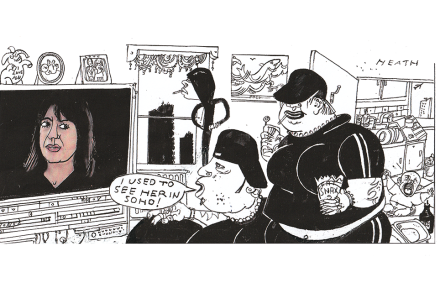
For a century, Kenwood ladies’ pond on Hampstead Heath in north London had been a haven for women – gay, straight, secular, observant and everything in between. Then in 2019, the City of London Corporation, which manages the bathing pond, issued guidance dictating that trans women could swim there. Suddenly a schism appeared among the regulars: pond Terfs who protested the change vs a mostly younger, right-on cadre who applauded it. Trans women have reportedly been swimming at the ladies’ pond informally for decades, but this was a quiet, largely unacknowledged practice that happened unobtrusively – not a source of division or discord among swimmers.

The rich are fleeing – what next?

Keir Starmer is worried about who’s coming into the country. This week, he launched a white paper with the aim of cutting migration. Britain risks becoming an ‘island of strangers’, he said. However, it’s not just arrivals that should give him sleepless nights. It’s the number of people in the departures lounge too. London’s private members’ clubs, top schools, luxury car dealerships and estate agents are all grappling with the same problem: their customers are fleeing the country. Since 2016, almost 30,000 millionaires have left Britain – an outflow unmatched in the developed world. They are either returning home or moving abroad. The reason is a slew of tax changes that have made it much less attractive to be rich in Britain.

Your state pension is a socialist bribe

Every four weeks the government sends me my state pension. Those words have a socialist, almost Soviet, ring. The amount has recently risen to £11,973 a year – a preposterous sum to send a 67-year-old man still in paid employment. But from the state’s point of view, the money is not entirely wasted: it buys a kind of loyalty. Because I accept the money, and do so with a certain pleasure, I am bound into the system and am less likely to say it’s a bad one. I’ve allowed myself to become a dependent. I may criticise the way the welfare state is run and demand improvements in the administration of one or another part of it, but I have become less likely to challenge the principle of the whole thing. This is bad, because we’re heading for a smash.

Shabana Mahmood: ‘There’s still a moment of reckoning to come’ on grooming gangs

Shabana Mahmood may be the only Labour politician to have persuaded Rishi Sunak to vote for her. The former prime minister was in the year above Mahmood when they both studied at Lincoln College, Oxford, in the 1990s. When she ran for JCR president, Sunak pledged his support. Meeting Mahmood in her ministerial office this week, I can understand why. There is a sense of quiet purpose about her that instils confidence. I’m predisposed to sympathise with her more than most because she occupies the post I held for 15 months – Lord Chancellor. It’s the most glamorous and least attractive job in the cabinet. You’re the only minister with your own personal gold-braided gown, wig, pumps and purse bearer – or at least the only one who has to be seen with all four publicly.

How to bring down Britain’s power grid

At the end of last month, a fire at an electrical substation in Maida Vale caused chaos in west London. Homes lost power. Transport services ground to a halt. It came in the same week as outages across Spain and Portugal and just a few weeks after a fire at another substation caused Heathrow airport to shut down. We also know that the British government is drawing up contingency plans for Russian attacks on energy infrastructure. All of this raises an important question: how resilient would the British state be in the face of a determined effort to cripple its power grid? The blunt answer is: not very. David Betz, at King’s College London, has long warned that Britain’s national infrastructure is dangerously vulnerable to simple tools such as hammers and hacksaws.