Features

Let Putin have Crimea – and it will destroy him

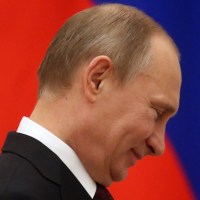
David Cameron says that Russia’s annexation of Crimea ‘will not be recognised’. Ukraine’s Prime Minister Arseniy Yatsenyuk promises that ‘we will take our territory back’. They are both misguided. Let Crimea go: it will be the making of Ukraine and the end of Vladimir Putin. Without Crimea, there will never again be a pro-Moscow government in Kiev. Ukraine will have a chance to become a governable country — a strongly pro-European one with a Russian minority of around 15 per cent. Putin will have gained Crimea but lost Ukraine for ever. And without Ukraine, as former US national security adviser Zbigniew Brzezinski famously said, ‘Russia can no longer be an empire.’ Crimea is a gangrenous limb on Ukraine’s body politic.

How to buy your way into the British establishment

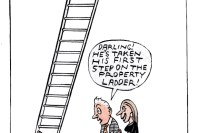
[audioplayer src="http://traffic.libsyn.com/spectator/TheViewFrom22_20_March_2014_v4.mp3" title="Harry Mount and Ben Judah discuss how to buy your way into Britain"] Listen [/audioplayer]‘Money has won,’ Martin Amis said this week, promoting his BBC4 programme Martin Amis’s England on telly this Sunday. The class gulf has disappeared, he said, replaced by a money society. It’s a little more complicated than that. Class differences are still stonkingly obvious in this country, whenever you open your mouth or put your clothes on in the morning. But it’s never been easier, or quicker, to hurtle up the class ladder by the deft application of huge amounts of money.

Putin is making the West’s Cold Warriors look like fools

William Hague was on rather shaky ground when he argued this week that Moscow has chosen ‘the route to isolation’ by recognising Crimea’s referendum. On the contrary, it is the European Union and the United States who look as if they have seriously overplayed their respective hands in Ukraine. Across Asia, Africa and Latin America, the cry of ‘western hypocrisy’ has been heard much louder than complaints about Vladimir Putin. Even in the UK, mainstream opinion is steadily becoming more critical of western interventionism and our ‘New Cold War’ posturing, despite some pretty one-sided media coverage and much establishment tut-tutting.

I don’t want to rate the restaurant. I want to rate the date

It was an averagely OK evening at one of London’s smarter restaurants: the food was edible, the wine wasn’t vinegar, the company was quite adequate and I managed to return home without actively wanting to shoot myself, which is always a plus. But a mere 12 hours later these feelings of nondescript non-satisfaction turned into a boiling rage, because it had happened yet again: an email pinged into my inbox. ‘Rate last night’s experience at London’s finest,’ it urged. ‘Were you a) Extremely impressed with the restaurant? b) Quite impressed? c) Neither impressed nor distressed...’ And so it went on, pages of it, because you cannot do a blinking thing these days without being asked to fill in a customer satisfaction survey.

The joy of less sex

From the age of 13, when the hormones kicked in, till I left my parents home at the age of 17 to become a writer (nearly forty years later, I’m still waiting) I must have been the most sex-mad virgin in Christendom. Nights were spent dressed as a West Country approximation of a transvestite Port Said prostitute, blind with eyeliner and dumb with lipgloss, alternately dancing like the lead in a Tijuana pony-show and hiding in the toilets during the slow numbers, crying repeatedly ‘Why won’t all those men just LEAVE ME ALONE!’ Days were spent in an attempt to evade the attentions of the regiment of leering males while voluntarily rolling up my regulation school skirt so high that it resembled a cummerbund.

Is Hamas finally losing its grip on Gaza?

 Gaza City Tattered green Hamas flags still flap above the streets in central Gaza and posters of its martyrs hang in public spaces. But these are tough times for the Hamas government, and not just due to the recent flare-up in tensions with Israel. In December last year, they cancelled rallies planned for the 26th anniversary of their founding, an occasion celebrated ever since they seized power here in 2007, and though usually secretive about their financial affairs, they revealed a 2014 budget of $589 million, with a gigantic 75 per cent deficit. So, what’s gone wrong for Hamas? Just a year ago, it seemed to be enjoying a honeymoon here.

How to tell a tech bubble from a tech revolution

There are two major schools of technology investing. The first believes that all investments these days are fundamentally technology investments. Every big company relies to a greater or lesser degree on the innovations and efficiencies of technology to replace the high costs and laggardly habits of human beings. The faster they do this, the higher their returns. The second school covets the pop and fizz of the new. It rejects the tedium of earnings-based valuations in favour of the helium of potential. It piles into the latest new share offerings and regards Twitter as the future of mobile advertising, not a punchline. One school feels like traditional, copper-bottomed investing, the other like a long night in Las Vegas. Each attracts investors with very different risk profiles.

The bull market is five years old. Does that mean it’s nearly over?

There were no fireworks, and not much champagne. Indeed, it wasn’t an anniversary that many people noticed. But on 9 March, the bull market in equities was five years old. It was on that day back in 2009 that the Dow Jones Industrial Average, the key global benchmark for stocks, edged down another 80 points to close at 6,547, its lowest level since 1997. Although no one knew at the time, that was the bottom, and it was to go no lower. From then onwards, the recovery was under way. In London, our own low point came three days earlier, on 6 March 2009, when the FTSE100 index touched 3,530. There is an old saying among traders that ‘nobody rings a bell at the bottom of the market’.

When I pick the right share, I shout about it. And here’s what I do when I get it wrong…

I have a confession to make. I earn my living advising my readers whether particular companies’ shares are going to go up or down. I have no idea whether an individual share will go up or down. Fortunately, nor does anyone else. That goes for the analysts, investment bankers, fund managers, accountants and other professionals who work in the City and earn a great deal more than I do. As the scriptwriter William Goldman said, no one knows anything. My abject failure to predict the future has two consequences. One: I am sitting here typing this, rather than being on a beach somewhere, counting my yachts. Two: the best I can do is get it right more often than not, and when the tide runs in my favour, point it out as often and as loudly as possible. Last year was an excellent one.

Israelis don’t care that we hate them. But they’d like to know why

 Jerusalem   Talking to Israelis feels a bit like talking to fans of Millwall FC. ‘No one likes us, we don’t care,’ sing Millwall fans. Israel is the undoubted Millwall of global affairs, loathed by almost every Westerner who considers himself decent and they’ve adopted a similar cri de coeur. ‘Europe doesn’t like us. Americans do not like us. We can live with this,’ says a kippah-wearing guy at the Western Wall. He sums up a sentiment I hear across this country. If you were in Iran or North Korea, long-time chart-toppers in the international community’s gallery of rogue states, you wouldn’t bat an eyelid when a citizen expressed disgruntlement with the wicked West. But Israel?

Teacher training’s war on science

When I trained as a teacher, seven years ago, these are some of the things I was taught: it’s better for pupils to discover a fact than to be told it. Children learn best working on authentic, real-world projects. Schools and traditional subject boundaries are silos which stifle the natural creativity we all have within us. And this last fact especially: there is no point teaching a body of knowledge, because within a few years it will be outdated and useless. Don’t teach the what, teach the how. ‘Drill and kill’ and ‘chalk and talk’ will lead to passive and unhappy pupils. This, to a large degree, is still what most teachers are taught. So it’s unfortunate that these ideas are deeply flawed.

I always defended Michael Gove. Then I met him

[audioplayer src="http://traffic.libsyn.com/spectator/TheViewFrom22_13_March_2014_v4.mp3" title="Toby Young and Fraser Nelson discuss Michael Gove's personality and the attacks from all sides"] Listen [/audioplayer]A few weeks ago, I was a guest at a huge tea party for children’s authors, publishers and commentators at the South Bank, but the atmosphere, over the cupcakes and finger sandwiches, was decidedly frosty. There were three keynote speakers and their speeches all targeted a man so vile and destructive that the audience visibly recoiled every time his name was mentioned. He was, of course, Michael Gove — and I wasn’t sure I should tell anyone that I had always rather admired him and, moreover, was about to interview him for this magazine.

The battle against the dog police

[audioplayer src="http://traffic.libsyn.com/spectator/TheViewFrom22_13_March_2014_v4.mp3" title="Josie Appleton and Camilla Swift discuss the rise of the dog police" startat=1509] Listen [/audioplayer]‘Be careful!’ shouted a woman on the North Wales beach. ‘The dog police are back!’ Using her walking stick to help her, Lynne stumbled towards the path leading off the beach as fast as she could, followed by her border terrier, Bonnie. But she was too late. The enforcement officer was already there, waiting. Lynne was given a fine and a severe lecture. Her crime? Taking Bonnie for a walk on the beach. She refused to give her name or address, so the officer tried to follow her home to find out. Lynne isn’t alone.

If homophobia is a problem for bobsled, why is it OK for cricket?

Where are the threats of a boycott, the calls for isolation, the outraged letters to the Prime Minister? Where are the rainbow logos, the delegations of human rights activists, the declarations of solidarity? On 16 March Bangladesh is to host the T20 World Cup, one of the top limited overs tournaments in international cricket. All the top cricketing nations, including England, will participate. Yet the competition has not attracted so much as a bat squeak of protest from gay rights campaigners, despite the fact that Bangladesh has an appalling record of institutionalised discrimination against homosexuals. Indeed, same-sex activity remains a criminal offence in the country.

How the politically correct garden grows

Next week is ‘Hug a Slug’ week. Well, come on, you did believe it for a couple of seconds. We’ve all grown so used to the fog of humourless eco-rectitude that has settled over our gardens that you probably didn’t even blink. No right-thinking (let alone left-thinking) person these days would dream of paving their front garden (bad for drainage), using a bag of peat-based compost (very un-green) or a nice toxic pesticide. It’s all too feasible to imagine we might suddenly to be told by the RSPCA that slugs had rights too. The apparently innocent world of gardens, dedicated, you might suppose, to pleasure (both private and in the public sphere); to aesthetic delight and intellectual challenge, has been taken over by the righteous brigade.

Patrick McLoughlin on HS2, rebellion and Ukip

It was, perhaps, inevitable that heading to interview the Transport Secretary I would end up stuck in traffic — so by the time I reached Patrick McLoughlin’s office, I was running a few minutes late. The normal punishment for tardiness is to be left languishing outside a minister’s office. But McLoughlin does things differently. When I arrive, his door is open and he urges me to come straight in. As befits a man who used to earn his crust as a miner, McLoughlin has a big physical presence. He is broad-shouldered and the buttons on his shirt sleeves look close to bursting as they try to contain his large forearms. His physical appearance is just the most obvious of the many traits that make McLoughlin stand out in a cabinet dominated by Oxbridge graduates.

Is any kind of sex still taboo in literature?

The first gay marriage will be conducted this Easter, and those who still object to the idea find themselves in a minority. The majority, according to polls, can’t see what all the fuss is about. How far we have travelled in a relatively short period of time. Until 1967, the punishment for homosexuality was a year in prison, or chemical castration, which was the option taken by Alan Turing, the Bletchley Park codebreaker. At least he has now been posthumously pardoned, so that’s OK. Extreme though attitudes to homosexuality have been in the past, I don’t think that, as a subject, it ever had the status of a taboo, not properly. Consider the way that, long before the new spirit of tolerance emerged, novelists were able to write about it without censure.