Features

Today Crimea, tomorrow Estonia?

 Tallinn, Monday  ‘I have some sad news,’ says the Estonian politician, as we sit down to dinner. ‘War has broken out.’ The pain in his voice is palpable. For this patriotic man, and many like him, Russia’s invasion of Crimea has reawakened memories of an era everyone here hoped was over. Wandering the cobbled streets of Tallinn, Russia seems a long way away. You could be in Bremen or Lubeck. Yet Tallinn’s European heritage is only half the story. It’s been Estonia’s capital for just 45 years, from 1918 (when Estonia first won its independence) to 1940 (when Stalin invaded) and again from 1991 (when Estonia regained its independence) to today.

Europe’s ‘new world order’ is letting Vladimir Putin run riot

[audioplayer src="http://traffic.libsyn.com/spectator/Untitled_2_AAC_audio.mp3" title="John O'Sullivan discusses why we shouldn't be so afraid of Putin" startat=1088] Listen [/audioplayer]If Vladimir Putin’s invasion and occupation of the Crimea brings to an end the Pax Americana and the post-Cold War world that began in 1989, what new European, or even global, order is replacing them? That question may seem topical in the light of Russia’s seemingly smooth overriding in Crimea of the diplomatic treaties and legal rules that outlaw aggression, occupation and annexation. In fact, it is six years behind the times. To understand the situation in the Ukraine, we need to go back to the Nato summit in Bucharest, in April 2008.

The night that saved England

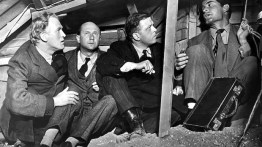
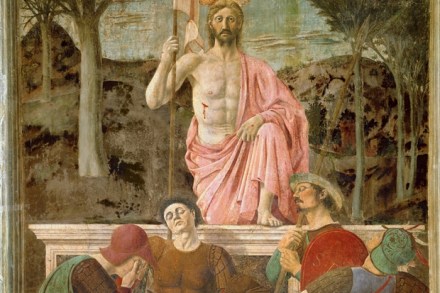
Thanks to the centenary of the first world war, counter-factuals are much in vogue. How different might history have been had Archduke Franz-Ferdinand never been assassinated, had Britain kept out of the conflict, had the Allies been defeated? Questions such as these are more than just a parlour game. They serve to cast the shadow of contingency over events that otherwise can seem all too predetermined. Deep and strong though the tides of history are, there have indeed been moments in the past when their flood-surge might have been diverted along profoundly different courses — moments when the fate of nations did truly hang in the balance. The protagonists of one such episode are currently starring in the British Museum’s latest spectacular.

Why David Cameron’s ‘Northern Alliance’ may reshape Europe

If David Cameron were to divide Europe up, he’d make some crude distinctions. There would be the basket cases, like Italy, Spain, Greece, France — examples, by and large, of how countries should not be run. Then there’d be the former Soviet bloc, sceptical about Brussels because they recently escaped a remote, controlling bureaucracy and don’t want to repeat the experience. Then come the good guys, the people with whom he intends to reshape the continent: the Germans, the Dutch and the Scandis. This is the group that the Prime Minister has started referring to as his ‘Northern Alliance’. Mr Cameron has, until now, had little interest in the machinations of the European Union.

The joy of online hatred

[audioplayer src="http://traffic.libsyn.com/spectator/TheViewFrom22_20_February_2014_v4.mp3" title="Julie Burchill debates Paris Lees on intersectionality"] Listen [/audioplayer]On Saturday morning, when the body of the beautiful Antipodean model and television personality Charlotte Dawson was being taken from her home in Sydney, I was back in Blighty rolling up my sleeves and getting stuck in for yet another happy hour in the gladiatorial arena that is the Spectator online comments section. Wherein, amongst other things, an angry trans-person had threatened me with the Police, for committing Hate Crimes (note the use of Krazy Kapitals) and a Beating from her Hells Angel Husband.

I’m scared to admit to being a Tory in today’s C of E

[audioplayer src="http://traffic.libsyn.com/spectator/TheViewFrom22_27_February_2014_v4.mp3" title="Ed West discusses political bias in the church" startat=640] Listen [/audioplayer]I am training for ordained ministry at a Church of England theological college. I am a trainee vicar, if you will. I am also a Conservative, which puts me in an extremely small minority and quite a tricky position. At my college, there are approximately 60 ordinands in full-time residential training. Of those 60, there are no more than three or four who would describe themselves as Conservative and the overwhelming majority would call themselves (proudly) socialist. There is also a sizable minority of Marxists.

The American economy vs gravity

The American economy always feels better when the Super Bowl is on. Ads for trucks and beer fill the airwaves. It’s steak and cigar season for the corporate bigwigs, not a time for the calorie conscious. For a few days, they can forget about foreign labour and cratering emerging markets and wallow in the fantasy that America is still about men in faded jeans and worn baseball caps, doing practical things with their hands. Now the pigskin has been locked away until autumn, however, one can take a colder look at the behemoth. No doubt, it has been a fine few years to be rich in America. The crash of 2008 turned out to be an epic buying opportunity, and you didn’t even have to use your own money.

You, too, can be a shale profiteer

It might not be something you want to mention in the Half Moon Inn in Balcombe, or around any of the other communities where people are getting anxious about shale gas explorers ripping up the countryside with their drills and pipelines. But if shale is the tremendous source of wealth that David Cameron insists it can be for this country, how do you go about investing it? After all, if there are fortunes to be made, there is no reason not to claim your share. There is no longer any question that shale gas is a major industry. In the US, where it is most advanced, it is already worth $76 billion annually, according to its trade association, and by the end of next year that will have grown to $118 billion.

Why has Britain signed up for the world’s most expensive power station?

‘As part of our plan to help Britain succeed, after months of negotiation, today we have a deal for the first nuclear power station in a generation to be built in Britain.’ That was David Cameron in October, announcing that his government had reached an agreement with the French power giant EDF over the construction of two reactors at Hinkley Point in Somerset. The Prime Minister must have a funny idea of success, because the more we learn about the Hinkley deal, the more we can see that it is one of the worst ever signed by a British government. Even the European Union can smell a rat. Last month, the European Commission published an initial report suggesting that the contract involves illegal back-door government subsidies to EDF, and will now carry out a full investigation.

The church of self-worship: Sunday morning with the atheists

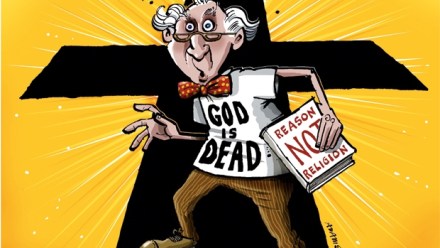
I had always assumed that the one thing atheism had going for it was that you could have a lie-in on Sundays. For the past year, however, an atheist church has been meeting in London on Sunday mornings. Founded by two comedians, Sanderson Jones and Pippa Evans, the Sunday Assembly is a symptom of what Theo Hobson identified in this magazine as ‘the new new atheism’, the recognition that the new atheism of Professor Dawkins et al had, in rejecting God, gone too far in rejecting all His works. Churches, the founders felt, had much to recommend themselves — a space for inspiration, reflection, and a sense of community in an atomised city — and they found a willing audience.

Vladimir Putin’s new plan for world domination

[audioplayer src="http://traffic.libsyn.com/spectator/Untitled_2_AAC_audio.mp3" title="Anne Applebaum and Matthew Parris discuss how far we should let Putin go"] Listen [/audioplayer]It’s been a generation or so since Russians were in the business of shaping the destiny of the world, and most of us have forgotten how good they used to be at it. For much of the last century Moscow fuelled — and often won — the West’s ideological and culture wars. In the 1930s, brilliant operatives like Willi Muenzenberg convinced ‘useful idiots’ to join anti-fascist organisations that were in reality fronts for the Soviet-backed Communist International.

The Environment Agency cares more about wildlife than people

What do voles, beetles, mussels, trout and the golden plover have in common? Believe it or not, they have all been used as excuses by the Environment Agency not to improve flood defences. Travelling around the worst of the flooded areas last week, I met family after family who said their local rivers had been left to clog with debris — and always because of some critter or other. Somerset farmer David Gillard, for example, repeatedly begged the Environment Agency to dredge the River Parrett, which runs near his sheep farm just outside Burrowbridge. And last summer they did come and give it a go. But while they were at it they found a vole, so of course they packed up and left. The farm is now flooded.

Investment trusts – the way the City saves

After years in the doldrums, investment trusts — those venerable pooled funds with names like Foreign and Colonial and City of London — are in danger of becoming fashionable. There are good reasons why they should be better known. They offer the possibility of high returns at low cost, as well as access to exotic asset classes that would otherwise be out of reach. They can be a way of spreading risk, if you do not have the time or the inclination to pick individual stocks for yourself.

Warning: upspeak can wreck your career

A few weeks ago, I accompanied my daughter to an Open Day at Roehampton College, where she is hoping to start a teacher training course in September. I enjoyed it — and was impressed by the broad mix of motivated young men and women who, if all goes well, will soon be teaching the next generation of primary school children. Towards the end of the afternoon, the co-ordinator said she wanted to offer a few tips about the interview process that would begin once all the applications have been submitted. It turned out she had only one main tip: avoid upspeak. She stressed the point vigorously.

Britain has many major problems – racism isn’t one of them

I am a banana. In Singapore, where I used to live, this needs no explanation — it means I’m yellow on the outside but white on the inside, someone who looks ethnically Chinese but whose way of thinking is ‘western’. There are bananas all over Asia, and I daresay the world. We are better versed in Shakespeare than Confucius, our Mandarin is appalling, and we often have pretentious Anglo or American accents. Then there are people who are ‘ching-chong’, a reference to anyone who enjoys the kitschy bling of stereotypically Chinese things, sans irony — they like paving their entire garden with cement, for example, or driving a huge Mercedes, or placing two garish stone lions on either side of a wrought-iron gate.

Why I’ve started my own Mail Online

There are good reasons for serious people to despair of the news. A minor country singer dies, and the BBC gives him the front page. An actor dies and every channel mourns him as if a president had expired. There’s one final fact that particularly sticks in the throat of serious news people: the most followed news website in the English language, by an enormous factor, is the Mail Online, purveyor of a stream of appalling ‘human interest’ stories of the lowest kind. The clear temptation is to withdraw into the bunker and lament the decadence of a ruined age. This would be a big mistake. We can face the facts head on: the most attractive, charming, sexy and compelling news outlets enjoy unparalleled influence over the minds of tens of millions of people.

And the prize for most fatuous awards ceremony goes to…

‘Prizes are for boys,’ said Charles Ives, the American composer, upon receiving the Pulitzer in 1947, ‘and I’ve grown up now.’ He was using humour to make a serious point, but it would be lost on many people today. Never has there been a lusher time for self-congratulation; when all, as in Alice in Wonderland, must have prizes. Not all prizes are bad. Nathan Filer, who collected the Costa last month for his first novel, The Shock of the Fall, was granted the kind of recognition that evades most first-time authors. The Costa, formerly the Whitbread, has a reputable tradition that values quality of writing above commercial considerations. Good for them. There was a time when you could say something similar about the Evening Standard drama awards.