Features

No, Putin didn’t plot to invade Ukraine. But now he might have to

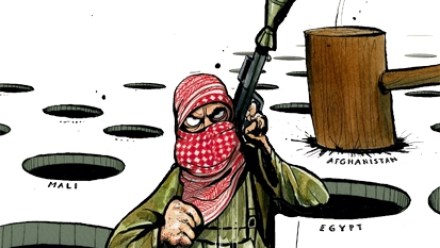
So what, exactly, does Vladimir Putin want? ‘To start World War Three,’ according to the embattled Ukrainian prime minister Arseny Yatseniuk. ‘To rule as president for life with powers on par with the tsars,’ according to Alexei Navalny, leader of Russia’s tiny opposition. To ‘force a major change of boundaries on Europe… and break the post-Cold War consensus,’ according to Radek Sikorski, Poland’s foreign minister. Actually, Putin himself has always been rather clear about his ambitions. ‘Russia has been a great power for centuries, and remains so,’ Putin told the State Duma in his first speech as prime minister, back in August 1999.

When did it become OK to be boring?

[audioplayer src="http://traffic.libsyn.com/spectator/TheViewFrom22_8_May_2014_v4.mp3" title="Cosmo Landesman and Lara Prendergast debate if the bores have taken over" startat=1297] Listen [/audioplayer]I can remember back in the 1970s when a girlfriend of mine, sensing my lack of interest in her very long and very detailed analysis of the lyrics of Bob Dylan suddenly said, ‘Am I boring you?’ Of course she was. And of course I denied it. Why? Because it was a hurtful and embarrassing thing to say to someone. Back then to be seen as boring was the verbal equivalent of having bad breath or body odour. But today no one worries about boring other people — or being branded a bore.

Sugata Mitra interview: ‘A reduction in resources can cause something nice to happen’

Fifteen years ago, Sugata Mitra, a scientist from Calcutta, conceived of an interesting experiment. He went to a slum in Delhi, installed a computer into a public wall in the manner of a cash machine, then he waited to see what would happen. As he had expected, the local children crowded round and began to experiment — but what he had not expected was how very quickly the kids mastered the basics of computing and began to search the internet for new areas of study. Professor Mitra was astonished by how fast the kids learnt, especially given that they hardly spoke English. But as he observed the group, he realised one reason for their success: they were co-operating; reading in groups; solving problems together.

I am ready to talk about my death. Is anyone else?

It is October 2012 and my ovarian cancer is back. As we wait to see the consultant I say to my best friend, ‘We are going to Mexico this weekend to get that stuff so I can kill myself. We’ll probably get killed by drug barons.’ My consultant says I have three years. I agree to more chemo and ask: ‘Can I go to Mexico?’ She looks baffled. It is February 2013 and the consultant is discussing hospices. She is eight months pregnant. I don’t tell her about the Mexican barbiturate in the fridge. I do tell the nice hospice counsellor, though. She goes white. ‘The drug dealers seem to have a good reputation.’ She isn’t reassured. ‘It works on large animals and I’m no bigger than a small donkey or a big dog.

E-cigarettes are making tobacco obsolete. So why ban them?

If somebody invented a pill that could cure a disease that kills five million people a year worldwide, 100,000 of them in this country, the medical powers that be would surely encourage it, pay for it, perhaps even make it compulsory. They certainly would not stand in its way. A relentless stream of data from around the world is showing that e-cigarettes are robbing tobacco companies of today’s customers — and cancer wards of their future patients. In Britain alone two million now use these devices regularly. In study after study, scientists are finding e-cigarettes to be effective at helping people quit, to show no signs of luring non-smokers into tobacco use and to be much safer than their noxious competitors.

Guns, gays and the Queen – a former bishop reminisces

The bishopric of Bath and Wells comes with more bear-traps than most. For one thing, there’s the baby-eating. Ever since Blackadder told Baldrick he was being chased for a debt by the ‘baby--eating Bishop of Bath and Wells’, the image has stuck. When the last incumbent, Peter Price, made his first visit to the House of Lords, accompanied by his five-week-old granddaughter, the Bishop of Southwark remarked: ‘I see the bishop has brought his own lunch.’ The present incumbent, who was elected in March, and will be formally enthroned in June, has suffered a worse indignity. Peter Hancock is to become the first appointee not to live in the Bishop’s Palace, home to each of his predecessors since Jocelin of Wells laid the first stone in 1206.

Why Beyoncé is a conservative icon

[audioplayer src="http://traffic.libsyn.com/spectator/TheViewFrom22_1_May_2014_v4.mp3" title="Fraser Nelson and Freddy Gray whether Beyoncé is a conservative icon" startat=1050] Listen [/audioplayer]When Time pictured an underwear-clad pop star on its cover, hailing her as one of the world’s most influential people, it looked like a crass sales ploy. But in Beyoncé Knowles-Carter, they had more of a point than they seemed to realise. Time had asked Sheryl Sandberg, the head of Facebook, to praise the singer for joining various do-gooding campaigns — but this is the least of her achievements. Beyoncé’s real potency lies in her status as a poster girl for a new conservative counter-revolution taking place among the young.

How to shop for the apocalypse

 New York City An architect friend who usually designs Manhattan skyscrapers was recently asked to pitch for a far more interesting project. The client, a senior partner at Goldman Sachs, wanted him to design a family house in upstate New York with a difference. It wouldn’t just be completely ‘off the grid’, with its own power and water supplies, but — and there isn’t yet an architectural term for this — it would be post-apocalypse. The conventional house would be mirrored below ground with pretty much identical living quarters that would be completely secure and so self-contained that there would be facilities to hydroponically grow plants and vegetables without soil.

Meet Team Miliband

[audioplayer src="http://traffic.libsyn.com/spectator/TheViewFrom22_24_April_2014_v4.mp3" title="Dan Hodges and Marcus Roberts debate the state of Milibandism" startat=47] Listen [/audioplayer]If the opinion polls and bookmakers are to be  believed, some time during the morning of Friday 8 May next year a small group of men and women will appear out of the of the Derby Gate entrance of the old Scotland Yard building on Whitehall, stride purposefully across the road, and assemble at the gates of Downing Street. After having their names checked by the officer on duty they will continue their journey up the famous street, enter via the equally famous and rather imposing black front door, and get to work. That work will involve running the United Kingdom for the rest of the decade.

Old Labour, New Danger

[audioplayer src="http://traffic.libsyn.com/spectator/TheViewFrom22_24_April_2014_v4.mp3" title="Dan Hodges and Marcus Roberts debate the state of Milibandism" startat=47] Listen [/audioplayer]A cruel new joke is doing the rounds about Ed Miliband: that the Labour leader is like a plastic bag stuck in a tree. No one is sure how he got up there, but no one can be bothered to take him down. It’s one of many unfair gags, made on the premise that he is a laughing stock and, ergo, doomed in next year’s general election. Many a Tory comforts himself with the idea that Miliband is just too implausible, too weak, too trivial a figure to make it to 10 Downing Street. Yet anyone wishing to dismiss him has to face some uncomfortable questions.

A Protestant country is a free country

For the past decade, I have lived — literally — between a church and a synagogue; as metaphors go, I would get laughed out of town if I stuck it in a novel. I left my church (not the one next door) when a ten-year-old child (not just a random passer-by, but a regular attendant) identified the cross as ‘a space rocket’ and everyone laughed indulgently. And then I left my synagogue (again, not the nearby one) when the liberal rabbi’s insistence that all religions were equally worthy of respect began to sound increasingly hollow in the face of the increasing intolerance and bigotry of Islamism. Now I exist in suspension between the two faiths.

Subterranea is sexy

‘Sometimes when I’m down here,’ says Harry, ‘I get them to stop the train in the middle of a tunnel. Just for a minute or two, so I can savour the peace.’ Harry Huskisson is press officer for the British Postal Museum and Archive. He’s showing me the ‘Mail Rail’, the GPO’s underground train system, which until 2003 carried letters across London. The museum plans to reopen it as a tourist attraction. Subject to funding, by 2016 you could be mooching around the train depot underneath Mount Pleasant sorting office, and later on maybe even riding one of the mini-trains which defeated the capital’s traffic jams by whisking letters and parcels from Whitechapel to Paddington via Oxford Street.

Investment special: Boom time in Africa

It’s easy to see why until recently Africa has been a hard sell. It is still regarded as a place for charity rather than investment. But that view is out of date: much of the continent is booming now and investors are wising up. The economy of sub-Saharan Africa is expected to grow by 6 per cent this year. Compare this with the eurozone’s paltry 1 per cent, and you start to see why smart money is moving from the old continent to the dark one. ‘Economists have had to rip up their numbers for how rich African households are — they were too low,’ says Charles Robertson, author of The Fastest Billion, a book about Africa’s economic revolution. ‘And this is just part of a much improved story.

Investment special: How to come out top in the pensions revolution

Three years after The Spectator called on the Chancellor to ‘stop treating pensioners like babies’, his Budget this year gave everyone greater choice about how we enjoy our life savings. While more column inches have been expended on the outside chance that some pensioners might blow the lot on a Lamborghini, less has been said about our exciting freedom to retain control of the biggest fund most of us will ever acquire and to remain active investors after we retire. Contrary to what some commentators seem to imagine, George Osborne did not abolish the legal compulsion to spend most of our pension savings on an annuity or guaranteed income for life last month.

Investment special: Sell your Ferraris

Here is a paradox. Study the photographs of the flats and houses being sold in London’s prime property boom and you see one minimalist interior after another. The huge, empty sweeps of marble and limestone, broken only by a solitary painting, might give you the impression that it is fashionable to declutter your life. One can imagine one of those H.M. Bateman cartoons portraying the shock and horror generated by the man who placed an ornament on his mantelpiece. Why, then, if we are so keen to get rid of all the clutter, has the price of luxury goods mushroomed over the past decade? Chinese ceramics, the collectable sort, that is — are up 83 per cent, jewellery up 146 per cent, art up 183 per cent.

The mathematical revolution behind ‘the greatest picture in the world’

It seems odd to enter a room dominated by what Aldous Huxley famously called ‘the greatest picture in the world’ to find not another soul there. Looking down from an end wall of the mediaeval civic hall in the quiet little Tuscan town of Borgo San Sepolcro, Piero della Francesca’s ‘Resurrection’ is an image of astonishing power, showing a stern-faced risen Christ stepping out of his tomb in the dawn light of the first Easter morning like an unstoppable force of nature, exuding supernatural authority as he turns the leaves on the trees behind him from wintry death to the new life of spring. This is a painting like no other in the history of art.

The return of God: atheism’s crisis of faith

[audioplayer src="http://traffic.libsyn.com/spectator/TheViewFrom22_16_April_2014_v4.mp3" title="Douglas Murray and Freddy Gray discuss the return of God" startat=37] Listen [/audioplayer]Like any movement or religion, atheism has ambitions. Over the years it has grown and developed until it has become about far more than just not believing in God: today atheism aspires to a moral system too. It comes with an idea of how to behave that’s really very close to traditional secular humanism, and offers a sense of community and values. Atheism has crept so close to religion these days that it’s de rigueur for political atheists like Ed Miliband to boast about a dual identity: a secular allegiance to a religions tradition, in his case Judaism.