Features

Revealed: how green ideology turned a deluge into a flood

[audioplayer src="http://traffic.libsyn.com/spectator/TheViewFrom22_13_February_2014_v4.mp3" title="Christopher Booker explains how the EA failed to prepare for the floods " startat=60] Listen [/audioplayer]It has taken six long weeks to uncover the real hidden reasons why, from the West Country to the Thames Valley, the flooding caused by the wettest January on record has led to such an immense national disaster. Only now have the two ‘smoking guns’ finally come to light which show just how and why all this chaos and misery has resulted directly from a massive system failure in the curious way our country is governed. Because I live in Somerset, I first became aware that something very disturbing was going on back around the new year.

How the first world war inspired the EU

Among the millions of words which will be expended over the next four years on the first world war, very few will be devoted to explaining one of its greatest legacies of all, the effects of which continue to dominate our politics to this day. One of the best-kept secrets of the European Union is that the core idea which gave rise to it owed its genesis not to the second world war, as is generally supposed, but to the Great War a quarter of a century earlier. It was around that time that the man who can be described as ‘the Father of Europe’ was first inspired to the detailed vision which only after 1945 was he finally in a position to launch on its way.

Alex Salmond is within striking distance of victory. Why hasn’t England noticed?

 Edinburgh [audioplayer src='http://traffic.libsyn.com/spectator/TheViewFrom22_6_February_2014_v4.mp3' title='Alex Massie and Matthew Parris discuss why the Union is in peril' startat=55] Listen [/audioplayer]A century ago, with Britain in peril, Lord Kitchener’s stern countenance demanded that every stout-hearted Briton do their bit for King and Country. ‘Your country needs you’ rallied hundreds of thousands to khaki and the Kaiser’s War. Today, with Britain in peril again, you could be forgiven for asking where Kitchener’s successor is. A new recruiting poster might cry: ‘Britons: Wake up! Pay attention! Your country really is at risk!’ The threat, of course, is domestic rather than foreign (for now, at least).

The comedy club theory of dictatorship

Have you ever wanted to know how dictators stay in power? Try visiting a comedy club. I went to one the other night. The acts varied in quality. No one died on their backside, no one stormed it, the audience went away happy. But at a couple of points the thing happened, the thing that gives you a clue about dictators: the comedian picked on a member of the audience. In fairness they were both minor examples. One was the compère assessing how a line had gone down. Two guys in their fifties sitting at the side had laughed. ‘Wow, even you two liked that,’ said the compère. ‘Look at you, Waldorf and Statler there.’ Everyone laughed, including Waldorf and Statler, and the evening moved on.

America’s right still hates Hillary Clinton. And it still can’t stop her

 Atlanta, Georgia Who thinks Hillary Clinton is the nastiest woman in the world? The American Spectator once called her ‘the Lady Macbeth of Arkansas’ while US News and World Report described her as ‘the overbearing yuppie wife from hell’. But that was back in the nineties. Surely such vitriol is a thing of the past? No. The founders of ‘StopHillaryPAC’ say on their website that they want to ‘save America from the destructive far-left liberal cancer’ that Mrs Clinton represents. Do they wish her actual harm? Well, they plan to ‘STOP Hillary dead in her tracks’ but, you know… just politically. They’re not the only ones.

The quango state: how the left still runs Britain

[audioplayer src="http://traffic.libsyn.com/spectator/TheViewFrom22_6_February_2014_v4.mp3" title="Fraser Nelson discusses David Cameron's quango problems" startat=1350] Listen [/audioplayer]Last week Sally Morgan reverted to type. After almost three years as a model of cross-party co-operation, instinctive Labour tribalism finally won out as she accused Downing Street of purging Labour supporters from high offices. Of the many Labour types appointed by the coalition into quangos, she was probably the last person the government expected to go hostile. Not only had she done a fine job chairing Ofsted, the schools inspector, but she was a proven reformer who certainly shares Michael Gove’s passion for new schools. Like many Blairites, she is something of a Goveite at heart.

Sochi Olympics: Why picking on gays has backfired so horribly for Vladimir Putin

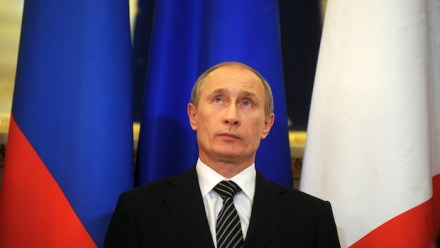
After all the fuss, the billions spent, the calls for boycotts and so on, the Sochi Winter Olympics will begin next week. Given the incredibly low expectations, the Russian Games may even be judged a success — as long as the weather stays cold and no terrorist attack takes place. But Vladimir Putin should not be too smug, because his broader campaign against homosexuality has backfired spectacularly. The Russian President’s decision to sign a law prohibiting ‘the propaganda of nontraditional sexual relations to minors’ last summer probably made sense to him at the time.

Israel’s other A-bomb

 Jerusalem Some day soon, the foreign minister of a major ally may decide to drop an A-bomb on Israel. William Hague and John Kerry have each pointedly left the option open. And Jimmy Carter, of course, has already done it. This A-bomb isn’t a literal bomb, cooked up beneath the deserts of Iran, but it could be almost as great a threat to the longevity of the Jewish state. This A-bomb is the word apartheid . Hague is the one who’s sounded the loudest warnings. He has repeatedly insisted that if there isn’t a deal this year that establishes an independent Palestinian state, then Israel’s own future as a both a Jewish state and a democracy is in doubt.

The case against London cabbies

I lost my misguided faith in black cabs last week, on the corner of Royal College Street in north London. It was the tiniest trip — 2.4 miles from Bloomsbury to my Camden flat at 11.30 in the evening. Hard to mess up, too: empty roads, good weather and the easiest of routes — practically a straight line to my flat. To my horror, the cabbie dodged the obvious, straight route and embarked on an extended loop through the traffic-choked hub of Camden Town tube station and Camden Market. I pointed him in the right direction and he reluctantly did a U-turn and headed up Royal College Street. Not a word of apology — and still a £11.20 fare for a ten-minute journey. No tip, needless to say. I can’t know whether he was ripping me off or merely clueless.

Britain’s accidental one-child policy

[audioplayer src='http://traffic.libsyn.com/spectator/TheViewFrom22_30_January_2014_v4.mp3' title='Alec Marsh discuss the death of the big middle class family'] Listen [/audioplayer]The future Mrs Marsh and I wait outside a small Victorian terraced house for an estate agent. It’s a familiar Saturday scene, especially in W7 — the last London postcode before you reach Middlesex and an area I formerly classified as the dark side of the moon. Hanwell is where estate agents are fanning the flames of a house-buying firestorm, like therapists prescribing amphetamines to hyperactive children. Here, as on the edges of so many British cities, middle-class buyers driven from even more expensive districts converge in a desperate bid to find a home.

Why we should let Faroe islanders hunt whales

In Tórshavn, capital of the Faroe Islands, I met a man who first helped his father kill a whale with a sharp knife when he was eight years old. The spouting blood soaked his hair and covered his face like warpaint.  He remembered the warmth on his skin, a contrast to the cold North Atlantic in which they stood. These days we assume that people who kill whales and dolphins must be bad. Flipper and his cousins are our friends, and notwithstanding that unfortunate business with Moby-Dick, those who pursue whales for their flesh must be terrible human beings. We know now, as Herman Melville did not, that cetaceans are exceptional mammals, highly intelligent with elaborate social networks and close family relationships.

Agitprop for toddlers: the oddly strident politics of CBeebies

I think I might be a bad parent; whenever my wife is out, I plonk our two-year-old daughter in front of the television. The other day we watched a rainbow nation of children marching around the British countryside singing ‘Let’s make sure we recycle every day’, and I realised that something has changed in children’s programming since I was little. These young recyclers are from a show called Green Balloon Club, which is ostensibly a wildlife programme, but the song had more in common with one of those Dear Leader dirges you see in North Korea. It wasn’t education, it was propaganda. The purpose of children’s stories has always been to educate as well as entertain. I was brought up on the Railway Stories by Revd W.

Why foreign aid fails – and how to really help Africa

David Cameron speaks compellingly about international aid. Eradicating poverty, he says, means certain institutional changes: rights for women and minorities, a free media and integrity in government. It means the freedom to participate in society and have a say over how your country is run. We wholeheartedly agree and were flattered to see the Prime Minister tell this magazine that he is ‘obsessed’ by our book on the subject, Why Nations Fail: The Origins of Power, Prosperity, and Poverty. But diagnosing a problem is one thing; fixing it another. And we don’t yet see the political will — in Britain or elsewhere — that could turn this analysis into a practical agenda. The British government is strikingly generous in foreign aid donations. It spent £8.

MPs grope men too

[audioplayer src="http://traffic.libsyn.com/spectator/TheViewFrom22_23_January_2014_v4.mp3" title="Alex Wickham discuss Westminster's wandering hands with Miranda Green" startat=790] Listen [/audioplayer]As I walked out of the bar, I noticed a Conservative MP following me. It had been an evening for young political activists, mostly teenage boys, and it was drawing to an end. I pretended to be engrossed in my phone, but the MP — well-liked, universally respected — lurched towards me, placing his arm around my waist and leaning in close. I could smell the whisky and cigars on his breath. ‘I’m just going to the toilet,’ he slurred, winking and gesturing at the gents.

Iran, Saudi Arabia, and the Middle East’s 30 year war

[audioplayer src="http://traffic.libsyn.com/spectator/TheViewFrom22_23_January_2014_v4.mp3" title="Douglas Murray discuss Islam's 30 year war with former solider Thomas Tugendhat"] Listen [/audioplayer]Syria has fallen apart. Major cities in Iraq have fallen to al-Qa’eda. Egypt may have stabilised slightly after a counter-coup. But Lebanon is starting once again to fragment. Beneath all these facts — beneath all the explosions, exhortations and blood — certain themes are emerging. Some years ago, before the Arab ‘Spring’ ever sprung, I remember asking one top security official about the region. What, I wondered, was their single biggest fear? The answer was striking and precise: ‘That the region will clarify.

What a lost prison manuscript reveals about the real Nelson Mandela

This is a story about Nelson Mandela, and it begins on Robben Island in 1974. Prisoner number 466/64 is writing up his life story, working all night and sleeping all day.  Finished pages go to trusted comrades who write comments and queries in the margins. The text is then passed to one Laloo Chiba, who transcribes it in ‘microscopic’ letters on to sheets of paper which are later inserted into the binding of notebooks and carried off the island by Mac Maharaj when he is released in 1976. Outside, the intrepid Mac turns the microscopic text into a typescript and sends it to London, where it becomes the Higgs boson of literary properties, known to exist but not seen since it passed into the hands of the South African Communist Party, or SACP, in 1977.

The Spectator book review that brought down Macmillan’s government

[audioplayer src="http://traffic.libsyn.com/spectator/TheViewFrom22_16_January_2014_v4.mp3" title="Vernon Bogdanor discuss Iain Macleod's 'What Happened' article" startat=1460] Listen [/audioplayer]Fifty years ago this week, a cover story in The Spectator helped to bring down a Conservative government. It was called ‘The Tory Leadership’ and was written by the editor, Iain Macleod, who had been a senior minister in Harold Macmillan’s government. Purporting to be the review of a book by Randolph Churchill on how Lord Home had ‘emerged’ in October 1963 as Macmillan’s successor, it claimed that Macmillan had fixed the succession so as to scupper the chances of the natural candidate, R.A. Butler, who had been deputy prime minister in all but name.