Features

The biggest civil liberties outrage you’ve never heard of

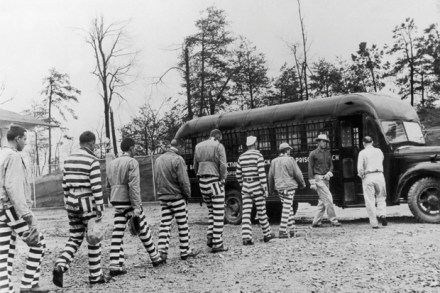
Imagine you bought a ticket for the opera and then a copper told you how you may travel to the opera house. You absolutely may not drive there, he says, nor take public transport, nor walk. You must go on a licensed coach, crammed in with all the other opera-lovers, under the watchful eye of the boys in blue. Yes, that’s right, the police will escort you to the opera, monitor you through the performance, and then escort you home. You got a problem with that? I imagine you would. You might feel that your right to get from A to B however you please had been curtailed. Now you know how football fans feel.
The West isn’t the solution in Iraq. It’s the problem

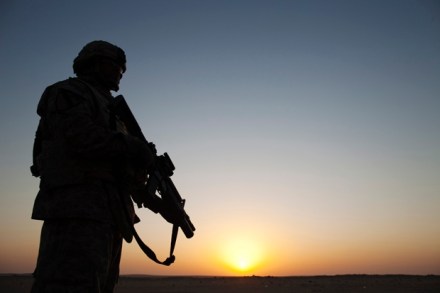
[audioplayer src="http://traffic.libsyn.com/spectator/TheViewFrom22_14_August_2014_v4.mp3" title="Peter Hitchens and Douglas Murray discuss Iraq and Isis" startat=52] Listen [/audioplayer]To hawkish right-wingers, but also to many militant liberals, the antidote to the problem of Isis is clear: the application of military power to defeat the jihadists and lay the foundation for a humane and stable political order, beginning in Iraq but eventually extending across the Islamic world. There are several problems with this analysis. For starters, it glosses over the fact that military power in the form of the 2003 Anglo-American invasion created the opening for the jihadists in the first place. Where there had been stability, US and British forces sowed the seeds of anarchy.

No, I haven’t seen that beheading video. And it’s not right to share it

I am sure we’re all in agreement that watching videos of adults abusing children is wrong. At least outside the halls of BBC light entertainment (historically speaking) such a consensus must exist. So how has it become not just right, but seemingly virtuous, to watch and then promote pictures of big bearded men chopping off children’s heads? The proliferation of torture and beheading porn is one of the social media horrors of our day. Every minute millions of people around the world send links to videos and photographs. And as world news gets darker, even if you don’t seek them out, such images find their way to you. Of course the boastful sadists of Isis and similar groups ‘produce’ most of this content.

David Cameron could have been an anti-slavery hero

When I helped bring the Modern Slavery Bill to parliament I thought here, surely, was a piece of legislation that the PM would want to own. Three women — Theresa May, the Home Secretary; her then special adviser Fiona Cunningham; and Philippa Stroud, Iain Duncan Smith’s special adviser — had all worked for a Bill that would give the government a chance to seize the moral high ground, restoring Britain to its historic role as leader in the abolitionist movement. David Cameron was within touching distance of greatness. But almost at the last moment, he stumbled. Wary of alienating the business community, he balked at the idea of stipulating that quoted companies must report on how they were checking their supply chains against their use of slave labour.

The squeezed middle is a myth

[audioplayer src="http://traffic.libsyn.com/spectator/TheViewFrom22_14_August_2014_v4.mp3" title="Ed West and Ryan Bourne discuss the moaning middle class" startat=1402] Listen [/audioplayer]Almost from the moment the coalition came to power four years ago, a mood of deepening grievance has gripped parts of the middle class, fuelled by a sense that they have been the biggest losers from the government’s austerity programme. They see themselves as ‘the squeezed middle’, the ones cruelly punished by rising taxation and the loss of state support. What makes their anger all the greater is the feeling of betrayal. David Cameron should be on their side. This narrative of victimhood has become conventional wisdom.

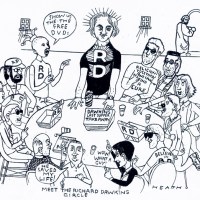
The bizarre – and costly – cult of Richard Dawkins

[audioplayer src="http://traffic.libsyn.com/spectator/TheViewFrom22_14_August_2014_v4.mp3" title="Andrew Brown and Daniel Trilling discuss the cult of Richard Dawkins" startat=788] Listen [/audioplayer]The other day I wrote something to upset the followers of Richard Dawkins and one of them tracked me down to a pub. I had been asked to give a talk to a group of ‘Skeptics in the Pub’ about whether there are any atheist babies — clearly not, in any interesting sense — and at the end a bearded bloke, bulging in a white T-shirt, asked very angrily where Dawkins had said there were any. I quoted a couple of his recent tweets on the subject: When you say X is the fastest growing religion, all you mean is that X people have babies at the fastest rate.

I believe in animal research. But it’s time to draw a line

Imagine, for a minute, that you’re a frog — a pro-science frog. You’re so pro-science that you’ve decided to donate yourself to it. You sign the consent forms, climb into the barrel and await your fate. It’s all quite exciting, you think, as you travel the bumpy road to the lab. A huge sacrifice, but a chance to expand the shores of human knowledge. You might be part of a cure for cancer, or the common cold, or help to eliminate polio. Finally you emerge — and for the first time, a doubt does too. You’re in a lab, sure, but instead of scientists, there are children everywhere — all dissecting frogs. ‘Dissecting’, though, is a loose description.

For Boris, choosing the right seat will only be half the battle

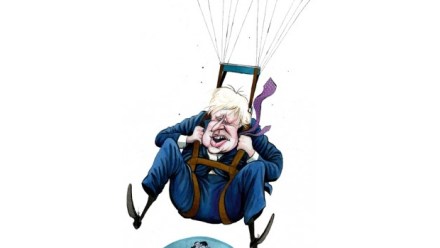
[audioplayer src="http://traffic.libsyn.com/spectator/TheViewFrom22_07_August_2014_v4.mp3" title="Harry Mount and Isabel Hardman discuss Boris's parliamentary campaign"] Listen [/audioplayer]Boris Johnson is to stand as an MP in 2015 — but where? In the next few weeks, his secret parliamentary campaign team (and there is one) expects him to pick his constituency. The Tories need a decision by the beginning of September, as an announcement any closer to the party conference will overshadow David Cameron’s own plans to talk about the manifesto, rather than watch hopelessly as cameras and journalists trail after Boris, asking the same question over and over again. Uxbridge, where former deputy chief whip John Randall is standing down, is the favourite, with a 11,216 majority.

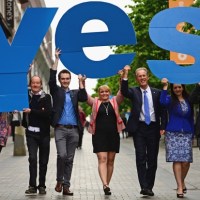
Secret oil fields! Skewed polls! The Yes campaign is losing the plot

 Edinburgh When the histories of the Scottish independence debate are written, 13 February 2014 will be seen as a crucial date in the story. It was then that George Osborne suggested that no Westminster government, of any party, could countenance a currency union with an independent Scotland. Such an arrangement might be good for Scotland but it would make little sense for the rump United Kingdom. And with that observation, boom went much of the nationalists’ economic credibility. Osborne and his accomplice Alistair Darling might seem an improbable double act (though Osborne’s record in office bears a passing resemblance to Darling’s plans had Labour won) but together they might just have saved the Union.

Who are you calling a blob, Owen Paterson?

Why did David Cameron send Owen Paterson to Environment if he meant to sack him? Paterson knew and cared about his subject. He wore green wellies with panache, loathed Europe and wind turbines, and argued with everyone. He was a sop to the shires and a bulwark against Ukip. Yet like his colleague Michael Gove, he was found to be ‘toxic’. He has told the Sunday Telegraph that he blames his downfall on the ‘green blob’, on ‘highly paid, globe-trotting, anti-capitalist agitprop’. Paterson had discovered that the toughest job in government nowadays is no longer foreign affairs or defence, awash in grand crises, whirling dervishes and expensive kit.

How niceness became the eighth deadly sin for women

[audioplayer src="http://traffic.libsyn.com/spectator/TheViewFrom22_07_August_2014_v4.mp3" title="Rhiannon Lucy Cosslett, Camilla Swift and Lara Prendergast discuss the demise of the 'nice girl'" startat=1335] Listen [/audioplayer] Niceness is the eighth deadly sin for any self-respecting feminist Fredericksburg, Virginia I have come a long way with feminism. When it first hit the fan in the early 1970s I was living in a thin-walled apartment next to a woman who held assertiveness-training workshops that included bloodcurdling shouts of ‘This steak is tough! I demand to see the manager!’ Now, 40 years later, assertiveness is all about careers.

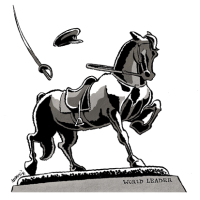
A world crisis with no world leader

There was a time when having almost two hundred of your citizens blown out of the sky was a big deal for a western democracy. But when Malaysian Airlines flight MH17 was shot down over Ukraine last month, killing 193 Dutch citizens and a couple of dozen other Europeans, the response was conspicuous public mourning, some mild objections, a soupçon more sanctions, but otherwise nothing. Everyone knew which government might have handed powerful surface-to-air missiles to eastern Ukraine’s rebels. But nobody seemed willing or able to do anything much about it. There was also a time when whole swaths of the map being overrun by Islamic groups who make al-Qa’eda look like Quakers would have caused concern to the civilised world.

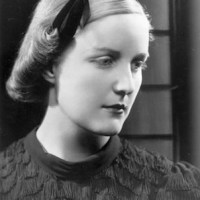
Hitler’s Valkyrie: Unity Mitford at 100

On 8 August 1914, four days after the declaration of war, Unity Valkyrie Mitford was born, the fifth child and fourth daughter of David and Sydney Freeman-Mitford, who admired the actress Unity Moore. Grandfather Redesdale suggested Valkyrie, after his friend Wagner’s Norse war-maidens. The fact that Unity Valkyrie had been conceived in the town of Swastika, Ontario, where her father was prospecting for gold, made it all the more portentous. A few weeks after her birth, Unity and her mother (‘Muv’) joined ‘Farve’, who was with his regiment in Newcastle. His quarters were so cramped that Unity was laid to sleep in a drawer.

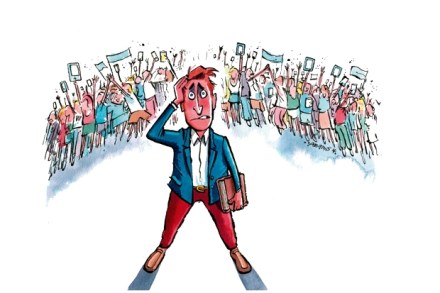
The rise of crowd culture – a generation scared to do anything alone

[audioplayer src="http://traffic.libsyn.com/spectator/TheViewFrom22_31_July_2014_v4.mp3" title="Ross Clark and Lara Prendergast discuss the demise of individualism"] Listen [/audioplayer]Hell, as one of Jean-Paul Sartre’s characters said, is other people. Unless, that is, you happen to be British and born after about 1980, in which case hell is the opposite: being alone for more than about five minutes. As for the absolute pit, the eighth circle or however else you describe the geography of Beelzebub’s kingdom, that is being left alone without a 3G mobile phone signal. Of all changes in British life over the past generation, nothing has been quite so as stark as the strange death of individualism.

The war that we Germans really don’t mention

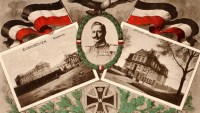
In 1912 Kaiser Wilhelm had an ambitious task for my great-great-great uncle Karl Max von Lichnowsky. He sent him to London to be our ambassador there, with orders to try to ensure Britain’s neutrality (at the very least, in cases of conflict with Russia and France). Although Lichnowsky already had a sympathetic relationship with Britain’s foreign minister, Edward Grey, who also hoped to avoid a war, his mission failed. His personal objective — to deter the Kaiser from going to war — fell flat too. In a telegram sent on 18 July 1914 he pleaded with Kaiser Wilhelm to ‘spare the German people a war from which nothing can be gained but everything lost’.

In our hard-pressed NHS, must sympathy be rationed too?

Sometimes I have a quiet time as a voluntary hospital visitor. But recently I’ve witnessed a lot of distress from people of all ages and types. The other week I saw an elderly Middle Eastern man bent over a bin in a ward corridor, crying almost uncontrollably. I asked him the problem and he stuttered out that he had been watching his daughter sleeping, and he believed she was going to die. I went off to find a nurse as I felt I didn’t know enough about his situation or hers to help. The nurse wouldn’t tell me anything due to patient confidentiality. I returned alone to the man and tried to sympathise. He managed to say that his daughter had food poisoning. I didn’t think that sounded too bad, but he added that his wife had died of it.

Now remember August 1714

The centenary of the start of the first world war is getting much more attention than the tricentenary of the accession of George I, which also falls this week. As far as I can tell, no new biographies of the first Hanoverian king are imminent, whereas books on the great war are pouring forth. You can see why. The replacement of a plump, if benign, queen by an ‘obstinate and humdrum German martinet with dull brains and coarse tastes’ (Winston Churchill’s words), who presided over a huge financial scandal and died unlamented after a short reign, need hardly detain us. But forget the royals and focus on what we might call the reshuffle among politicians that accompanied the change.