Features

Premier league

At a large Tory breakfast meeting that David Cameron spoke to recently, the tables were named after all of the Conservative premiers of the past: the good, the bad and Ted Heath. So there were the Lord Salisbury, Harold Macmillan and Margaret Thatcher tables, for example. (I was delighted to be on the Winston Churchill table; the people on the Neville Chamberlain one looked suitably ill-favoured.) As Cameron — who was sat at the David Cameron table, appropriately enough — looked around the huge room that morning, he could be forgiven for wondering where he will wind up in the pantheon of past premiers.

‘Money, money, money’

[audioplayer src="http://rss.acast.com/viewfrom22/thegreatbritishkowtow/media.mp3" title="Listen: Fraser Nelson and Jonathan Mirsky discuss Britain's attitude towards China" startat=35] Listen [/audioplayer] The Dalai Lama is a connoisseur of absurdity. When we met in London on Monday I reminded him that two years ago, desperate to resume relations with China, No. 10 said it had ‘turned the page on that issue,’ by which he meant the Dalai Lama. He responded with his celebrated chuckle but it became clear that he’s far from sanguine about being snubbed by Britain. He agreed with me that not even Beijing could have thought up a phrase like ‘turn the page’.

Why Putin backs Assad

At the outset of Syria’s brutal four-year civil war, I was an almost unique voice in the British media deploring the push to depose the secular dictator President Bashar al-Assad, especially in the absence of a genuinely popular uprising against him. Here in The Spectator I tried to point out that such a short-term strategy would have devastating long-term consequences. Assad, I argued, would not fall, because the people of Damascus would not rise up against him. The so-called secular rebels were in fact vicious Islamists in disguise. Western interests in the region would be dramatically undermined by Saudi and Iranian militias, who would fight a devastating proxy war. Syria’s extraordinarily diverse population risked annihilation as a result.

The royal road to peace

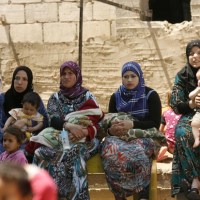
Watch the videos of 1950s Iraq on YouTube and you glimpse something close to an idyll. It’s true that Pathé News was not big on gritty realism, but history relates that here it was not using a heavily rose-tinted lens; Hugh Trevor-Roper even went so far as to describe Iraq at the time as a Levantine Switzerland. Or you can go to Google Images, tap in ‘1960s Afghan women’ and be offered photographs of a mixed university biology class, and others of young women with short skirts, long hair and smiling faces. This was life under the kings, and knowing what followed is enough to make a grown man weep. But let’s be hard-headed and forward-looking: the creation of new constitutional monarchies is a sensible solution to such clear and present dangers as Isis.

Corbyn’s salvation

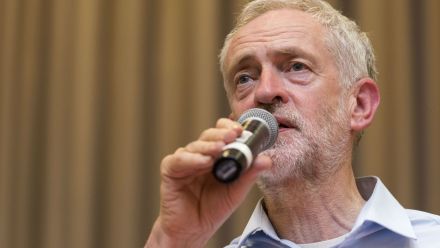
On religion, Jeremy Corbyn is interestingly moderate, circumspect — not the angry atheist you might expect. In a recent interview with the Christian magazine Third Way, he said his upbringing was quite religious: his mother was a ‘Bible-reading agnostic’ and his father a believer, and he went to a Christian school. ‘At what point did you decide that it wasn’t for you?’ he was asked. He replied very carefully, even challenging the premise of the question: ‘I’m not anti-religious at all. Not at all… I find religion very interesting. I find the power of faith very interesting. I have friends who are very strongly atheist and wouldn’t have anything to do with any faith, but I take a much more relaxed view of it.

Trouble brewing

‘Milk?…Milk!’ rages Nirmal Sethia, clutching the side of the table in ill-disguised apoplexy. ‘If you put in milk and sugar then you have destroyed the taste! Destroyed it!’ I apologise and say I will happily drink my Earl Grey black. The truth is, I don’t have much choice, because I am trapped in a basement near Smithfield meat market with an impassioned tea magnate. I never knew there was such a thing, but there really is. Tea is an art form, you see, and although we Brits think we know quite a bit about it — well, we like drinking it morning, noon and night — we actually don’t know anything because we no longer drink proper tea, by and large, and have thus betrayed our great tea heritage. Mr Sethia is very cross about this.

Pigs, pranks, but no Dave

I attended the Piers Gaveston Society in the mid-1980s, when I was at Oxford in the year above David Cameron. The parties were debauched and tremendous fun. But Dave was not there. The most remarkable figure at the heart of the Gaveston was Gottfried von-Bismarck, the Iron Chancellor’s great-great-grandson who, after his untimely death at just 44 in 2007, was said by the Telegraph to have led an ‘exotic life of gilded aimlessness’.

Why I left

[audioplayer src="http://rss.acast.com/viewfrom22/thedeathoftheleft/media.mp3" title="Nick Cohen and Fraser Nelson discuss the death of the left" startat=32] Listen [/audioplayer]‘Tory, Tory, Tory. You’re a Tory.’ The level of hatred directed by the Corbyn left at Labour people who have fought Tories all their lives is as menacing as it is ridiculous. If you are a woman, you face misogyny. Kate Godfrey, the centrist Labour candidate in Stafford, told the Times she had received death threats and pornographic hate mail after challenging her local left. If you are a man, you are condemned in language not heard since the fall of Marxist Leninism.

Our drugs cheat

Do you want to see Paula Radcliffe’s blood? If so, you’re not alone. Radcliffe, three-time winner of the London Marathon has been outed as a drugs cheat by the Tory MP Jesse Norman. No proof, but proof is for wimps. Radcliffe’s name will now always have a certain stink. Norman used parliamentary privilege to talk about 'the winners or medallists at the London Marathon, potentially British athletes... under suspicion for very high levels of blood doping.' That was enough to tar Radcliffe as a possible druggie. It’s like accusing a public figure of paedophilia: the softest whisper will do for them.

The man to stop Trump

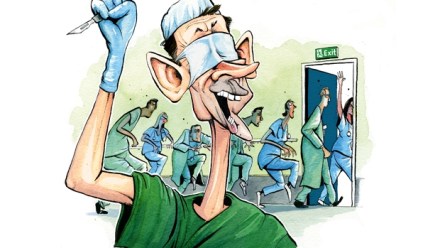
   Washington DC Ben Carson is relaxed. ‘He’s always relaxed,’ says an aide. The next televised Republican primary debate is two days away, but Dr Carson is about to begin his first rehearsal for it. The preternatural calm he exudes is presumably what gave him his steady hands during the 22-hour operation that led to him becoming the first surgeon to successfully separate Siamese twins fused at the head. That operation is part of the Carson legend: growing up poor, black, becoming chief of neurosurgery at Johns Hopkins aged 33. This life story has aided an improbable presidential bid that is now starting to look more plausible. Carson is polling second in a Republican field of 16 and he has momentum.

Labour’s lost thinker

Shortly before the last election a group of Labour MPs approached Ed Miliband to ask him what he would do if he lost. They suggested he could provide stability by staying on as leader for a while, as Michael Howard had done, and that his last duty should be to oversee an inquiry into what went wrong at the general election. Miliband, still convinced he would win, did not entertain the idea, to the dismay of his policy chief, Jon Cruddas. After the election, Cruddas decided to go ahead and do an inquiry anyway. The results will infuriate the Labour left. The inquiry found that Labour’s anti-austerity message put voters off.

Down with slippery slopes!

Well, of course the Assisted Dying Bill failed. It mattered not a jot that an overwhelming majority of public opinion urged its success; it was always going to fail and the only surprising thing is that anybody is surprised. I’ll bet my teeth on a few more certainties, too. Last week the required 200,000 people put down their spliffs long enough to sign a petition in favour of decriminalising cannabis and thus, in October, the matter will be debated by MPs. Proponents, however, really should not bother — they will lose, regardless.

The library in the Jungle

Sikander and I are sitting at a small table in a small shed. The shed is filled floor-to-ceiling with books: chick lit, thrillers and a neat set of Agatha Christies line the shelves, alongside a large atlas, a few dictionaries and grammars, and the thin green spines of children’s learning-to-read books. More books spill out of boxes stacked in the corner, and pens, notepads, bags of clothes, a globe, a guitar and a game of Battleships are useful flotsam. We are in Jungle Books, a library which British volunteer Mary Jones set up a few weeks ago in the Calais migrant camp known as ‘The Jungle’. Sikander, a lean Afghan, tells me that the last book he took out was about starting a small business.

The Australian way

 Sydney Most ordinary Australians are shocked that our immensely civilised country is reviled in polite society here and abroad, when the world has so many blatant human rights abusers. The latest accusation comes from a New York Times article complaining that our policies on asylum-seekers are harsh, insensitive, callous and even brutal, and urges European nations not to copy them. Yet the policies on border protection of Tony Abbott and John Howard before him should be a lesson to Britain. At the heart of the matter is a firm but fair post-war policy that mass migration is conditional on government control over ‘who comes to this country and the circumstances in which they come’, as Mr Howard famously put it.

The cruellest month

In six months’ time, my son is due to attend an assessment day for a nursery. The details on the nursery’s website are deliberately sketchy — presumably to avoid parents coaching their children — but it seems to involve my son being observed while he plays and graded on the results of his burbling: it sounds very much like an interview. He is going to be two and a half. It is easy to be satirical about a child going for an interview at the age of two and a half — his PowerPoint skills are not up to it; we haven’t arranged a single internship for him; he doesn’t have any particularly insightful questions to ask. But my wife and I thought we had better put him forward for it.

Adoption begins at home

Would you open your home to a migrant child? If the reaction to the drowning of three-year-old Alan Kurdi is anything to go by, thousands of families across Britain are ready to welcome Syrian refugee children — including an impressive number of politicians. Bob Geldof has offered space for three families in one of his spare houses. Walking past the two empty beds in my spare room, I felt the same tug: why couldn’t those beds have two little heads nestling on the pillows, safe after years of horror? It’s the same instinct we feel when a toddler tumbles over on the street and his face crumples up into tears: we want to help, we want to hug. But there’s something odd about the rush of offers to help Syrian children.

France’s fight on the right

A year has passed since Nicolas Sarkozy announced his return to frontline politics, and the political landscape in France is still recovering from the shock. His rivals for the leadership of the French right have watched while their cordially disliked ex-leader consistently outmanoeuvred them. They had made the mistake of believing in the sincerity of Sarko’s farewell speech in May 2012 when, following his defeat in the presidential election by François Hollande, he said: ‘From now on I will seek to serve my country in other spheres.