Features

My surreal Christmas in hospital with a dangerously ill child

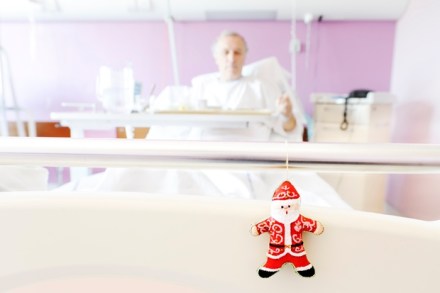
Ever since my teens I’ve hated Christmas, but last year something happened which made me change my mind. On 20th December, my teenage son was struck down by bacterial meningitis. No rash, no stiff neck. He’d been off school the day before but we all thought it was just a nasty cold. By the evening he seemed to be on the mend. He wolfed down a huge supper and sat up on the sofa, watching TV, tormenting his little sister. In the small hours he started throwing up. He became incoherent, then unresponsive. By the time the ambulance arrived he was like a statue. By the morning he was in intensive care, unconscious, wired up to all sorts of weird machines. Mercifully, he came round, quite suddenly, 24 hours later. I was by his bedside. I’d been awake for three days.
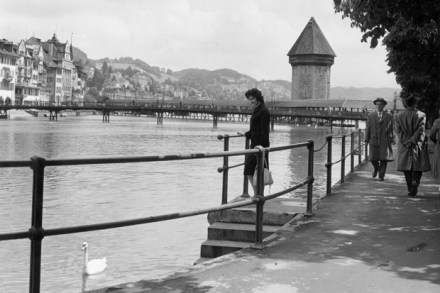
Pisa

Say ‘Pisa’ and everyone thinks of the Leaning Tower. Fair enough; it’s a curiosity, and the tourist board must be pleased that Mussolini’s plan to straighten it came to nothing. It stands, or leans, next to the cathedral in the Piazza dei Miracoli, and beyond the cathedral is the Baptistry, one of the most beautiful buildings in Italy. I was in Pisa for the annual book festival, which attracts an extraordinary number of independent publishers and huge audiences (25,000 over a long weekend). Each year the director, Lucia della Porta, invites a foreign delegation, and this was Scotland’s turn.

Strange young things

[audioplayer src="http://rss.acast.com/viewfrom22/thegreendelusion/media.mp3" title="Douglas Murray and Steph Smith discuss whether all young politicians are oddballs" startat=1130] Listen [/audioplayer]Whenever the curtain is pulled back on youthful political activism, the picture is ugly. Three years ago, in Young, Bright and On the Right, the BBC followed students at Oxbridge fighting like vipers to get ahead in their university Conservative clubs. Along with the inevitable three-piece suits, wildly invented accents and endless talk of what ‘the party’ expected, there was also that characteristic lack of awareness that ‘the party’, like the rest of the world, remained largely indifferent to them.

Cooler heads

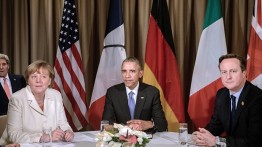
When world leaders met in Paris to launch the latest UN climate conference, much of the talk behind closed doors did not focus on global warming. Instead, the Paris conference has been overshadowed by more pressing and less contentious security concerns: the war in Syria, Europe’s refugee crisis and the growing threat of Islamist terrorism in the wake of the Paris massacre. The Copenhagen summit six years ago was a massive event; this year’s climate conference barely merits a mention of the front pages. The Paris meeting is not even attempting to achieve what the 2009 Copenhagen summit failed to do: reach a legally binding treaty on cutting CO2 emissions.

The real victims of climate change

[audioplayer src="http://rss.acast.com/viewfrom22/thegreendelusion/media.mp3" title="Matt Ridley and Michael Jacobs debate the point of the Paris climate change conference" startat=31] Listen [/audioplayer]The next generation is watching, Barack Obama told the Paris climate conference: ‘Our grandchildren, when they look back and see what we did in Paris, they can take pride in what we did.’ And that, surely, is the trouble with the entire climate change agenda: putting the interests of rich people’s grandchildren ahead of those of poor people today. Unfair? Not really, when you look at the policies enacted in the name of mitigating climate change.

The Corbyn crack-up

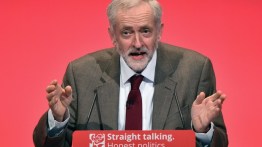
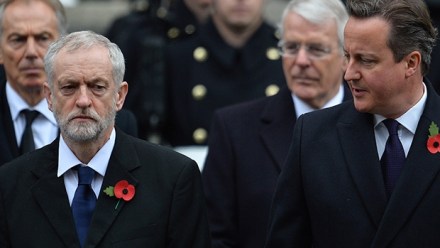
Jeremy Corbyn is a rarity among politicians. All his enemies are on his own side. For the Tories, Ukip and the SNP, Corbyn is a dream made real. They could not love him more. As the riotous scenes at the shadow cabinet and parliamentary Labour party meetings this week showed, his colleagues see Corbyn and John McDonnell as modern Leninists who are mobilising their cadres to purge all dissidents from the party. Conversations with Corbyn’s aides show a gentler side to the new regime, however. They suggest the Corbynistas are unlikely to be able to control Labour MPs when they can barely control themselves. ‘Chaos’ was the word that came up most often, followed by ‘panic’ and ‘unforced errors’. Corbyn’s staffers were working 12-hour days.

Silent strongman Sergey Shoigu is the real force behind Russia’s military aggression

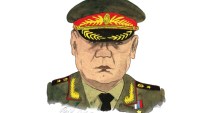
‘Crimea is ours,’ President Putin boasted last May. He was speaking on a documentary viewed by millions of Russians, and it was the culminating moment in the militarisation of Russia. Moscow had attracted criticism for spending unprecedented sums on its armed forces under Putin, despite a weak economy over-dependent on oil. The successful annexation of Crimea seemed a perfect vindication. Yet the huge expansion of Russia’s armed forces budget was instigated not by Putin but by the defence minister, the mysterious Sergey Shoigu. The ascendancy of the military has propelled Shoigu up the ranks of the power elite to the extent that he is now regarded as the favourite to succeed Putin.

Could I have prevented a Kray murder?

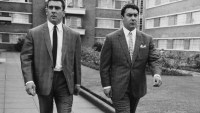
It was watching the latest film on the Krays (ludicrously called Legend) that brought it all back. I remembered not so much the deliberate and casual violence which underlay the swinging Sixties in Britain but something more personal. A recurrent question I have asked since those days is whether I personally could have prevented one of the Kray murders. Let me go back to 1966. I was a journalist on the Times commissioned to write two articles on British prisons. The Prison Department had directed me to the new secure prison of Albany on the Isle of Wight and to the psychiatric work being done at Grendon Underwood. But I wanted to contrast this with prison life in an older and more typical prison. What better place to go than Dartmoor?

Send in the street pastors

Martin Surl, the Police and Crime Commissioner for Gloucestershire, has been buying flipflops. Hundreds of them. Not for the police, but for a local Christian volunteer team of ‘street pastors’. Earlier this year, Surl announced a £40,000 grant to cover the group’s training and resources. ‘Some things are better delivered by people who aren’t the police,’ he says. What street pastors deliver is hard to sum up in a few words. When I first encountered them a couple of years ago in their uniform of baseball caps and blue jackets, both with ‘STREET PASTOR’ printed across them, I thought they were going to ask me whether I was saved. But street pastors are not street preachers.

‘They pull a gun, you pull a hashtag’ – the ridiculous debate over what to call Isil

‘They pull a knife, you pull a gun. He shends one of yoursh to the hospital, you shend one of hish to the morgue.’ Thus Sean Connery in The Untouchables, explaining how you fight a war ‘Chicago-style’. How would you adapt that, do we think, for our collective response to the Paris attacks? ‘They pull a gun, you pull a hashtag. They send 132 of yours to the morgue, you start calling them a slightly rude name.’ As they say on the internet: srsly? Imagine you’re in Raqqa, having at last made hijrah from the family semi in Dudley. You’re chillaxing, maybe having a bit of a kickabout with the head of an apostate, when your friend calls you over to his laptop. ‘Look, brother.

Military action against Isis needs a coherent strategy. . . . here it is

Like most British soldiers of my generation, I fought in Iraq and Afghanistan. Few would now justify the reasons for invading Iraq; most of us who fought there at first recognised the amateurish nature of the strategy and its lack of realistic political objectives. But in 2007, under General Petraeus, the coalition adopted a new strategy that was underpinned by coherent policy. This stemmed from the recognition that unless common cause was found with moderate Sunnis, a workable Iraqi polity could never be established. The rapid improvements that flowed from this change were impressive but disgracefully shortlived.

The pretend war: bombing Isil won’t solve the problem

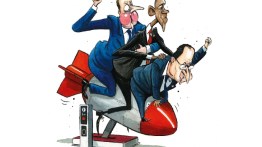
[audioplayer src="http://rss.acast.com/viewfrom22/thegreatfakewar/media.mp3" title="Andrew J. Bacevich and Con Coughlin discuss the West's war with Isis" startat=35] Listen [/audioplayer]Not so long ago, David Cameron declared that he was not some ‘naive neocon who thinks you can drop democracy out of an aeroplane at 40,000 feet’. Just a few weeks after making that speech, Cameron authorised UK forces to join in the bombing of Libya — where the outcome reaffirmed this essential lesson. Soon Cameron will ask parliament to share his ‘firm conviction’ that bombing Raqqa, the Syrian headquarters of the Islamic State, has become ‘imperative’. At first glance, the case for doing so appears compelling.

Dartmoor

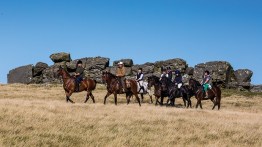
I’ll willingly admit that the moors of south-west England are not my natural territory. Mention the word ‘Dartmoor’ and my immediate thoughts are of scruffy, sturdy ponies and a giant bog. But then I boarded a train to Exeter to spend two days crossing said bog on horseback, and my whole perception changed. Yes, there were bogs (at one point my horse descended almost entirely into one — quite unnerving for those following behind) and plenty of wild ponies. But we also found standing stones that predate Stonehenge by a thousand years, spectacular granite tors breaking out of grassy hilltops, an unmarked (and allegedly haunted) grave and — most importantly — an ice-cream man mid-afternoon on Sunday, just when we were starting to flag.

‘I was tossed out of the tribe’: climate scientist Judith Curry interviewed

It is safe to predict that when 20,000 world leaders, officials, green activists and hangers-on convene in Paris next week for the 21st United Nations climate conference, one person you will not see much quotedis Professor Judith Curry. This is a pity. Her record of peer-reviewed publication in the best climate-science journals is second to none, and in America she has become a public intellectual. But on this side of the Atlantic, apparently, she is too ‘challenging’. What is troubling about her pariah status is that her trenchant critique of the supposed consensus on global warming is not derived from warped ideology, let alone funding by fossil-fuel firms, but from solid data and analysis. Some consider her a heretic.

What Muslims think

Do you have sympathy with young Muslims who leave the UK to join fighters in Syria? It’s a hard question to answer: perhaps you’d wonder who the ‘fighters’ were. Or whether the ‘young Muslims’ were 14-year-old girls, groomed by fanatics to be jihadi brides. But if you answer ‘yes’, you may be surprised to find yourself described as having ‘sympathy for jihadis’. Such are the perils awaiting British Muslims who respond to opinion poll questions. The Sun this week found itself in a row about a front-page headline: 1 IN 5 BRIT MUSLIMS’ SYMPATHY FOR JIHADIS.

How hard should we fight Black Friday?

The veneer of civilisation is easily cracked, as anyone who has followed Donald Trump’s Twitter feed will know. This Friday, the day after Thanksgiving, the point of which is no longer clear, there will be riots in shops across the globe, as people fight over discounted products they do not need or even want. The returns rate for goods bought on Black Friday is very high, which does not surprise me. This kind of shopping is a very pure narcotic, and it ebbs fast and wild. Black Friday, Cyber Monday, Boxing Day — capitalism has its own liturgical calendar now. Festivals are essential to humans; and as the sky shrinks and the advertising hoardings get larger and more grotesque, where can we turn but to Asda? Actually, not Asda.

Sir Ian Botham is a hero – and a fool

In 1981, when I was ten and Ian Botham was 26, I thought he was God. Now, the week after Botham turned 60, the 44-year-old me thinks he’s an arse. And that makes me sad. The world is a simple place when you’re ten. There are heroes and villains, victories and defeats. The very best victories are the ones that were nearly defeats. Headingley 1981, for example. No need for the details — you know them already, not just from the match itself but from the hundreds of documentaries made about it since. I still lap them all up like an addict, silently mouthing along as Richie Benaud describes Botham’s six going ‘into the confectionery stall and out again’.

The politics of terror | 19 November 2015

 Paris Unfortunately, like most things the president does, his big speech fell flat The terror attacks on Friday have given President François Hollande an opportunity to be statesmanlike, and he has tried his best. He quickly declared a state of emergency and summoned a special congress of the Senate and the National Assembly so that he could deliver a powerful address. ‘Terrorism will not destroy France, because France will destroy it,’ he said. Unfortunately, like most things the president does, the speech fell flat. Pictured on the front page of Monday’s Le Figaro, France’s conservative daily (as well as inside the left-leaning Le Monde), he looked a small man, flanked by his security guards.