Features

The secret brilliance of Prince Philip’s ‘gaffes’

Prince Philip has died at the age of 99. Writing in 2015, Harry Mount reflected on the Duke of Edinburgh's personable style and sense of public service.I’ve just been on the receiving end of a Prince Philip gaffe, of sorts, and I loved it. It was at a lunch last week at the Cavalry and Guards Club for the Gallipoli Association — the charity that commemorates victims and veterans of that tragic, doomed campaign. For 40 years, the Duke of Edinburgh has been the association’s patron. And so, in Gallipoli’s centenary year, he came to the association’s lunch. Before lunch, he roamed at will around the cavernous drawing room, chatting to association members.

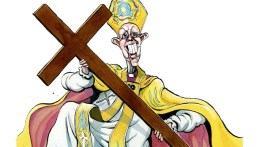
Pope vs church

[audioplayer src="http://rss.acast.com/viewfrom22/civilwarinthecatholicchurch/media.mp3" title="Damian Thompson and Fraser Nelson on civil war in the Catholic church" startat=30] Listen [/audioplayer]Last Sunday, the Italian newspaper La Repubblica carried an article by Eugenio Scalfari, one of the country’s most celebrated journalists, in which he claimed that Pope Francis had just told him that ‘at the end of faster or slower paths, all the divorced who ask [to receive Holy Communion] will be admitted’. Catholic opinion was stunned. The Pope had just presided over a three-week synod of bishops at the Vatican that was sharply divided over whether to allow divorced and remarried Catholics to receive the sacrament. In the end, it voted to say nothing much.

The Church of England’s shameful betrayal of bishop George Bell

The Church of England has produced a lot of good men and women, but very few great ones. It is in its modest, cautious nature that it should be so. Greatness requires a lonely, single-minded strength that does not sit easily with Anglicanism’s gentle compromise. And I suspect the Church has always been hesitant and embarrassed about the one undeniably great figure it produced in the 20th century. To this day, George Bell, Bishop of Chichester from 1929 to 1958, is an uncomfortable, disturbing person, like a grim obelisk set in a bleak landscape. Many British people still disapprove of his lonely public denunciation of Winston Churchill’s deliberate bombing of German civilians in their homes.

Britain’s armed forces no longer have the resources for a major war

[audioplayer src="http://rss.acast.com/viewfrom22/civilwarinthecatholicchurch/media.mp3" title="Con Coughlin and Tom Tugendhat debate the state of Britain's armed forces" startat=1561] Listen [/audioplayer]This Sunday, David Cameron will lay a wreath at the Cenotaph to commemorate those who made the ultimate sacrifice during two ruinous world wars. People will say ‘Never Again’ and Cameron will agree. But then, thanks to the drastic cuts he has made to the strength of our armed forces, the Prime Minister need not worry himself unduly about Britain’s involvements in any future conflicts.

We could end HIV

You have probably never heard of Truvada, but it is a pharmacological breakthrough that has the potential to consign Aids to the history books. The drug effectively makes its users immune to the HIV virus. In the US, the Food and Drug Administration approved Truvada for use over three years ago. Truvada is even covered by insurance companies. It formed the backbone of New York’s HIV strategy, published this summer, which aims to halt the spread of the infection and reduce new HIV infections to near-zero by 2020. Yet in this country, a conspiracy of silence surrounds Truvada, or Pre-Exposure Prophylaxis (PrEP), as it is termed. The NHS claims that it is waiting on the results of its own studies to decide whether Truvada should be introduced.

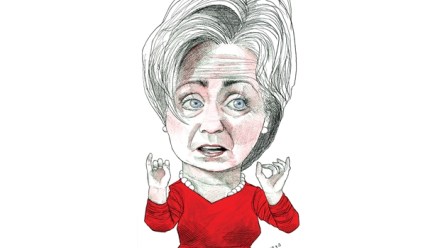
Forty is a feminist issue

If Emily Hill is right in her cover piece for the magazine last week headlined ‘The end of feminism’, then women like me are in a whole world of trouble. And by women like me, I mean women over 40. The nub of Ms Hill’s argument was that all the big battles are won. She quoted the sparkling achievements of ‘women in their twenties’ and also ‘the under-40s’, who are out-earning men. What happens to women after they have broken through the glass ceiling is a question for an older, more cynical female writer. At your service.

France’s new reactionaries

When President de Gaulle was asked to authorise the criminal prosecution of Jean-Paul Sartre for civil disobedience during the Algerian war, he declined. ‘One does not lock up Voltaire,’ he added, unhistorically. In France, ‘public intellectuals’ have a quasi-constitutional status, so it’s not surprising that a furious bunfight has broken out over a handful of philosophers known as ‘les nouveaux réactionnaires’. The new reactionaries do not see themselves as a group, but they defend a common point of view about the causes of France’s diminishing status and influence.

Converting the Corbyn cult

If Labour is ever to clamber out of its cage on the fringe of politics, it will have to convince the 250,000 supporters who voted for Jeremy Corbyn to turn from far-leftists into social democrats. The necessity of persuading them that they made a terrible mistake is so obvious to Labour MPs that they barely need to talk about it. In case it is not obvious to you, let me spell it out. Corbyn exacerbates every fault that kept Labour from power in 2015, and then adds some new ones, just for fun.

The years of pain

I remember the exact day my illness first declared itself. Twenty-seven years ago. Thursday 20 October 1988. My then wife and I were at a viewing of Harry Hook’s The Kitchen Toto at the Strode Theatre in Street when I felt a sudden, crippling pain in my back. Being 35 and a grown-up, I tried to ignore it. But the pain came back when we went for a pizza that evening, and I ended up crawling to the gents’, mewling and cawing. It took me 11 days to summon up the courage to go to my GP. ‘I’m having terrible pain on the left of my spine. I passed something like a piece of liver in my urine. And I’ve got a lump on one testicle.’ The GP looked me up and down, as if to say, what is a young man like you doing in a place like this?

Women’s issues are for everyone now, not just feminists

Like all right-thinking lefty men who came of age in the women’s liberation movement of the 1970s, I always thought of myself as a feminist. But now, thanks to Meryl Streep, I’ve been liberated from the label. Last week I heard her on the radio promoting her new film Suffragette. Asked why the story of the suffragettes hadn’t been made into a film before now, she said that in Hollywood the men with the power to get films made didn’t see this subject as anything to do with them. ‘It wasn’t their fight,’ said Streep. But now things were changing. ‘Increasingly we think that women’s issues and women rights are men’s issues,’ she said. ‘But it belongs to all of us to right this imbalance.

Red-brick revolutionaries

‘I’d rather entrust the government of the United States to the first 400 people listed in the Boston telephone directory than to the faculty of Harvard University,’ said William F. Buckley Jr, the American conservative writer. Jeremy Corbyn’s Labour party must be hoping British voters agree. Under Corbyn, the Labour party — once the clever party — has had a brain transplant. It’s out with the Oxbridge and Harvard graduates with first-class degrees; in with the red-brick university graduates. Or, in Corbyn’s case, a non-graduate. Corbyn got two Es at A-level at Adams’ Grammar School in Newport, Shropshire. He did a year of trade union studies at the North London Polytechnic before dropping out.

The Hinkley Point disaster

How easy it would be to scorn the environmentalists who are up in arms about George Osborne’s new pet project, the Hinkley Point C nuclear power station. You can understand their anxiety: subsidies for green energy are being slashed, yet the Chancellor will do anything — and pay anything — to get this project up and running. He is happy to force households to pay artificially high prices for a form of energy which brings all kinds of risks — of which the world was reminded this week when Japan found the first cancer case liked to the Fukushima disaster of 2011. ‘Has the Chancellor lost his mind?’ they ask.

How far can Bernie Sanders go?

[audioplayer src="http://rss.acast.com/viewfrom22/thedeathoffeminism/media.mp3" title="John R. Macarthur and Freddy Gray discuss how far Bernie Sanders can go " startat=1764] Listen [/audioplayer]Boston A woman’s voice carried through a lull in several conversations around the table at a smart East Coast dinner. ‘But he’s not even a fucking Democrat…’ She was one of the party’s stars and was talking about Senator Bernie Sanders. He is inducing as much red-faced apoplexy in the Democratic party’s great and good as Donald Trump is causing among the Republican establishment: outsiders both, each upsetting the smooth coronation of the party leadership’s candidate for president.

Iran’s hidden war with the West – and what we can do to fight back

When British troops were on patrol in Iraq and Afghanistan, we faced many enemies, from jihadis to press-ganged civilians. But for me, the most terrifying ones lay buried. Bullets usually miss. Improvised explosive devices – IEDs — don’t. They are frighteningly simple. Old munitions wired together or plastic bottles packed with fertiliser and ball-bearings could destroy a vehicle and kill its passengers. During my four years in Afghanistan I saw IEDs evolve: first came remote triggers, then pressure plates and then low-metal-content devices. Curiously, IEDs evolved in a similar way in Iraq. This should be no surprise, since the groups trying to kill British troops shared one common resource: Iranian support. For years, Tehran has armed insurgents.

Centralising, illiberal, catastrophic: the SNP’s one-party state

[audioplayer src="http://rss.acast.com/viewfrom22/thedisasterofthesnp-silliberal-one-partystate/media.mp3" title="Adam Tomkins vs. Kevin Pringle on the SNP's 8 years in government" startat=37] Listen [/audioplayer]Imagine a country where the government so mistrusted parents that every child was assigned a state guardian — not a member of their family — to act as a direct link between the child and officials. Imagine that such a scheme was compulsory, no matter how strongly parents objected. Imagine that the ruling party controlled 95 per cent of MPs, and policed the political culture through a voluntary army of internet fanatics who seek out and shout down dissent. Welcome to Nicola Sturgeon’s Scotland in 2015. The First Minister is admired the world over.

What Scottish professors have to fear from Nicola Sturgeon’s power grab

In the grounds of Edinburgh’s Heriot-Watt University stands a one-tonne sculpture. Roughly hewn and about five feet high, it carries in its top corner an ill-carved sun. Beneath it are some words of Alex Salmond, half-sunk in the sandstone, as if they were the thoughts of a Scottish Ozymandias: ‘The rocks will melt with the sun before I allow tuition fees to be imposed on Scottish students.’ This clunky celebration of SNP -policy should raise a few doubts. Free higher education is not free for all in Scotland. Edinburgh can afford to pay the fees of only 124,000 students in Scottish universities. Their contemporaries might have the grades, but they must go elsewhere because Scottish universities need fee-payers from England and Wales to balance their books.

Notes from a very small island: wonderful, eccentric Ascension

‘This is one of the strangest places on the face of the earth,’ wrote a Victorian naval officer. Another early visitor called it ‘the abomination of desolation’ — and to this day, on the 200th anniversary of the British occupation, Ascension remains decidedly odd. The summit of an extinct volcano, it pokes up out of the Atlantic eight degrees south of the Equator, and although the latest eruption is thought to have taken place 70,000 years ago, most of it still looks raw. Vegetation cloaks the summit and shoulders of the 2,800-foot Green Mountain, but steep ravines and petrified lava-flows — jet-black, grey, brown and white — plunge away towards the coast.