Frank Field

Destitution is the new British disease

From our UK edition

I became aware that there was real destitution in modern Britain five years ago. Destitution, as I see it, arises when a family or individual is hungry, unable to afford gas and electricity, and on the brink of homelessness. It was apparent to me then that too many people at the bottom of the pile who fall on hard times are slipping through holes in the nation’s safety net — some are even forced through those holes by the modern welfare state. The model of how society worked, which I had picked up as a child of the 1945 Attlee Government, survived my decade at the Child Poverty Action Group and many of the years I have spent as Birkenhead’s MP. It is the model that most voters held — a great story of British progress.


Britain’s morals are regressing. We need a Social Highway Code

From our UK edition

Life in Britain has become much cruder, meaner and more spiteful practically everywhere. It can be seen in people’s behaviour on the street; in those abominable neighbours from hell; in companies piling up the profits with no care whatsoever for the degree to which they are sweating their workers on terms that, until quite recently, would have been unimaginable. The incivility of one to another can be seen most sharply and poignantly in the degree of cruelty to children which, at the beginning of my working life, would have had every alarm bell ringing wildly. Children have to be almost on the point of being murdered before they are taken into care. Outside that protection, some are subjected to brutal treatment by parents who are also brutal creatures.

Brutish Britain

From our UK edition

Life in Britain has become much cruder, meaner and more spiteful practically everywhere. It can be seen in people’s behaviour on the street; in those abominable neighbours from hell; in companies piling up the profits with no care whatsoever for the degree to which they are sweating their workers on terms that, until quite recently, would have been unimaginable. The incivility of one to another can be seen most sharply and poignantly in the degree of cruelty to children which, at the beginning of my working life, would have had every alarm bell ringing wildly. Children have to be almost on the point of being murdered before they are taken into care. Outside that protection, some are subjected to brutal treatment by parents who are also brutal creatures.

Frank Field: this deal is awful. Labour supporters should vote ‘out’

From our UK edition

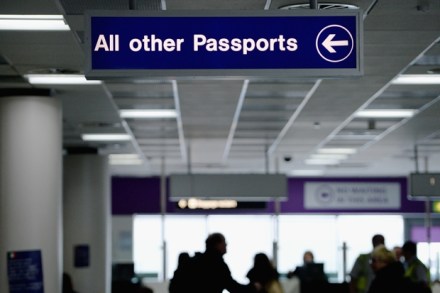
[audioplayer src="http://rss.acast.com/viewfrom22/spectatorpodcastspecial-davidcameronseudeal/media.mp3" title="Isabel Hardman, James Forsyth and Fraser Nelson discuss the EU deal" startat=18] Listen [/audioplayer] What a choice our poor old country faces. There’s widespread support amongst voters across Europe (but not leading politicians) for a fundamental EU reform programme, but our Government never seriously considered leading on this front. Yet the Government so lacked ability that it couldn’t even achieve the minimal reform programme it cobbled together. Holding the referendum in June was clearly more important than winning major reforms. The Government has failed to secure the key renegotiation requirement, namely, that we should regain control of our borders.

George Osborne could revolutionise welfare – but does he know what he’s doing?

From our UK edition

Have we ever had a more political Chancellor of the Exchequer? I doubt it. The political skills of George Osborne were on full display in July’s Summer Budget. Here he tweaked Labour’s tail particularly violently by pinching the party’s higher minimum wage strategy that all too many within Labour thought would be a winning card at the last election. I still wonder whether he sees the revolutionary potential of his Labour-baiting initiative, the ‘National Living Wage’. With a little more development it could become the most important game changer in Britain’s post-war welfare debate.

David Cameron could have been an anti-slavery hero

From our UK edition

When I helped bring the Modern Slavery Bill to parliament I thought here, surely, was a piece of legislation that the PM would want to own. Three women — Theresa May, the Home Secretary; her then special adviser Fiona Cunningham; and Philippa Stroud, Iain Duncan Smith’s special adviser — had all worked for a Bill that would give the government a chance to seize the moral high ground, restoring Britain to its historic role as leader in the abolitionist movement. David Cameron was within touching distance of greatness. But almost at the last moment, he stumbled. Wary of alienating the business community, he balked at the idea of stipulating that quoted companies must report on how they were checking their supply chains against their use of slave labour.

The lower classes have serious – and justifiable – concerns about mass immigration

From our UK edition

The light is at last beginning to dawn on the immigration debate. Today’s Migration Advisory Committee report on the impact of low-skilled migration to this country sheds a small amount of light on what has been blindingly obvious for a long time to people at the bottom. In total there were almost three quarters of a million Eastern Europeans working here last year. The number of citizens from Poland, Hungary, the Czech Republic, Slovenia, Slovakia, Estonia, Lithuania, and Latvia living in this country grew from an estimated 167,000 in 2004 to just over one million in 2012. Working- and lower middle-class voters have serious and justified concerns about the impact of this mass immigration on their lives and on our society.

The first two years of life are more important for social mobility than schooling

From our UK edition

Much is prattled on about social mobility. Practically the whole emphasis, however, is put on schools. Yet by the time most children reach school, life’s race for many of us has been determined. The report I wrote for the Prime Minister published in December 2010, The Foundation Years: preventing poor children becoming poor adults, had this as its main conclusion. Drawing on all the evidence we have available to us, the report suggested that the very first stages of life, in pregnancy, and during the first two years, are crucial as to where most children will end up in adult life. Using one of the national cohorts, Leon Feinstein showed that, probably at 3, but certainly at 5, the life destinations of children are clearly marked.

Time’s up for today’s welfare state

From our UK edition

Welfare as we know it is doomed to defeat. It looks like going down to defeat from three major challenges, and each challenge comes from the sea change that is now so marked in public opinion. First, welfare has moved from one based on the duty to contribute before the right to help was conceded. Increasingly benefits are provided only after a test of income. Voters do not approve of this significant change. The next challenge comes from an increasing reluctance by voters to pay an ever growing share of their income in taxes, of which the largest part goes to a form of welfare with which they strongly disagree – means-tested welfare. The third fundamental change is generational.

Enoch Powell as a Parliamentarian

From our UK edition

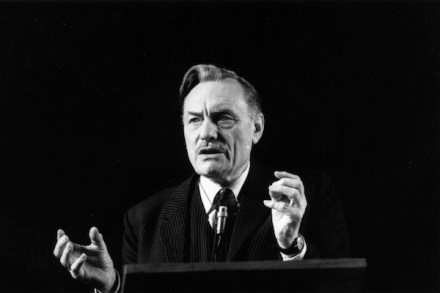
A new collection of essays and reminisces, called Enoch at 100, has been published to mark Enoch Powell’s centenary. In this piece, Frank Field recalls his affection and admiration for his fellow parliamentarian.   When I joined the House in 1979, Enoch Powell was firmly established as one of the greatest political figures in the Commons. Whilst admired he was also feared and herein lay the strength of his parliamentary presence and its weakness. As a schoolboy I was already aware of Enoch and there were three aspects of his political life that had already impressed themselves on my mind by the time I entered the House. There was first, his protest against the shenanigans that had led to Alec Douglas-Home being installed in No. 10 in place of R. A. Butler.

How to defuse the pensions timebomb

From our UK edition

Frank Field argues that a radical reform of Britain’s pensions policy could enrich both pensioners and the exchequer Ten years of austerity must deliver the country a radicalism that ten years of abundance has failed to achieve. The Prime Minister’s economic war council must decree that the necessary budgetary strategy also forges a radical agenda. Every secretary of state should be instructed to bring forward one major reform which, while cutting the size of a departmental budget, also begins to transform the political landscape. Combining these individual initiatives would lay the basis for a five-year reform programme, comparable to the models of 1906 and 1945.

Budget 2009: A crisis waiting to happen?

From our UK edition

At a few minutes to one o’clock today the country’s fate passed from the Chancellor and was cast on the waters of the money markets.  Public borrowing will be £175bn this year and £173bn the following year. From the very start of the crisis the Government has consistently underrated its severity.  Even so, Britain will proportionately be borrowing more than any other G8 country. Are the funds out there to meet the colossal requirements of G8 countries?  Where do we rate in the international league tables as to whom colossal sums should be lent? In these very early stages the Government is finding the gilts market sticky when it comes to issuing its endless new tranches of debt.

Politics | 18 April 2009

From our UK edition

It is difficult to overdramatise the danger that is engulfing our country. In some ways our position is more precarious than in 1940 when we stood alone against the Nazi tyranny. The danger can be stated easily enough. Far from building up reserves during the latter stages of the boom, the government went on a borrowing spree amounting to £200 billion or so. This borrowing disguised the fundamental structural imbalance in our national accounts. No government, however intent on making the pips of the rich squeak, has been able to raise in taxation more than 37 per cent of our gross domestic product. It is as though one of Adam Smith’s invisible hands has constructed a lead ceiling over the amount of income governments can lift off us taxpayers.

Abolishing the 10p tax rate shattered the contract on which New Labour was based

From our UK edition

Why is the abolition of the 10p rate of tax unlike any other rebellion of backbench Labour MPs? The answer lies in the mood of Labour backbenchers following decades of modernising the party, a process that began under Neil Kinnock but only became a root and branch operation under Tony Blair and Gordon Brown. Repeated Labour defeats in the 1950s were accompanied by the burst of outriders demanding a revision of an exclusively economic definition of socialism. This plea ought to have fallen on fertile ground. There has always been a sizeable proportion of activists who believe that socialism could not be achieved without first changing the kind of people we are.

If Labour is to beat Cameron, Brown must forge a new tax contract with the voters

From our UK edition

Is David Cameron feeling his way to a winning political narrative? In a number of recent speeches he has begun to spell out a new debate about the size of the state. It is definitively post-Thatcherite. The battle lines are not the traditional ones of cutting public provision and leaving the private sector to fill the gaps. Cameron is instead seeking ways of offering collective provision which is not run and dominated by a central state. The public appears cautiously interested. But, given the weakness of those bodies that once provided collective provision, say in welfare — poleaxed by good old Mr Attlee — provision of collective services by voluntary bodies sounds good, but is unlikely to provide any major innovations that voters would notice.

A false dawn

From our UK edition

Gordon Brown has a number of key political challenges to satisfy simultaneously if he is to lead his party to a fourth consecutive election victory. As Lee’s outstanding book makes plain, the Prime Minister’s immediate political task is to distance himself from the unpopular aspects of the Blair legacy without falling into the hole Al Gore dug for himself. Brown’s task is much more difficult, however. No one thought Gore had much influence on US politics. No one could believe the same here, with Brown’s unparalleled imperial power over home policy. The Prime Minister has also to deal with the Kirkcaldy and Cowdenbeath Question. This strategy coalesces around attempts to develop a new sense of Britishness.

Doctors’ dilemma unsolved

From our UK edition

This is a brilliant tract against the times. Tallis records how the traditional vocation in medicine is ceasing to be renewed. What he says has a wider application to all professions and, indeed, to work generally. How can Britain sit casually by as a profession which, under oath, brings a lifetime of learning and dedication to our care is replaced by the highly paid medical salesman? Tallis locates a number of destructive forces at work. Changes in the practice of medicine reflect changes in the wider society. The idea of vocation is increasingly no longer strong enough to determine what role people wish to play in life. A number now training as doctors may never practise, or, if they do, it will be for only a short period.

A love of God and the ballet

From our UK edition

There was a time when the Catholic party of the Church of England was not consumed by the latest ecclesiastical millinery. Its driving force then was a passion for social righteousness. It was also fun in the hands of perhaps the most flamboyant of Christian Socialists, Stuart Headlam. Headlam is still sometimes remembered for standing bail for Oscar Wilde. But there is much more to him than this characteristic act of bravery. Headlam was born into a Liverpool stockbroking family. It was at Eton where his father, an evangelical, noticed what was to him his son’s worrying liking for High Church ritual. But it was in the marrying of F. D. Maurice’s theology to beautiful ceremonial that Headlam made his unique contribution to public life.