Features

Varsity blues

A vast cohort of bright young things have secured their university places with A-level success this week. But things are not so rosy at the universities they will set off to join: after 25 years of rapid expansion, the sector is drifting away from both the core principles of education and the world of work. A few figures illustrate the problem: 2.3 million students are in higher education; 47 per cent of young people are in university; 51 per cent of A--level students will begin undergraduate study aged 18. And almost three quarters of them will get a 2:1 or a first. What exact distinction does a university degree confer? True, the vast majority of students enter paid work or further research within six months of graduating.

Beyond the pale | 17 August 2017

Setting off to spend a year teaching English in Zhejiang province in south-eastern China, I expected plenty of surprises. But what struck me most was something they tend not to tell you about in the guidebooks: the racism. It started when I went around the classroom, asking pupils which city they were from. When I got to a slightly darker-skinned boy, his classmates thought it was hilarious to shout ‘Africa!’ It’s a theme. A girl with a similar complexion was taunted with monkey sounds; her peers refused to sit next to her, saying she smelt bad. I apparently erred when, teaching the word for wife, I showed my students a picture of Michelle Obama. The image of the then First Lady was greeted with exaggerated sounds of repulsion: ‘So ugly!’ they said.

Hostile climate

The subtitle of Al Gore’s new film is ‘Truth to Power’, which is supposed to give the impression of brave old Al fighting for right against the mighty fossil fuel establishment. But it is somewhat ironic, given his response when the power being challenged is Gore himself. The former vice president was in London last week to promote his new film and I, along with the world’s press, was invited to a private screening before being allotted an entire eight minutes talking with the great man. An Inconvenient Sequel is an odd film. Billed as a film about global warming, it is really about Gore himself.

Frater, ave atque vale

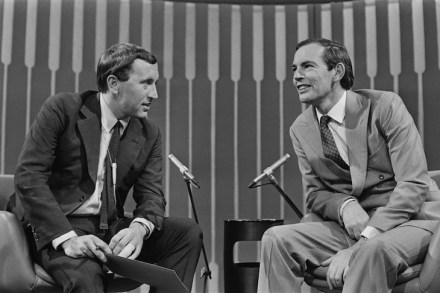
As his obituaries pointed out, my brother David made a name for himself with his unrideable bicycle; his ‘perpetual motion’ machine — a bicycle wheel still rotating in a frame on our mantelpiece (it attracted 1.1 million hits on a German website); and his theory that the arsenic found in Napoleon’s hair and fingernails was down to his wallpaper. The papers naturally got all this wrong (‘Napoleon killed by wallpaper’ they intoned, as did Andrew Roberts), and the image of the potty prof emerged. In fact, his purpose was serious. He was equally serious about our children — after a failed marriage, he had none of his own, to his great regret — and at lunch every Sunday the idiosyncratic scientist and dedicated uncle came together.

Going nuclear

Wednesday marked the 72nd anniversary of the dropping of the bomb on Nagasaki. The bombings of Hiroshima and Nagasaki prompted Emperor Hirohito to announce Japan’s surrender in a radio address, though fanatical war hawks tried to stop him. After 1945, Japan developed a pacifist movement and a so-called peace constitution. No country has deployed these fearsome weapons since. Can it really be a coincidence that the day before this eerie anniversary, Donald Trump issued his implicit threat to unleash an unprecedentedly devastating nuclear attack on North Korea that would apparently eclipse Hiroshima and Nagasaki? ‘North Korea best not make any more threats to the United States,’ said the President.

Don’t forget the Yazidis

As the floodwaters subsided, the Ark drifted across northern Iraq. Finally, with a crunching jolt, it hit dry land. Its timbers had scraped the peak of a mountain range called Sinjar. Water began to pour in. Fortunately, a black serpent, its coils as thick as an arm, moved to plug the breach. The Ark did not sink. Noah, his family, and all the various animals on board survived to repopulate the earth. This story, so familiar, so strange, can be seen illustrated in a shady courtyard that also boasts, just for good measure, the very spot where Adam is claimed to have been fashioned from dust. Lalish, a magical compound of domes, towers and stairways, stands in a valley in Iraqi Kurdistan.

How I write

How do they do it? Among writers, the earnest audience member at a literary festival who asks, ‘Do you write by hand or on a computer?’ is a sort of running joke; an occasion for the rolling of eyes. And yet, let’s enter a note in defence of that audience member: how novelists and the authors of literary nonfiction go about their work is interesting. If, as Kingsley Amis argued, most of a writer’s work is the application of the seat of one’s trousers to the seat of the chair, it’s legitimate to ask: what trousers, what chair, sexuality where and when? In my experience the answers are wildly different from writer to writer; an experience borne out by our sampling — 400 words a day, or 15,000? A bath for inspiration, or exercise?

The joy of sex

Your typical Trollope-loving, Brahms-bothering Spectator reader probably won’t be aware that the most recent winner of Big Brother was a girl called Isabelle Warburton, but her victory was a joy to behold — and a lesson to be learned. The unemployed 21-year-old had a tan so orange it made Oompa-Loompas look pale and interesting, and on her first night in the house she was already wisecracking about how she’d caught an STD in Ibiza from a fellow contestant. Everyone presumed she was an air-headed bimbo, but she went on to display the most extraordinary decency — the only word for it — with her honesty, self-sacrifice and boldness. She took on and saw off the strutting alpha male of the house and volunteered herself for eviction to save a rival.

A tale of two Valleys

Silicon Valley looks like a cross between Milton Keynes and the set of the Stepford Wives. Row after row of ordinary houses and picket fences, clustered in villages notable only for the mega-companies they serve: Menlo Park (Facebook), Cupertino (Apple) or Mountain View (Google). There’s the odd charm, but it’s generally clean, sterile, young, overpriced. Life here, they say, is five years ahead of everywhere else. Well, if that’s the case, I’ve seen the future and it is a bit disturbing. The surface ordinariness of the Valley hides a deep utopianism. In the late 1960s San Francisco was the home of both hippie counterculture and the early computer communities. Both groups shared an aversion to the existing order.

Riot chic

Last weekend, I got into a conversation with the son of an old friend. He’s a nice middle-class boy, mid-twenties, who plays in a band and has lots of tats and piercings. We got into a conversation about summer festivals. I was telling him about a wonderful one I’d been to — the Curious Arts Festival — and then I asked him, ‘You been to anything exciting?’ ‘Yeah,’ he said with a grin, ‘I went to a riot in east London.’ The riot, I discovered, had been a protest for Rashan Charles, a 20-year-old black man from east London who died after being chased and apprehended by a police officer in Dalston. It was a horrible death, the circumstances of which are still being investigated.

Girl power | 3 August 2017

England won the cricket World Cup for the fourth time. Huzzah! England reached the semi-finals of the European football championship. Huzzah again! Or you can, as some have preferred, say well, it’s not really England, is it? It’s England women — and that’s not the same thing at all. Ten points for observation, eh? I remember when I first noticed. But there’s less power, less speed and it’s altogether less thrilling a spectacle than the men’s versions, they say. Anya Shrubsole, the demon fast bowler who secured the win for England by taking six wickets in the final, only bowls at 70 mph; she’d be cannon fodder in a men’s game.

Snapping point

Our family holiday snaps used to be slides. We’d gather in the sitting room while Dad clicked through each one. He and my mother are archaeologists, so the pictures were short on people and long on fortifications. These days we tourists take so many photographs that a slide show would take all day. We record everything. The slightest thing. That promising first glass in the airport departure lounge; the entertainingly bungled English on the local restaurant menu (lol); our toes burrowing happily into smooth beach pebbles. I went mad for the tiles on a recent Portugal trip, photographing hundreds, eager not to miss an even prettier patterned frontage. They were so lovely, so pleasing. But what will I do with all the pictures?

Whither Ukip?

‘Some wine? How about a beer? Shall we settle into a good old pub?’ I make these suggestions to Ukip’s interim leader, Steve Crowther, as we meet in central London, but he opts for a quiet bistro where he orders a cup of tea. He has a dapper suit, a ruddy, forceful face and a white beard of neatly trimmed bristles. His rat-a-tat laugh resounds across the bar like a well-oiled machine gun. Our intended subject is the Ukip leadership election (hustings this month, results on 30 September), but the n-word elbows its way through and claims our attention. The negotiations.

A fighting chance

‘We remember it not only for the rain that fell, the mud that weighed down the living and swallowed the dead, but also for the courage and bravery of the men who fought here.’ The Prince of Wales was in good voice on Monday at the centenary commemorations of the battle of Passchendaele — more properly, ‘Third Ypres’. It was a pity he couldn’t say that we should remember it not only for the incompetence of the high command, but because the majority of the British troops were at best only half-trained. One of the enduring myths about war is that armies can be raised quickly. They can’t, because armed conflict is the most complex human interaction known. A soldier’s skill is nine parts judgment.

Road to nowhere | 3 August 2017

When I heard the government’s announcement that petrol and diesel cars are to be banned from 2040, I resorted, as I often do for entertainment, to the British Pathé news archive. I found a 1967 film showing trials of a prototype electric Mini, as well as a similar experiment from Ford. Then came this rather delicious prediction, delivered in clipped tones: ‘In the next few years there is the prospect of seeing millions of them on the road.’ The hype over electric cars has been going on a long time. Had Harold Wilson been moved by it and done what Michael Gove, the Environment Secretary, has just done, he would have passed a law banning petrol and diesel cars from 1990 — and the country would have been virtually immobilised when that year arrived.

Trump’s eastern front

 Kiev There is no lavatory paper to be found in government buildings in Kiev. Plan ahead, locals advise, if you visit a tax office, the council or some other arm of the bureaucracy. This state of affairs is one small sign of the corruption that pervades Ukraine. Even the trifling sums spent on toilet roll are stolen by dishonest officials. Patients bribe doctors to get treatment; students bribe professors to pass exams; citizens bribe tax inspectors… actually, many people don’t bother with tax in the first place, working instead in a vast shadow economy. Two Ukrainian journalists tell me all this as we sip drinks in a surprisingly expensive Kiev café.

Blatant not latent

It’s exactly 50 years since the Sexual Offences Act, which partially decriminalised male homosexuality, received the Royal Assent on 27 July 1967 after an impassioned late-night debate in the Commons. I wish I could say — death of Kennedy-like — that I remember where I was. But I don’t. I had only one concern that summer. It was to get the First which would enable me to return to Cambridge to study for my PhD in Tudor history under Geoffrey Elton. The goal achieved, I relaxed like a spent fish. But I did do one thing that mattered. I lost weight and changed from a fat and frumpy teenager into a svelte and rather fetching young man. Which stood me in good stead for the next milestone in gay history.