Features

Sentences without end

My first sight of Colin was as a lanky manifestation lying on a desk in the Dartmoor prison education department where I was working as the writer-in-residence. He looked a bit like Ian Curtis; he was mid-twenties, clever and funny. He was also on an IPP — imprisonment for public protection sentence — for GBH, and because IPPs were indeterminate sentences, he had no release date. When he was 18 he had got drunk on a train, beaten a man up and kicked him in the head. It was the kick that got him the IPP, at a time ‘when they were handing them out like sweets’. By 2012, the year I met him, he had served six years on what should have been a two-year tariff (sentence) and there were 5,949 other IPP prisoners clogging up the landings of British prisons.

Putin the peacemaker

When Russia entered the Syrian civil war in September 2015 the then US secretary of defense, Ash Carter, predicted catastrophe for the Kremlin. Vladimir Putin was ‘pouring gasoline on the fire’ of the conflict, he said, and his strategy of fighting Isis while backing the Assad regime was ‘doomed to failure’. Two years on, Putin has emerged triumphant and Bashar al-Assad’s future is secure. They will soon declare victory over Isis inside the country. The dismal failure turned out to be our cynical effort to install a Sunni regime in Damascus by adopting the Afghanistan playbook from the 1980s. We would train, fund and arm jihadis, foreign and domestic, in partnership with the Gulf Arab despots.

The lady’s not for quitting

Even Damian Green seems to find it odd that he’s the second most important person in the government. When asked, the First Secretary of State plays down his influence — in fact, he plays down most things. When David Cameron wanted the Tories’ immigration policies out of the spotlight, he put Green in charge of them. And when Theresa May wanted someone she could trust to be her deputy after the disastrous general election, she chose one of the few people in the cabinet whom she can call a friend. The pair have known each other since Oxford, and now talk face-to-face every day. When we meet in his magisterial cabinet office headquarters, he talks about her with enthusiasm.

His first 100 days

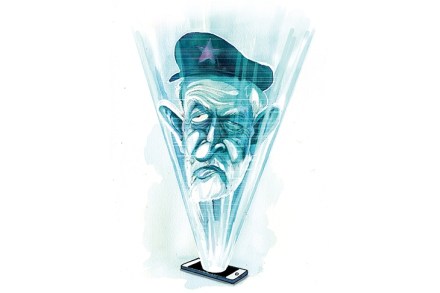
Many assume that if an election were held soon, Jeremy Corbyn would win. But what if, say, the government fell in 2020 and Labour won a working majority? At 71, Corbyn becomes Britain’s oldest prime minister since Churchill, and at first is one of its most popular. His appeal grows as he takes on some of the country’s favourite demons. Few listen to the protests of water and electricity shareholders as their stakes are seized — most are focused on their own bills, which surely will come down now. There are cheers at Victoria Station as the news flashes across screens that Southern Railway is to be nationalised. At hospitals, medical staff are filmed applauding as PFI contracts are terminated and taken on by the NHS. Stock markets show an upwards blip.

Abe’s challenge

As the only nation to have suffered mass casualties from a nuclear bomb, Japan has been understandably nervous about Kim Jong-un’s missile tests. Sales of domestic nuclear bunkers and gas masks have soared and nationally aired TV ads with a chilling ‘Protect and Survive’ flavour urge residents to hunker behind washing machines in basements and stay away from windows. This is one reason why Shinzo Abe, Japan’s long-standing Prime Minister, felt confident enough to surprise the world this week and call a snap election. In the light of Theresa May’s recent disaster, it seemed to many like a rash move.

Not refugees, not children

I was interviewing ten foster parents in west London for a report on children in care. Foster parents are in great demand, so I was startled to discover that only one of the sets of parents was looking after the sort of vulnerable children you imagine to be in the care system. The others were looking after unaccompanied asylum-seeker children. They made an alarming claim: three of these seemed to be adults passing themselves off as boys. ‘The first thing they ask for is a razor,’ said one foster parent, ‘They’ve got these big beards.’ A woman admitted she found it embarrassing having a grown man posing as a 17-year-old. But the authorities appeared uninterested. ‘Our concerns are just fobbed off,’ said another.

Life in the e-lane

The plane landed a fraction early, at just after 9 p.m. Hope flickered that passport control would be as deserted as the echoing arrivals terminal. But no. By the time we reached sight of what is now labelled in enormous letters the ‘UK Border’, we had joined a mass of humanity in a single corridor to be decanted in batches into ‘the maze’. This is the point where, at most UK airports, the great segregation occurs, between UK/EU passports and the rest, and then between regular channels and ‘e-passports’. Often, they try to chivvy you into e-passports. Tonight, though, these lanes were taped off. After the long shuffle to the control desk, I had the nerve to ask why.

Brexit wars

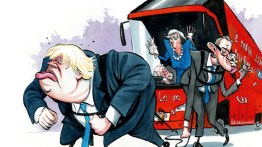
The time for choosing is fast approaching for Theresa May. Soon she must make a decision that will define her premiership and her country’s future. The past few days have shown how hard, if not impossible, it will be for her to keep her entire cabinet on board with whatever EU deal she signs. It is imperative that she now picks what kind of Brexit she wants. But doing so will risk alienating — or even losing — various cabinet members. She has been trying to blur the lines for months, but as one of those closely involved in this drama warns: ‘She can’t fudge this forever.’ Another participant in the struggle says: ‘She’s got to decide who she wants sitting round the cabinet table.

Can we be friends?

Have you heard the one about the new Labour MP who refuses to be friends with Tories? When Laura Pidcock dropped into an interview with a left-wing website that she has ‘absolutely no intention of being friends with’ any Tories, she was surprised by the fuss that followed. It might have seemed odd to her, but within Parliament it’s well known that friendships that cross the divide spring up the whole time. Sometimes it’s personal: Kezia Dugdale, leader of the Scottish Labour Party, caused headlines when she started dating a nationalist MSP. But more often, political: to achieve something, MPs from different parties often have to work together. But the new member for North West Durham sounds as if she is appalled at the whole system.

Crime and prejudice

Nothing spoke of the fractious atmosphere in the aftermath of the Brexit referendum more than the death of 40-year-old Arek Jozwik in a shopping centre in Harlow, Essex in August 2016. What might, on any other weekend, have been passed over as just another grubby Saturday-night incident on Britain’s drunken high streets became elevated into a symptom of Brexit-induced racial hatred. James O’Brien, an LBC radio talk-show host, declared that certain Eurosceptics had ‘blood on their hands’ as did ‘anybody who has suggested speaking Polish in a public place is in any way undesirable’. This was the premise of almost all reporting on the story: a man seemed to have been murdered for being Polish.

Ukraine’s last best hope

You have to hand it to Mikheil Saakashvili: the man doesn’t give up. After a tumultuous nine years as president of Georgia, which began with a furious anti-corruption purge, culminated in a short but disastrous war with Russia in 2008 and ended with accusations of embezzlement and authoritarian practices, he is determined to return to power — not in his own country, but in Ukraine. Saakashvili is brilliant and divisive. His many fans, principally drawn from the educated and the young of Georgia and Ukraine, see him as exactly the kind of clear-thinking, fearless leader who can sweep away the tangle of cronyism that has turned most former Soviet states into kleptocratic autocracies.

Decision breakers

‘The risk of a wrong decision is preferable to the terror of indecision,’ said Maimonides. How right he was. Today, we are racked with choice, and decision-making has never been more fraught. It’s hell. Look at restaurant menus. Anything longer than a page is alarming. So much margin for error. ‘Hold on a minute, I just need another look.’ ‘What’s the special, again?’ Glance at a neighbouring table. ‘That looks nice, is it the lamb?’ Turn to your partner. ‘What are you having?’ At least you’ve settled on a restaurant.

The scandal of privatised water is going to blow

Enough has been written about a Conservative government that knows its electoral success depends on Britain remaining a property-owning democracy, yet offers nothing beyond token gestures to stop the young being priced out of home ownership. Enough, too, has been said about graduates being overcharged, pensioners soaking up the largesse of the tax and benefit systems, the failure to upgrade infrastructure, the obesity crisis, and all the other problems that can’t be tackled because of half-thought-through Tory prejudices. Allow me instead to concentrate on the scandal of the privatised water industry. Journalists and academics have been banging on for what feels like an age about an ‘organised rip-off’, to use the words of the usually sedate Financial Times.

Our browbeaten universities

Are university vice-chancellors paid too much? The government clearly thinks so, and is planning to fine universities that can’t justify paying their leaders more than the Prime Minister’s salary of £150,000 per annum. Louise Richardson, vice-chancellor of Oxford University (salary £350,000), strongly disagrees, and has contrasted her salary negatively with those of bankers and footballers. But bankers and footballers work in the private sector and so are not the concern of government. It’s surely an established principle that government can intervene in the pay of chief executives of public bodies, but not of private ones. And any fool knows that universities are public bodies. Or are they? Actually, Professor Richardson is on to something important.

The straight dope

It’s not easy to get hold of Ángel Hernández, the legendary Mexican chemist who for a decade provided illicit performance-enhancing drugs to numerous athletes, including, he claims, all eight 100 metres finalists at the Beijing Olympics. It took me just over a year of trying. The FBI also struggled. The story goes that when they eventually caught up with him in 2005 he had been holed up in a hotel room in Texas, living under an assumed name for two years. Presented with numerous incriminating wire-tapped telephone conversations and bank statements as part of the investigation that eventually sent three-time Olympic gold medallist Marion Jones to prison, Hernández became a state witness in return for avoiding chokey.

Ya Allah!

Last month Luigi Brugnaro, the mayor of Venice, warned that anyone who yelled Allahu Akbar (‘God is the greatest’) in his city was liable to be shot dead by a police sniper. A bit harsh you might think, but it’s weird how tricky it’s become to use the world’s fifth most spoken language in Europe, let alone invoke the Arabic name for God. Three days after the London Bridge attacks, a trio of Muslim women attacked a female nursery worker on Wanstead High Street in north-east London. One of her colleagues told the Daily Mail they were ‘chanting the Quran, and invoking Allah’.

Our big fat problem

The good news is that Theresa May has dropped the threat to withdraw universal free school meals. Thank God (and the PM) for that. School lunches are the biggest weapon we have to fight obesity. The UK is sixth in the supersize race of OECD countries, with a quarter of the population obese. The fact that six of the fattest nations (the US, Australia, New Zealand, Canada, Ireland and the UK) are English-speaking should tell us something about our food culture. But sadly even Japan and South Korea, the slimmest nations, are fattening up fast on burgers and chips. What is to be done? No country is going to have the courage to ban junk food, as they have drugs. Maybe we’ll come to that one day.