Features

One man rules

Optimists speculate that Xi Jinping’s power accumulation is the prelude to a burst of liberalising reform in his second five-year term as the Communist party’s general secretary, which will be consecrated at the current Congress. Nothing seems more unlikely, with the Chinese leader insisting in his marathon opening speech on Wednesday that his country should ‘strive for the great success of socialism with Chinese characteristics’ to take ‘centre stage in the world’. While he recognises the need for China Inc. to operate more efficiently, his chosen route lies through the reinforcement of the party state, the repression of dissent and the centralisation of his authority. This represents a sea change in the direction of the last major Leninist state.

Papa Xi

For the first time since the death of Chairman Mao four decades ago, a leadership personality cult is emerging in China. You can see it in Beijing’s streets, where President Xi Jinping’s face appears on posters on bus stops, next to those of revolutionary war heroes. Scarlet banners fly with bold white letters saying: ‘Continue Achieving the Successes of Socialism... with Comrade Xi Jinping at the core’. The city has this week been hosting the Communist Party Congress, during which Xi was affirmed for a second (and supposedly final) five-year term. But it looks and feels like a coronation. To those who remember Mao’s iron-fisted rule and the cult around him, the emerging Xi cult might seem like a great leap backwards.

Pregnant silence

Brian Sewell once wrote an article about abortion headlined: ‘Women, the killers in our midst.’ He got an awful lot of flak for it, which he took in his stride. He came to mind during the screening of Abortion On Trial, the documentary hosted by Anne Robinson and screened this week to mark the 50th anniversary of the passing of the 1967 Abortion Act. In it, one of the participants described abortion as murder. ‘Are nine of us here… murderers?’ asked Mrs Robinson with a flourish, to which the only tactful answer was no, of course not. Brian would unhesitatingly have said yes. Abortion is one of those issues about which dissent is not normally socially permissible right now; see what happened to Jacob Rees-Mogg.

Dangerous liaisons | 19 October 2017

Lothario, Don Juan, philanderer, ‘naughty’, ‘plays away’ — all terms for men who have an overwhelming drive to seduce scores of women, take no responsibility, and often get away with it. In the recent allegations about Harvey Weinstein’s predatory sexual attacks on more than 30 females, mainly actresses, whose careers seem to have depended on them being compliant, most of his victims now complain too of his physical unattractiveness. One, the Italian actor and director Asia Argento, who went on to have ‘consensual sex’ with Weinstein on and off for five years, says she was ‘a fool’. Those who have come forward with their stories and condemned Weinstein, often several years later, are being heaped with praise for their courage.

Lost in translation | 19 October 2017

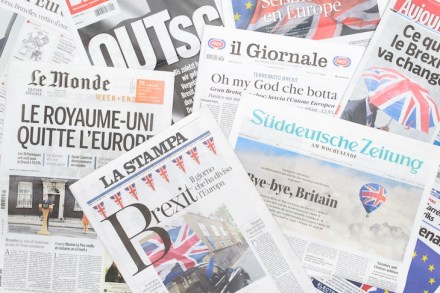
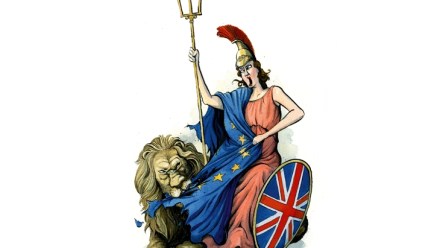
If Michel Barnier and David Davis, in their regular dialogue of the deaf, seem to be inhabiting different mental universes, that is because they are. The British and French have often found each other particularly difficult to negotiate with. Of course, Barnier represents not France but the EU, and he has a negotiating position, the notorious European Council Guidelines, on which the veteran British diplomat Sir Peter Marshall has recently commented that ‘I have never seen, nor heard tell of, a text as antipathetic to the principle of give and take which is generally assumed to be at the heart of negotiation among like-minded democracies’.

Cult classic

In Dan Brown’s new thriller, Origin, we are introduced to the Catholic church’s sinister far-right rival — a paranoid worldwide cult dedicated to undermining the reforms of Pope Francis. This toxic outfit has its own pope, who runs it from his ‘Vatican’ at El Palmar de Troya, on the Andalusian plain; hence its name, the Palmarian Catholic church. Brown describes a ‘soaring Gothic cathedral’ dominated by ‘eight towering spires, each with a triple-tiered bell tower’. Inside, members are required to attend interminable masses and pray to hundreds of freshly created saints, including St Adolf Hitler. Origin is a clumsily fashioned thriller, even by Brown’s standards, and you might imagine that he invented the Palmarian church.

Silicon Valley made Trump. Will it now confront him?

In the 1962 Japanese sci-fi classic King Kong vs Godzilla, the two giant monsters fight to a stalemate atop Mount Fuji. I have been wondering for some time when the two giants of American social media would square up for what promises to be a comparably brutal battle. Finally, it began last month — and where else but on Twitter? ‘Facebook was always anti-Trump,’ tweeted the President of the United States on 27 September. Mark Zuckerberg shot back hours later (on Facebook, of course): ‘Trump says Facebook is against him. Liberals say we helped Trump. Both sides are upset about ideas and content they don’t like. That’s what running a platform for all ideas looks like.’ A platform for all ideas? Well, maybe. Others see Facebook differently.

The wisdom of weirdos

It was World Mental Health Day this week — and it drove me mad. I don’t have ‘mental illness’. I have bipolar disorder, and I feel as possessive about my diagnosis as Gollum did his precious ring. One term. One label. To lump the manifold terrors of the mind together under the monolithic ‘mental illness’ is an offence against the person. Failing to differentiate shifts the stigma like a bubble under a carpet. So I was horrified to discover, in my latest stint in a psychiatric hospital, that others experience exactly the same as me. Others use the same ‘maladapted coping mechanisms’. They are also their own worst critic; they replay their mistakes; they are wracked by ‘meta-worries’: being worried about being worried.

Kill your friendships

I am not a bad friend. I enjoy my mates, and I am generous, showering them with fun, money and sympathy. But I do not crave their company when I am without it, for whatever length of time, and should we lose touch, I do not miss them. In fact, I find there’s a profound pleasure in parting with a chum, whether by their hand or by yours. We should all have the courage to admit it when a friendship has become more work than play, more duty than beauty. Maybe my origins led me to feel this way. I was an only child who, at an early age, became extremely fond of my own company. Some of my earliest memories are of lurking in my bedroom and begging my mother to get rid of young schoolmates who had come calling for me to play.

Truth in fiction

The Sunday Times’s literary editor Andrew Holgate recently tweeted the news that Robert Harris’s latest thriller had entered the bestseller list at No. 2: ‘Pipped to the post by Ken Follett.’ Harris retweeted it: ‘Well done Ken. You bastard.’ Pipped to the post only by Follett. That’s the level Harris is at now. Even before it hit the shops, his novel was being chased for film rights by two studios. Harris is one of that small and enviable group of journalists who became novelists — and made it big instantly. His first book, the alternative history story Fatherland, set in a Germany in which Hitler won the war, was bought on the basis of the idea alone and became a name-establishing bestseller.

Language barrier

Since the EU referendum result last June our nation has been divided: not only by the vote but also by language. If 62 per cent of Britons (many of whom undoubtedly voted for Brexit) now say Britain ‘sometimes feels like a foreign country’, it’s not anti-foreigner prejudice so much as a feeling that people in authority are speaking at them in a foreign language. Not Polish or Punjabi but PC-speak, that opaque code that connotes whether you are ‘on message’ and one of ‘our kind of people’ or one of those racist lizard-brained Leaver oiks. Look at the new language of diversity that is now being prescribed in much of the public sector.

Following suit

Why do Tories all look the same? This year, having never been to a party conference before, I went to the Labour one in Brighton, then the Tory one in Manchester. At each, the political weather was what you’d expect. What struck me most, however, was the difference in clothing. In Brighton, I saw women with pink hair and men wearing T-shirts that read ‘Stop the war’ or ‘Never kissed a Tory’; scruffy young Corbynistas rubbing up against nervous-looking Blairites. At the Conservative conference, there was only one tribe — and its uniform was a bland blue suit. I expected to find a mix of styles as at the Labour convention.

Say nothing

To my embarrassment, ever since my novel We Need to Talk About Kevin was published in 2003, I’ve been a go-to girl regarding American mass murders. I’m embarrassed because my credentials are so poor — I’m only an expert on a school killer I made up — and because I’ve so little to say. That’s one of the standard reactions to these things, whose scale seems only to escalate: being struck dumb. That’s why Sky News and the BBC ring me up. They’re desperate, you see. They have nothing to say either. In the days I accepted many of these gigs, I made what I hoped was one serviceable point. As most of the shooters want attention, surely our mistake is to give it to them.

The great unknowns

Have you heard about the invention that cures your smartphone addiction? Whereas normally you can’t go more than a minute or two without checking your phone, this invention allows you to sit with the thing safely tucked away in your pocket or bag, not giving it a second thought. The invention is known as the ‘quiz’. You’d have thought that smartphones would have killed off this British institution. A pub quiz, with the answer to every question in the world just a fumbled, sneaky glance away? Surely cheating would become rife, rendering the whole exercise pointless? But that hasn’t happened. There’s something about a quiz that returns us to our pre-smartphone mindset, where if we didn’t know something, we didn’t know it.

Spanish practices

In October 1936, on the anniversary of Columbus’s discovery of the New World, a ceremony was held at Salamanca University, in the heart of the nationalist Spain, to celebrate the ‘Day of the Race’. The Bishop of Salamanca, who had recently offered up his episcopal palace to be Franco’s headquarters, stood in the great hall next to the founder of the Spanish Foreign Legion, General José Millán Astray, a one-armed and one-eyed thug of a man. Also present was the university rector, Miguel de Unamuno, an eminent Basque philosopher who had supported the nationalist coup when it was launched four months earlier, but had since become disillusioned with its viciousness.

Imran’s biggest test

It’s been a long journey for Imran Khan. He founded his political party, PTI (Pakistan Movement for Justice), in 1996, and for many years made no real progress. Many mocked him. The Guardian journalist Declan Walsh dismissed him as ‘a miserable politician’, whose ideas and affiliations had ‘swerved and skidded like a rickshaw in a rainshower’. PTI did make a limited amount of progress in the 2013 general elections, when it emerged as the second largest party by national vote and with 30 parliamentary seats. Furthermore, Khan’s party secured control of Khyber Pakhtunkhwa (formerly North-West Frontier Province). But none of this was enough to challenge for national power. The outlook has changed dramatically over the past three months.

Low spirits

You may have noticed that we’re in the throes of a 21st-century Gin Craze. It’s not as serious as the one which began in the 1720s, when London was awash with the stuff, much of it adulterated with turpentine, alum and sulphuric acid, but it’s still an irritation with no signs of an imminent hangover. The big difference between then and now is that sales and marketing ‘creatives’ have been let loose to talk up ‘boutique’ distilleries with fancy names, trendy bottles and romantic back stories about Uncle Jack dusting off his great-grandfather’s rusting stills down a remote back alley. I found one gin, for example, with a tag line that says ‘intricately realised’.