Features

America is burning – and it could cost Trump the presidency

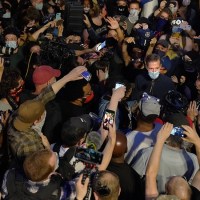
‘The crime and violence that today afflicts our nation will soon come to an end,’ said Donald Trump on 21 July 2016, as he accepted the Republican party’s nomination for the presidency of the United States. ‘Safety will be restored.’ Mark that down as a broken promise. On Friday, as a seething mob menaced the White House, the Secret Service rushed Mr Trump down to the emergency bunker under the East Wing. Downtown Washington has come to resemble a war zone. On Monday, police deployed cavalry and tear gas to clear Lafayette Square so the President could shoot a video of himself walking outside looking tough. In other parts of the capital, rioters carried on smashing buildings and starting fires.

Why whales sing: it’s a question of culture

A few years ago I was sitting in Carl Safina’s yard on Long Island, drinking tea, occasionally patting a dog who was lying at my feet. Safina was talking about the magnanimity of wolves. A wolf in Yellowstone National Park, known as Twenty-One, never lost a fight, and unlike most wolves, never killed a vanquished opponent. Park rangers called him the perfect wolf. ‘When a human releases a vanquished opponent rather than killing them, in the eyes of onlookers the vanquished still loses status but the victor seems all the more impressive,’ Safina said. ‘Onlookers might feel it would be desirable to follow such a person, so strong yet inclined towards forbearance.’ Safina is not some woo-woo merchant, or a new-world mist-dweller. He does proper science.

Could the key to Covid be found in the Russian pandemic?

The killer came from the east in winter: fever, cough, sore throat, aching muscles, headache and sometimes death. It spread quickly to all parts of the globe, from city to city, using new transport networks. In many cities, the streets were empty and shops and schools deserted. A million died. The Russian influenza pandemic of 1889-90 may hold clues to what happens next — not least because the latest thinking is that it, too, may have been caused by a new coronavirus. In addition to the new diseases of Sars, Mers and Covid-19, there are four other coronaviruses that infect people. They all cause common colds and are responsible for about one in five such sniffles, the rest being rhinoviruses and adenoviruses.

A death, live-streamed: my husband’s Skype funeral

When my husband died last month, I was as prepared as a person can be. Howard had been afflicted for many years by early-onset dementia and that, as we all know, is a one-way street. What I was totally unprepared for was the lockdown factor. Could we even have a funeral? Yes, we could, as long as we adhered to some rules. And would I like the ceremony live-streamed to those unable to attend? Well yes, I suppose I would. The offer of live-streaming solved my biggest problem. Howard was an American who had lived for many years in Europe. He had family and friends who couldn’t possibly travel to be with us in person. But all they needed was a Skype account and they’d be able to witness and feel part of the whole 20-minute, socially distanced ceremony. Perfect.

How Xi Jinping plans to crush Hong Kong

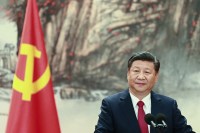
The Hong Kong government has recently extended its Covid regulations banning gatherings of more than eight people until 4 June. How convenient. Last year, according to organisers, 180,000 people gathered to commemorate the anniversary of the Tiananmen massacre on 4 June 1989. In future, being an organiser may well land you in court under a new national security law, which Beijing announced last week at its annual National People’s Congress. Perhaps we should have expected it. After all, the Basic Law, Hong Kong’s ‘constitution’, lays down that the Hong Kong government should enact such a law, and the big party meeting in October told us that the ‘legal systems and implementation mechanisms for protecting national security’ would be set up.

As the primary schools go back, it’s the older kids who suffer

It now appears that school’s out till after the summer for pretty much all secondary pupils. The loudest cries, an equal mix of exaltation and despair, come from those who were due to sit GCSE and A-l-evel exams this term: groups now split between delight at unstructured months of leisure time and anxiety that lackadaisical efforts in mock exams won’t prove enough to secure them the required grades. Yet my sympathies in this stalemate lie with those in Year 12, or the lower-sixth, the sandwich year between the two public exam groups. The Prime Minister has said that from 15 June, these 16- and 17-year-olds will be allowed ‘some contact’ with their teachers, but with just one quarter of the usual class permitted to be present at any one time.

Escaping the dragon: the government’s new approach to China

How will the world be different after coronavirus? Will everything return to the way it was or will there be lasting change? For this country, there is one thing that will clearly be different: the government’s approach to China. I understand that while Boris Johnson’s grand, integrated foreign policy review has been put on hold because of the pandemic, the work on Anglo-Sino relations has been brought forward as a matter of urgency. One of those heavily involved in the development of this new policy tells me that the aim is to get this country ‘off the trajectory of ever-increasing dependence’ on China. The issue is not that Covid-19 emerged from Wuhan but what the crisis has revealed about the Chinese state and the UK’s dependence on it.

It’s hell when your whole neighbourhood is working from home

Every morning, like sun-seekers stampeding to get their towels on the sunbeds at a cheap Spanish hotel, it’s a race to the patio for my neighbours and me. Each of us in the line of terraced houses on the village green must try to be the first to get into their garden, because the first one out there reserves the air space. If it’s the neighbour who works in telecoms then we’re in for merger talks all day. Her firm is in the middle of a big deal, the negotiations for which she’s carrying out on her patio via laptop conference calling. Working from home. Oh dear. This is going to be trouble. Our homes are no longer our homes. Every home in the country, since lockdown, has become the outer office of some company or other.

The NHS is letting down thousands of patients

I’m embarrassed every Thursday. I don’t mean to sound ungrateful. The outpouring of love for NHS workers at 8 p.m. each week has been touching. Who wouldn’t want to be clapped and cheered? But quietly among ourselves, many of us in the health service have increasingly felt it’s misplaced. I’ve come to dread it. It makes me wince. The fact is that the NHS is currently letting down thousands upon thousands of patients. When the dust has settled, I fear that we will be responsible for the death or morbidity of countless people. Since the pandemic hit, entire NHS services have completely stopped. I fear that this will have catastrophic consequences for the health of the nation.

Lockdowns are as contagious as Covid

Schools might never have closed in the first place had the coronavirus not started in China. Imagine it had started in Sweden. Whoever responded first was going to set the tone for the nations that followed. When we are uncertain about what to do, we look to the behaviour of others to guide us. Imagine walking down a street with a new restaurant on either side (you remember restaurants, right?), and that you do not know anything about either of them. One has some customers inside, the other has none. Assuming you can get a table, you would choose the one with people in it because, in the absence of any prior knowledge about the restaurants, other people provide you with a signal about which to eat in.

‘Herd immunity’ is impossible without a vaccine

My great-grandfather did not fight in the war. He wasn’t a conscientious objector — he was a scientist helping to develop radar. It’s tempting to imagine family history repeating itself. I’m not alongside my colleagues on the NHS front line; instead I’ve been part of a large team at the Crick Institute, helping to develop tests for Sars-CoV-2, the causative agent of Covid-19. For the first phase of our struggle against this virus, we’ve had minimal testing capacity — no radar — and we’ve suffered the consequences.

Britain’s strange aversion to seafood

Last week’s Brexit negotiations, conducted by video conference, failed to come to an agreement on fisheries. Michel Barnier, the EU negotiator (and former French fisheries minister), insisted that continued European access to British territorial waters was a prerequisite of any deal, and David Frost, his British counterpart, replied that this was ‘incompatible with our status as an independent coastal state’. If there is going to be no deal as a result of fishing, as seems increasingly probable, we are going to have a lot more fish to eat, but we’re also going to have to eat a lot more fish. For an island surrounded by fish, Britain has never really been keen on seafood.

Is Trump more left-wing than Biden?

Just when it seemed that Donald Trump had finally committed political suicide — his notion of injecting disinfectant to cure coronavirus marking only one of his recent reckless absurdities — he says something off the cuff that makes one lament the sight of so much raw political talent going to waste in the cause of solipsistic mania. A leftist anti-Trumper I may be, but I’ve been strangely impressed by the President’s capacity for perfectly credible, progressive--sounding political analysis, especially on the trade issues that sometimes bring together on common ground right-wing nationalists and left-wing defenders of labour rights.

Coromance is blossoming

It’s heartening to hear that while it’s curtains for the economy, our domestic lives are on the up. In Wuhan there was a spike in divorce rates, and in Japan, wives have been sending their husbands away to hostels. But here in Britain, there’s love in lockdown. Sales of engagement rings have risen significantly since we were all told to stay at home and couples have found creative ways to pop the question in their living rooms and local parks. For those who have been married for longer, working, eating and sleeping at home together 24/7 for weeks on end has been a strange novelty — an odd throwback to a time when the relationship was new.

Brexit is back – and Covid has transformed negotiations

We will know in the next few weeks if Britain is to leave the European Union without a trade deal. The ‘high-level’ meeting in June has been earmarked by the UK and the EU as the moment when they decide whether to take the negotiations to the next stage or not. If there is to be a deal, then the contours of it will need to start to become clearer at this meeting. If they don’t, then both sides will need to decide whether their time would be better spent preparing for trading on WTO terms than in unconstructive negotiations. The Covid pandemic, far from pausing the talks, has made it all the more urgent that an agreement is found quickly.

League of nations: the race out of lockdown

Uppsala Last week, Europe started its liberation from lockdown — and it all feels like a study in national political identity. Belgium took its first step towards ‘deconfinement’ but no one seems exactly sure what that means. France is opting for complexity rather than simplicity. Italy’s national plan for the easing of its lockdown is more convoluted still, but few regions bother to follow it anyway. Spain, goes a national joke, went more slowly and started with a reopening of the siesta. And in Germany, everyone is praising the country’s scientific approach to the pandemic, but as soon as they were allowed to roam freely again, many Germans headed for the beer gardens. Governments say their approach is ‘guided by the science’.

Lives vs lives – the global cost of lockdown

‘There have been as many plagues in history as there have been wars,’ wrote Albert Camus in The Plague, ‘yet always plagues and wars take people equally by surprise.’ So it was this time. The arrival of a new coronavirus blindsided governments of most advanced nations as they reached for a tool that few had ever really considered before: lockdown. It all happened too fast for a proper discussion about the implications. The biggest question — the extent to which lockdown will claim lives as well as save them — is one you can ask at a global level. We know the national costs. In the United States, there is joblessness on a scale not seen since the Great Depression, with more than 33 million unemployed.

The MP demanding a new approach to China

Six years ago, Neil O’Brien was working for George Osborne when the then chancellor was enthusing about a ‘new golden era’ in Sino-British relations. But now O’Brien, who became the Conservative MP for Harborough in 2017, is one of the founders of the new China Research Group, a group of Tory MPs who are pushing for the government to take a tougher line with Beijing. His best-case scenario is one where the UK and its allies ‘manage to restrain some of the worst behaviours of the Chinese government’. O’Brien’s change of heart sums up the shift in Tory thinking on China.